Dual-Spindle Turn-Mill: Machining Both Ends in One Setup
Most turning jobs do not lose their time in the cut. They lose it in the second operation: unload the part, blow it off, carry it to another machine, re-chuck it on a fresh set of jaws, find the datum again, and only then start making chips on the back end. On a short part with a short cycle, the handling can take longer than the cutting ever did.
A dual-spindle turn-mill machine attacks that handling directly. The front of the part is finished on the main spindle, the part is parted off, a second spindle mirror-mounted on the same bed picks it up, and the back end is completed while the operator loads the next blank. For the right part it removes a whole machine, a fixture and the queue in between. For the wrong part it adds cost and complexity and gives almost nothing back. This article is about telling the two apart.
Why the Second Operation Is the Real Cost
Look at a shop that turns small hydraulic fittings. On a single-spindle lathe the cycle might be two minutes of cutting. Then the part goes into a tray and waits. Somebody picks up the tray, walks it to a second lathe or a mill, chucks it on the second end, drills a cross hole, taps it, chamfers the mouth, and drops it in the finished bin. The machine time is short; the wall-clock time between first chip and last chip is not. Every part carries two setups, two chuckings, two chances to lose the datum, and an operator moving between stations all day.
That gap is where a dual-spindle machine earns its money. The two ends happen in one cycle on one bed. There is one work order, one setup sheet, one operator looking at one machine, and one part coming out complete. The saving is not only labour. It is also work in progress sitting in trays, floor space for a second machine, and the scrap that comes from a part being referenced three times instead of once.
How a Dual-Spindle Turn-Mill Is Built
Strip away the sheet metal and the layout is simple: two spindle units face each other along one bed, with the tooling between them.
The main spindle
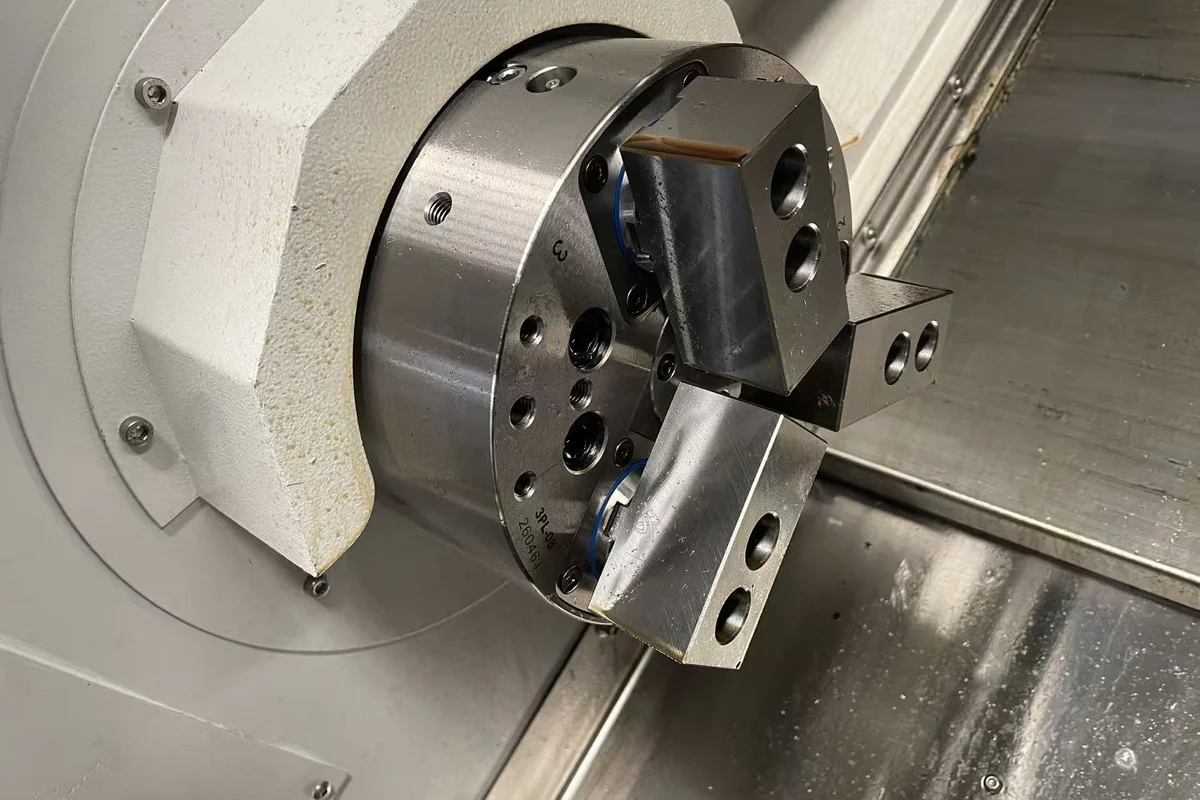
The main spindle holds the bar or the blank and turns it against the turret. Everything you would expect on a turning centre lives here: a chuck or a collet chuck, the turret or tool block, and on a mill-turn machine, driven tools that can mill, drill and tap off the centreline.
The sub-spindle
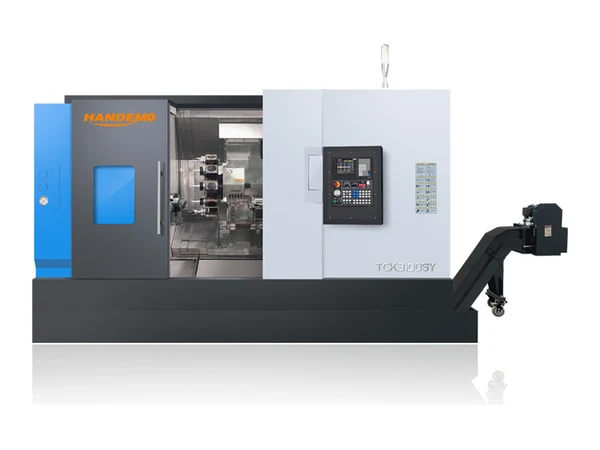
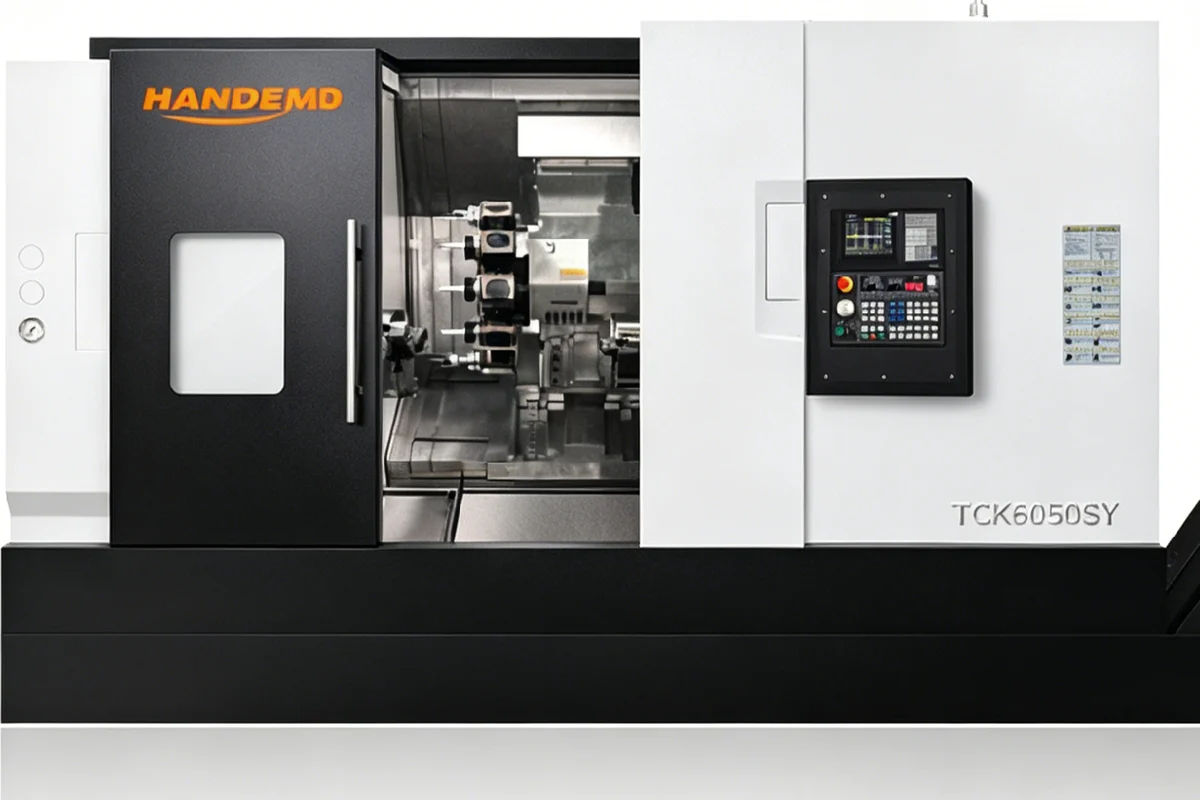
The sub-spindle, sometimes called the second spindle or counter-spindle, is mounted on its own slide facing the main spindle. It can travel towards the main spindle to pick up a part, then travel back and index to present the back end to the tooling. On a machine like the 3100SY the two spindles are equal partners rather than a main machine with an add-on, which matters as soon as you want to run the second end at a comparable cutting load to the first.
What actually moves
There are two common architectures. In one, the sub-spindle carries X and Z and travels to meet the main spindle. In the other, the sub-spindle is more fixed and the main spindle or the turret does more of the moving. Which one suits you depends on how long the part is and how much of the work is on the back face.
What the Sub-Spindle Is Good At
Parting off and transferring
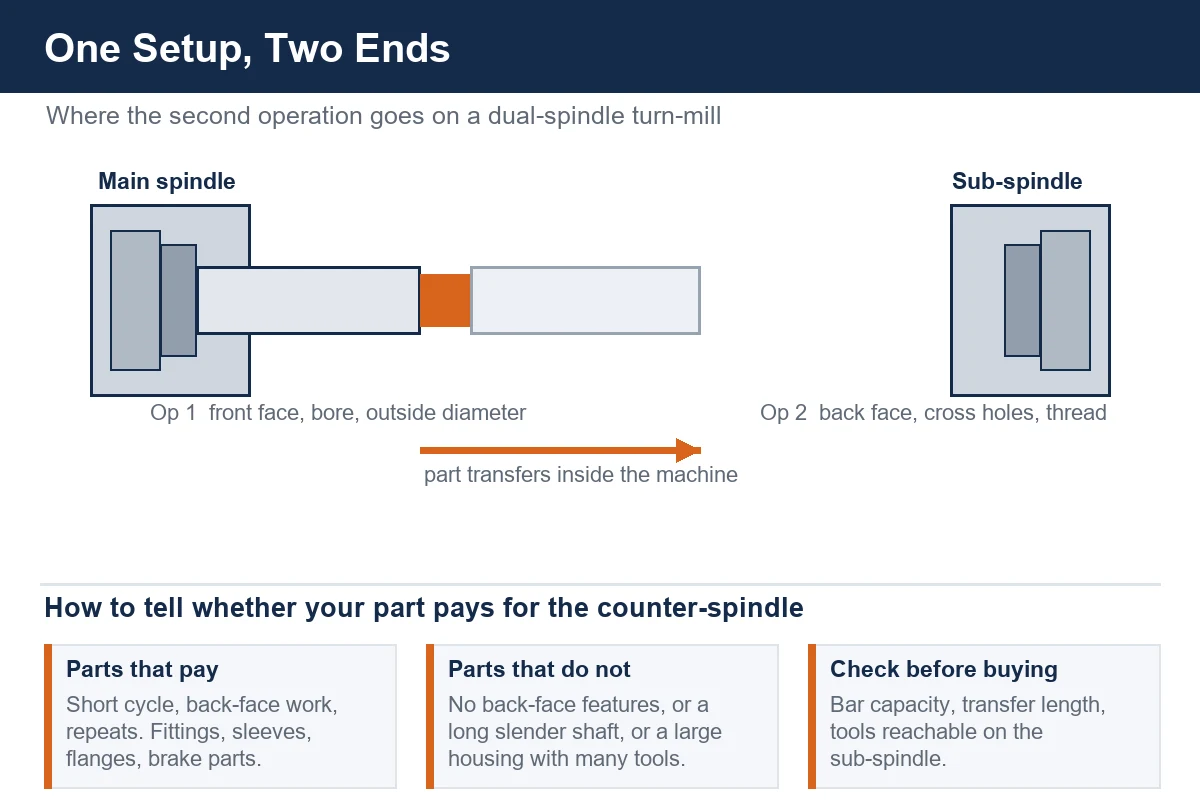
The classic sequence is: turn the front, face it, drill it, then part the part free of the bar with the sub-spindle already closed on the finished diameter. The transfer is done without the part ever touching a tray. The parting tool leaves a small nub, so the sub-spindle faces that away on its side, and from that point the back end is just another turning job.
Back-face work
Once the part is in the sub-spindle, the back face is fully open. That is where you do the counterbore, the second bore, the internal thread, the back chamfer, and on a mill-turn machine the cross holes and milled flats that would otherwise need a second machine. Because the sub-spindle can index, you can also drill a hole pattern that has to line up with a feature cut on the front.
What it will not do
A sub-spindle is not a second full machining centre. Its work envelope is smaller, and on many machines it has fewer tool positions available than the main turret. Very long parts do not transfer comfortably. If the back end needs eight tools and a large swing, the honest answer may be that a second operation on a proper machining centre is still the better plan.
Milling on a Lathe: Where the Turn-Mill Part Comes In
The turn-mill half of the name is doing as much work as the dual-spindle half. On a plain turning machine, a cross hole means a second setup. On a turn-mill machine it is a driven tool in the turret, cutting while the part is still gripped.
Driven tools and the Y axis
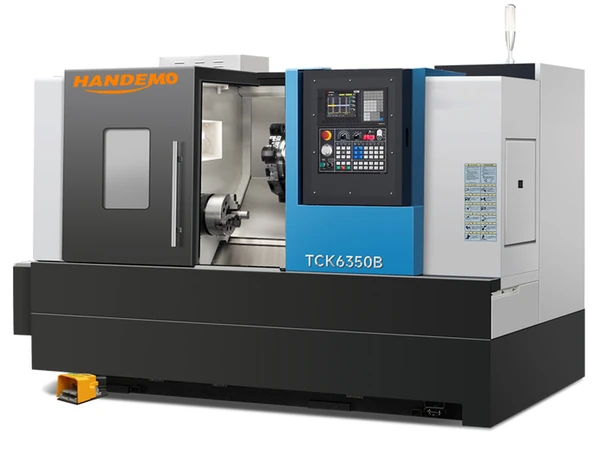
Driven tools let the turret spin a cutter instead of a turning tool, so you can mill flats, drill off-centre holes and tap without breaking the setup. A machine with Y axis goes further: the tool can move across the part rather than only to its centreline, which is what makes milled slots and true cross features practical. The TCK6050Y is a power-turret machine in this class, aimed at parts that need turning plus a modest amount of milling rather than full multi-axis contouring.
The limits of a turret machine
It is worth being clear about the ceiling here. A power-turret mill-turn machine is very good at turning plus straight milling and drilling. It is not a substitute for a machine with a B axis or a dedicated multi-axis head, and it will not do the kind of free-form surfacing that a five-axis machining centre is built for. If your part needs that, the comparison that matters is the one in 5-Axis vs 3-Axis Machining Centers, not this one.
The Parts That Pay for a Dual-Spindle Machine
Hydraulic fittings, sleeves and housings
Fittings, adaptors, piston guide sleeves and small housings are the classic case. They are usually short, they have a bore that runs right through, they need a cross hole or a hex or a spigot on the second end, and they are made in hundreds. That combination of short cycle and back-face work is exactly what a sub-spindle was invented for. The pattern shows up across the valve and hydraulic work covered in our valve and hydraulic parts application page, and in the hydraulic cylinder guide where bores and cap patterns have to stay on one reference.
Automotive and brake parts
Brake discs, hub-type parts, wheel hubs and small automotive fittings all follow the same logic: turn one face, turn the other, drill a bolt pattern, and keep the two faces square to each other. Doing that in one setup removes the stack-up that comes from a second chucking. Our brake disc process notes and the automotive parts page cover the same family of parts from the other direction.
Flanges, couplings and stepped shafts
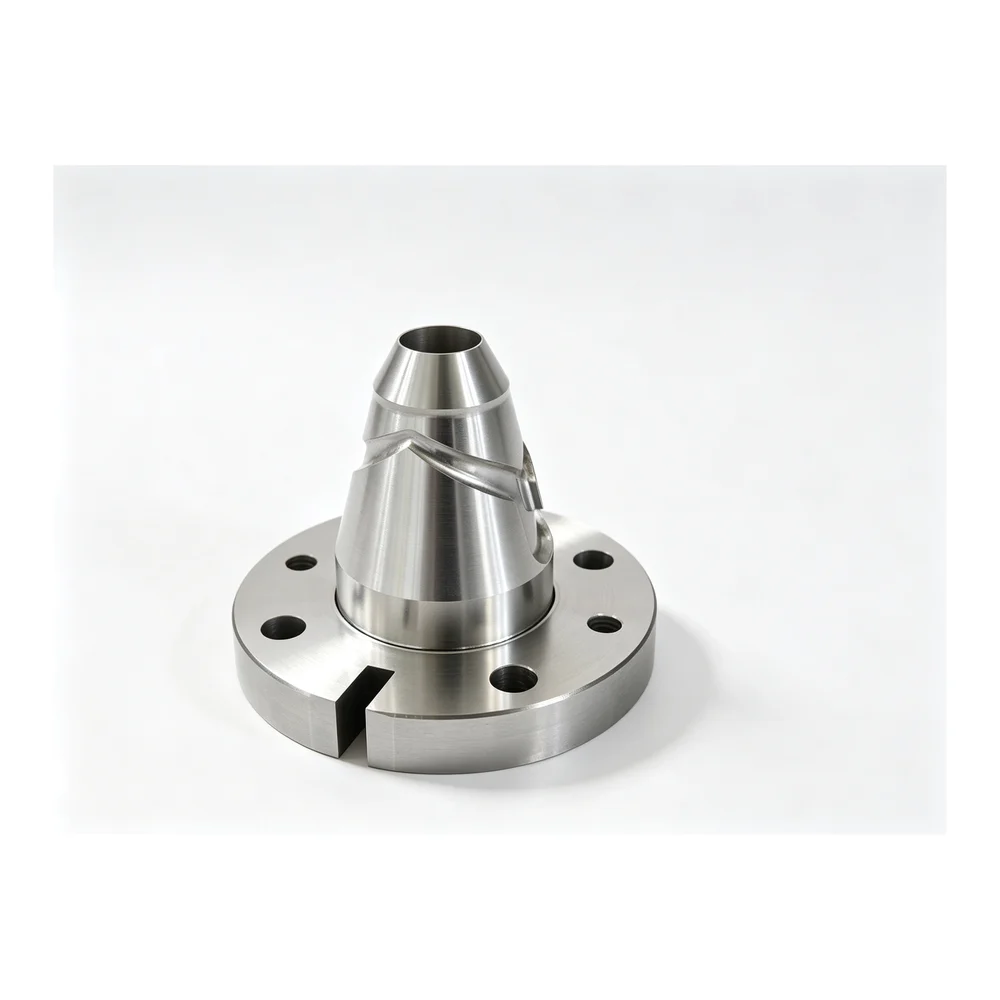
Short stepped shafts with a flange, a thread and a bore in the back are strong candidates. So are couplings and adaptor plates where the bolt pattern on one face has to be clocked to a feature on the other. Where the shaft becomes genuinely long and slender, though, the trade-offs change and the layout question in slant bed vs flat bed starts to matter more than the spindle count.
Matching the Machine to the Part
Two numbers decide most of this. The first is bar capacity, because it sets the largest bar you can feed through the spindle without pre-cutting blanks. The second is the working length each spindle can comfortably hold, because that is what limits how long a part can transfer.
Within our range, the 3100SY and the TCK6050SY are the two dual-spindle mill-turn models, and they sit at different points on the size scale rather than being variants of the same machine. If the back-face work is light and you mainly want the second operation gone, a power-turret machine such as the TCK6050Y or a straightforward TCK6050D can carry the job without paying for a counter-spindle you will not use.
Send us the drawing with the batch size, the bar size you buy and the features that sit on the back face, and the choice between a single-spindle machine with a second operation and a dual-spindle machine with one setup is usually clear within a few minutes of looking at the part.
Keeping Both Ends on the Same Centreline
The reason a dual-spindle machine is worth the money is that it removes a re-datum. When the same part is chucked a second time, any run-out in the second chuck, any chip trapped under a jaw and any wear in the second fixture is added to the error of the first operation. On a machine that transfers the part inside itself, the alignment between the two spindles is set once at build, and provided the transfer pick-up is clean, the two ends stay coaxial in the way the part was designed.
That is also why the small things matter more than they look. A transfer that picks the part up on a diameter that is still hot, or on a burr left by the parting tool, will hold position less consistently over a shift than one that picks up on a clean turned surface. Getting the parting and pick-up sequence right is a bigger factor in real shop performance than any single specification on the datasheet.
Automation Around a Dual-Spindle Machine
A dual-spindle machine is already half automated: the part moves itself from the first spindle to the second. The remaining manual step is loading blanks and taking finished parts out. That is why these machines pair so naturally with bar feeders on bar work, and with a gantry loader or a robot on chuck work. Our gantry loader and robotic machine tending pages cover the two routes; the choice usually comes down to part weight and how the blanks arrive.
If you already run lights-out for part of the day, a dual-spindle machine is often the cheapest way to add unattended capacity, because it removes an operation rather than adding a robot to perform one.
When a Single-Spindle Machine Is Still the Right Answer
There are clear cases where the counter-spindle is dead weight. If the part has no back-face work at all, a sub-spindle adds nothing. If the second operation needs more tools than the sub-spindle can reach, you will still need a second machine. If batches are tiny and the part is large, the setup time on a dual-spindle machine may not pay back. And if the job is really a milling job with a little turning, the money is better spent on a machining centre.
The test is simple. Count the operations on the part, not the machines in the shop. If the same part is touched by more than one machine on its way to the finished bin, and the parts are small and repeat, a dual-spindle turn-mill machine is worth pricing.
Frequently Asked Questions
What is the difference between a dual-spindle lathe and a turn-mill machine?
They describe two different axes of the same decision. Dual-spindle describes how many places the part can be held; turn-mill describes whether the machine can mill and drill as well as turn. A machine can have either feature, both or neither, and a dual-spindle turn-mill machine has both.
Can a dual-spindle machine replace two lathes?
For short parts with back-face work, often yes, and that is the point of buying one. For long or heavy parts, or where the second operation is substantial, it usually replaces the first machine and the handling rather than the second machine.
Does the part lose accuracy when it transfers to the second spindle?
The transfer is the critical step, but it is a controlled one. Because both spindles sit on one bed and their alignment is set at build, the part keeps one reference instead of being re-datumed on a second fixture. The practical risks are chip entrapment and picking up on a rough surface, both of which are solved in the process rather than in the specification.
Is a bar feeder required?
No, but it is the usual partner. On bar work the machine will run continuously as long as the bar feeder is loaded. On chuck work the feed is by gantry loader or robot, or by hand for small batches.
How do I know whether my part suits one?
Send the drawing and the batch size. A part with two ends, a through bore, a cross feature and a repeat order is the profile that pays; a long single-setup shaft or a large housing is usually better served by a different platform.
Send Us the Part
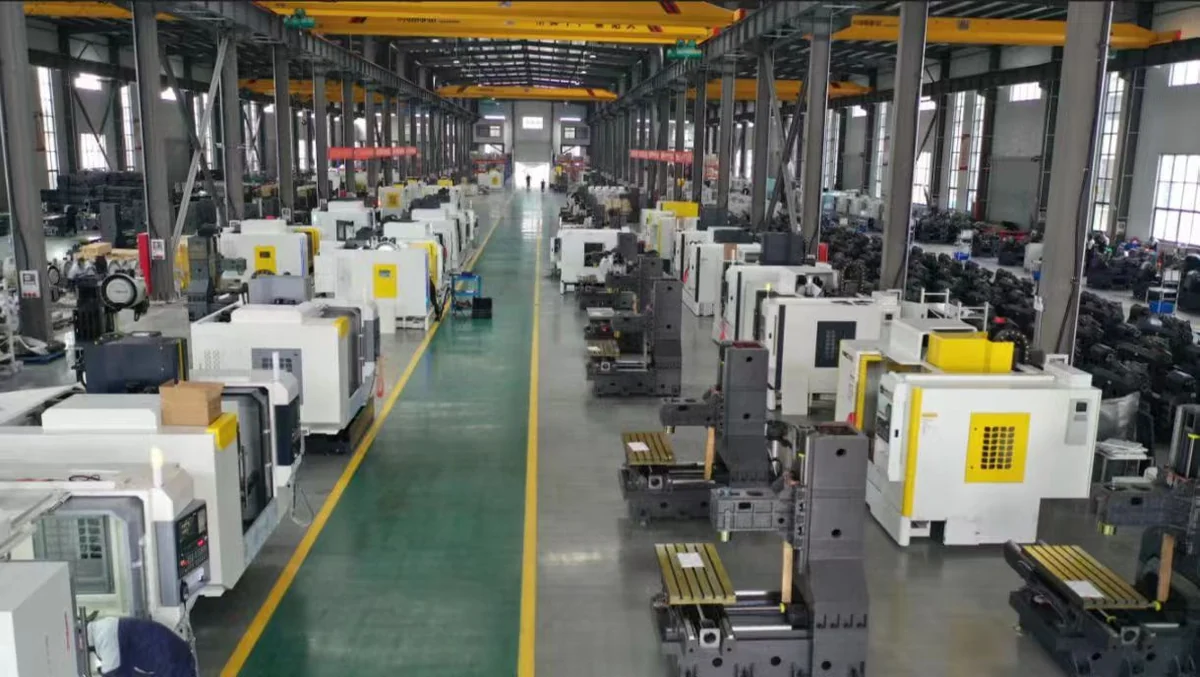
Handemo has been building machine tools since 2008 and supplies buyers in more than 150 countries from a plant of 220,000 m². If a part is spending its day travelling between machines, send us the drawing and we will say whether one setup is realistic or whether a second operation is the honest answer.
You can upload a drawing through our drawing upload page and we will come back with a machining plan and a quotation against your part.
Contact Handemo CNC | Email: sales1@handemocnc.com | WhatsApp: +86 135 6320 3038
Related reading: CNC Lathe vs Mill-Turn: How to Choose | Slant Bed vs Flat Bed CNC Lathes | VMC vs HMC: How to Choose a Machining Center