VMC vs HMC: How to Choose, and How to Buy
VMC or HMC is one of the first decisions a shop makes, and it is usually made badly. The two machines are built for different jobs, and the wrong one shows up later as idle spindles or setups that never seem to finish. This guide sets the two side by side and then takes the question one step further: what to look for when you are buying one, and what separates a machine that will still hold its geometry in five years from one that will not.
 Video
What a Vertical Machining Center Is
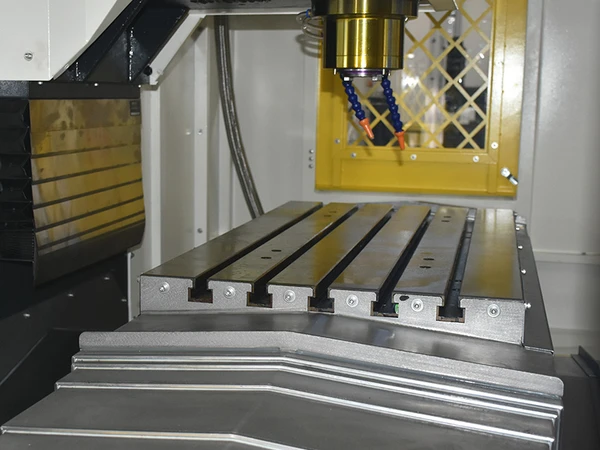
A vertical machining center has the spindle facing down over the table. The tool points at the workpiece from above, which makes it the natural choice for flat plates, dies, moulds, brackets and anything that needs face milling, drilling and tapping from one direction. A VMC is simpler to set up, costs less and is familiar to almost every operator.
Because the spindle comes down from above, a VMC is easy to load and easy to watch. An operator can see the cut and reach the part without much trouble, which makes it a very approachable machine for a shop that is starting to do its own machining or a job shop running a wide mix of parts.
What a Horizontal Machining Center Is
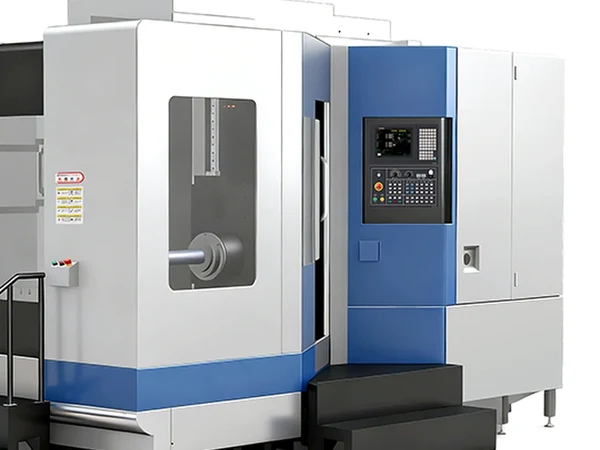
A horizontal machining center has the spindle parallel to the table, so the tool comes in from the side. Chips fall away from the cut instead of piling up on the part, which helps in deep pockets, deep bores and heavy cuts. The workpiece can be a box, a manifold or a casting that needs work on several sides.
The real strength of an HMC is that the workpiece can be indexed. With a pallet system or a rotary table, the machine rotates the part so the spindle reaches several faces in one sitting. That is what makes an HMC productive on repeat work - it keeps the spindle cutting while the operator loads the next part on the pallet outside the machine.
How the Two Differ
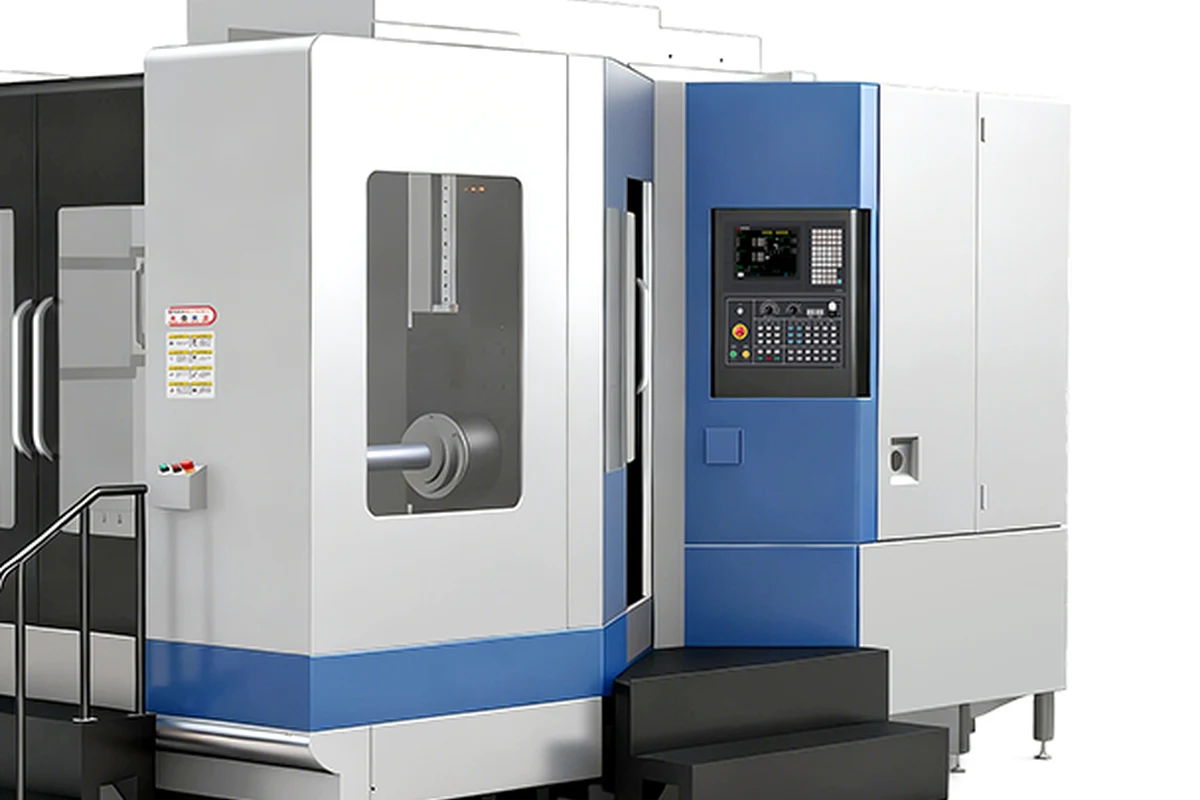
The spindle orientation drives almost every other difference. A VMC works down onto a horizontal surface. An HMC works sideways into a part that can be rotated. That single change decides chip clearing, how many faces a setup can reach, and the cost of the machine.
- A VMC suits flat work, dies, moulds and one-offs.
- An HMC suits boxes, manifolds and multi-face castings in quantity.
- A VMC is usually cheaper and faster to set up.
- An HMC costs more but is more productive once the parts repeat.
- A VMC reaches one face per setup; an HMC reaches several without re-clamping.
Where a VMC Wins
A vertical machining center is the more versatile choice for a job shop. If the work is mostly flat shapes, dies, moulds and brackets, a VMC covers it well. It is easy to program, easy to set up and easy for an operator to learn. For toolroom work and one-offs, a VMC is the fastest way to a finished part.
If you do not know what the shop will be running next month, a VMC is the safer bet. It will machine almost anything a small shop makes, and it does not need a pallet system or a rotary axis to be useful.
Where an HMC Wins
A horizontal machining center earns its cost when you machine repeat parts with features on several faces. The pallet system lets one part cut while the operator loads the next, so the spindle is not waiting. The rotary index lets one setup cover several sides, which removes handling time and the error that comes with it.
If a part is a box, a housing or a manifold that needs work on three or four sides, an HMC does it in fewer setups than a VMC. On a repeat run that difference is not small; it is the difference between a machine that pays for itself and one that does not.
The Trade-Offs That Actually Matter
Two figures decide most of it, and neither appears on the brochure in the form that matters.
The first is handling time per part. Add up the time a part spends being clamped, unclamped, moved, re-datumed and inspected between operations, and compare that with the cutting time. Where handling is a large share of the total, an HMC with a pallet and a rotary table removes most of it. Where handling is small because the part is simple, a VMC is the cheaper machine doing the same job.
The second is the number of sides that carry work. One face, or two opposite faces, is VMC territory. Three or four sides on the same part, or a bore pattern that has to relate to faces at right angles, is where the HMC's indexing stops being a convenience and starts being the reason the part is accurate.
Choosing a Machine for Multi-Face Parts
When the part does have work on several sides, a few questions settle the specification quickly.
How many faces carry features, and are they at right angles to each other? A part with four faces suits a tombstone with two or four fixtures, so the machine indexes to each in turn. How heavy and how large is the part? The pallet and the rotary table have to carry it and index it accurately, and the load rating covers the part and the fixture together. And how many parts per month? Below a certain volume, the setup time for a pallet system is hard to recover and a VMC with a fourth axis can be the better buy.
If you are weighing the two machines against a specific family of parts, Vertical vs Horizontal Machining Center: Multi-Face Parts takes the decision further, and How to Choose a Machining Center for Box and Housing Parts works through the housing case in detail.
What to Look For When Buying a Horizontal Machining Center
Buying an HMC is a bigger commitment than buying a VMC, so the questions worth asking change. An HMC spends much of its life cutting heavy, interrupted loads in a part that gets indexed between them, so the structure and the positioning system carry more of the burden.
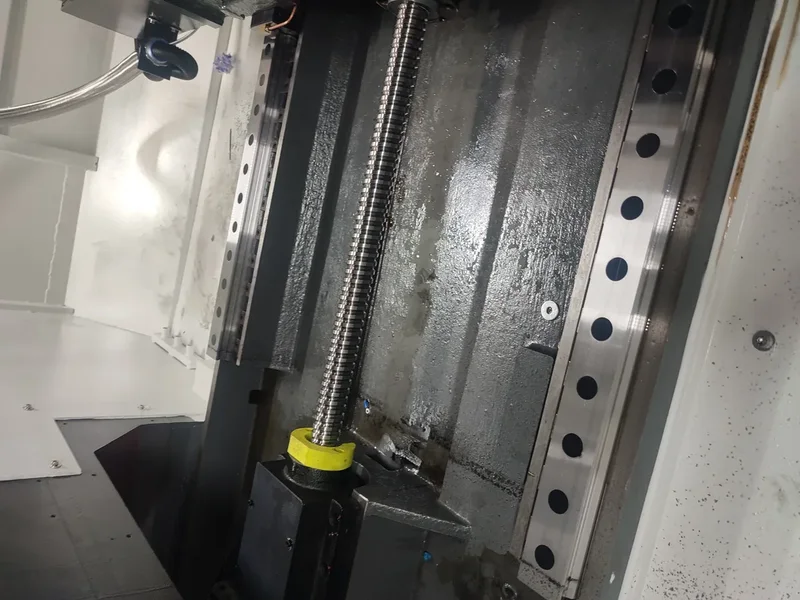
Start with the structure. A wide, heavy casting with box ways suits heavy cutting and gives the damping that keeps a large face flat. Linear guideways are faster to position and better for cycles dominated by many short moves. On a horizontal machine the column carries the head out over the part, so the column's stiffness and the way the head is supported decide how the machine behaves at full extension.
Then the pallet and the rotary table. Ask about the indexing accuracy and repeatability of the table, because every face of every part comes off it. Ask how the pallet is located and clamped, because a pallet that settles differently when it is swapped puts every job on that pallet out of position. And ask about the load rating of both, since the part and the fixture together are what they carry.
Then the chip and coolant system, which is where a horizontal machine is easy to get wrong. Chips fall onto the machine rather than the part, so the conveyor, the wash-down and the tank have to match the material: cast iron makes fine, heavy chip that settles, aluminium makes light chip that floats, and steel makes stringy chip that wraps. Ask what the machine is set up for, not what the catalogue offers.
Finally, the spindle and the tooling. A horizontal machining center range usually steps through spindle sizes and tool magazine capacities, and the step you take decides the largest tool the machine can carry and how many tools the program can hold between changes. It is worth matching the magazine to the part, not to the budget.
Questions to Ask Any Machine Supplier
Most of what separates suppliers shows up before the machine arrives, in how they answer questions you did not think to ask.
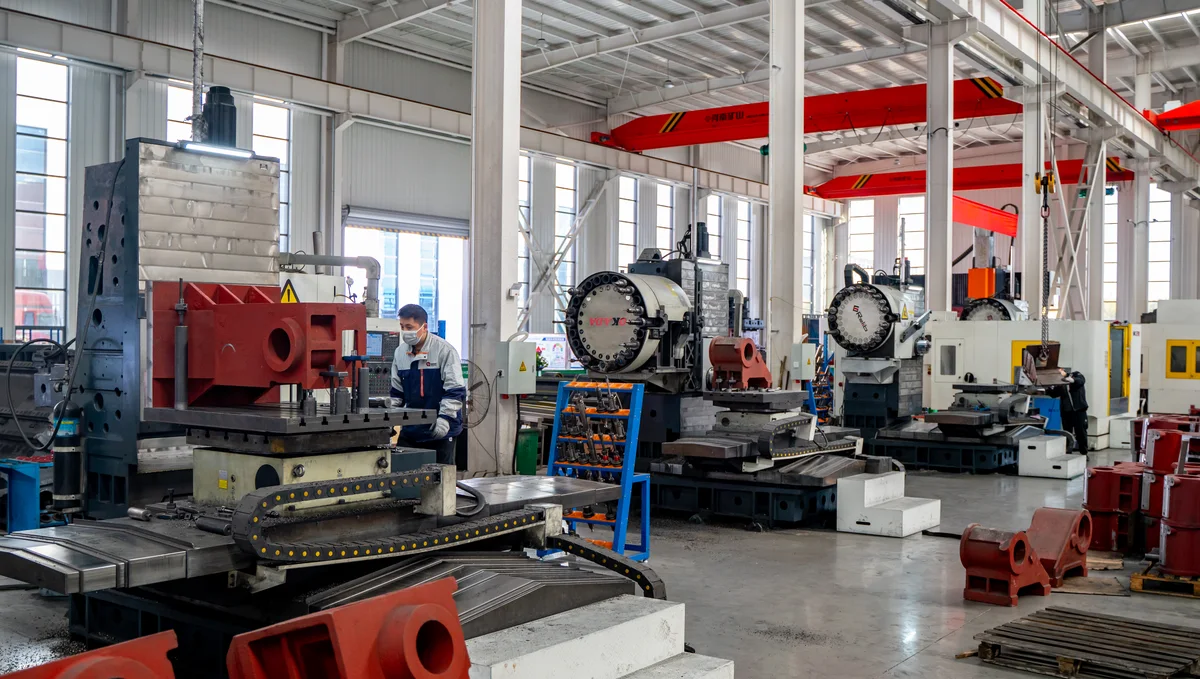
Ask which castings are made in their own plant and which are bought in. Ask how the bed or the column is aged and for how long. Ask what the geometric checks are at the end of assembly, and whether the test report comes with the machine. Ask which structural parts are hand-scraped or finish-ground rather than simply machined. Ask what the standard acceptance test covers, and what the buyer is expected to check on arrival.
Then ask about what happens after delivery: what spare parts are stocked, what the response time is, and who does the commissioning. A machine is a twenty-year purchase, and the supplier's answers to those questions are worth more than a discount.
Handemo builds the range in Tengzhou, with the castings and the assembly in the same plant, and the machines are checked on the finished article before shipment. The companion piece in this series is the one-page version of this comparison.
Frequently Asked Questions
What is the difference between a VMC and an HMC?
The spindle orientation. A VMC has the tool coming down from above onto a part on a horizontal table, which suits flat work and one face at a time. An HMC has the tool coming in from the side, with the part on an indexing table, which lets several faces be machined in one setup and lets chips fall clear of the cut.
Which is better for a job shop?
For a shop running a wide mix of parts at low volume, a VMC. It is cheaper, faster to set up, easier to program and covers most flat and single-face work. An HMC is the better machine once the parts repeat and carry work on three or four sides.
When is a horizontal machining center worth the extra cost?
When handling time is a large share of the cost per part and the part has features on several faces. In that case the pallet system and the rotary table remove most of the handling between operations, and the part comes off in fewer setups. If neither condition holds, the extra cost is hard to recover.
What is a multi-pallet horizontal machining center?
An HMC whose pallet pool holds several pallets, so parts can be loaded and unloaded away from the spindle while the machine keeps cutting. It is used where one operator runs several machines, or where long unattended cutting periods are wanted, and it turns the machine's non-cutting time into loading time that happens in parallel.
Can a VMC machine several faces of a part?
Yes, with a fourth axis or an indexer, and for lower volumes that is often the cheaper route. What a VMC cannot do is present three or four faces without giving up the spindle, where an HMC indexes the part and keeps cutting. The choice is about volume and about how much re-clamping errors the part can tolerate.
What should I check before buying a horizontal machining center?
The structure and the guideways, the accuracy and repeatability of the rotary table, how the pallets are located and clamped, the load rating of the pallet and table, the chip and coolant arrangement for your material, and the spindle size and tool magazine capacity. Then the supplier questions: what is made in-house, how the castings are aged, and what the acceptance test covers.
Talk to Us About Your Parts
Tell us the part, how many faces carry work, and how many you make a month. We will tell you honestly whether the work belongs on a vertical machine, a horizontal machine, or one of each, and which model in the range fits. Contact Handemo CNC | Email: sales1@handemocnc.com | WhatsApp: +86 135 6320 3038
Related reading: Horizontal Machining Centers and Vertical Machining Centers set out the machines, and Machine Comparisons covers the rest of the selection questions we get.