
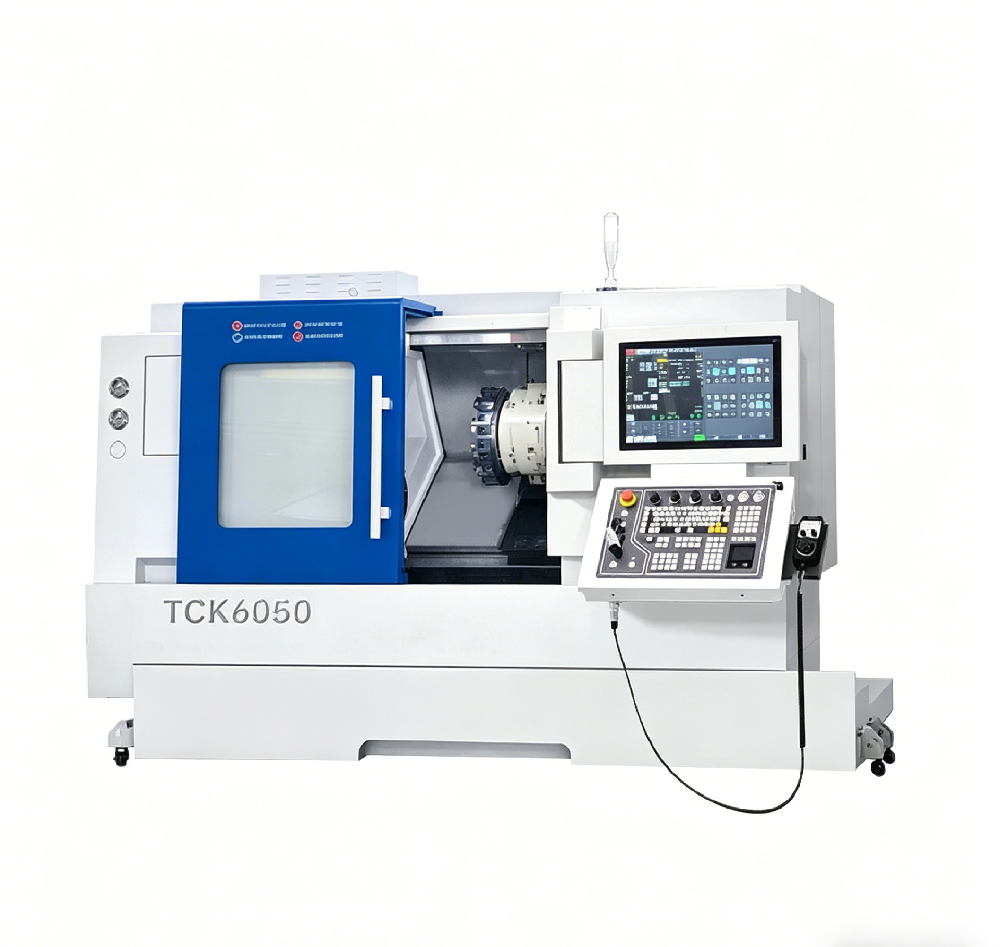
CNC Slant Bed Lathes
Product List
Download Catalog
CNC Slant Bed Lathes
General-Purpose CNC Slant Bed Lathes
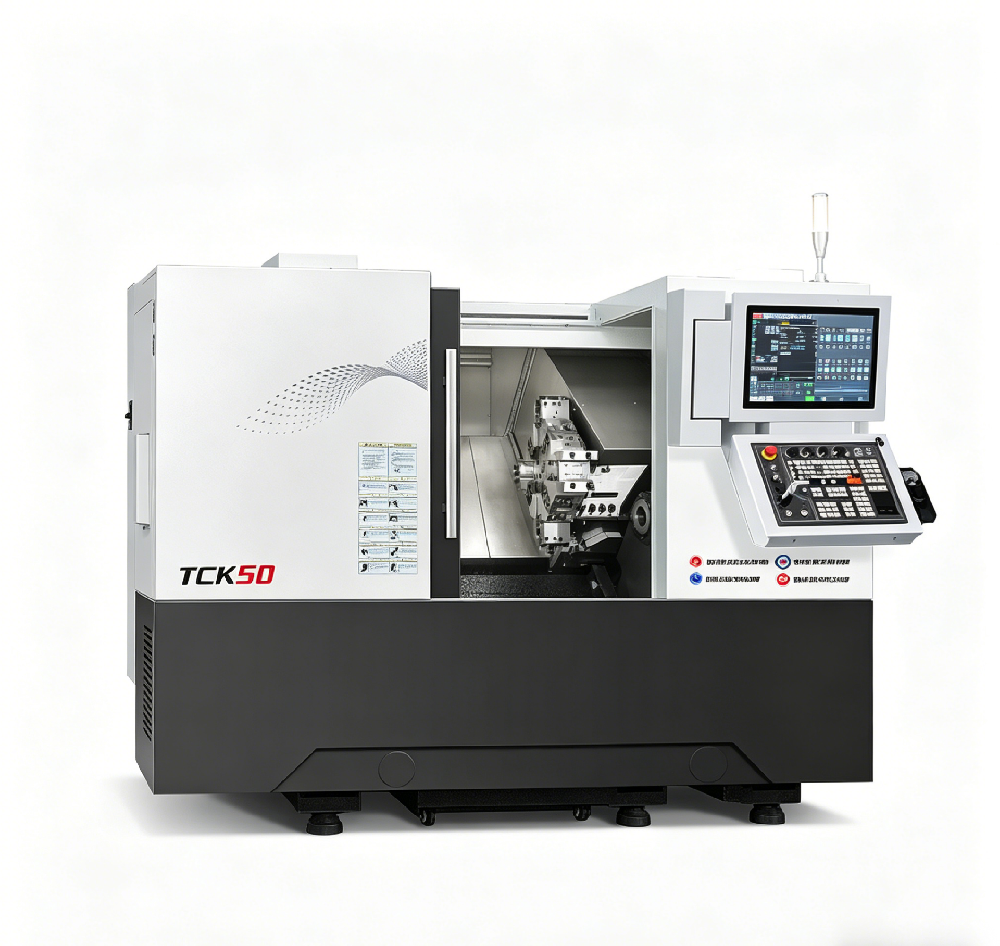
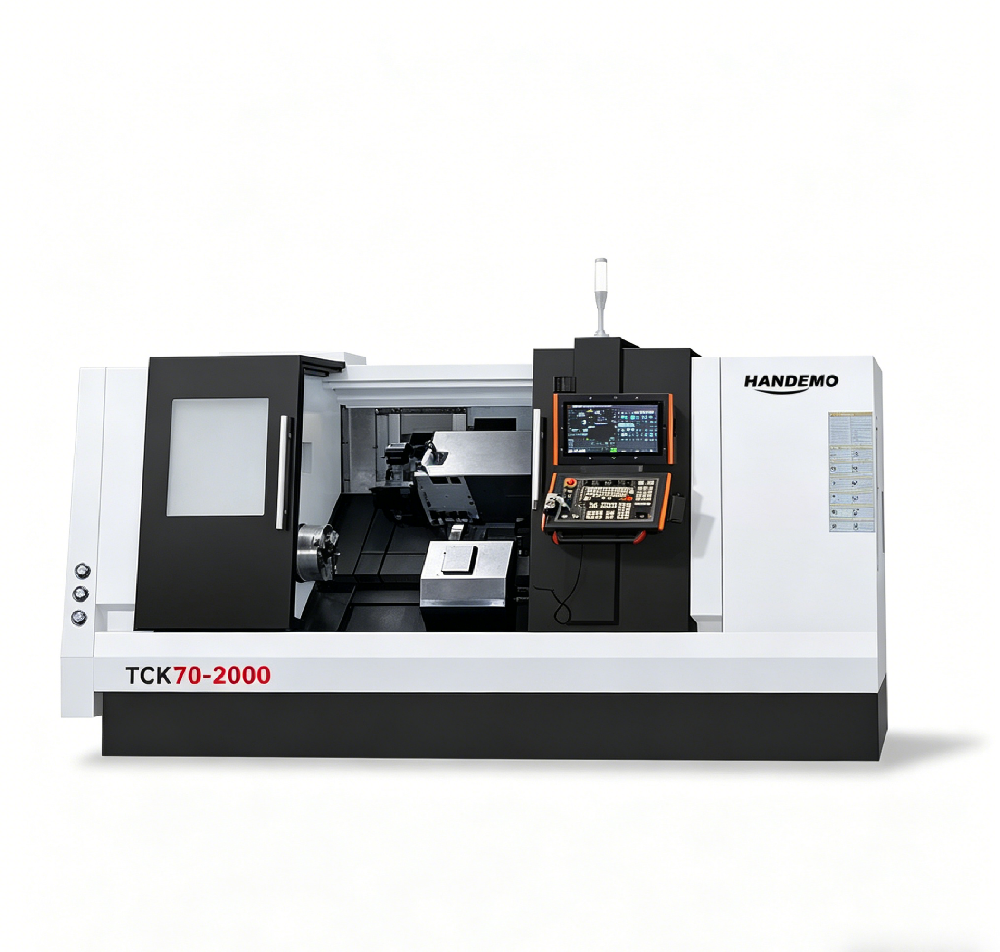
Heavy-Duty CNC Slant Bed Lathes
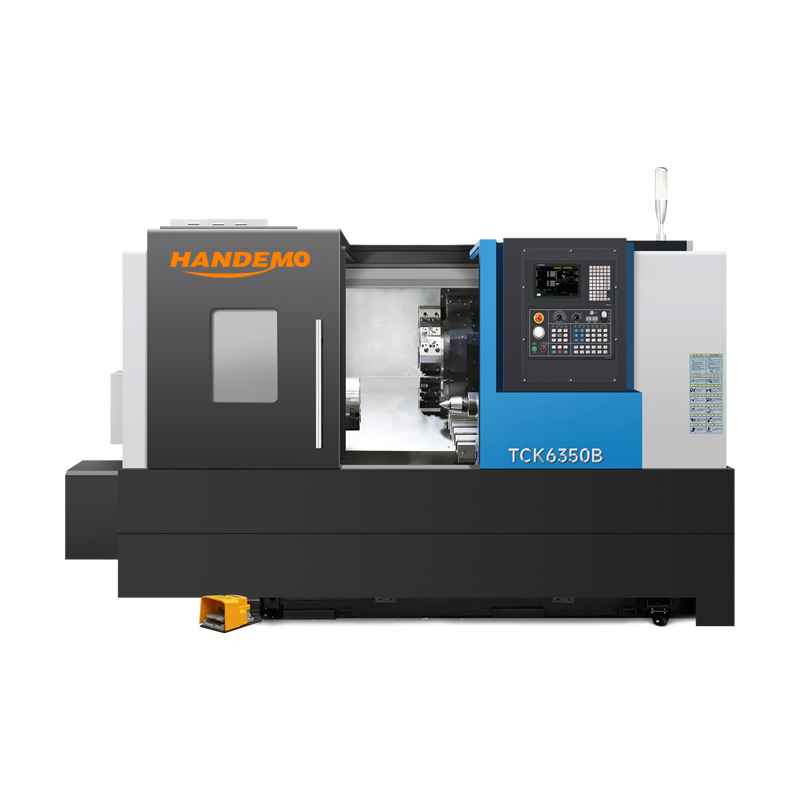
TCK6350B Heavy-Duty Industrial Model
View Details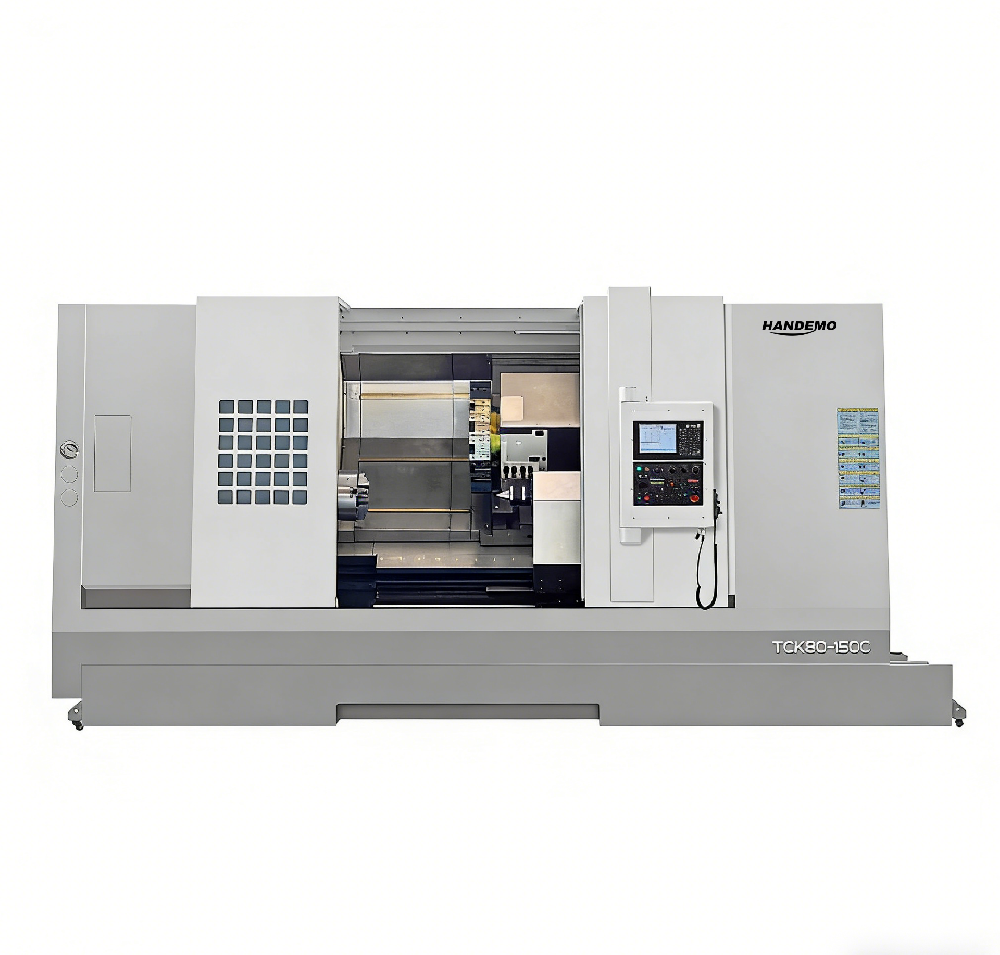
TCK80B-1500 Heavy-Duty Industrial Model
View DetailsHigh-Precision CNC Slant Bed Lathes
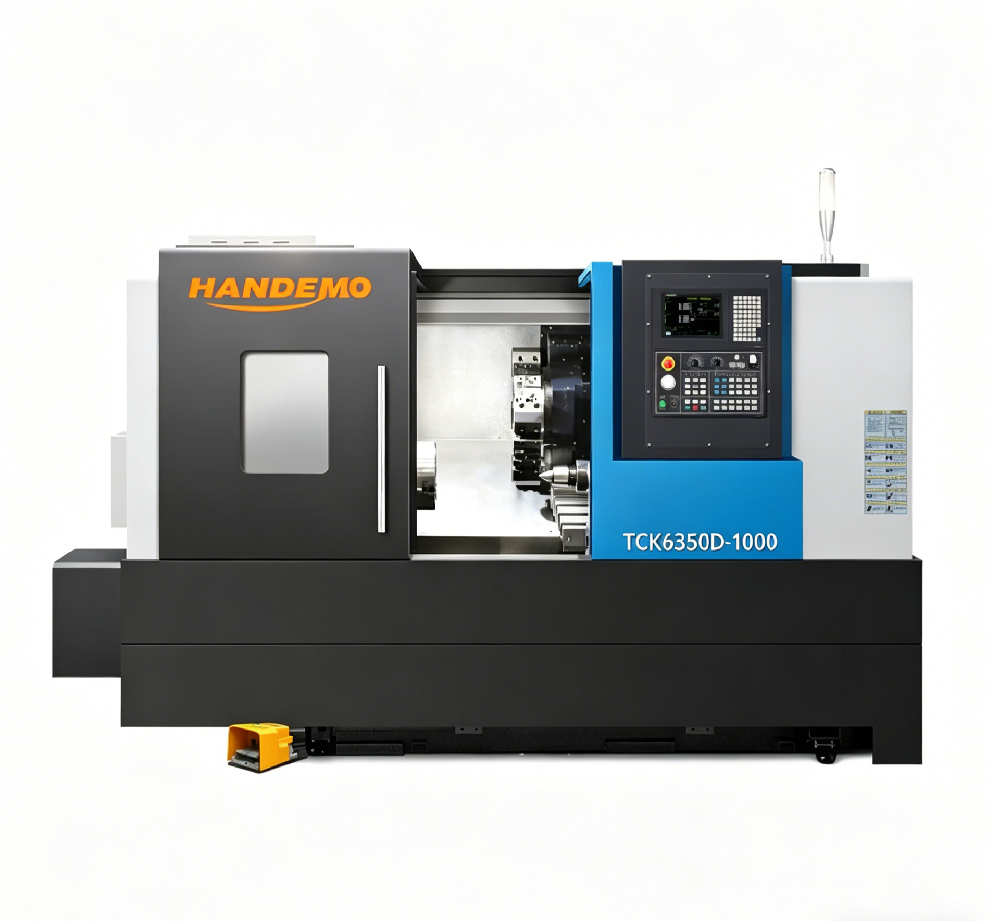
TCK6350D CNC Slant Bed Lathe
View Details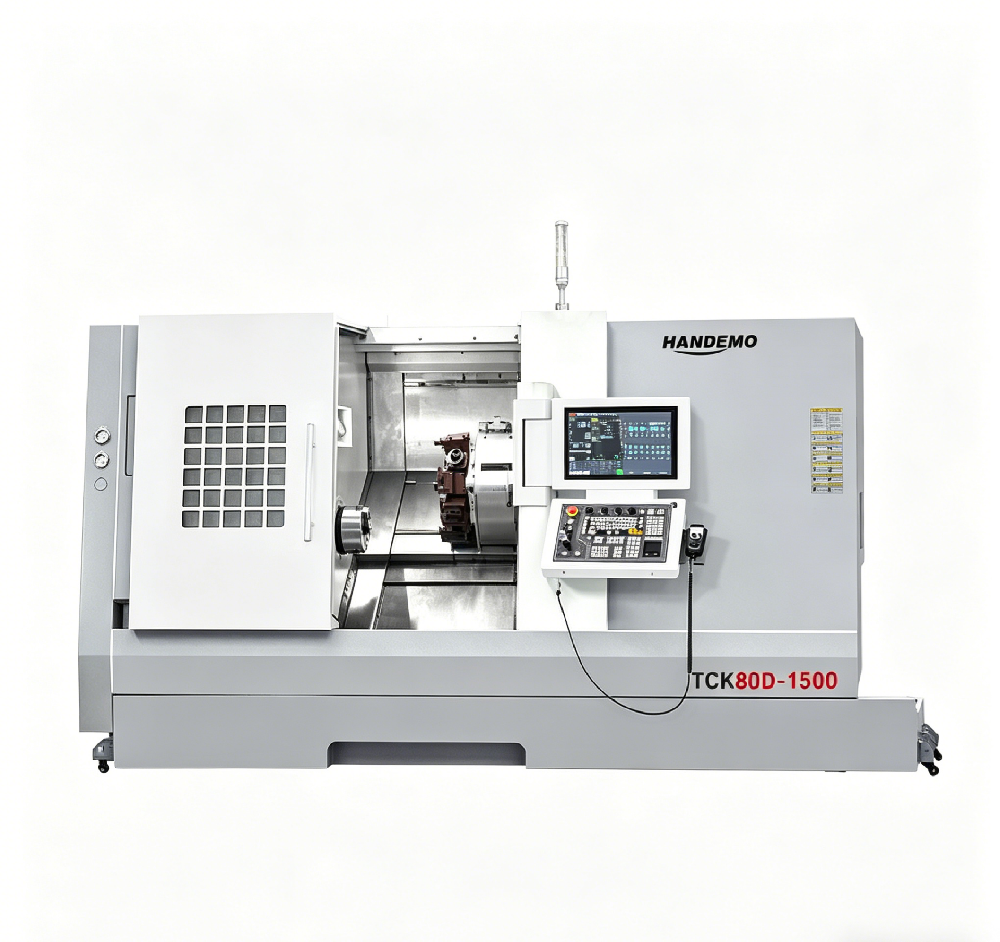
TCK80D-1500 CNC Slant Bed Lathe
View Details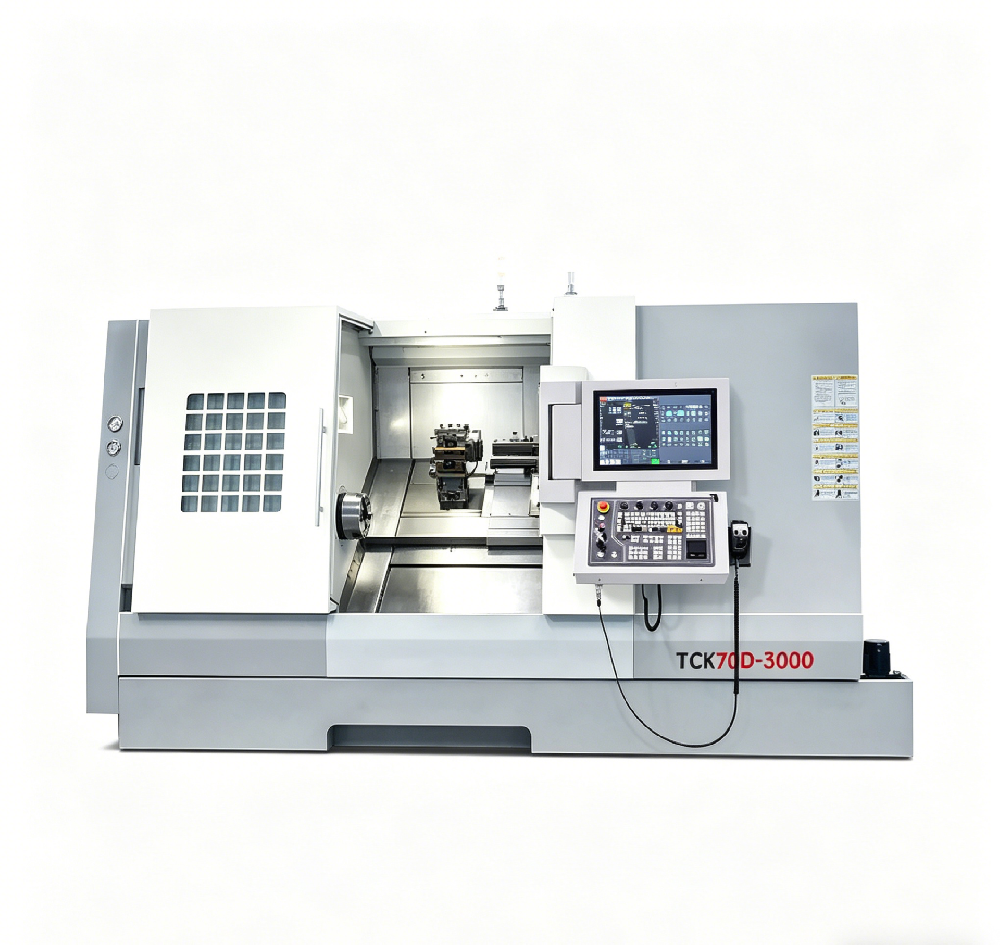
TCK70D CNC Slant Bed Lathe
View Details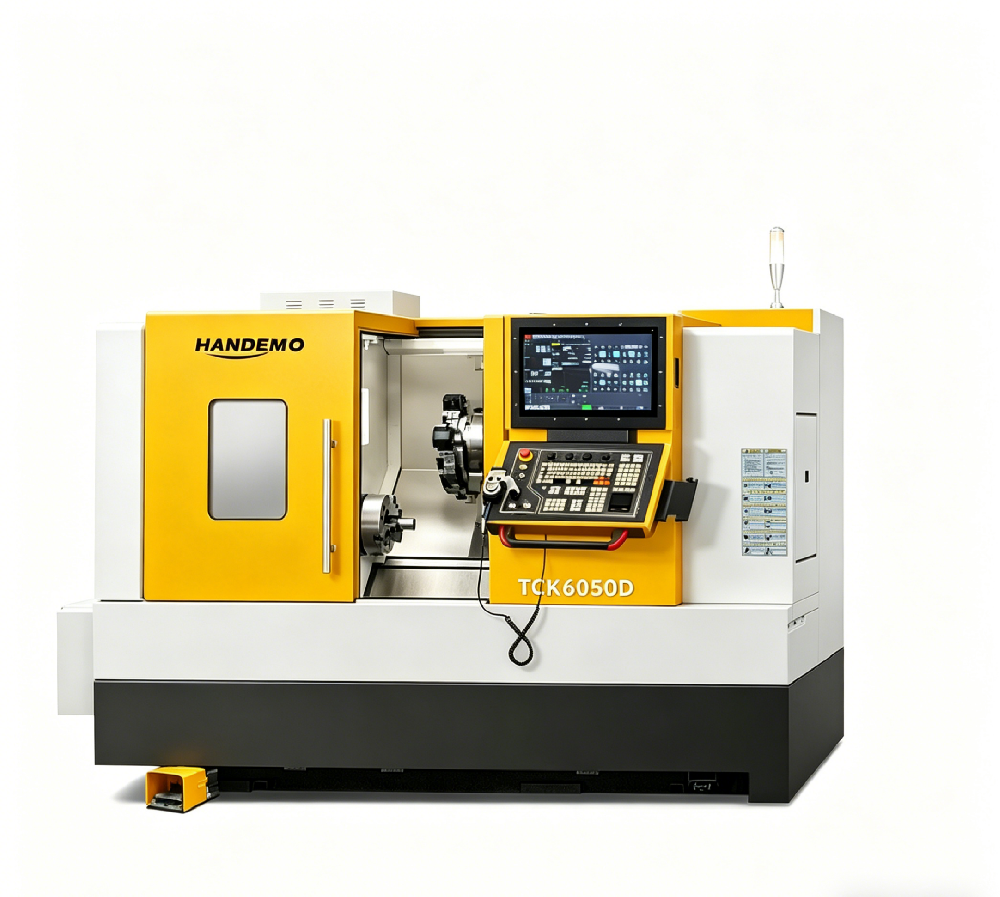
TCK6050D High-End Precision Model
View DetailsChoose the Right CNC Slant Bed Lathe for Your Parts
A CNC slant bed lathe provides a rigid turning platform and allows chips and coolant to move away from the cutting area efficiently. It is widely used for shafts, sleeves, flanges, hydraulic parts, bearing components and other round workpieces that require stable, repeatable production.
Handemo organizes its CNC slant bed lathes into three practical groups: general-purpose machines for everyday production, heavy-duty machines for larger or tougher workpieces, and high-precision machines for demanding dimensional and surface-finish requirements. This structure helps buyers compare machines by production goal before reviewing individual specifications.
How to Select a CNC Slant Bed Lathe
Start with the maximum part diameter and length, raw-material size, spindle bore or bar capacity, material, tolerance and surface-finish target. Then consider spindle speed and torque, chuck size, turret and tooling requirements, live-tool or axis options, batch size and whether bar feeding, part catching or robotic automation may be required.
Send Handemo your part drawing, material, annual volume and current process. Our team can help narrow the range and recommend the models worth evaluating in detail.
Three Machine Categories
General-Purpose High-Efficiency Models
For a broad mix of common turned parts and production environments where cycle time, flexibility and straightforward operation must stay balanced.
Heavy-Duty Industrial Models
For larger workpieces, tougher materials and cutting conditions that place greater emphasis on rigidity, torque and process stability.
High-Precision Models
For close-tolerance components where dimensional consistency, surface finish and repeatability are the main buying priorities.
Frequently Asked Questions
What information is needed for machine selection?
A part drawing, material, blank size, tolerance, surface finish, tooling plan and production target provide the best starting point.
Should I choose a general-purpose or heavy-duty lathe?
Choose by the most demanding workpiece and cutting condition, not only by maximum diameter. Material, depth of cut, cycle time and spindle-torque needs are equally important.