
Horizontal Machining Centers
Product List
Download Catalog
Horizontal Machining Centers
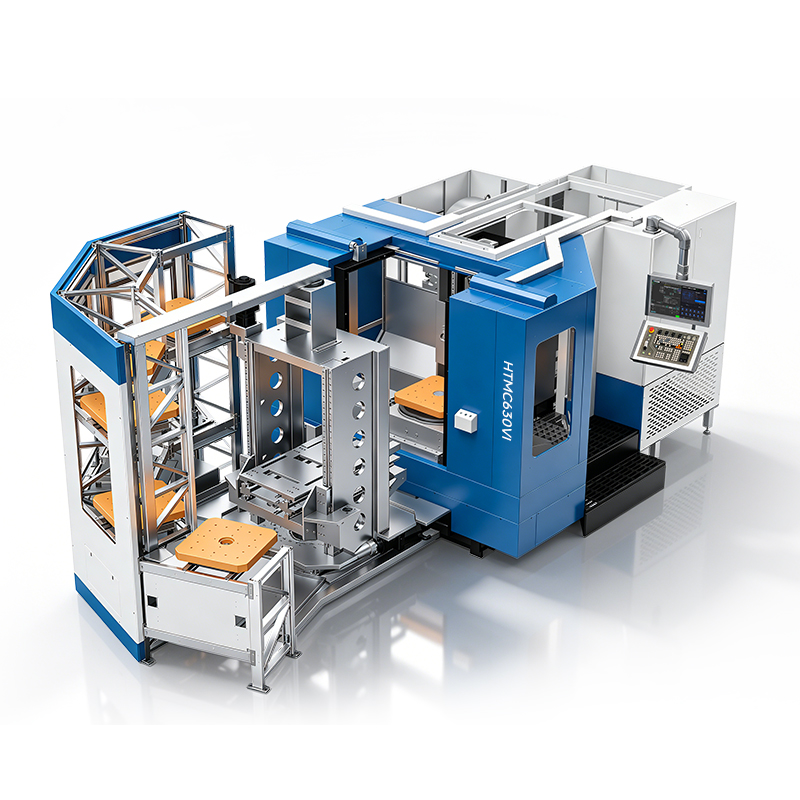
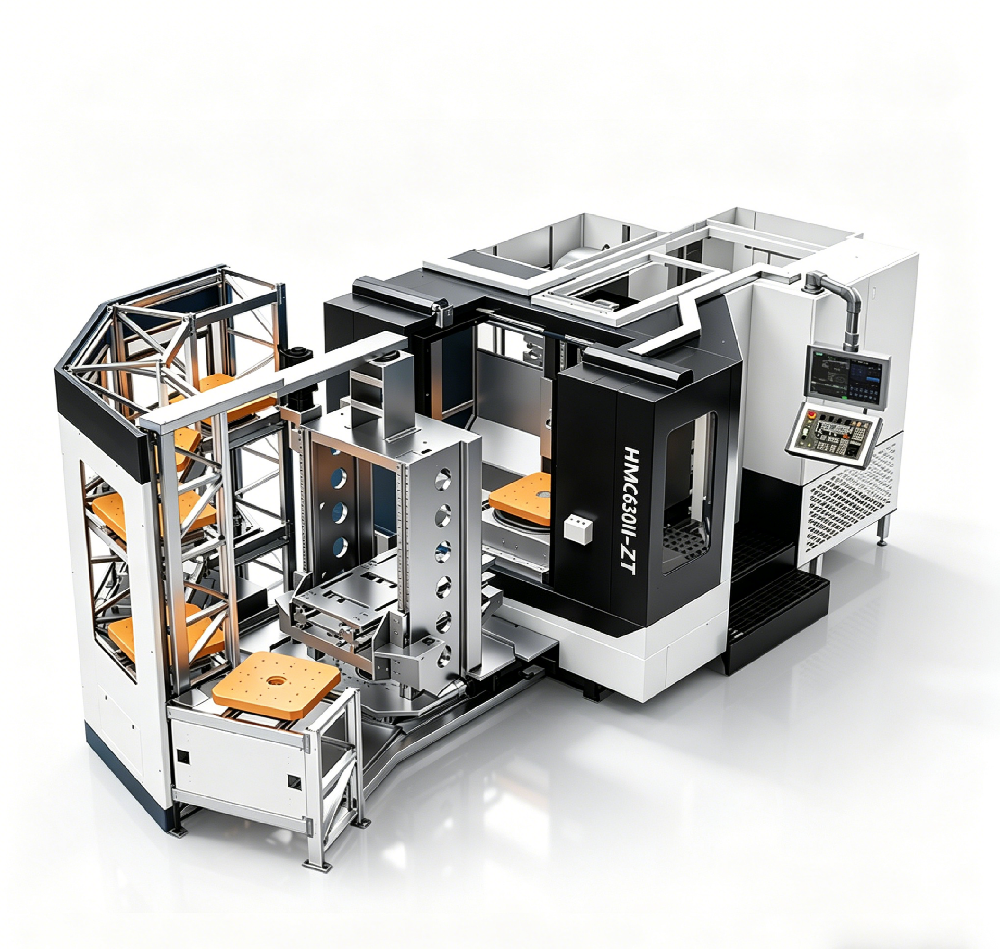
What Is a Horizontal Machining Center?
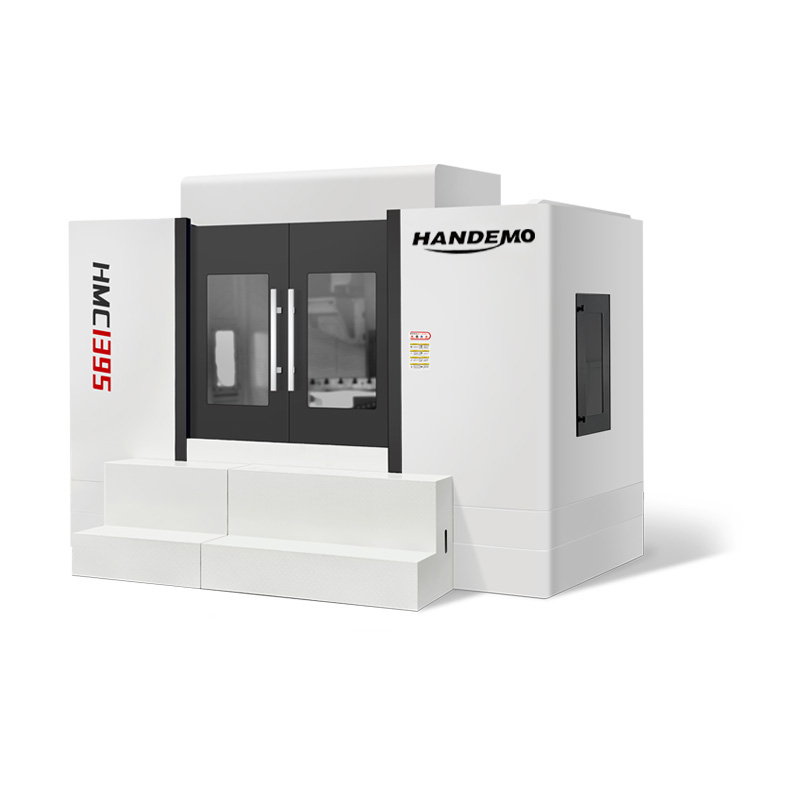
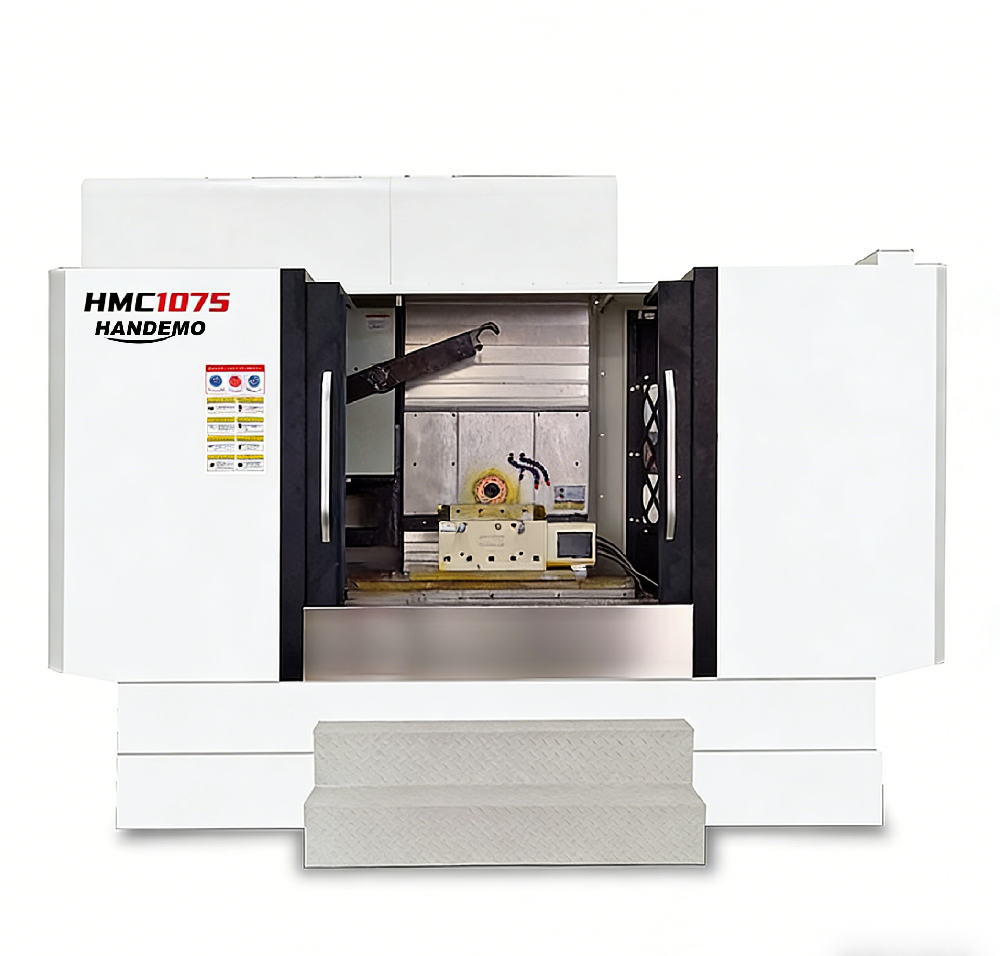
A horizontal machining center (HMC) is a CNC machining center whose spindle sits parallel to the floor instead of pointing down. That single design choice changes almost everything about how the machine behaves. Chips fall away from the cutting zone instead of piling up around the tool. The workpiece mounts on a vertical face, so four sides of a box-type part can be reached without re-clamping. And because the column and spindle sit on a wide, low bed, the structure resists cutting force differently from a vertical machine.
In practice, an HMC machine is chosen when a part has to be machined on several faces, when a lot of material has to come off, or when the same part runs again and again and setup time starts to dominate the cost. It is not a universal machine. It is a machine for prismatic work where access, chip flow and consistency all point the same direction.
That choice, taken part by part rather than machine by machine, is set out in multi-face parts on a horizontal machining center — the three drawing numbers that settle it, and where a vertical machine runs out.
Why Chip Evacuation Changes the Economics
Chip evacuation is the quiet reason HMCs hold their accuracy on heavy cuts. On a vertical machining center, chips land on the part and in the fixture, and the operator has to stop, blow them out and start again. On a horizontal machine, gravity does part of that work: chips fall clear of the cutting zone as they are produced, coolant washes the pocket, and the tool returns to the next feature without dragging swarf across a finished surface.
That difference compounds over a production run. Fewer interruptions per cycle, less manual cleaning, less scrap from chips caught between the part and the fixture, and a more stable thermal state because the cutting zone stays clear. For housings, valve bodies, pump casings and engine components, this is where the real saving sits — not in spindle speed on paper, but in how many clean cycles the machine completes in a shift.
What “Chip Evacuation” Covers on an HMC
On a horizontal machine the phrase covers four systems that have to work as one: the gravity fall that takes the chip out of the cutting zone, the coolant flow that flushes the pocket and the fixture, the conveyor that lifts chips out of the machine, and the separation stage that keeps fines out of the coolant tank. A weakness in any of the four produces the same three symptoms — chips re-cut under the tool, surface finish drifting through the shift, and coolant temperature climbing because the tank is carrying swarf instead of water. That is why evacuation should be specified as a system with a target removal rate attached, not ordered as four separate options.
Where Chips Decide Your Cycle Time
Three locations account for most of the lost time on prismatic work, and each one fails in a different way:
- The falling zone. Chips leaving the cut have to clear the pallet and the fixture before the next pass. If the enclosure geometry or the coolant pattern lets them settle on the fixture face, every subsequent clamp traps a chip and every finished face carries a witness mark. This is the failure mode that shows up first on tall fixtures and on parts with deep pockets facing upward.
- The fixture and locating faces. A 0.1 mm chip under a locating pad is a 0.1 mm position error on every part in the batch. Horizontal machines avoid most of this by falling chips away from the part, but only if the fixture is designed with drain paths instead of flat pockets that hold coolant and fines.
- Blind bores and cross passages. Bores that cannot drain — spool bores, manifold cross-drillings, long hydraulic bodies — are cleared by coolant pressure and tool retraction strategy, not by gravity. This is where deep-hole boring and milling machines differ from a general-purpose HMC: the coolant circuit and the spindle rating are specified for continuous through-tool flow rather than occasional pecking.
Chip Conveyor and Coolant Options That Set the Limit
The conveyor is the part of the evacuation system that actually sets the ceiling on removal rate, because it has to move loose chip volume, not the compact volume the cutter produced. Bulk factor for milling chips is typically 8–12 times the solid volume, so a conveyor that looks generously sized against spindle power can still be the bottleneck on cast iron roughing.
| Evacuation option | Best for | Watch out for |
|---|---|---|
| Hinge-belt / scraper conveyor | Mixed chip shapes from steel and cast iron, continuous production, heavy roughing | Long stringy chips can birdnest at the incline; needs a chip breaker in the programme |
| Screw / auger conveyor | Fine chips from aluminium and finishing passes, compact machines | Poor with bundled chips, and abrasive on cast iron fines |
| Magnetic conveyor | Ferrous fines and sludge that gravity leaves behind | No effect on aluminium, stainless or titanium |
| Drum / centrifugal separator | Fines carryover control, clean coolant for through-spindle supply | Extra floor space and a maintenance item that has to be scheduled |
| Through-spindle coolant | Blind bores, cross passages, deep holes where gravity cannot help | Check the spindle is rated for the pressure continuously, not intermittently |
Enclosure wash-down and pallet-zone nozzles belong in the same specification. On a machine running unattended or in a lights-out cell, the wash-down cycle is what keeps the pallet changer from carrying chips onto the next fixture; on a manually loaded machine it is the difference between a wipe-down at lunchtime and a wipe-down every hour. If the cell is going to run with a gantry loader or on a multi-station arrangement, size the conveyor and the chip bin for the whole unattended window, not for one cycle.
Sizing Evacuation to Your Removal Rate
The calculation is short and worth doing before the quotation stage. Take the roughest cut in your process and work out the material removal rate in cubic centimetres per minute, then multiply by the bulk factor to get the loose chip volume the conveyor has to clear.
Worked example: a cast iron housing roughed with an 80 mm face mill at 3 mm depth of cut, 60 mm width of cut and 900 mm/min feed gives 3 × 60 × 900 = 162,000 mm³/min, or 162 cm³/min of solid chip. At a bulk factor of 8–12 that is roughly 1.3–1.9 litres of loose chip per minute at 100% cutting time. Allowing 60–70% actual cutting time across a 7.5 hour shift, the machine produces something in the order of 350–600 litres of loose chip per shift. A conveyor rated at three to five times the peak minute rate covers normal variation; a chip bin sized below the shift figure guarantees an interruption the cycle time study never accounted for.
The same arithmetic explains why finishing passes are not the constraint. A finishing cut removing a fraction of that volume never loads the conveyor, so a machine specified around finishing demonstrations tells you almost nothing about whether it will keep up with your roughing.
What to Ask a China HMC Manufacturer Before You Order
China now supplies a large share of the horizontal machining centers installed in Europe, the Middle East, Southeast Asia and Latin America, and the specification gap between suppliers is mostly in exactly this area — the parts of the machine that do not appear on the capacity plate. A supplier claiming superior chip evacuation should be able to answer these without going back to the factory:
- Conveyor type, rated loose-chip throughput and discharge height, plus the chip bin volume that ships with the machine.
- Coolant tank volume and how many separation stages sit between the tank and the through-spindle supply.
- Through-spindle coolant pressure and flow, and whether the spindle is rated for that pressure continuously.
- Wash-down coverage: which zones of the enclosure are sprayed, and whether the pallet changer area is included.
- Bed and cover geometry — where chips are guided, and which surfaces they are guided away from.
- Wear parts for the conveyor (belt, chain, scraper) and their lead time, because a stopped conveyor stops the machine.
- Cycle data on a roughing operation in your material, not a finishing demonstration in aluminium.
Send the drawing with the faces to be machined, the material and the target cycle time, and the evacuation specification can be sized against your removal rate instead of against a catalogue page. That is also the point at which a pump casing run in two setups or a bearing housing becomes a comparable reference rather than a claim.
Handemo Horizontal Machining Center Families
Handemo builds horizontal machining centers in four families, each aimed at a different balance of size, access and throughput. Choosing between them is mostly a matter of part envelope, weight and how many setups you want to eliminate.
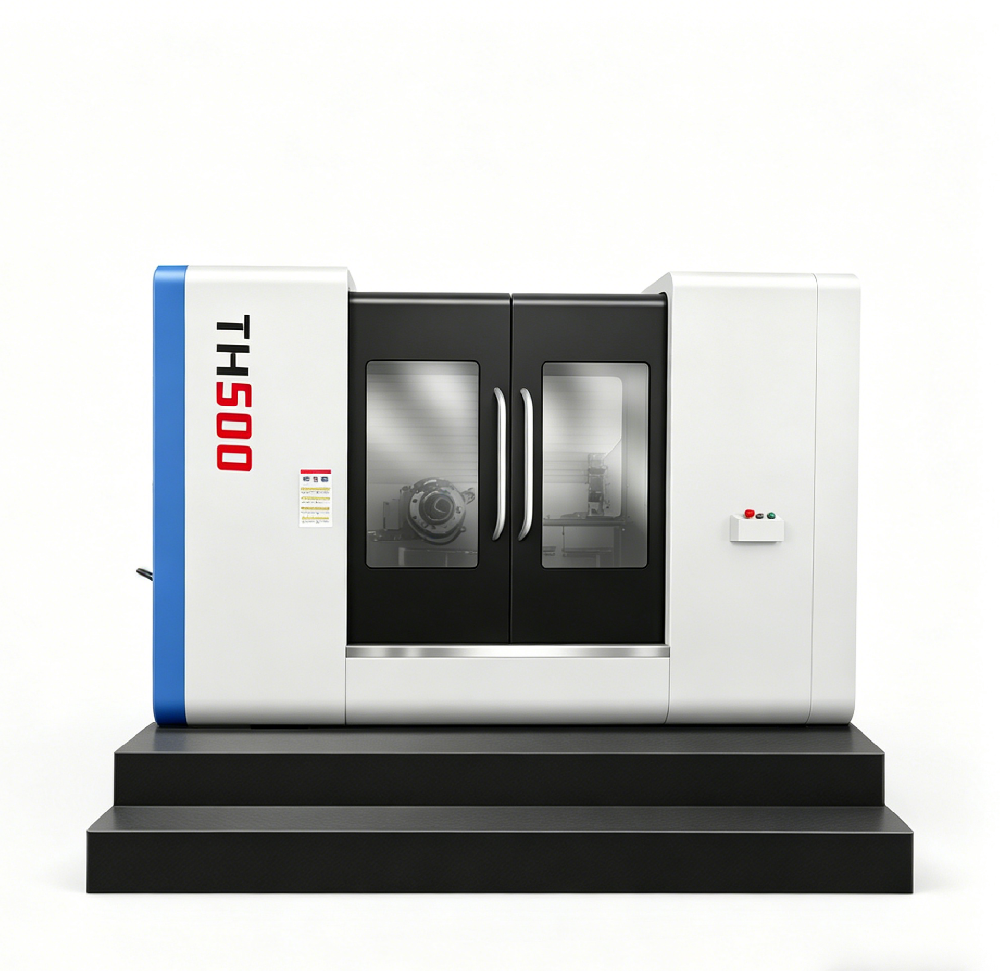
Compact boring and milling machines suit smaller box parts and multi-face work where floor space is limited and the part does not justify a full-size HMC. They keep the horizontal spindle advantage in a tighter footprint.
High-speed T-type horizontal machining centers are the general-purpose core of the range, and where most heavy-duty HMC work lands. The T-type bed arrangement gives a rigid base for larger housings and structural parts, with travel sized for medium and large workpieces and spindle options that cover both steel and cast iron.
Deep-hole boring and milling machines are intended for work that combines long internal bores with surrounding milling, drilling and facing — mold components, long hydraulic bodies and machinery parts where the bore and the surrounding faces have to stay aligned to each other.
Multi-station horizontal machining centers are built for production strategy rather than single-part capability. Several stations or pallets let you load one part while another is cutting, which is how a multi-pallet HMC reaches high utilization without adding operators.
Applications That Fit an HMC
Horizontal machining centers earn their cost on parts that are box-like, heavy, or need faces machined from more than one direction. Typical work includes:
- Automotive engine and transmission components — cylinder blocks, housings, covers, bearing caps
- Hydraulic and pneumatic parts — valve bodies, manifolds, pump casings, spool bores
- Pump and valve bodies where intersecting passages must line up with sealing faces
- Thin-wall and deep-pocket housings — where wall deflection, not the workpiece size, decides the finishing pass
- Heavy machinery and construction equipment structural parts
- Aerospace structural components and general engineering housings
- Machine tool bases, columns and other large prismatic castings
The common thread is multi-face access. If a part needs four sides machined and the tolerance between those faces decides whether it assembles, an HMC usually wins because the faces are produced in one setup on one machine, not across three operations on three machines.
HMC vs VMC vs Horizontal Boring Mill
These three machine types overlap in appearance and are often confused in early sourcing conversations. They are not interchangeable.
A vertical machining center holds the part on a horizontal table and brings the tool down from above. It is more flexible for flat work, easier to fixture for simple parts, and generally lower cost. For smaller parts, single-face work or job-shop variety, a VMC is usually the right answer. The trade-off is chip management and multi-face access.
A horizontal machining center holds the part on a vertical face and reaches it from the side. It handles heavier cuts, clears chips better, and reaches multiple faces in one setup. The trade-off is fixturing complexity, floor space and cost.
A horizontal boring mill is a different animal: it is built around boring long, deep, large-diameter holes with a traveling spindle or quill, often on very large weldments. If your work is dominated by long bores in big fabrications, a boring mill may fit better than an HMC. If your work is dominated by prismatic parts with many faces and moderate bore depth, the HMC is the more productive choice.
For a fuller comparison of the two machining center types, see our guide on VMC vs HMC selection.
How to Choose a Horizontal Machining Center
Machine selection goes wrong when it starts from the catalog instead of the part. Work through these in order:
1. Part envelope and weight. Measure the largest part you expect to run, not the average one, then add the fixture. The table and pallet have to carry fixture plus workpiece plus clamping margin. A machine sized exactly to today's part leaves no room for the next contract.
2. Travel versus table size. Table size alone tells you little. X, Y and Z travel decide whether the spindle can actually reach the far corner of the part, and whether you can drill and tap without repositioning. Check travel against your largest feature pattern, not just the part outline.
3. Number of faces per setup. Count how many faces need machining. Two faces may not justify an HMC. Four faces almost always do, because a single-setup process removes the stack-up error between operations.
4. Spindle taper and torque. BT40 covers a lot of general work with faster tool changes. BT50 gives more rigidity and torque for heavy cuts in steel and cast iron, at the cost of speed and tool cost. Match the taper to the material removal rate you actually need. The full taper comparison — torque, cutter diameter, tool cost and the spindle speed you give up — is in BT40 vs BT50 spindle: how to choose.
5. Tool capacity and change time. More tools means fewer manual interventions, but only if the magazine actually holds the tools your process needs. Count the tools in your longest cycle, not the average one.
6. Pallet automation. If load and unload time is a meaningful share of the cycle, a pallet changer or multi-station arrangement pays back quickly. If your parts run in long single cycles, it may not.
7. Accuracy and thermal stability. For bores and sealing faces, how the machine holds position across a shift matters more than rapid traverse speed. Ask how the machine holds those values across a shift, not just in a cold test.
What "High Speed" Means on a Horizontal Machining Center
Buyers search for a high speed horizontal machining center and then compare the wrong number. On an HMC the word speed covers four separate figures, and a machine that is fast in one is often ordinary in the others. Knowing which one your cycle actually spends time on is what turns a catalogue comparison into a machine choice; the figures below are the ones published on the individual Handemo model pages, not a range-wide claim.
Four speeds, and only one of them is the spindle
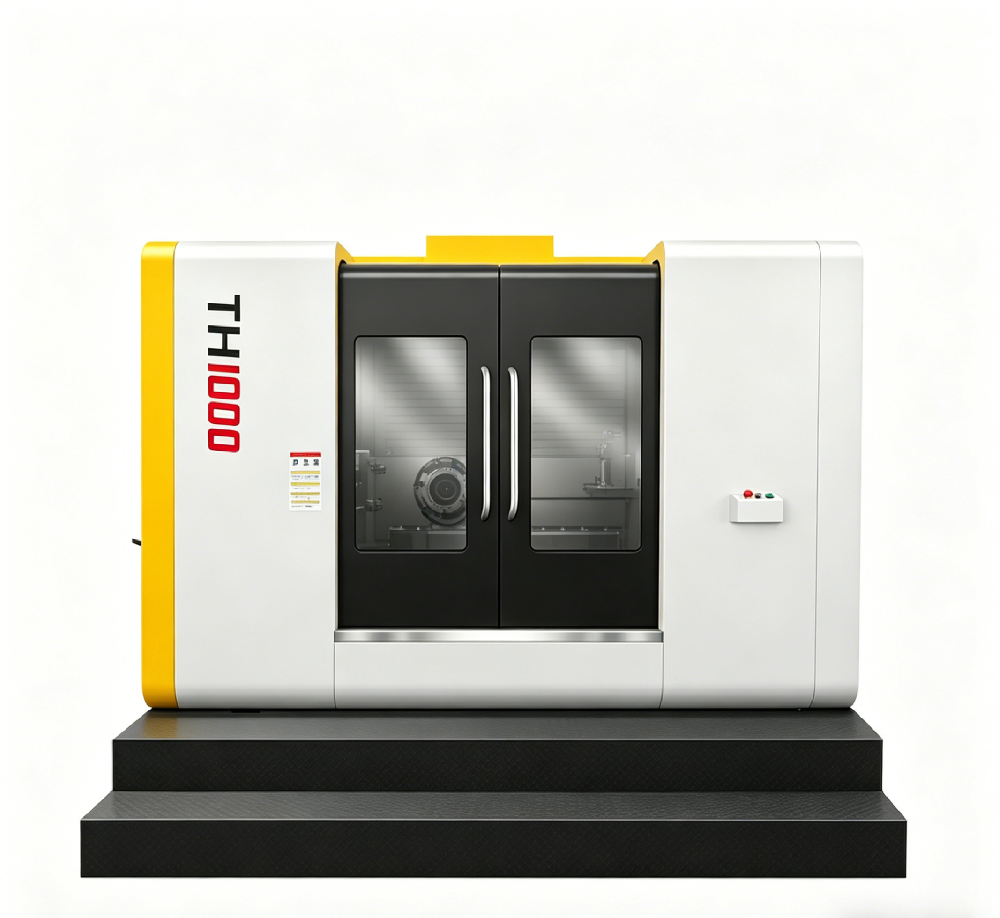
The spindle speed is the figure on the badge: 6,000 rpm on the BT50 heads used across the T-type and multi-station models, and the same 6,000 rpm on the TH1000. What that number buys you is surface speed at a given cutter diameter, so it sets the ceiling on small tools in aluminium and on finishing passes in steel. It does not set the cycle time on a cast iron housing, because that cycle is limited by how much material the face mill can take per pass, not by how fast the spindle can turn.
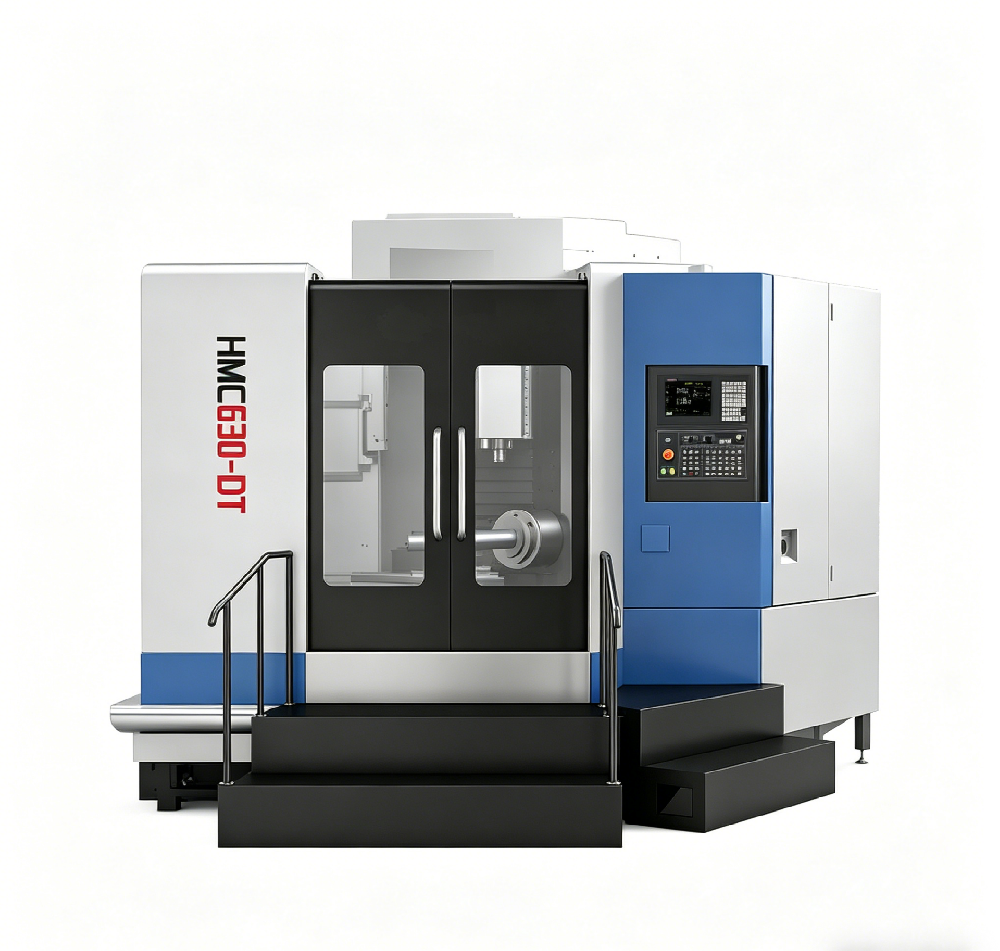
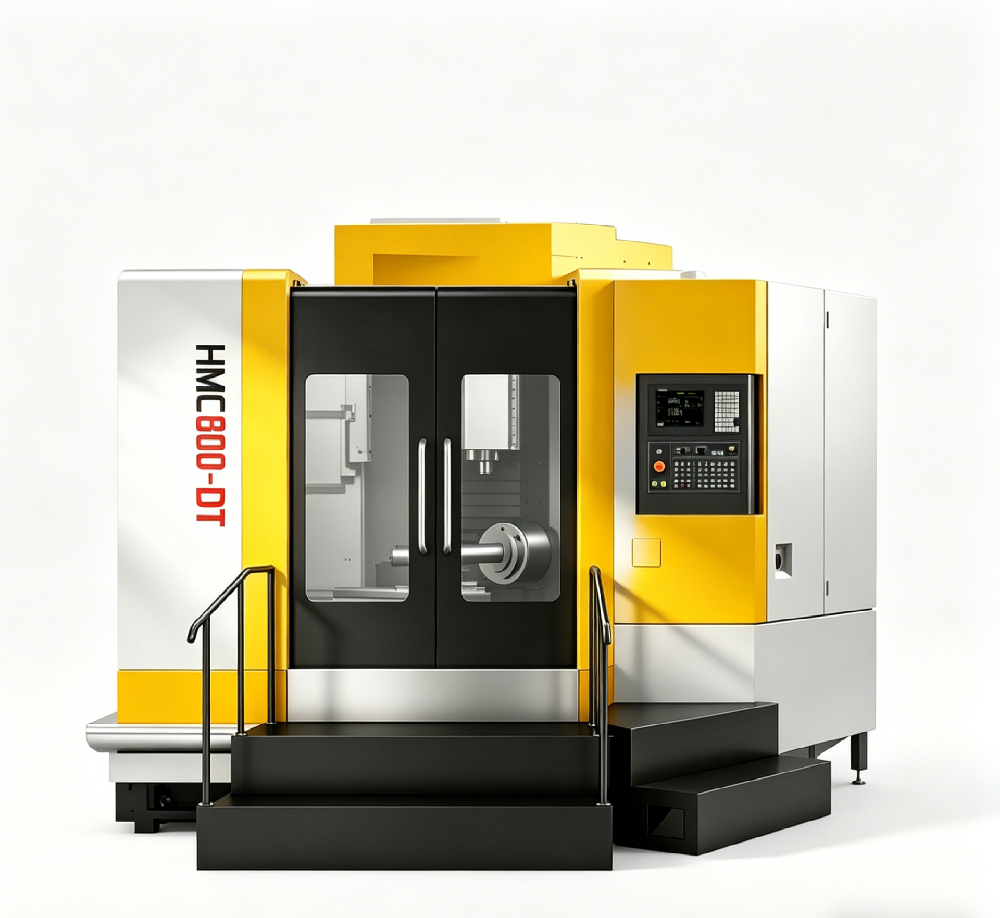
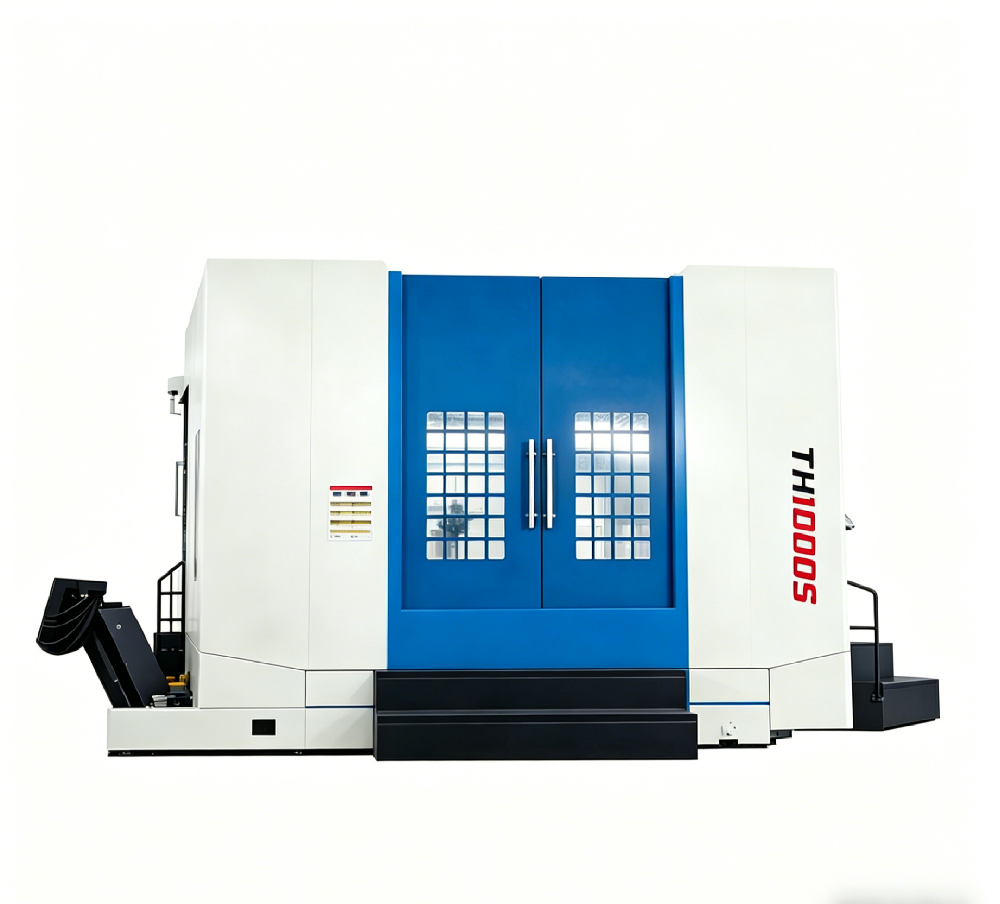
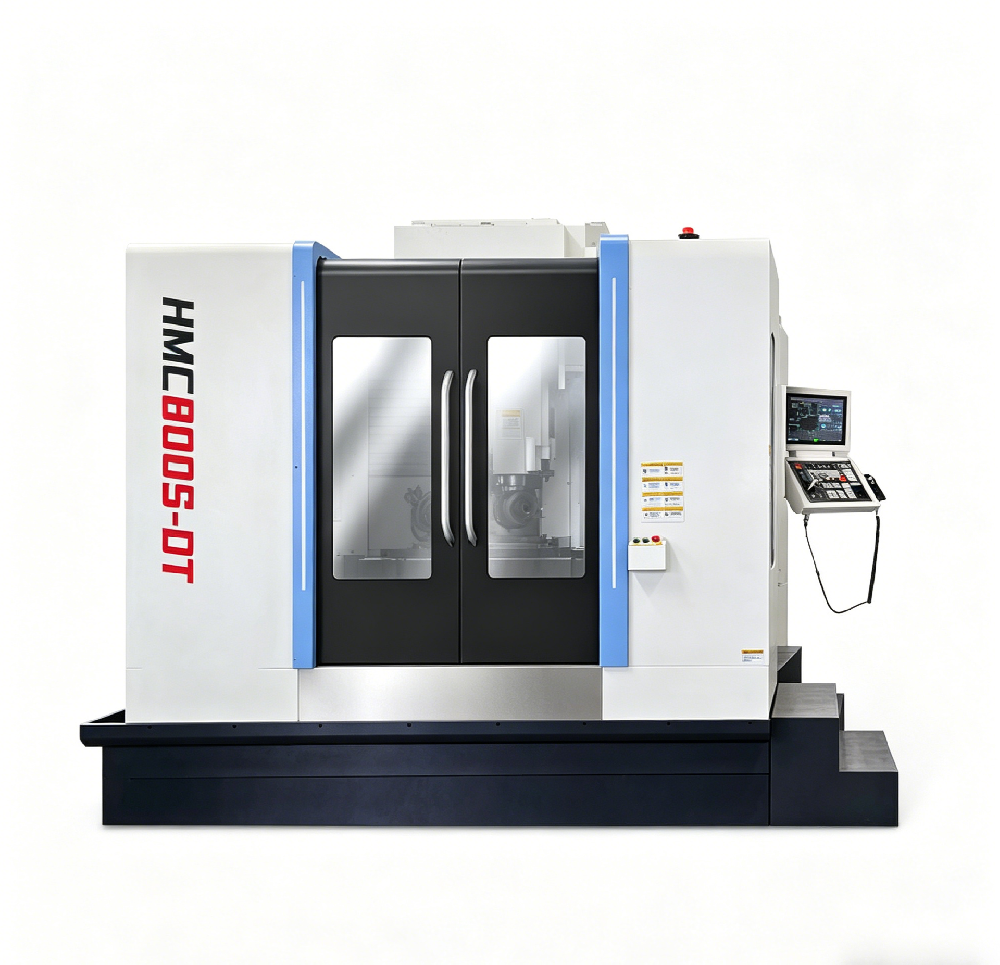
Rapid traverse is the second figure, and on this range it ranges from 12 to 24 m/min depending on the axis and the model. The TH500 runs 24 m/min in X and Z and 18 m/min in Y, which is the fastest on the list and follows from the smallest mass: a 7,200 kg machine with a 1,200 x 600 mm rectangular pallet. The HMC630-DT runs 18 m/min in X and 15 in Y and Z on 12,000 kg. The HMC800-DT runs 12 m/min on all three axes on 16,000 kg, and that is a deliberate mass decision rather than a limitation, because a plate carrying two 950 kg parts cannot be reversed at 24 m/min without the structure arguing back. Reading speed off a price list and assuming smaller is always faster will mislead you at both ends of the range.
Tool change and pallet change are the third and fourth. On a horizontal machine these two decide whether the non-cutting time is measured in seconds or in minutes, and they matter far more than rapid traverse on a cycle built from many small features. A pallet change on this class of machine runs in the low tens of seconds; a tombstone reload with a new part, a fixture check and a probe run is measured in minutes. That ratio, not the rapid figure, is what a second pallet is buying.
Where speed stops helping
Three situations absorb a fast machine without returning anything. Deep bores in a large casting are limited by the boring bar and the coolant pressure, not by the axis, which is why the deep-hole models in the range run 1,500 to 3,000 rpm rather than 6,000 and still finish the job faster than a general-purpose machine running at full spindle speed. Heavy interrupted cuts in cast iron are limited by the stiffness of the structure and the mass behind the tool, so the 12 m/min and 16,000 kg combination on the HMC800-DT will out-cut a lighter machine with faster axes on that specific job. And a cycle dominated by one long finishing pass is limited by the surface speed the insert allows, which the spindle reaches either way.
The useful question is therefore not "how fast is this HMC" but "which of the four figures does my cycle spend its time waiting on". A shop running a thousand small aluminium brackets is waiting on tool change and rapid. A shop roughing a two-tonne gearbox housing is waiting on the depth of cut the structure will take. A shop boring a 400 mm deep spool bore is waiting on coolant pressure and bar rigidity. Those three answers point at three different machines in the same catalogue, and the model comparison table below is arranged so the columns can be read against whichever answer you gave.
Handemo HMC Model Comparison
Use this quick comparison to match a machine to your workpiece. Figures from official Handemo specifications.
| Model | Type | Table (mm) | X/Y/Z Travel (mm) | Max Load (kg) | Spindle | Best For |
|---|---|---|---|---|---|---|
| TH500 | Compact Boring | 1200×600 | 1100/750/650 | 800 | BT40 | compact multi-face parts, valve bodies |
| HMC800-DT | High-Speed T-Type | 800×800 | 1300/1150/1000 | 2500 | BT50 | larger housings, heavy parts |
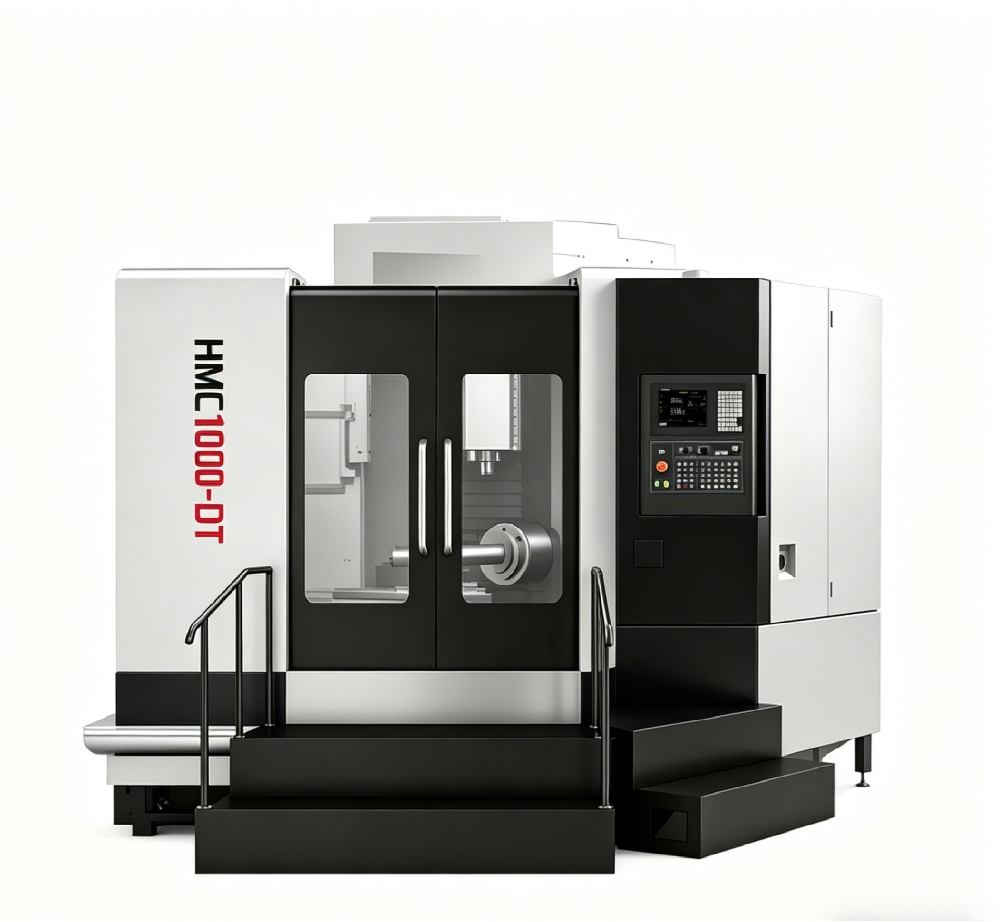
| HMC1000 | High-Speed T-Type | 1000×1000 | 1300/1100/1200 | 3500 | BT50 | large workpieces, high load |
| HMC630-DT | High-Speed T-Type | see product page | 1100/900/1000 | 1200 | BT50 | housings, structural parts, medium batch |
Reading a China HMC Quotation: What the Price Difference Is Made Of
Two quotations for a 630 mm pallet, BT50, 40-tool horizontal machining center can differ by 30 percent and both be honest. The gap is rarely the cast iron. It is what sits inside the same envelope: the screw and guide tier, the bearing set behind the taper, how the casting was aged before it was cut, and how much of the acceptance work the builder is willing to do with you watching. This section reads that gap in the order it changes your cost per part.
Start with the hour rate, not the machine price
A horizontal machining center does not compete on purchase price, it competes on cost per spindle hour. Take a 120,000 EUR machine written off over seven years at two shifts, which is 4,000 spindle hours a year and 28,000 over its life:
| Cost line | Basis | Per spindle hour |
|---|---|---|
| Machine write-off | 120,000 EUR over 28,000 hours | 4.3 EUR |
| Floor space and foundation | 25 m2 at 90 EUR/m2/year over 4,000 hours | 0.6 EUR |
| Operator | One operator on two machines at 45 EUR/hour | 22.5 EUR |
| Tooling and coolant | Carbide and filter elements in steel | 8.0 EUR |
| Power | 30 kW average at 0.20 EUR/kWh | 6.0 EUR |
| Total | 41.4 EUR |
Read that column and the buying decision changes shape. The machine itself is about a tenth of the hourly cost; the operator is more than half. A quotation 15,000 EUR cheaper is therefore not a 15,000 EUR saving, it is about 360 spindle hours, or five weeks of two-shift running. If the cheaper machine loses six minutes a part on a 40-minute part and you make 4,000 parts a year, that is 400 hours and about 16,500 EUR a year, and the discount is gone before the warranty expires. Ask both suppliers for the cycle time on a named testpiece and compare that number instead of the price list.
Where the 30 percent actually sits
Six items account for most of the gap between quotes that read the same on one line of paper. Each can be settled with a single question, and each one comes back later as either cycle time or downtime.
| Item | What varies between quotes | How it reaches your cost per part |
|---|---|---|
| Ball screw and guide tier | C3 ground against C5 rolled screw, roller guide against ball guide | Position scatter at the end of a long travel, and the feed you can hold through a contour without polishing |
| Spindle bearing set | Bearing grade, preload, and taper contact above 85 percent | The chatter limit on a 100 mm face mill in cast iron, and how long the taper keeps that limit |
| Casting aging | Natural or vibration stress relief before finish machining, and wall thickness | Drift in the first months of production, which is exactly when you are proving the process out |
| Tool changer | Cam-driven or servo, 40 or 60 stations, chip-to-chip time | Non-cutting seconds multiplied by every tool in the programme, every part |
| Chip conveyor and coolant | Hinged belt, scraper or drum; coolant-through pressure and flow | Whether the machine runs unattended or needs someone clearing a bird nest of swarf at 2 am |
| Acceptance and commissioning | Who witnesses the tests, to which standard, and whether levelling and re-verification are included | Who pays for the first month of tolerance problems, and whether they are found before or after payment |
Name the standard in the contract
Ask for positioning accuracy and repeatability to ISO 230-2, a circular test to ISO 230-4, and the geometric tests of the ISO 10791 series for machining centres, measured on your machine and signed. A brochure figure with no standard behind it is a marketing number. The same figure with the standard, the ambient temperature and the instrument named is a specification you can reject against. Two further documents separate an exporter from a builder: the stress-relief record for the casting, and the laser or ballbar trace taken after the machine was levelled on your floor rather than at the factory.
Centre or center is the same machine
Buyers in the UK, Australia and India search for a horizontal machining centre, and some quotations follow that spelling while the nameplate does not. The specification does not change with the letter. It matters in one place only: the description on the invoice, the CE documentation and the shipping marks should read identically, because a mismatch between them is the kind of thing a customs broker queries after the container has already sailed.
None of this replaces the model comparison above, it prices it. The multi-face parts that justify an HMC in the first place are set out in vertical or horizontal for multi-face parts, the valve bodies and hydraulic blocks that make up much of the work are covered in the hydraulic valve body machining guide, and the loading that turns a two-shift machine into a three-shift one is on the gantry loader page. The plant, the certifications and the export record behind the quotation are on the company profile.
Buying an HMC from China: What to Check
Buying a China horizontal machining center is now routine for European, Middle Eastern, Southeast Asian and Latin American manufacturers. The difference between a machine that runs for a decade and one that creates problems in year two is rarely the price. It is what was specified and what was verified before shipment.
Ask for the geometric acceptance report and the circular interpolation or laser test results for your specific machine, not a generic brochure figure. Ask which controller and which servo and spindle drives are fitted, because that decides your local service options and spare part lead time. Ask for the actual commissioning plan: who installs, who levels the machine, who verifies accuracy on site, and what the response time is for a warranty call.
Handemo supplies horizontal machining centers with documented specification sheets, optional pallet automation, and commissioning support for overseas installations. If you send a part drawing with the faces you need machined and the tolerance that matters, the recommendation comes back tied to your part rather than to a model number.
Ordering a China Horizontal Machining Center: Model Numbers, Shipment and Acceptance
The sections above are about choosing the machine. This one is about what happens after the specification is agreed, because the differences between China horizontal machining center suppliers show up here rather than on the capacity plate: how the model number maps to a real pallet, what actually fits in a container, and what gets measured before the machine is allowed to cut your part.
Model numbers are not a standard; the pallet, the travels and the taper are
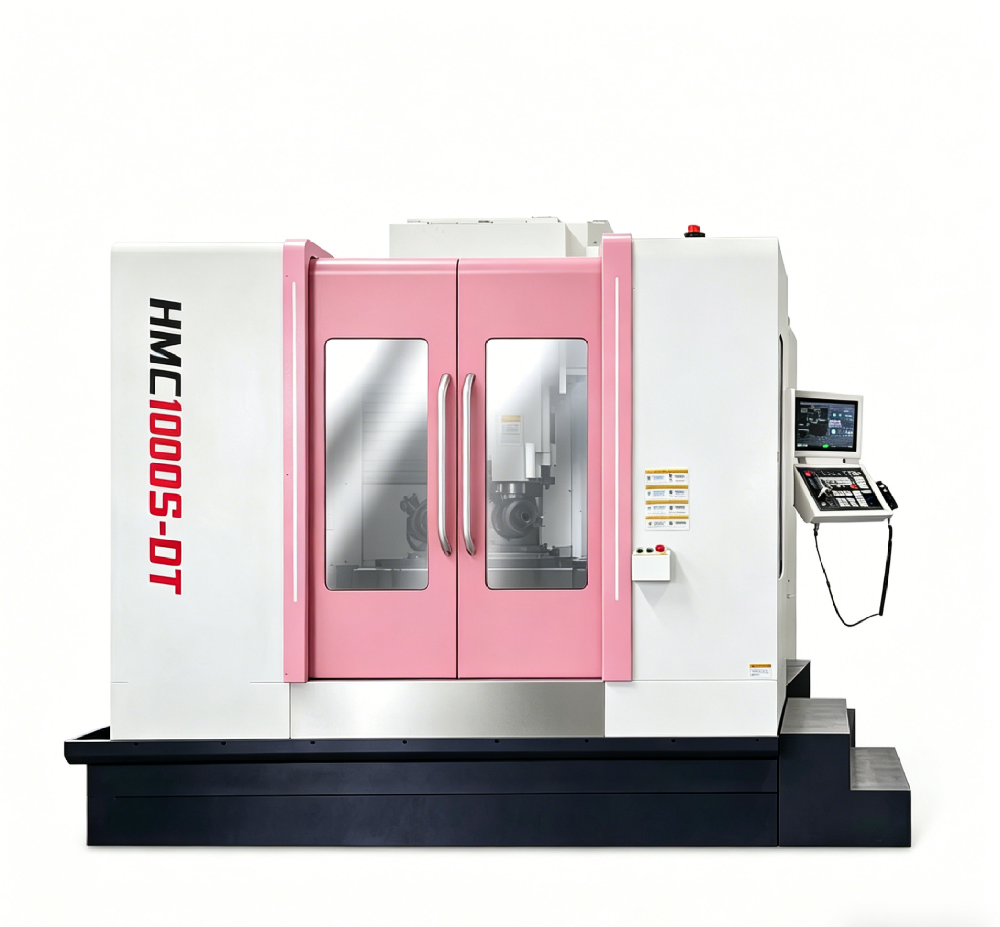
Chinese builders all use an HMC prefix with a number, but the number does not mean the same thing from one factory to the next. In the range on this page, HMC630-DT uses 630 to mean a 630 mm pallet, while TH500 uses 500 as a series figure although the actual table is 1200 x 600 mm, and HMC1000S-DT carries the same 1000 as HMC1000 while its X travel is 500 mm longer. A buyer comparing a Chinese HMC against a model number seen elsewhere, or against a quotation quoting something like HMC641 or HMC1169, gets a useful answer only by lining up four columns instead of two names.
| Model | Pallet / table (mm) | X / Y / Z travel (mm) | Max load (kg) | Spindle taper | Machine weight (kg) |
|---|---|---|---|---|---|
| TH500 | 1200 x 600 | 1100 / 750 / 650 | 800 | BT40 | 7,200 |
| HMC630-DT | 630 x 630 | 1100 / 900 / 1000 | 1,200 | BT50 | 12,000 |
| HMC800-DT | 800 x 800 | 1300 / 1150 / 1000 | 2,500 | BT50 | 16,000 |
| HMC1000S-DT | 1000 x 1000 | 1800 / 1000 / 1300 | 4,000 | BT50 | 16,000 |
| HMC1000 | 1000 x 1000 | 1300 / 1100 / 1200 | 3,500 | BT50 | 18,000 |
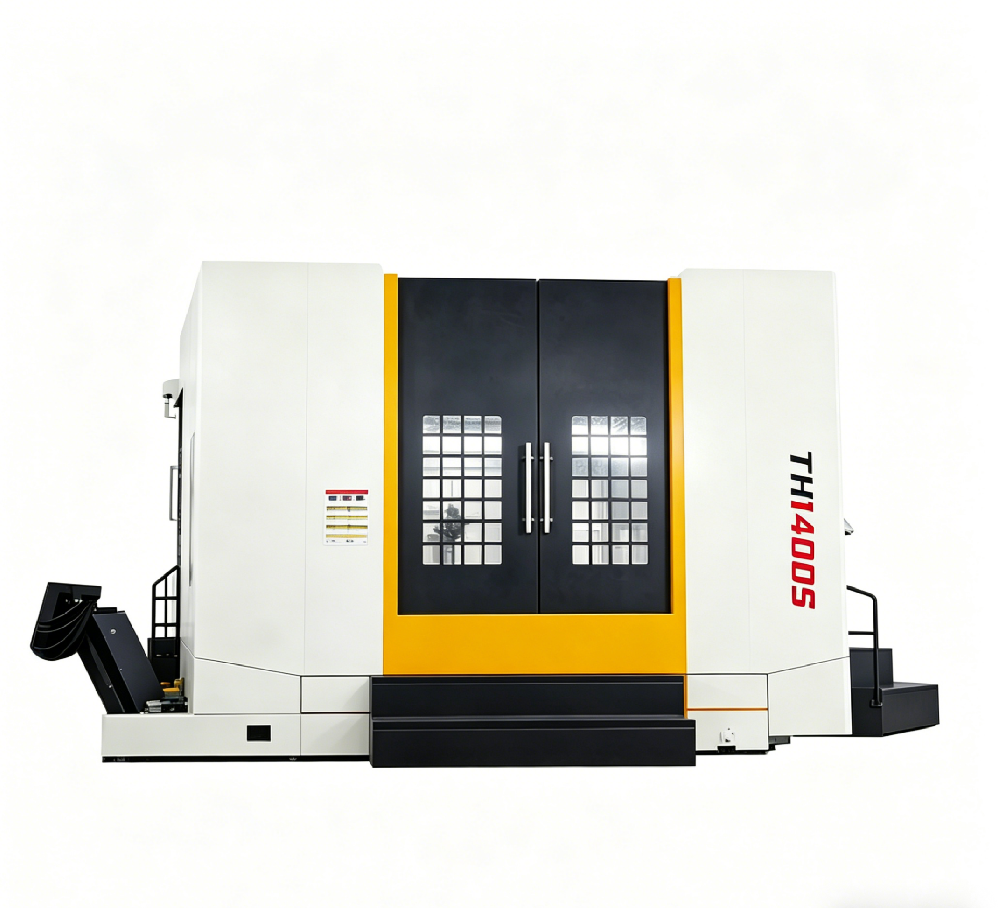
| TH1400S | 1400 x 1400 | 1800 / 1300 / 1500 | 5,000 | BT50 | 19,500 |
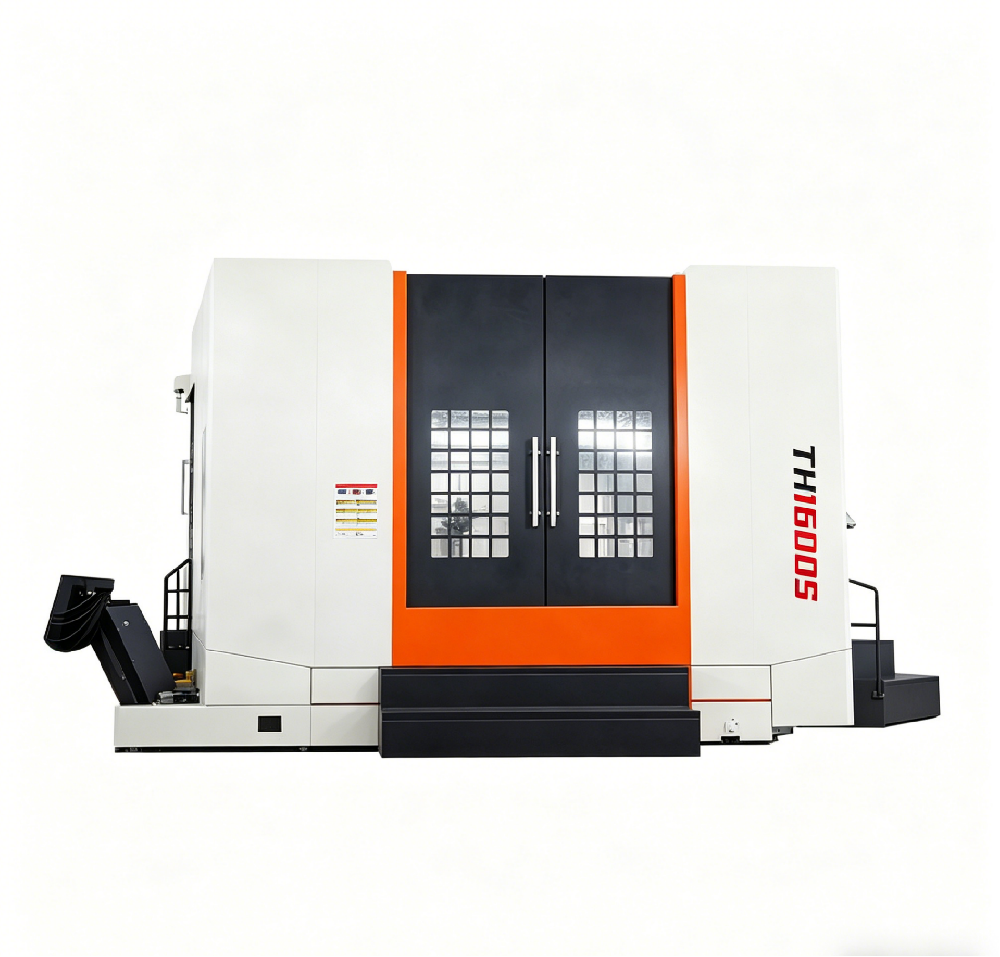
| TH1600S | 1600 x 1600 | 2000 / 1500 / 1800 | 10,000 | BT50 | 24,000 |
Two rows in that table make the point better than any explanation. HMC1000 and HMC1000S-DT both read 1000, yet one is an 18 t machine with 1300 mm of X travel and the other is a 16 t machine with 1800 mm, because one is built around a rigid bed for heavy roughing and the other is built around reach. HMC630-DT and HMC1000S-DT are separated by 4 t of cast iron and 700 mm of X travel while sharing the same BT50 interface. Read the table down the load column and across the travel row, and a quotation from any country becomes comparable within a minute; read only the model number and two different machines look like the same one.
What ships in the container, and what decides the freight
A horizontal machining center is not one crate. A typical shipment is the machine base and column assembly, the electrical cabinet, the chip conveyor and coolant tank, the tool magazine where it is not integral, the pallet changer on machines so equipped, foundation bolts and levelling pads, a commissioning tool kit, and a spare parts box. Each of those has to be blocked and braced separately, and each has its own lifting point.
The figure that decides the container is weight, and the second figure is height. A 12 t machine such as the HMC630-DT normally travels as a single unit in a 40-foot high cube, whose internal length is about 12 m and whose payload is roughly 26 t. An 18 to 19.5 t machine such as HMC1000 or TH1400S sits near that payload limit once crating and bracing are added, and the larger models in the range stand 4.5 to 4.7 m tall as assembled, which is well past the 2.58 m door height of a high cube. Those machines ship in a flat rack or an open-top container, or with the column removed and re-erected on site, and that decision changes both the freight cost and the commissioning plan.
So the quotation request should carry the destination port, the port of discharge handling capacity and whether CE marking is required, not only the part drawing. CIF price, overall dimensions, gross weight and container type belong in the same document as the spindle taper, because a freight rate quoted before those four are known is a rate that will be renegotiated at shipment time.
Acceptance: one test before shipment, one after the foundation
Accuracy on a Chinese horizontal machining center is not a matter of trust, it is a matter of two measurement reports that should use the same measuring points. Before shipment, ask for the geometric acceptance record taken on your own machine by the builder's own procedure, a circular interpolation test, an eight-hour spindle run-in with the temperature curve logged, a tool changer cycle test of at least 2,000 unloaded changes, and a trial cut in your material or in a standard testpiece. Ask for those as per-machine records, not as a sample report from a sister machine.
After arrival, the sequence is foundation, cure, level, verify, cut, train. Secondary grouting needs 7 to 14 days of curing depending on mix and slab thickness, and compressing that stage is the most common way a machine that tested well at the factory starts producing parts outside tolerance in its first month. Levelling and geometric re-verification come after the cure, not before it, and the trial cut should use the same testpiece geometry as the factory record so the two reports can be laid side by side.
Lead time, spares and the documents that decide year two
Lead time on a standard three-axis horizontal machining center runs 60 to 90 days; a pallet changer or a multi-station arrangement adds roughly another 60; special travels, dual-station configurations and cell integration are quoted separately. Write those as milestones in the contract, casting, assembly, commissioning, acceptance and shipment, rather than as one total number, because a single number hides which stage slipped.
The spare parts box is worth more attention than it usually gets. Conveyor belts and scrapers, coolant filter elements, tool changer gripper fingers, proximity switches and the disc springs in the spindle drawbar are the parts that stop a machine, and shipping them with the machine costs a fraction of air-freighting them later, when a single expedited shipment can approach the price of the parts themselves. Alongside the spares, the document set should include the CE attestation (Shandong Handemo's is valid to February 2030), the ISO certificate, electrical schematics, a PLC programme backup, and operation and maintenance manuals in the language of the destination country.
What to send for a quotation you can compare
- The drawing, with the faces to be machined and the tolerance that decides assembly marked on it.
- Material and blank form, casting, forging or bar, because that sets the depth of cut the machine is sized around.
- Batch size and annual volume, which decide whether a pallet changer earns its cost.
- The largest part envelope and its weight including fixture, not the average part.
- Required taper and the largest cutter diameter you intend to run.
- Destination port, CE requirement, and whether the cell will later be fed by a gantry loader or robot.
Send those six and the answer comes back as a configuration with a container plan attached. Send only a model number and the answer is a guess about which machine the number referred to. Drawings can go through our drawing upload page, and the company profile covers the plant, the certifications and the export record behind the quotation.
An HMC is built for prismatic parts that need four faces in one setup. When the part is itself a body of revolution — a flange, a valve body, a ring with milled ports — the same four-face logic is served better by turning: a 5-axis CNC mill-turn machine turns the diameter and mills the ports in one clamping, which keeps the port-to-bore position without a second setup.
HMC Machines: What the Name Stands For, and Where BMC Fits
Buyers reach this page through four or five different names for the same machine, and the words in a catalogue do not always agree with the words in the enquiry. HMC machines are horizontal machining centers: the three letters are an abbreviation, not a model family, and nothing in the specification changes when a builder writes the name out in full or shortens it. What does change, and what costs money when it is missed, is the machine standing behind a different prefix.
The full form, letter by letter
H is for horizontal: the spindle axis runs parallel to the floor, so the part is held on a vertical face and reached from the side. M is for machining: the spindle carries rotating cutters from a magazine, which is what separates this machine from a lathe-based turn-mill where the workpiece turns and the tool is indexed around it. C is for center: automatic tool change and CNC cycles replace the quill-and-handwheel operation of a manual boring machine, so one clamping can run a sequence of drill, tap, bore and face without an operator in the loop.
| Name on the quotation | Where you meet it | What it tells you, and what it does not |
|---|---|---|
| HMC, HMC machine, HMC machines | Enquiry forms, quotation headers, this page | The category only. It carries no size, no taper and no pallet figure, so the same three letters cover a 7.2 t compact machine and a 24 t double-column build. |
| Horizontal machining centre | UK, Australian and Indian catalogues | The same machine under the other spelling. It changes the invoice, the CE documentation and the shipping marks, not the iron. |
| BMC, boring and milling center | Chinese and Taiwanese catalogues, mold and die shops | Usually a boring-oriented build with a quill stroke. Check whether it has a full tool magazine and a pallet changer before treating it as an HMC. |
| Horizontal boring mill, HBM | Heavy fabrication and energy work | A traveling spindle or quill for long, large-diameter bores. Often no tool changer, and rarely a pallet pool. |
| High speed horizontal machining center | Catalogue headlines | Acceleration and chip-to-chip time, not spindle rpm on its own. A 12,000 rpm spindle on a heavy bed is not the same offer as a light machine at the same speed. |
HMC or BMC: the prefix does not tell you the machine
BMC comes from boring and milling center, and in a Chinese catalogue it usually marks a machine built on a boring-mill structure: a quill that extends to reach into a deep bore, a facing head option, and a table that indexes rather than pallets that swap. That is the right machine for a mold cavity or a long weldment with one dominant bore. It is the wrong machine for a housing that needs four faces and a fresh part every eight minutes, because the quill is mass the spindle has to carry and the tool magazine is smaller.
The test takes three questions and no brochure. Does the spindle have a quill stroke, which shows up as a W axis on the specification sheet? Does the table index, or does a pallet changer swap the whole workpiece? And what taper is in the spindle, because a BT50 boring spindle and a BT50 machining spindle are not the same assembly. A machine sold as a BMC-1000 by one factory can be a 1000 mm pallet HMC from another; the prefix is a house style, and the four numbers that make two quotations comparable are the pallet, the travels, the load and the taper, set out in the pallet size comparison.
Supplier, manufacturer and exporter: read the header before the specification
An HMC machine supplier, an HMC machine manufacturer and an exporter are three different businesses, and the same quotation can be issued by any of them. The word on the letterhead decides who you can hold to a date. A manufacturer signs the acceptance report on its own floor and can tell you which week the casting was poured; an exporter forwards the report and negotiates the freight. Neither is disqualifying, but the acceptance test has to be witnessed where the machine is built, not where it is consolidated.
Three documents settle it. The CE attestation and the ISO certificate should carry the name of the company that builds the machine, not a trading name that appears nowhere else in the file. The electrical schematics and the PLC programme backup should be issued with the machine rather than promised after commissioning, because a controller you cannot back up is a controller you cannot diagnose. And the spare parts box should be itemised on the packing list, with the parts that stop a machine named individually. If the cell is going to run unattended, ask the same supplier how the machine will be fed, since a multi-station arrangement and a gantry loader are ordered with the machine far more cheaply than they are retrofitted. Send the part drawing through our drawing upload page and the answer comes back as a configuration rather than a model number.
Frequently Asked Questions
Which parts are best suited to a horizontal machining center?
Box-type housings, valve bodies, pump casings, engine components and other prismatic parts that need multiple faces machined. The clearer the multi-face requirement and the heavier the material removal, the stronger the case for an HMC.
How do I choose the HMC table size?
Match the table to your largest fixture plus workpiece, with margin for clamps and chip clearance. Then check X, Y and Z travel against the actual feature pattern, because a part can fit on the table and still sit outside the working envelope.
What is the difference between an HMC and a horizontal boring mill?
A horizontal machining center is built for prismatic parts with many faces and moderate bore depth, using a tool magazine and typically a pallet. A horizontal boring mill is built around long, large-diameter bores in very large weldments, often with a traveling spindle. The work determines which one fits.
Can a horizontal machining center machine five faces in one setup?
Four faces are standard on a three-axis HMC with a rotary table. The fifth face usually needs either a second operation, an angled fixture, or a machine configured with additional axes. If five-face-in-one is a hard requirement, say so at the specification stage rather than after the machine arrives.
Does Handemo provide HMC pallet automation?
Yes, pallet changers and multi-station arrangements are available on several models. Share your cycle time target and how many part variants you run, and the automation scope can be sized around that.
What spindle taper should I choose, BT40 or BT50?
BT40 suits general work with faster tool changes and lower tool cost. BT50 gives more rigidity and torque for heavy cutting in steel and cast iron. Choose based on the material removal rate your parts actually require, not on the maximum the machine can survive.
How long does installation and commissioning take?
It depends on foundation work, utilities and the automation scope. Foundation curing, leveling, geometric verification and trial cutting all sit on the critical path. Ask for a commissioning plan with named responsibilities before the machine ships.
Do you supply machines for unattended or lights-out production?
Multi-station and pallet-equipped configurations are the usual route. Lights-out operation also depends on chip management, tool life monitoring and in-process gauging, so it should be planned as a system rather than bought as a machine option.
Get an HMC Recommendation
Send us your part drawing and requirements, and Handemo will recommend the right horizontal machining center configuration for your workpiece, material and production volume. Include the faces you need machined, the tolerance that decides assembly, and your target cycle time — those three inputs are enough to narrow the range to one or two models.