Vertical vs Horizontal Machining Center: Multi-Face Parts
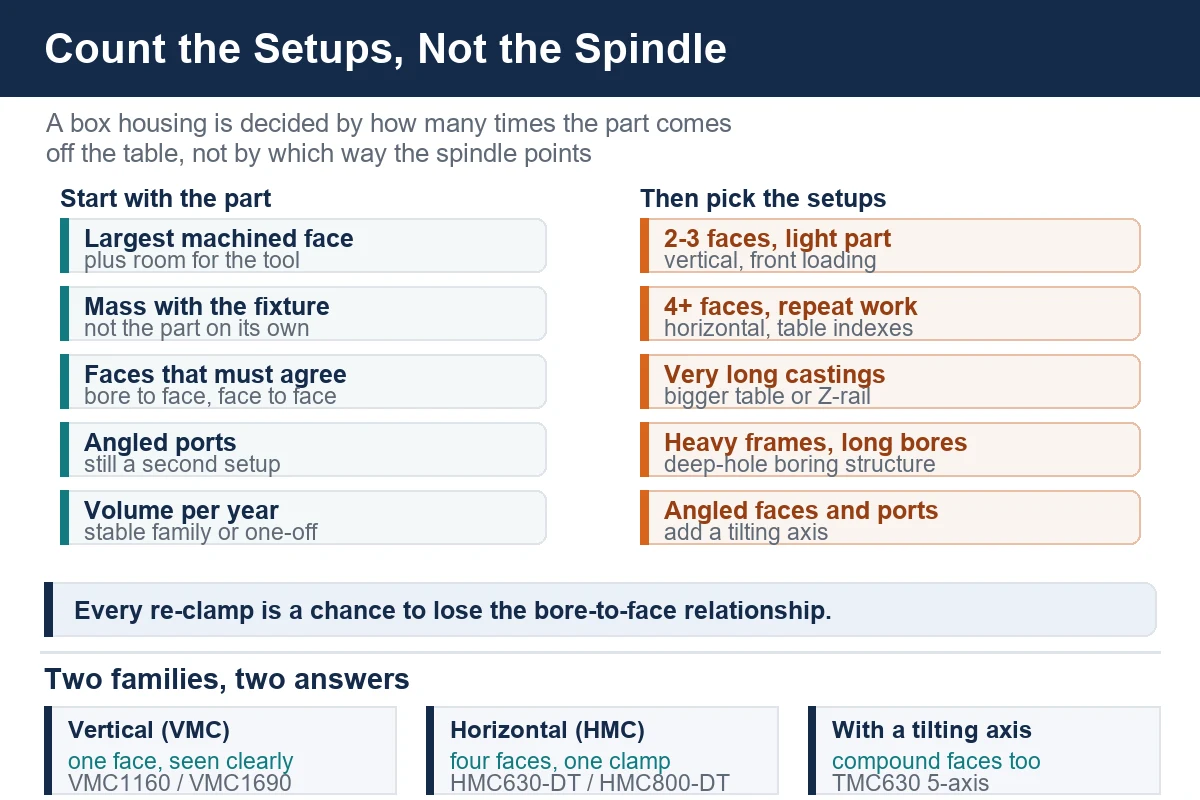
Ask ten shops whether a box housing should run on a vertical or a horizontal machining centre and you will get ten confident answers. Ask them how many times the part has to come off the table, and the argument tends to end. Multi-face work is not decided by which way the spindle points. It is decided by how many times you are willing to break the relationship between features that have to agree with each other.
A gearbox housing, a pump body, a manifold block and a machine column are all prismatic parts. The drawing looks calm: a block or a casting with bores, faces and bolt patterns. Then the first setup makes it clear that the features that matter are spread over four or five sides, and every re-clamp adds a new chance to lose the bore-to-face relationship you spent the first setup building.
This is one of our machine comparisons guides. It works through the decision the way a shop actually makes it: from the part, the fixture and the datum, then to the machine.
What makes multi-face work different
A box part is a prismatic part with features on most of its sides. A housing adds a controlling bore or spigot that has to sit in a known relationship to the face it mounts against. Both share the same practical difficulty, and it is not the cutting. It is the setup count.
A machine that presents four faces to the spindle without re-clamping removes setups, and removing setups removes the accumulation of error that comes with them. A machine with a long X travel that holds the part once and reaches every feature is doing the same job with different geometry. A machine with a fast spindle that forces the part onto four separate fixtures is the slowest option in the shop, whatever the spindle speed says on the brochure.
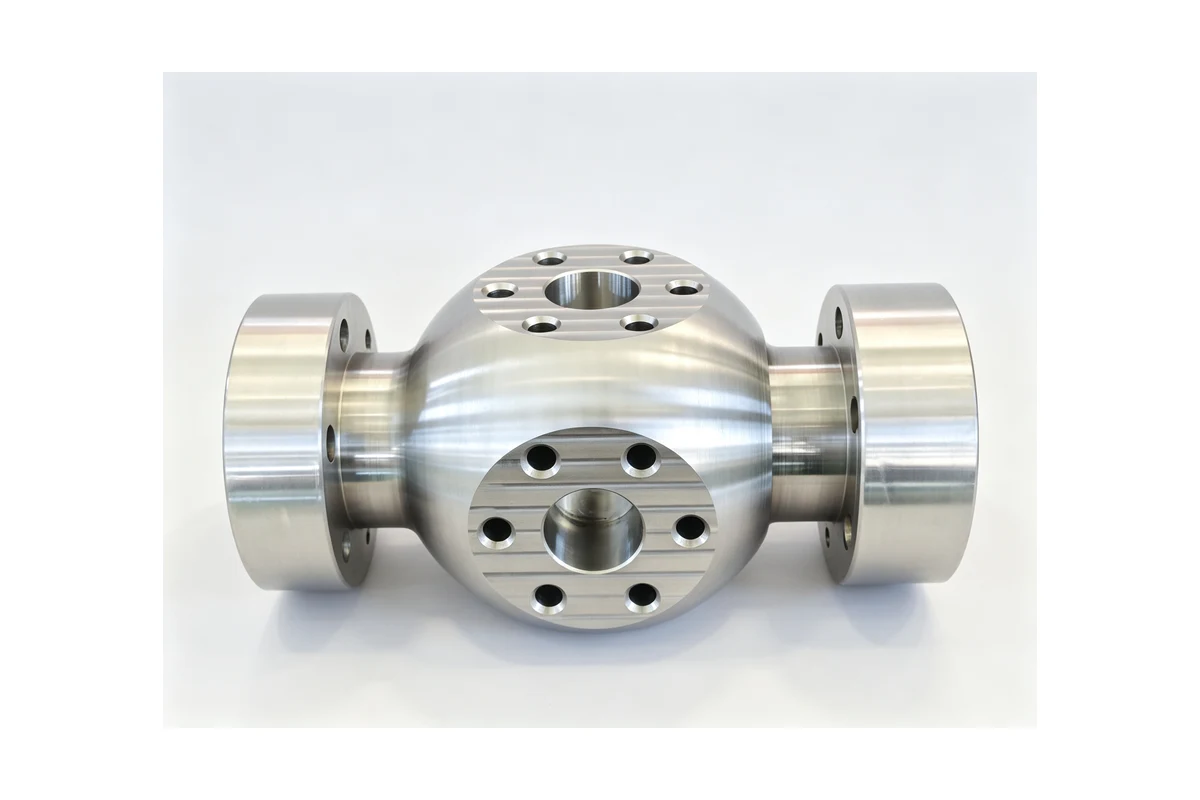
It is not the same problem as turning
Worth separating two things that get mixed up in the same conversation. A round part - a hub, a sleeve, a flange, an impeller - is a turning part, and the decision there is between a lathe, a mill-turn centre and a machine with an added rotary axis. A box housing is a prismatic part, and the decision is between a vertical and a horizontal machining centre. They are different families with different answers, and a shop that runs both needs both.
Three numbers from the drawing decide most of it
The envelope
Start with the largest machined face and the largest bolt circle or bore spacing. Not the blank size - the machined face, plus the clearance the tool needs to reach past it. A housing whose largest face is 600 by 500 mm with a bore pattern 400 mm across fits inside the envelope of a mid-size vertical machine with room for a fixture. The same part with a face at 800 mm is past that comfortable line and wants a bigger table or a different spindle orientation.
The mass, including the fixture
Weigh the part with the fixture and the tombstone it sits on, not on its own. A 700 kg casting on a 400 kg table pushes the machine around instead of the tool. Published table loads are real limits, and they include everything bolted to the table, which is where a lot of machine-sizing mistakes start.
There is a second reason to weigh the whole assembly. A horizontal machine holds a box on its side, so the fixture and the part hang off a pallet that has to locate them repeatedly. That pallet and fixture are part of the moving mass on every index, and they have to be stiff enough to keep the part still while the table rotates.
How many faces have to agree
Count the machined faces that carry features referencing each other: a bore in one wall and a counter-bore in the opposite wall, a mounting face and a spigot concentric to it, two flange faces that must be parallel, or a set of faces at right angles that all carry port patterns. Two or three faces is vertical territory. Four or more, on a part heavy enough to make handling awkward, is where the horizontal starts to pay for itself.
The vertical route, and where it runs out
Up to roughly 700 mm of face
A mid-size vertical machine covers a lot of housing work. Take the VMC1160: a 1200 x 600 mm table with an 800 kg load capacity and travels of 1100 / 600 / 600 mm. That envelope takes a housing with a machined face, a bore and a bolt pattern comfortably, with room left for a fixture and a boring head, and it is the machine most shops reach for first when they move into this family of work.
The vertical's strength is that it sees the part. The operator loads from the front, watches the cut, and reaches every feature without leaning around the column. For two or three faces, plus the underside done on a pair of parallels in a second setup, the vertical is the economical answer and always will be.
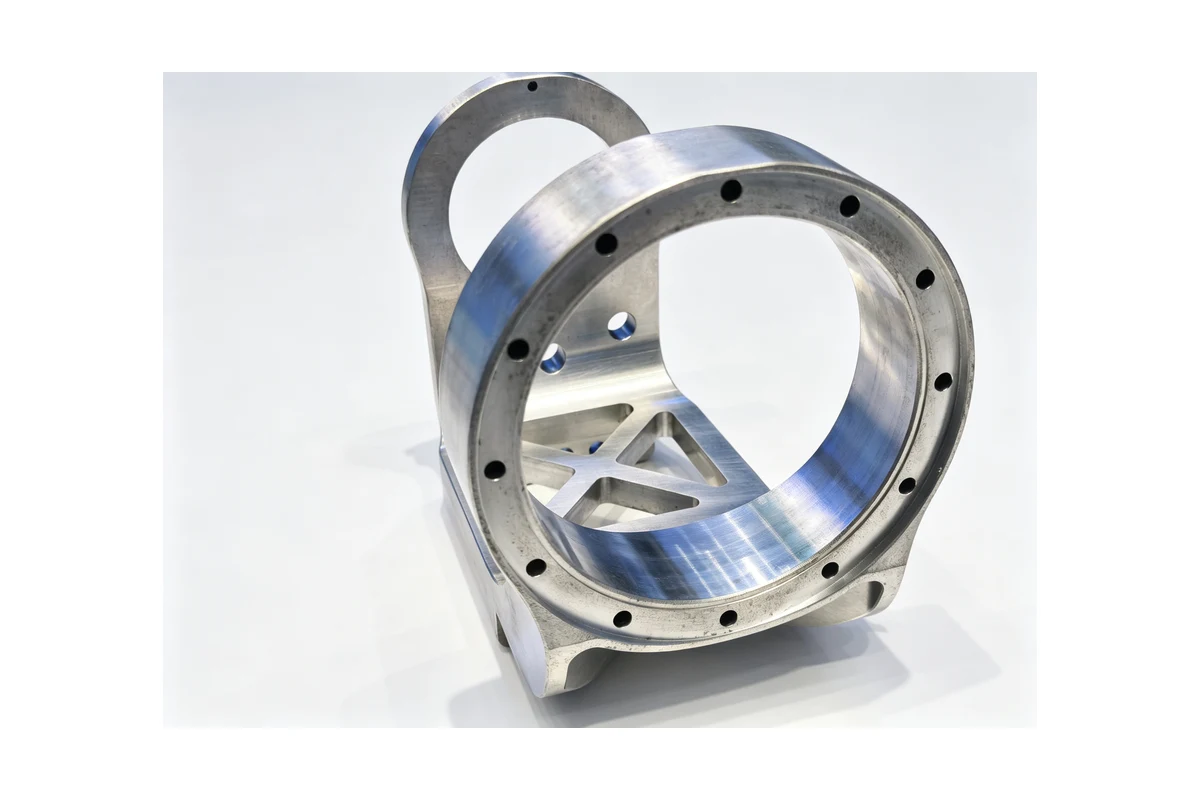
When the part gets longer and heavier
Once the part grows past a 1100 mm X travel, the vertical range has answers, and they are worth knowing before assuming a horizontal is the only step up. The VMC1690 carries a 1600 x 800 mm table with a 1500 kg load and a BT50-190 spindle, which suits large plates, long housings and machine parts that exceed the smaller machines. The L1690 sits in the same envelope with the ram-style Z structure, and the VMC1890 is the largest vertical in the range, for parts that would otherwise need a floor-type machine.
The trade-off at this size is not the table. It is the fixture. A 400 kg housing on a vertical table has to be flipped for its underside, and flipping a part like that needs either a crane and a second setup or a fixture that indexes it. Both add time and both add a way for the datum to move.
The tricks that extend a vertical
Tombstone fixtures let two, three or four parts share one setup, and a right-angle head reaches the side faces of a part sitting flat on the table. Between them, a vertical can do a surprising amount of housing work. What it cannot do cheaply is the fifth and sixth face, or the underside bore that has to be concentric with the one on top: that is when the part comes off the table and the relationship is at risk again.
The horizontal route
One datum, four faces
A horizontal machining centre has its spindle parallel to the table, so the tool comes in from the side and the part rides on a pallet with a rotary table underneath. That single change is the whole argument. Clamp the housing once on its machined mounting face or datum pad, cut the first face, index the table 90 degrees, cut the next, and keep going around the part. The datum never moves because the part never comes off.
The HMC630-DT is the size most housing work lands on: a 630 x 630 mm table with a 1200 kg load, travels of 1100 / 900 / 1000 mm and a BT50-190 spindle at 6000 rpm. The table indexes to each face in turn, so the bore and the face it must agree with are cut from the same clamp. Chips fall clear of the cut instead of piling up in a pocket, which matters on deep pockets and on housings full of internal webs.
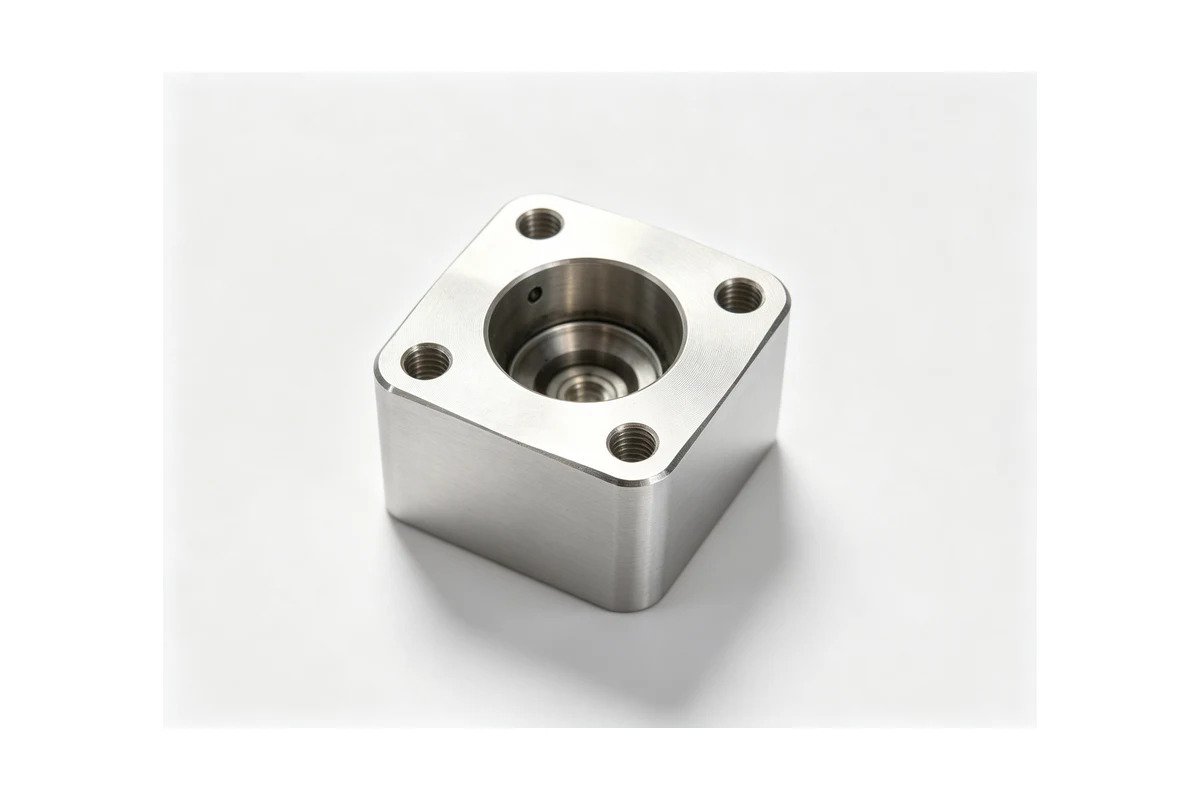
When the housing outgrows the 630
Bigger castings move up the range without changing the principle. The HMC800-DT carries an 800 x 800 mm table and a 2500 kg load with travels of 1300 / 1150 / 1000 mm, and the TH1000 and HMC1000 step up to a 1000 x 1000 mm table and a 3500 kg load. Parts in that band - machine columns, large gearbox bodies, multi-port manifolds - are where the horizontal stops being a convenience and becomes the only sensible answer.
Long bores and very large boxes
Frames, mill housings and heavy gearbox casings go further. The TH1400S takes a 1400 x 1400 mm table with a 5000 kg load, and the TH1600S runs to 1600 x 1600 mm and a 10000 kg load. On parts this size the machining centre is doing work that used to belong to a floor borer, and the deep-hole boring and milling structure is chosen for long internal bores that a standard horizontal cannot reach without a lot of tool overhang.
The productivity argument
There is a second, quieter reason horizontals win long production runs. With a pallet changer, the operator loads the next part while the spindle is still cutting the current one. On a vertical, loading usually stops the spindle. On a housing that runs for eight minutes a cycle, that difference compounds over a shift, and it is what makes the higher purchase price of a horizontal back its cost on volume.
Side by side
| Vertical machining centre | Horizontal machining centre | |
|---|---|---|
| Spindle orientation | Down onto a horizontal table | Sideways into a part that can be indexed |
| Faces in one clamp | One, sometimes two with a tombstone | Four and more with a rotary table |
| Chip clearing | Chips sit on the part and in pockets | Chips fall clear of the cut |
| Setup cost | Lower to fixture, faster to get running | Higher, needs pallets and datum discipline |
| Operator view of the cut | Direct, from the front | Less direct, depends on the guard and the window |
| Loading while cutting | Usually stops the spindle | Continues through a pallet change |
| Best fit | Two or three faces, mixed parts, low volume | Four or more faces, heavy parts, repeat volume |
Four ways this decision goes wrong
Buying for the part you have instead of the family you sell. One awkward housing does not justify a horizontal. If the shop sells a family of housings and the setups are the bottleneck, it does.
Ignoring the fixture in the table load. The rated load covers everything bolted down. A tombstone, a fixture and the part add up faster than most people expect.
Assuming a bigger vertical replaces a horizontal. Table size and face count are different problems. A large vertical gives you more room on one face; it does not give you four faces from one datum.
Forgetting the fifth and sixth face. Angled ports, inclined faces and compound features still need a second setup on either machine. If a part carries them, a machine with an added tilting or rotary axis - the TMC630, for example - removes the setup instead of relocating it.
Where automation changes the arithmetic
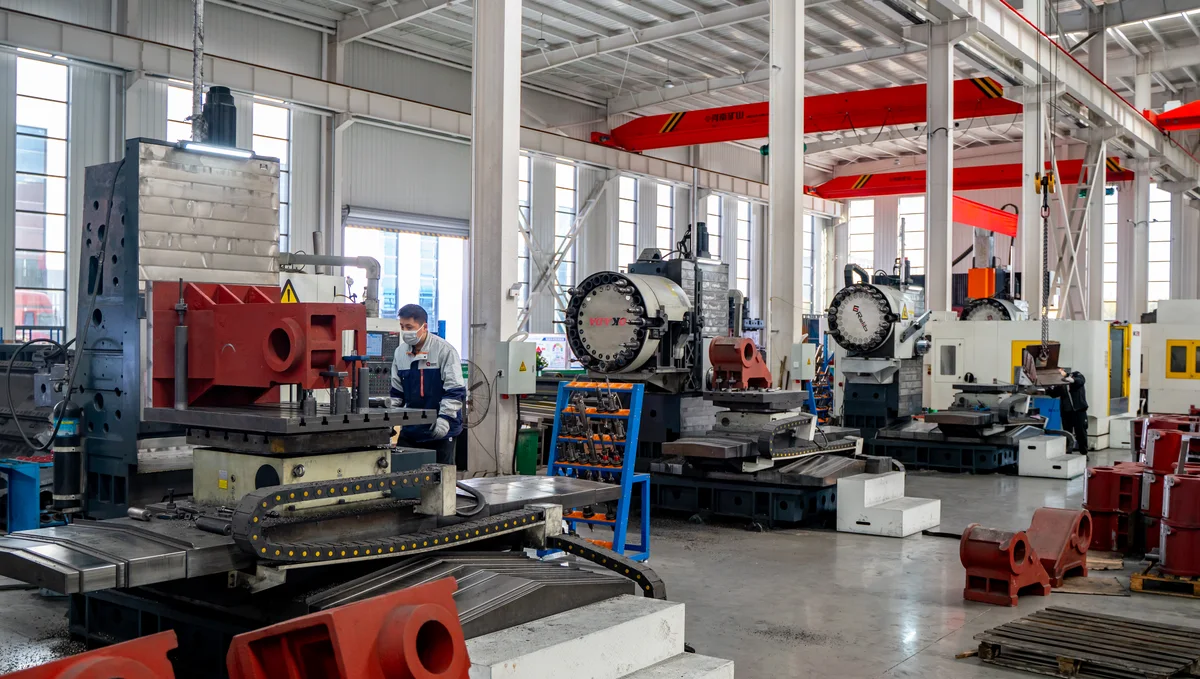
Housing work runs in stable families: the same casting, the same pads, the same clamp force, cycle after cycle. That is exactly the pattern that suits robotic machine tending, and it is also the pattern that makes clamp consistency a machine variable rather than an operator's judgement. One person running three machines changes the arithmetic on a housing cell, and it is worth having that conversation at the same time as the machine choice rather than after the fixtures are built.
Handemo CNC has been building machine tools since 2008, with a 220,000 square metre plant, more than 660 employees and machines running in over 150 countries. A large part of that base is job shops and manufacturers running exactly this class of part.
Frequently asked questions
Can I machine all four sides of a housing on a vertical machining centre?
Yes, but not in one clamp, and that is the difference. A vertical can reach the top face, the sides with a right-angle head, and the underside in a second setup on parallels or a fixture. Each one of those is a setup, and each setup is a chance for the datum to move between the bore and the face that must agree with it.
How much table load do I need for a cast iron housing?
Weigh the part, add the fixture and the tombstone, and keep the total below the rated figure with a margin. As a rough guide, the machines in the range step through 800 kg on the VMC1160, 1500 kg on the VMC1690, 1200 kg on the HMC630-DT, 2500 kg on the HMC800-DT and 3500 kg on the HMC1000. Send us the part weight and we will tell you which one has room.
Is a horizontal worth it for a shop that runs mixed, low-volume work?
Usually not on its own. The horizontal earns its place through repeat volume on parts with four or more machined faces. In a mixed, low-volume shop, a vertical with a tombstone and a right-angle head is more flexible for the money, and the horizontal can come later when a family settles down.
Do I need a pallet changer?
It is not required, but it is the feature that turns a horizontal into a productive machine rather than a versatile one. Without pallets, loading stops the spindle just as it does on a vertical, and you pay the horizontal price without the throughput.
What about a part with angled faces and ports?
Those features need a second setup on either machine unless you add a tilting or rotary axis. If the angles are the whole point of the part, a machine with that axis removes the setup instead of moving it. If they are a small part of the job, plan the second setup and fixture it properly.
Working on a housing family?
Send the drawing - housing, body, manifold or frame - with the material, the annual volume and the weight of the part and its fixture. We will come back with the setups it needs, the machine class that fits, and the fixtures to hold it. If you are still deciding between a vertical and a horizontal, that is the right conversation to have before the fixture is designed, because the fixture is where the decision becomes expensive.
Contact Handemo CNC | Email: sales1@handemocnc.com | WhatsApp: +86 135 6320 3038
Related reading: VMC vs HMC: how to choose, choosing a machining center for box and housing parts, and CNC machining gearbox housings. If you would rather send the drawing straight over, use our drawing upload page.