VMC650 vs VMC855: Table, Travel or Tool Count
The price gap between a VMC650 and a VMC855 is small enough that most buyers simply take the bigger machine. Six months later the 855 is running two vices on a table that could hold four, because nobody did the fixture arithmetic before the purchase order went out. The machine is not the problem. The table, the T-slots and the tool magazine were never matched to the parts.
This comparison is not about travel figures. Both machines cut well. The question that decides the purchase is how many parts you can load per cycle, how many tools you need in the magazine before the setup starts costing you changeovers, and how much floor space and foundation you are willing to give up for that.
Two Machines, One Family
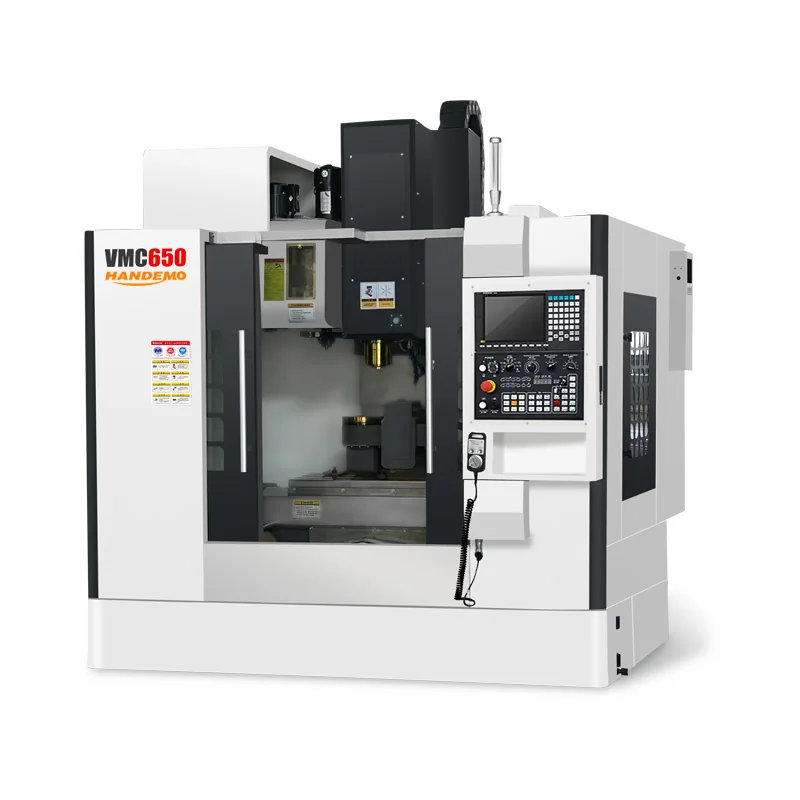
Both machines sit in the general-purpose vertical range. Both use a BT40 belt spindle at 8,000 rpm, both run 32 m/min in X and Y and 24 m/min in Z, and both change tools in about 2.5 seconds from a round disc magazine. On paper they read like the same machine at two sizes, and mechanically that is close to the truth.
The published numbers are the ones that matter for the decision:
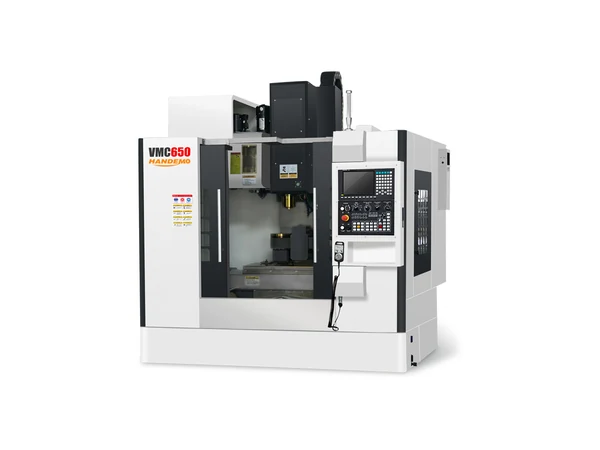
- VMC650 — table 1000 x 400 mm, 400 kg table load, travels 650 / 400 / 550 mm, BT40 with a Φ120 nose, 16-station disc, 3,800 kg, footprint roughly 2400 x 2100 x 2300 mm. A 32-tool magazine is available as an option.
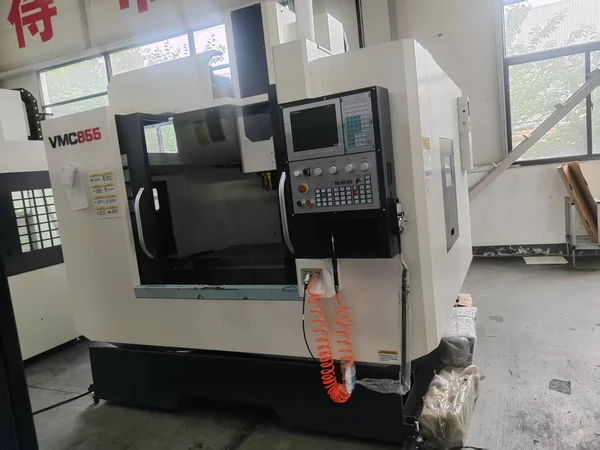
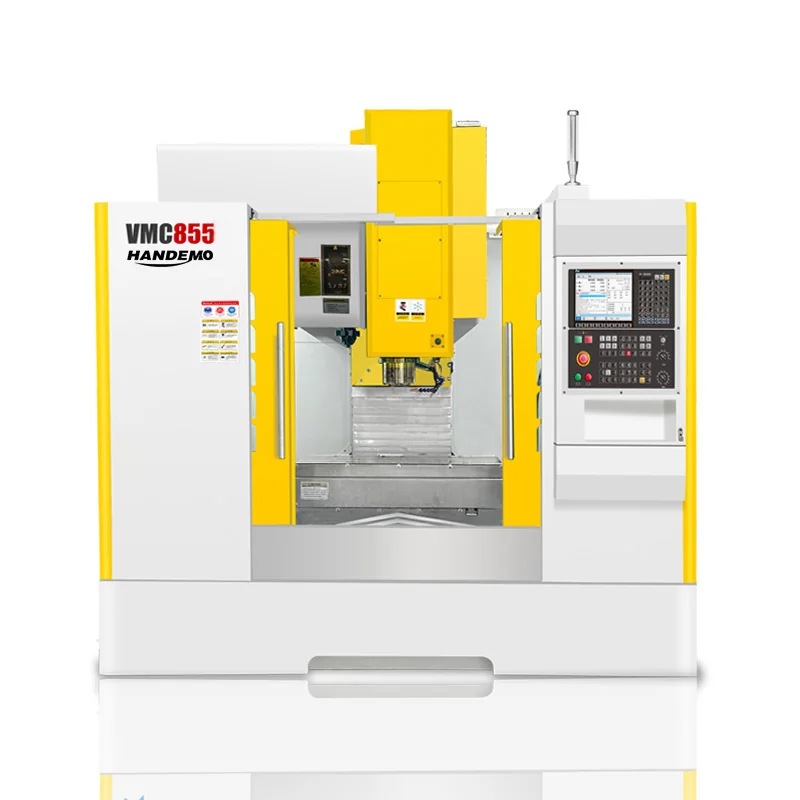
- VMC855 — table 1000 x 550 mm, 600 kg table load, travels 800 / 550 / 550 mm, BT40-150, 24-station disc, 5,300 kg, footprint roughly 2600 x 2380 x 2400 mm.
Read that list again and notice what did not change: the table length is the same 1000 mm on both. What changed is the width, the travel, the mass and the number of tools in the drum. Those four differences decide everything that follows.
The Table Is Where the Money Is
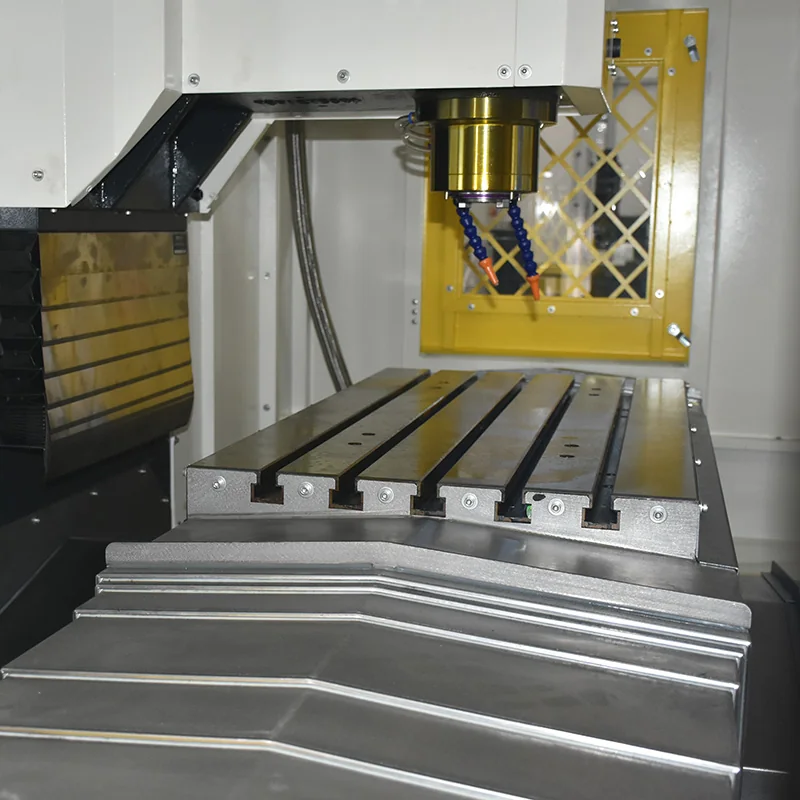
A 1000 mm table sounds generous until you put fixtures on it. A 150 mm machine vice with jaws takes about 330 mm of table length including the handle clearance at the front and the room to swing the jaw at the back. Two vices side by side along X eat 660 mm, and you still need clearance at each end so the cutter can reach the last part without the spindle nose fouling the next fixture.
That leaves room for two vices on a 1000 mm table. It leaves room for two vices whether the table is 400 mm wide or 550 mm wide. The width is what changes: on the 400 mm table a pair of 150 mm vices leaves you around 100 mm of usable strip at the front and back for a second row or a clamping rail. On the 550 mm table you get around 250 mm, which is enough for a real second row of small parts, a fixture plate, or a rotary table that is not hanging off the edge.
So the first question is not "how much travel do I need". It is "how many of my parts fit in one load".
Fixture arithmetic that takes ten minutes
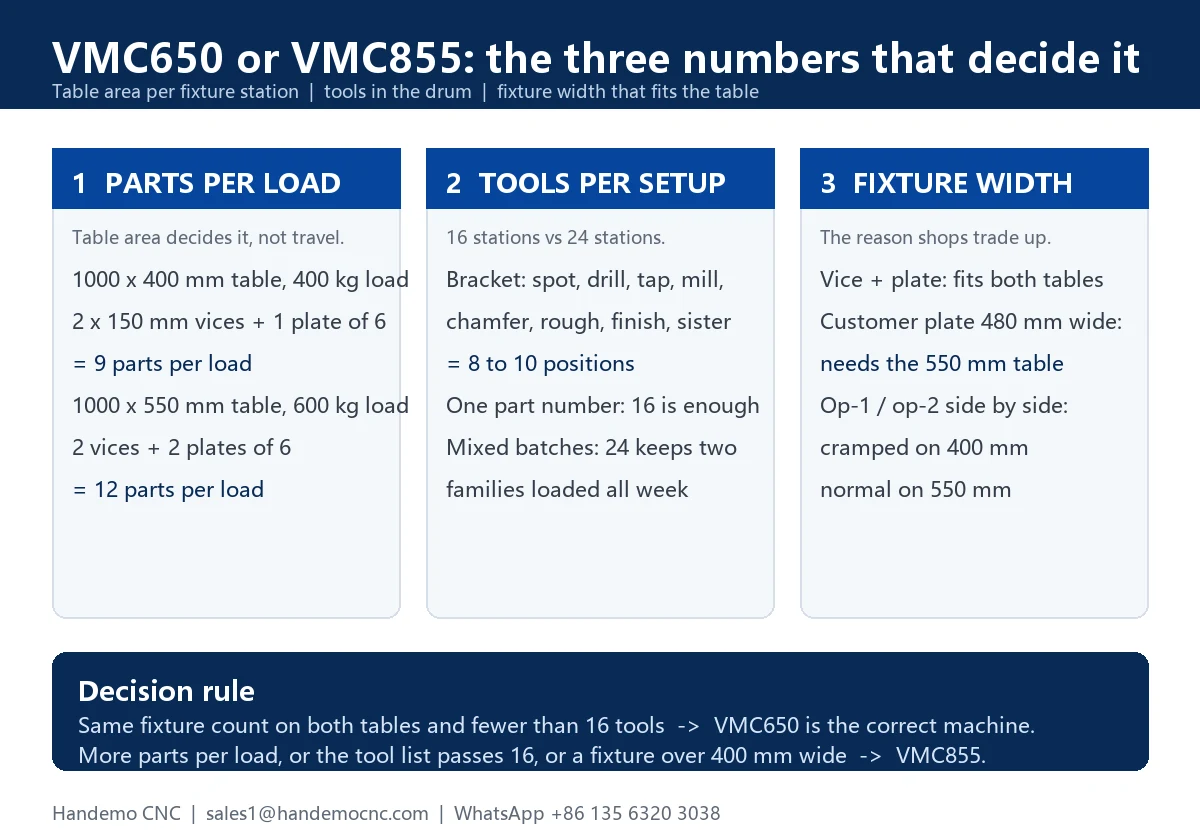
Take a typical small-part job: an aluminium bracket 120 x 80 x 25 mm, four tapped holes and a pocket, batch of 500 pieces a month. On a plate fixture with six stations, one load is six parts, one cycle is roughly nine minutes including a tool change, so the machine makes forty parts an hour.
On the VMC650 you can fit one 6-station plate of that size plus a second smaller plate, because the plate is 500 x 300 mm and there is room left over at the front for a vice. Call it nine parts per load. On the VMC855 the same plate plus a second full plate fits without crowding: twelve parts per load. The cycle time per load grows a little, the cycle time per part drops by roughly a quarter, and the operator's unloading time is spread over more parts.
That is the entire economic argument for the 855 on small parts, and it has nothing to do with travel. If your parts are small and your batch is large, table area per fixture station is the number to compare. If your parts are large, travel comes back into it, and that is the next section.
What the Extra 150 mm of Y Actually Buys
For most buyers the 400 mm of Y on the 650 is enough. It is enough for a 300 mm wide part in a vice, enough for a fixture plate, enough for a rotary table on small work. It stops being enough in three situations, and they are worth checking honestly before you save the money.
Deep pockets that need the spindle nose to clear
When you machine a pocket in a tall part, the limiting dimension is often not the part size but the clearance between the spindle nose and the top of the fixture. On a narrow table you end up with the part near the back edge and the fixture hanging over the front, which loads the table unevenly and puts the clamping force where it does least good. On the wider table the same part sits closer to the centre, and the fixture sits fully on the table.
Two operations in one load
The moment you want to run the front face on one side of the table and the back face on the other — a tombstone, a two-sided fixture, or a pair of vices set up for op-1 and op-2 — the table width is what decides whether the two setups coexist or fight for space. On the 400 mm table that arrangement is cramped. On the 550 mm table it is normal practice.
Fixtures that arrive from the customer
A lot of subcontract work comes with a fixture attached. If the customer's plate is 480 mm wide, a 400 mm table cannot hold it without overhang, and overhang on a table means the load is not where the casting was designed to carry it. This is the single most common reason a shop that bought the 650 comes back for the 855 within a year.
Sixteen Tools or Twenty-Four
The tool magazine is the second difference and it is underrated. Sixteen stations on the 650 versus twenty-four on the 855 does not sound like much until you count what a real setup needs.
A bracket with four tapped holes needs a spot drill, a tap drill, a tap, an end mill for the pocket, a face mill, and a chamfer tool: six tools. Add a roughing and a finishing end mill for the pocket and you are at eight. Now add a sister tool for the tap because it wears faster than the rest, and a spare end mill because aluminium builds up on the edge and you change it mid-batch. That is ten positions for one part number.
Put four part numbers in a week on the machine with overlapping but not identical tool lists and sixteen stations forces you to break the setup down and rebuild it, sometimes twice a day. Twenty-four stations lets you keep two or three families loaded and switch between them without touching the drum. The time saved is not the tool change — it is the setup, the first-article check and the scrapped piece when a tool is re-entered at the wrong length.
If your work is one part number running for weeks, sixteen is plenty, and the optional 32-tool magazine is an upgrade you will never need. If you run mixed small batches, count your tools before you choose. The same logic runs through the BT40 versus BT50 decision, where the tooling family matters more than the spindle size on paper.
Mass, Floor Space and What the Casting Does for You
The 650 weighs 3,800 kg and the 855 weighs 5,300 kg. In a machine of this size, the extra 1,500 kg is casting, not sheet metal, and it shows up in two places: how the machine behaves in a heavy roughing cut, and how much of your floor it takes.
Heavier castings absorb vibration. On aluminium and light steel work with modest depths of cut, both machines produce the same result and you would struggle to tell them apart. On a 4 mm depth of cut in 1045 with a 63 mm face mill, or on a cast iron housing where the interrupted cut runs over a port opening, the heavier frame keeps the cut stable where the lighter one starts to complain — audible in the cut, visible on the insert edge at the end of the shift.
Floor space is the counterweight. The 855 footprint is roughly 2600 x 2380 mm against 2400 x 2100 mm, and around it you need room for the control cabinet door, the chip conveyor at the back or side, and the operator. In a workshop with a fixed layout, that extra 400 mm of width can be the difference between fitting three machines in a bay or two.
Where Each Machine Pays Back
Payback is not a formula you can run in the abstract, so here are the four patterns that come up most often in small and mid-size shops.
High-volume small parts, one or two part numbers
The 855 wins, but not by as much as the price difference suggests. The gain comes from parts per load, not from cutting speed. If your batch is 2,000 pieces and your fixture holds twelve instead of nine, you save roughly a quarter of the load changes, which is a quarter of the operator's day.
Mixed batches, many part numbers, small quantities
The 855 wins clearly, because of the 24 stations. Setup time dominates, and a magazine that holds the whole week's tool list removes most of it. This is the profile where buyers regret the 650 most often.
Large single parts, mould inserts, plates
Neither machine is the answer if the parts keep growing. A 400 mm wide mould insert with a tall core needs the 855 at minimum, and once plate size passes the 855 table you are into the 1160, where the table and travels step up again. The comparison between 855 and 1160 covers that boundary in detail, and it is worth reading before you convince yourself that "one size up" will be enough for five years.
Fixtures, jigs and tooling plates for your own shop
The 650 is genuinely good here. Fixture plates are flat, they are not tall, they rarely need more than a handful of tools, and a compact machine with a 400 kg table load handles them comfortably. Shops that build their own workholding often run it on the small machine and keep the bigger one free for production.
Parts That Push You One Way or the Other
Instead of a generic recommendation, here is how the decision falls for four part families that come through most subcontract shops.
- Aluminium brackets and housings for electronics. Small, light, many per load, several tools. The 855's table area and magazine win. If the parts are thin-walled, the clamping method matters more than the machine — read the thin wall machining guide before you buy either.
- Flanges and end covers. Usually turned, but the drilling and milling after turning is a natural fit for a vertical. Diameters up to about 300 mm fit on the 650 in a three-jaw chuck or a fixture; above that the wider table and the extra Y travel start to matter.
- Small mould inserts and electrodes. The 650 handles small inserts well, but insert work usually comes with a family of plates that grow. Most mould shops end up on the 855 or the 1160 rather than the 650.
- Valve bodies and hydraulic blocks. These are the parts that expose the 650's limits fastest: they are heavy for their size, they have ports on several faces, and the fixtures are large. If this is your main product, the 855 is the sensible floor and a horizontal machine is worth a serious look — the VMC versus HMC comparison explains when the switch pays.
What You Give Up by Choosing the 650
Being honest about the small machine matters, because it is the right purchase for a real group of buyers. Choose the 650 when the parts are compact, the fixture is a vice and a plate, the tool list is short, and floor space or capital is the binding constraint. It is also the right choice as a second machine: a shop with a large vertical already running production can add a 650 for small parts, second operations and fixture work without disturbing the main line.
What you give up is headroom. Not in travel — in the ability to say yes to a job that arrives with a 480 mm fixture, or a batch that would fit twelve per load instead of nine. If you expect your part mix to widen rather than narrow, the extra money on the 855 is usually recovered in the first year of mixed-batch work.
One more thing worth saying plainly: neither machine will fix a workholding problem. A part that moves in the vice will move on either table, and an operator who loads the same fixture in a different position every cycle will produce variation on a five-tonne machine just as reliably as on a four-tonne one. Buy the table that fits the fixtures, then spend the remaining budget on the fixtures.
How to Decide in One Afternoon
Take the three part numbers that make up most of your revenue. For each one, answer five questions: how big is the fixture, how many parts fit on a 1000 x 400 table, how many on a 1000 x 550 table, how many tools does the setup need, and how often does the part mix change.
If the fixture count is the same on both tables and the tool list stays under sixteen, the 650 is the correct machine and the saving is real. If the fixture count goes up, if the tool list crosses sixteen, or if a customer fixture is wider than 400 mm, the 855 is the correct machine and the price difference is the cheapest part of the decision.
If the answer is "it depends on next year's jobs", that is the strongest argument for the 855 you will find, and it is also the point at which a conversation with the machine builder is cheaper than a guess. Send the drawings and the batch sizes; the fixture layout can be checked before the order, not after.
Frequently Asked Questions
Is the VMC650 too small for steel parts?
No. The 650 cuts steel with the same BT40 spindle and the same 8,000 rpm range as the 855. What limits it on steel is mass and table load, not the spindle: heavy 400 kg fixtures and deep cuts in hard stock favour the heavier 855. Light and medium steel parts run on the 650 without compromise.
Can I add a fourth axis to either machine?
Yes, both accept a rotary table on the table. The practical difference is space: a 200 mm rotary table plus tailstock leaves little room on a 400 mm wide table, while the 550 mm table keeps the fixture clear of the front edge. If a fourth axis is in your plan, plan the table width first.
Do I need the 32-tool magazine option on the VMC650?
Only if you want to keep several part families loaded at once. For a single part number with a short tool list, sixteen stations are enough and the option adds nothing. Compare the cost of the option with the price step to the 855 — sometimes the larger magazine and the larger machine cost about the same.
Which machine is easier to install?
The 650, simply because it is smaller and lighter. Both need a level floor and a stable foundation, but the 855 occupies more area and needs more clearance for the chip conveyor and the control door. In a rented unit with a fixed layout, that can decide the purchase on its own.
Can both machines run unattended with a gantry loader?
Both can be fed automatically, and the smaller machine is often the better candidate for a loader because the work envelope is compact and the cycle is short and steady. The gantry loader versus robot comparison covers the trade-offs, and for a two-machine cell the 650 plus a loader is a common and sensible first step.
Next Step
If you are weighing these two models, the fastest way to a real answer is to send the part drawings, the fixture sketch and the monthly batch size. We will tell you which table the fixture actually fits, how many parts per load each machine gives you, and whether a third model belongs in the comparison.
Write to sales1@handemocnc.com or reach us on WhatsApp at +86 135 6320 3038. You can also upload drawings through the drawing upload page and get a recommendation back with the model, the workholding and the tooling list.