VMC855 vs VMC1160: Table Size and Travel
A buyer sent us a drawing last month: a 900 mm long aluminium plate, 380 mm wide, 40 mm thick, two long pockets and a row of holes down each side. He had already been quoted a VMC855 by two other suppliers, and he asked us to match the price. We did not quote the 855. Nine hundred millimetres of part does not fit into 800 mm of X travel, and no discount makes it fit.
That is the whole argument between the VMC855 and the VMC1160. On the floor they look like the same machine in two sizes. Both take a BT40 spindle, both run 8000 rpm, both are C-frame verticals with a moving table. The difference is 200 mm of table, 300 mm of X travel, 100 mm of Z, 200 kg of table load, and about 1200 kg of cast iron. Those numbers decide which jobs each machine can take, and the decision is almost never about which one is "better".
We build both, and the conversation repeats often enough that it is worth writing down. This sits in our machine comparisons section next to the VMC866 versus VMC1160 note, which covers the high-speed mold version of the same question.
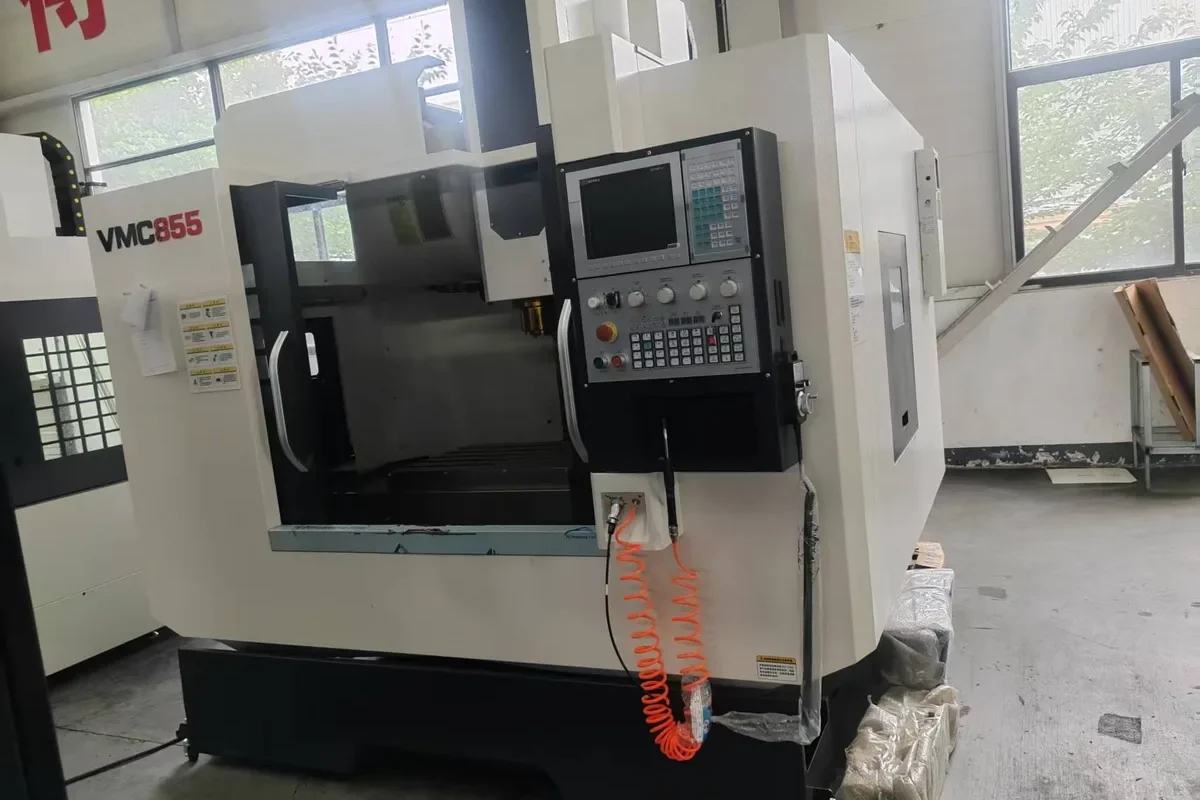
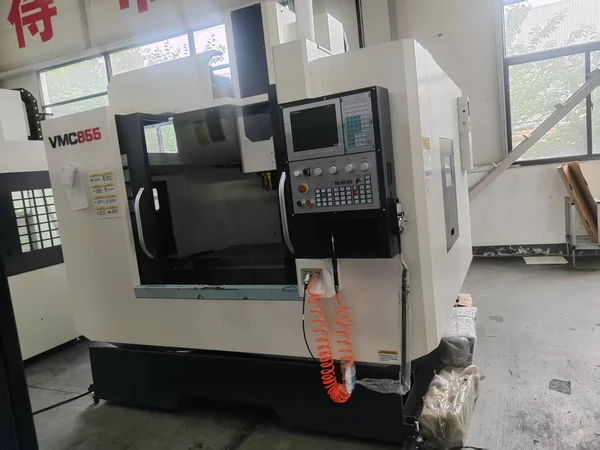
The two machines, side by side
Published numbers first, because everything else in this article is an interpretation of them.
| Item | VMC855 | VMC1160 |
|---|---|---|
| Table size | 1000 x 550 mm | 1200 x 600 mm |
| X / Y / Z travel | 800 / 550 / 550 mm | 1100 / 600 / 600 mm |
| Max. table load | 600 kg | 800 kg |
| Rapid traverse X / Y / Z | 32 / 32 / 24 m/min | 24 / 24 / 18 m/min |
| Spindle taper | BT40, 150 mm | BT40, 150 mm |
| Spindle speed | 8000 rpm | 8000 rpm |
| Machine size | 2600 x 2380 x 2400 mm | 3100 x 2500 x 2800 mm |
| Machine weight | 5300 kg | 6500 kg |
Read down the middle column and then the right one. Nothing here is exotic. The interesting part is which of these rows costs people money when they get it wrong.
Table length is not travel, and travel is what cuts
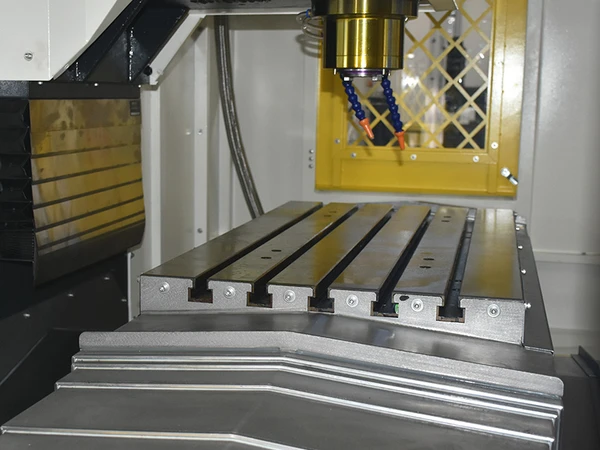
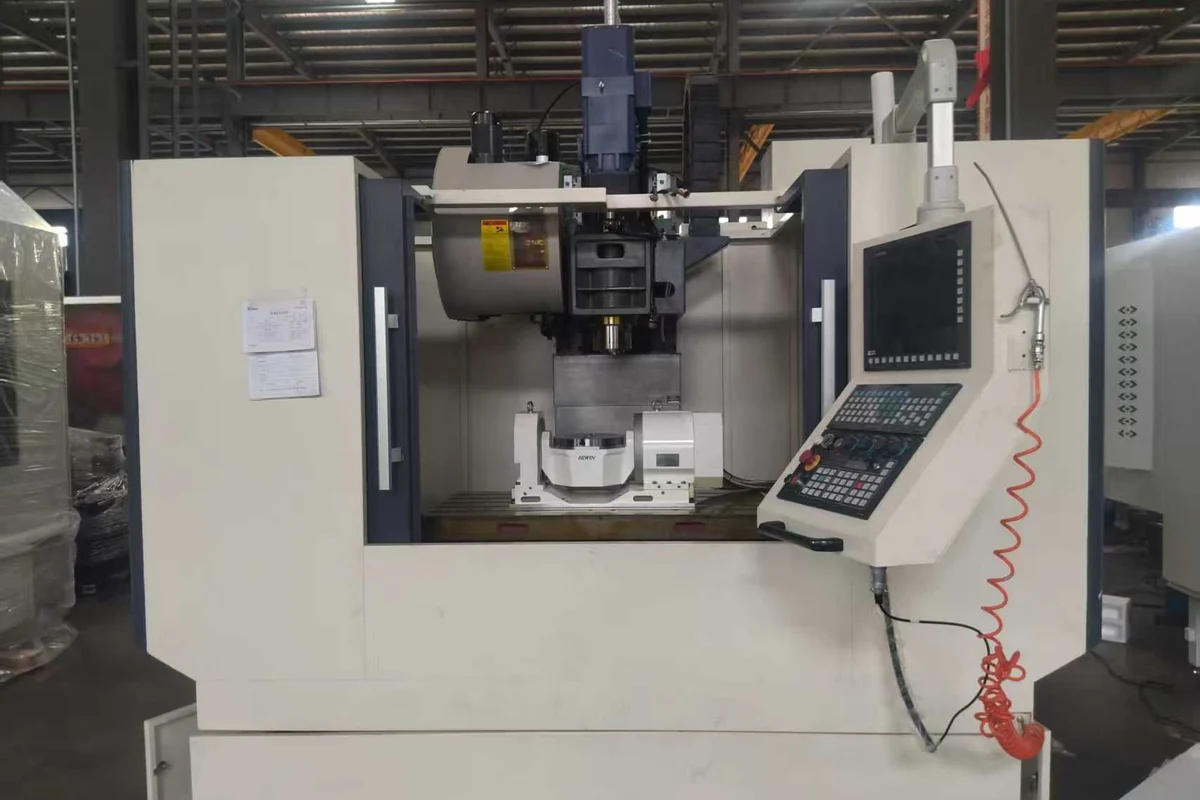
The 855 has a 1000 mm table and 800 mm of X travel. The 1160 has a 1200 mm table and 1100 mm of X travel. In both cases the table is longer than the travel, and that extra length is not wasted — it is where the clamps live. A part that sits at the very end of the table cannot be reached by the tool, so the useful machining window is the travel figure, not the table figure.
Buyers quote table size because it is the number printed largest on the brochure. Then a 900 mm part arrives, and the truth comes out on the CAM screen: at X = 800 mm the tool reaches the middle of the part and stops. You have three options, and all of them cost something.
The first is two setups. Clamp the left half, machine it, unclamp, shift the part, re-indicate, machine the right half. This works, and shops do it every day, but it introduces a joint line in the middle of the part, and on a pocket or a rail that joint has to blend. It also adds a full re-clamp cycle to every piece, forever, not once.
The second is a fixture that hangs the part off the front of the table so the overhanging end comes into the travel window. That works for light parts and short overhangs. On a 40 mm plate it turns into a chatter problem, because the unsupported end rings.
The third is the machine that was needed in the first place. Between 800 and 1100 mm of continuous cut is exactly the band where a lot of real work sits: conveyor side frames, machine guards and covers, long brackets, base plates for small automation cells, platen and heating plates, battery tray sections, door rails. If a part in that band arrives every week, the 1160 pays for itself in re-clamping time alone.
Z travel, and the fixture nobody budgets for
The 855 gives 550 mm in Z. The 1160 gives 600 mm. On a bare table, milling a flat plate, both are plenty and nobody thinks about it. Add the things that actually go on a table and the margin shrinks quickly.
Say you fit a fourth-axis rotary table to run a valve body or a pump flange. The rotary unit itself takes 180 to 250 mm of height depending on the model and the chuck. A three-jaw chuck on top of that takes another 100 mm or so to the centreline. A part 200 mm across the flats then reaches 300 mm above the table before the tool touches it. On the 855 you are now working in the last 250 mm of Z, which is fine for a stubby face mill and tight for a long shell mill or a boring bar.
The same arithmetic applies to tall fixtures, angle plates, and vice jaws stacked on parallels. The 100 mm difference between the two machines sounds trivial until the setup eats it. Our advice is boring and reliable: sketch the tallest realistic setup — part, fixture, rotary unit, tool holder, tool — and compare the total against Z travel before you compare anything else. If the sketch only works on one of the two machines, the decision is made.
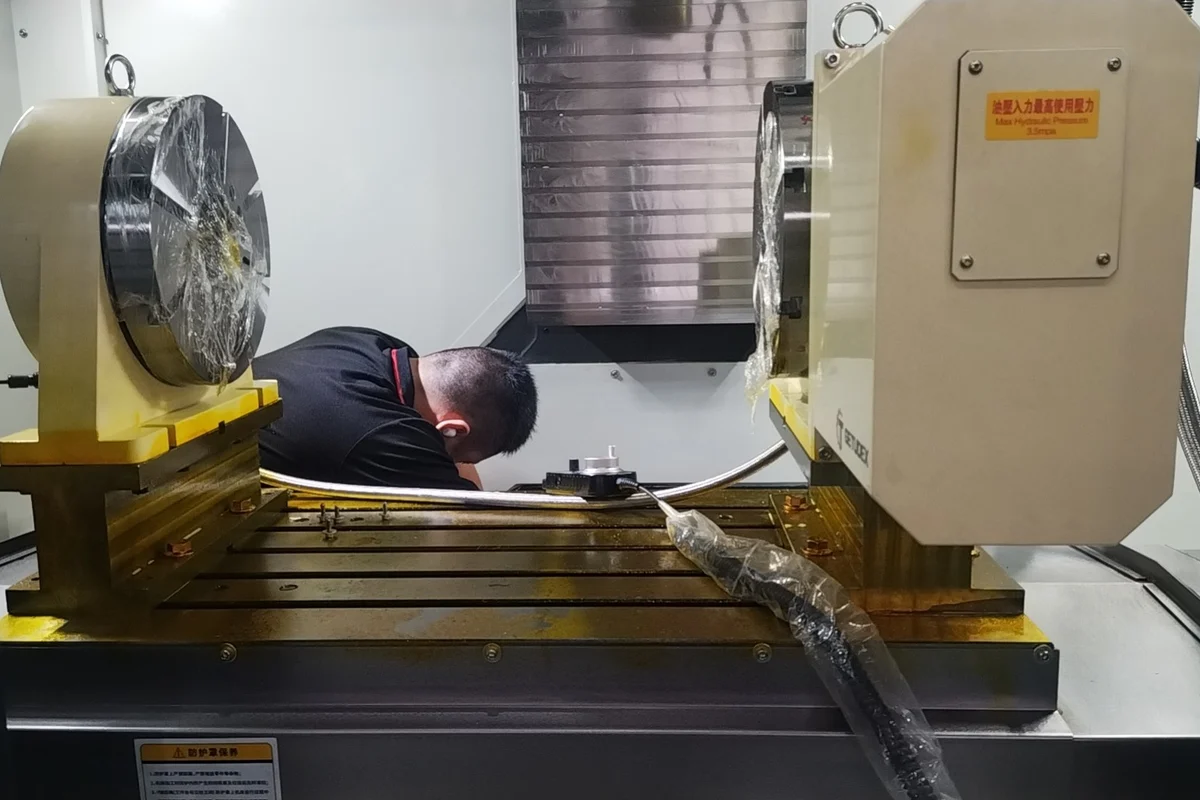
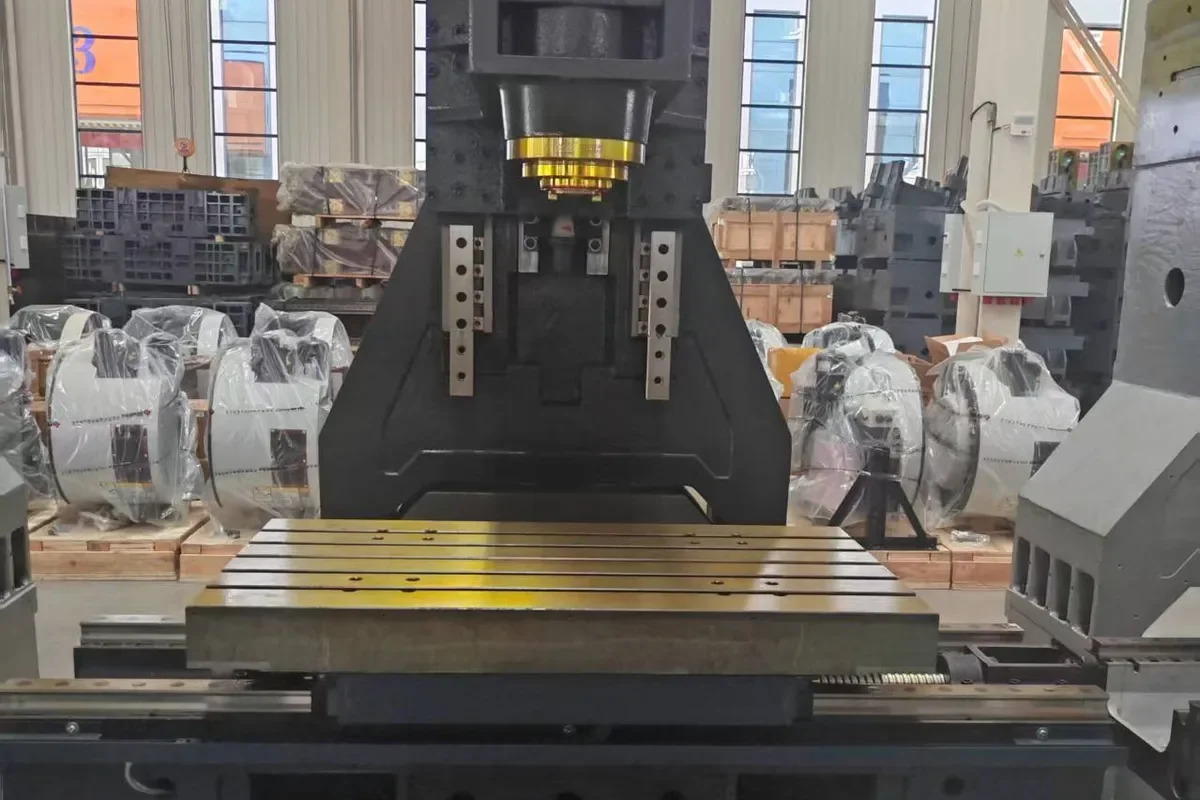
Table load arrives faster than you expect
Steel is heavier than most people estimate at the quoting stage. A plate 1200 x 600 x 50 mm is 0.036 m³ of steel, and at 7850 kg/m³ that is roughly 280 kg before you have bolted anything to it. Add a steel fixture plate 30 mm thick with clamps and locators, and you are at 400 kg. Add a fourth-axis unit and a tailstock on top of the same table, and the 855's 600 kg limit is close.
The 1160's 800 kg gives you room for a heavier fixture, a bigger vice, a rotary table and a tailstock at the same time. Cast iron parts are worse: a gearbox housing that looks modest can weigh more than the plate above because the walls are thick where you cannot see them. If the part family includes castings rather than plate, treat the load figure as the deciding number rather than a footnote.
Where the smaller machine actually wins
This is the part buyers do not expect from a machine builder, so here it is plainly. For a shop whose parts fit inside roughly 700 x 450 x 400 mm, the VMC855 is usually the better buy, and not only because it costs less.
The rapids tell the story: 32 / 32 / 24 m/min against 24 / 24 / 18. On a small part with a lot of features, most of the cycle is not cutting, it is moving between features and changing tools. The 855 gets from hole to hole faster, and over a thousand parts that shows up in the delivery schedule. Smaller parts also mean a smaller fixture, so the 600 kg table load is not a constraint.
Floor space matters too. The 855 occupies 2600 x 2380 mm and stands 2400 mm tall. The 1160 takes 3100 x 2500 mm and stands 2800 mm. In a workshop with an existing layout, a crane runway, or a low ceiling, that difference decides whether the machine goes where you wanted it or somewhere else. Check the door opening and the lifting height before the order, not after the crate arrives.
The 855 also loads and ships more easily, and a lighter machine on an existing floor slab is one less civil works conversation.
Where the bigger machine earns its price
The VMC1160 wins on four things, and none of them is "quality".
Travel: 1100 mm of X means a 900 to 1050 mm part is machined in one clamping, with room at each end for clamps outside the cutting window. That removes a whole re-clamp cycle and the joint that comes with it.
Z: 600 mm keeps a rotary table, chuck and mid-size part inside the working range with a normal tool hanging out of the holder.
Load and mass: 800 kg on the table and 6500 kg of machine. The extra iron is not decoration — it is what keeps a heavy casting quiet when an insert bites into a rough surface. A heavier column and base move less under an interrupted cut.
Work envelope in Y as well: 600 mm against 550 mm, which matters for parts that are wide rather than long, such as pump bases and manifold blocks clamped two-up.
When neither machine is the answer
Two honest exits from this comparison.
If the recurring part is longer than 1100 mm, go up a size rather than forcing it. The VMC1370 gives 1300 mm of X, 700 mm of Y and 750 mm of Z on a 1400 x 700 mm table. For long, narrow work — rails, beams, profiles, long skins — the VMC1560 is the better shape, with a 2200 x 600 mm table and 1500 mm of X on a 5-18-100 T-slot pattern. A long table under a narrow gantry is a different compromise from a wide table under a short one, and picking the wrong shape wastes travel you paid for.
If the part needs four or five faces machined, stop comparing verticals. A vertical with a rotary table will do it, but you are paying for the rotary and the setup every cycle. That is the subject of vertical versus horizontal for multi-face parts, and for a housing with bores on four sides the horizontal is usually the cheaper answer over three years.
The five lines to write before you ask for a quote
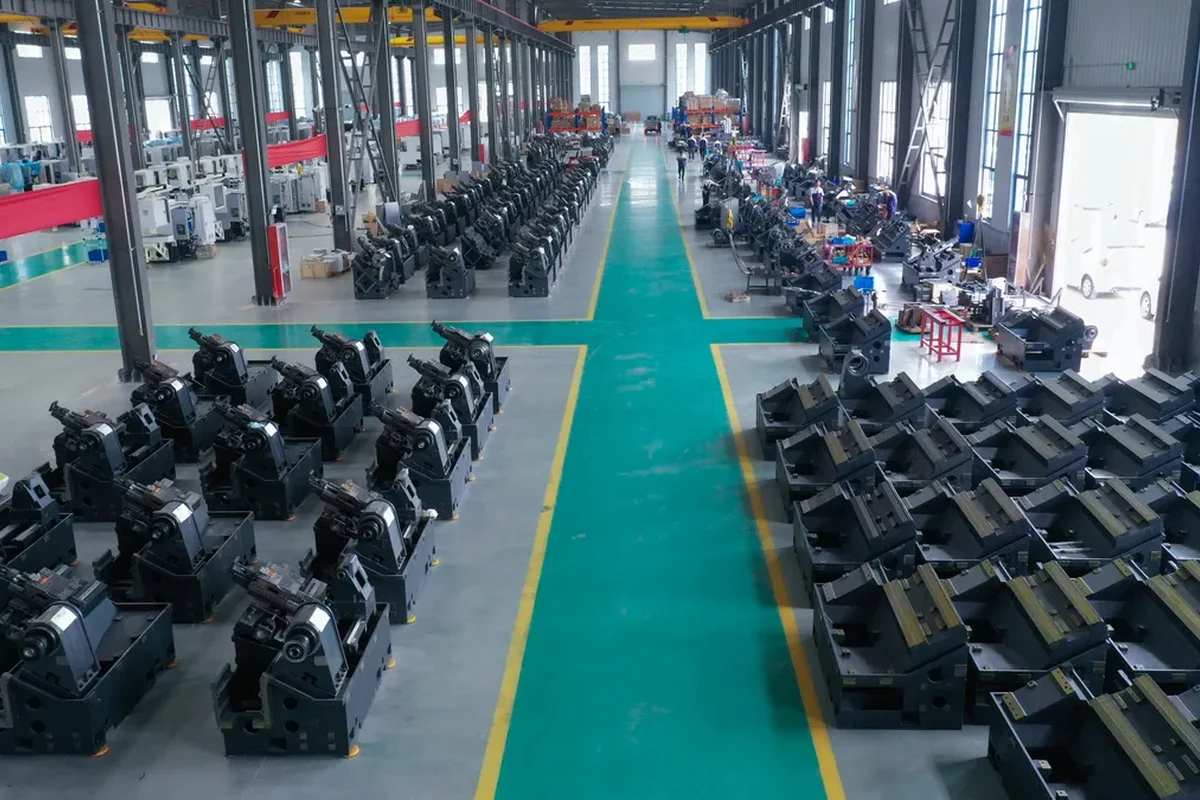
Every enquiry we answer properly starts with these. With them, a model recommendation takes one exchange. Without them, it takes a week of guessing.
One: the largest part in the family, as length x width x height in mm. Not the average part — the largest one you expect to run more than a handful of times a year.
Two: the weight of that part, and of the fixture you intend to use. This is the line people leave out.
Three: which faces get machined, and whether a rotary table or a fourth axis is planned now or later.
Four: material and the heaviest cut you expect — a roughing face mill in cast iron and a finishing pass in aluminium are different machines in practice.
Five: monthly quantity and how many setups the part needs today. If a part currently takes two setups elsewhere, say so; that is often the strongest argument for a bigger table.
Frequently asked questions
Can a VMC855 machine a 900 mm part?
Not in one clamping. With 800 mm of X travel the tool cannot reach both ends without shifting the part. It can be done in two setups with a joint in the middle, or with an overhanging fixture for light parts, but if that length is routine, the VMC1160 with 1100 mm of X is the correct machine.
Is the VMC1160 just a stretched VMC855?
No. The 1160 carries a larger table and travels, a higher table load, and about 1200 kg more machine weight. It also has slower rapids than the 855 — 24 / 24 / 18 against 32 / 32 / 24 m/min — so on small parts the smaller machine can finish sooner. They are two different compromises, not one machine in two lengths.
Which one is better for aluminium parts?
For small aluminium parts with many features, the 855 usually wins on cycle time because of the faster rapids and shorter moves. For long aluminium plates and profiles, the 1160 wins because the part fits. Material matters less here than part size does.
Which one for cast iron housings?
It depends on weight and width more than on length. A heavy housing with a fixture and a rotary table can reach the 855's 600 kg table limit, and the extra mass of the 1160 helps with interrupted roughing cuts. Send the part weight with the drawing and the answer is quick.
Can I add a fourth axis to either machine?
Yes, and both are commonly ordered that way. Budget the Z: a rotary unit plus chuck plus part can eat 300 mm of height before the tool touches anything. That is where the 1160's extra 100 mm of Z and its 800 kg table load become useful.
How do I know which size I need without a drawing review?
Measure the longest continuous cut on your biggest routine part and add 100 mm at each end for clamps and tool clearance. If the total is under 800 mm, the 855 is enough most of the time. Between 800 and 1100 mm, the 1160. Above that, look at the 1370 or the 1560.
Do both machines use the same tooling?
Both take BT40 tooling with a 150 mm spindle nose, so holders, collets and face mills are shared. That is convenient for a shop running both sizes, and it is a real reason some customers buy the pair rather than one large machine.
Next step
If you are weighing these two, send the drawing and the five lines above. We will tell you which model the part fits, and if the honest answer is "neither", we will say so and point at the size that does. Our engineering team quotes against drawings daily, and a model recommendation usually comes back the same working day.
See the full specifications on the VMC855 and VMC1160 pages, or browse the smaller VMC650 if your parts are compact and the floor space is tight.
Contact Handemo CNC | Email: sales1@handemocnc.com | WhatsApp: +86 135 6320 3038