
5-Axis Machining Centers
Product List
Download Catalog
5-Axis Machining Centers
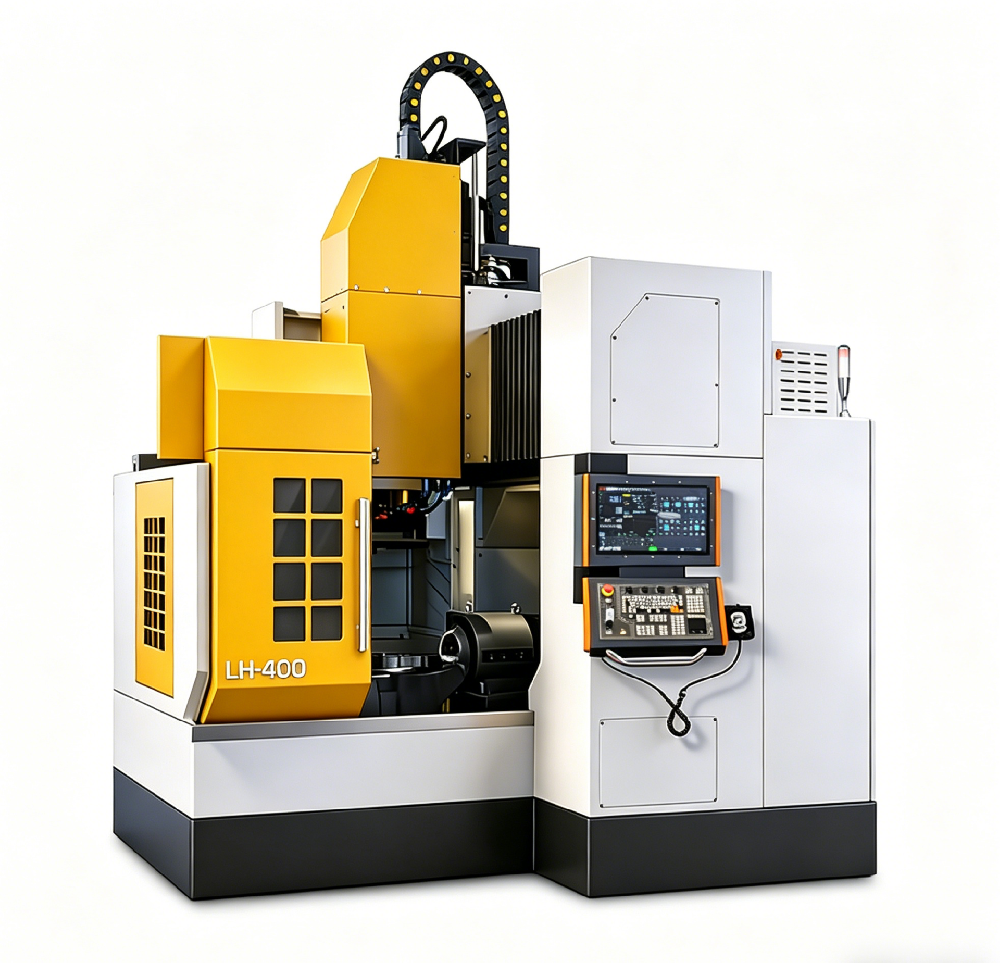
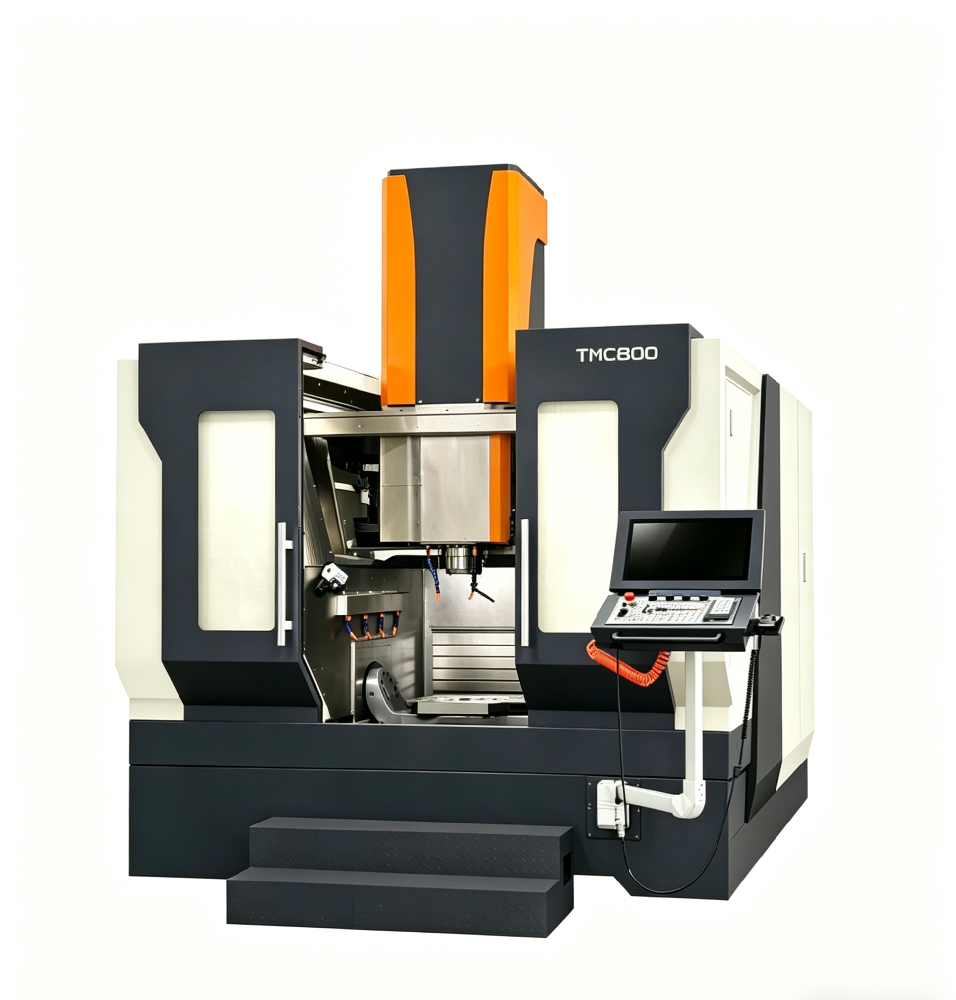
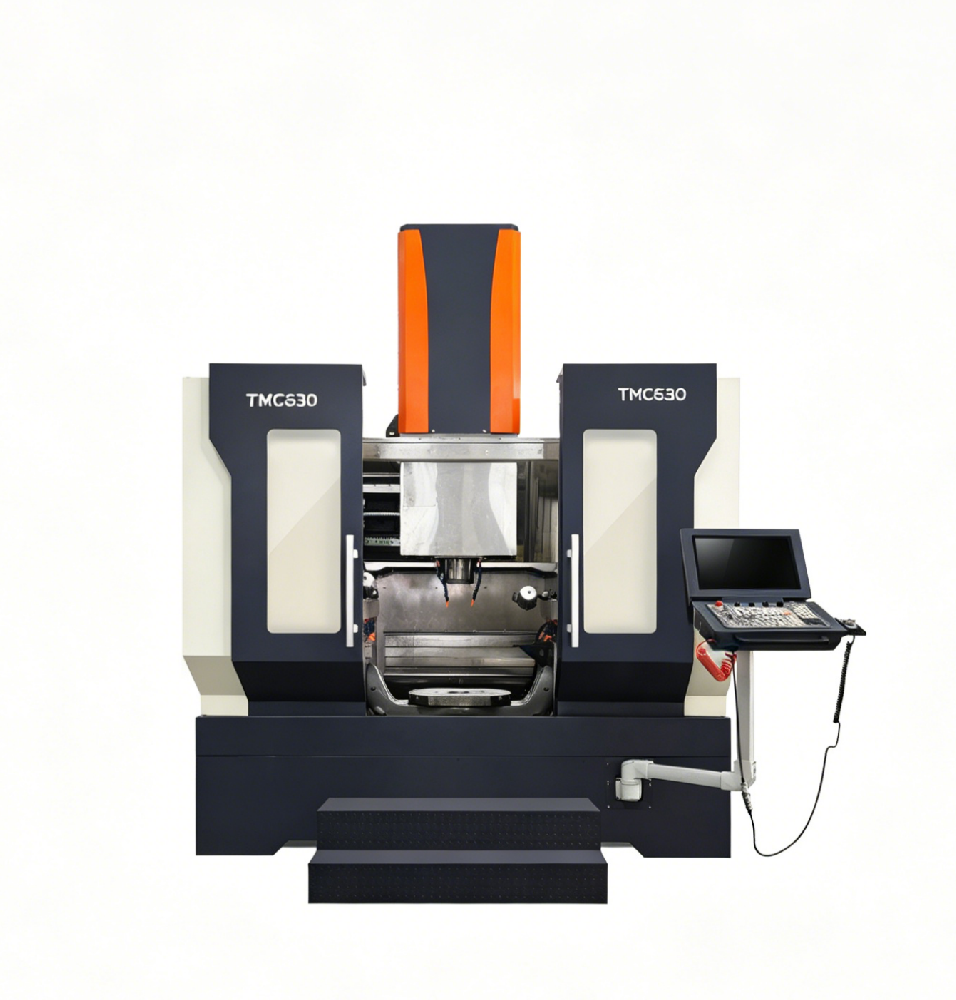
5-Axis Machining Centers for Complex Parts in Fewer Setups
A 5-axis machining center combines three linear axes with two rotary axes so the tool can reach multiple faces, angled holes and free-form surfaces without repeatedly moving the part. For shops making complex components, that usually means fewer setups, tighter relationships between features, and less re-fixturing error.
Handemo builds three families of 5-axis machines plus a 5-axis mill-turn range: compact machines for small precision parts, gantry machines for large heavy workpieces, high-speed machines for intricate surfaces, and mill-turn models that combine turning with multi-angle milling in one setup. This page covers how to choose between them on part geometry rather than model name.
When 5-Axis Machining Actually Pays Off
Five-axis work is not automatically better than 3-axis. It pays off when one of these is true:
- Multiple faces must be machined. If a part needs work on four or five sides, a 5-axis machine removes three or four separate fixtures.
- Angled holes or faces must meet tight position tolerances. Features cut in one setup keep their relationship; features cut across setups accumulate error.
- The surface is genuinely curved. Impellers, turbine blades, mould cavities and aerospace contours need the tool to tilt continuously.
- Setup time dominates the cycle. On low-volume, high-mix work, eliminating fixtures can cut total lead time more than raising spindle speed.
If your parts are prismatic with features on one or two faces, a 3-axis vertical machining center will usually do the job at lower cost and with simpler programming.
3+2 (Positional) vs Simultaneous 5-Axis
These are different capabilities and the price difference is real. Choose deliberately.
| 3+2 Positional | Simultaneous 5-Axis | |
|---|---|---|
| How it works | Rotary axes position the part at a fixed angle, then cutting happens in 3 linear axes | All five axes move together through the cut |
| Best for | Parts with machined faces at fixed angles, port faces, bolt patterns, angled bores | Free-form surfaces, impellers, blades, deep contours |
| Programming | Straightforward, similar to 3-axis | Requires CAM with full 5-axis toolpath control and collision checking |
| Rigidity | Higher - axes are locked during cutting | Lower, because rotary axes are moving under load |
| Typical parts | Valve bodies, manifolds, housings with angled ports, prismatic aerospace brackets | Impellers, turbine blades, mould cavities, medical implants |
The three families each have their own range page, because the part that decides a compact machine and the part that decides a gantry machine are not comparable: compact 5-axis machining centers for work that fits a 400 mm envelope, heavy-duty gantry 5-axis machining centers for large and tall parts, and high-speed 5-axis machining centers for mould and die surfaces. Each page states the envelope and the axis configuration for its group.
A practical rule from the shop floor: if the angled features are flat faces or straight bores, 3+2 is enough and will hold tolerance more easily. If the tool must stay normal to a changing surface, you need simultaneous capability - and the CAM investment that goes with it.
Machine Types and What Each Is For
| Type | Models | Workpiece Scale | Typical Applications |
|---|---|---|---|
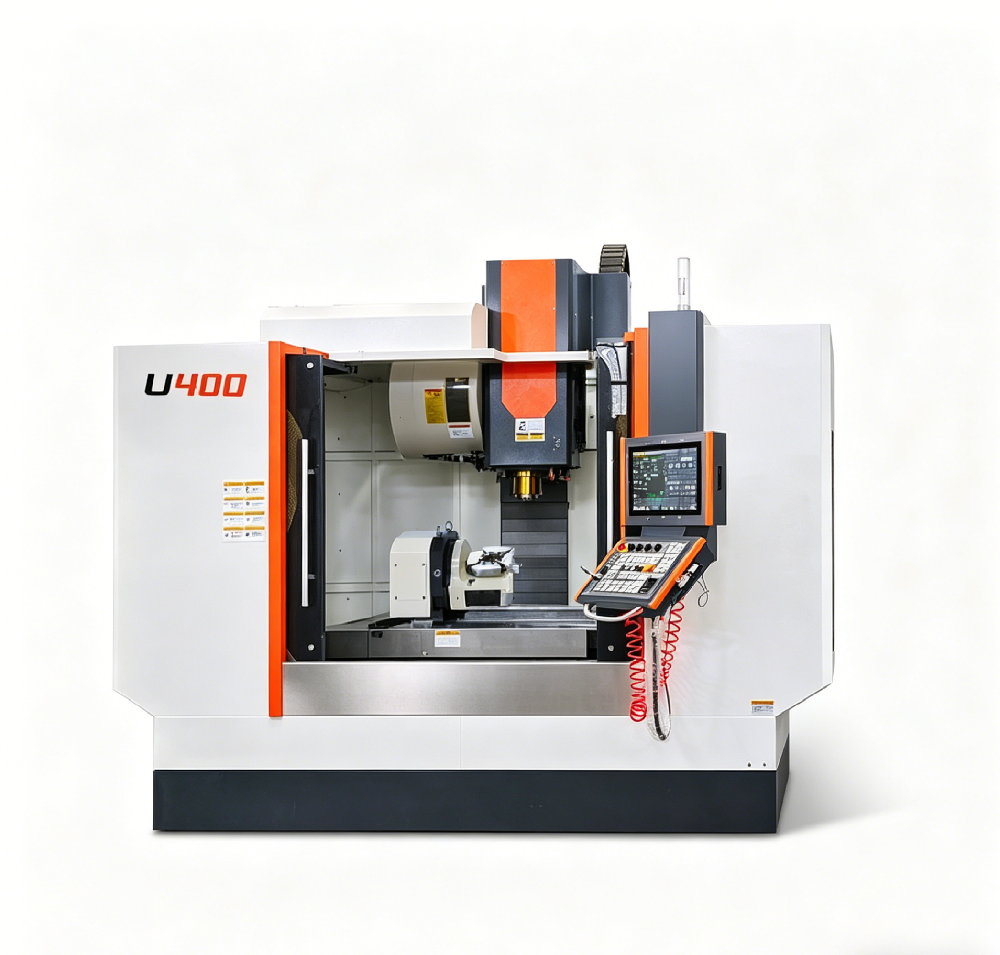
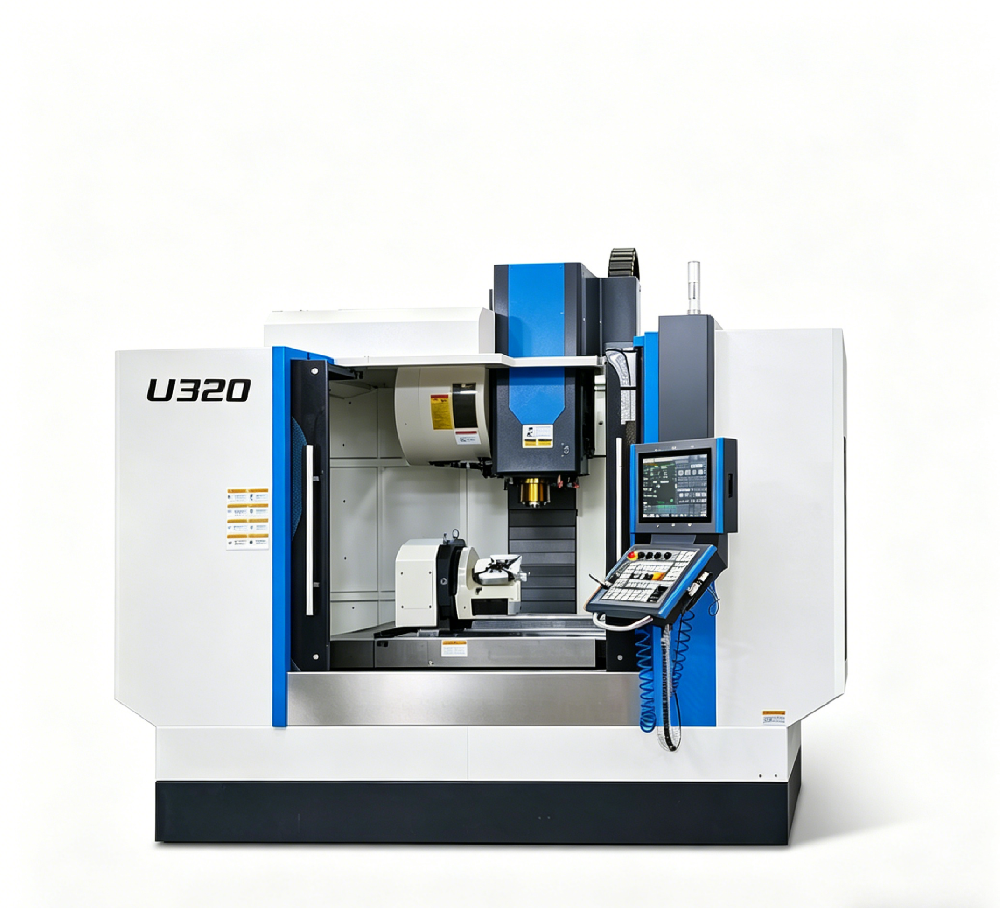
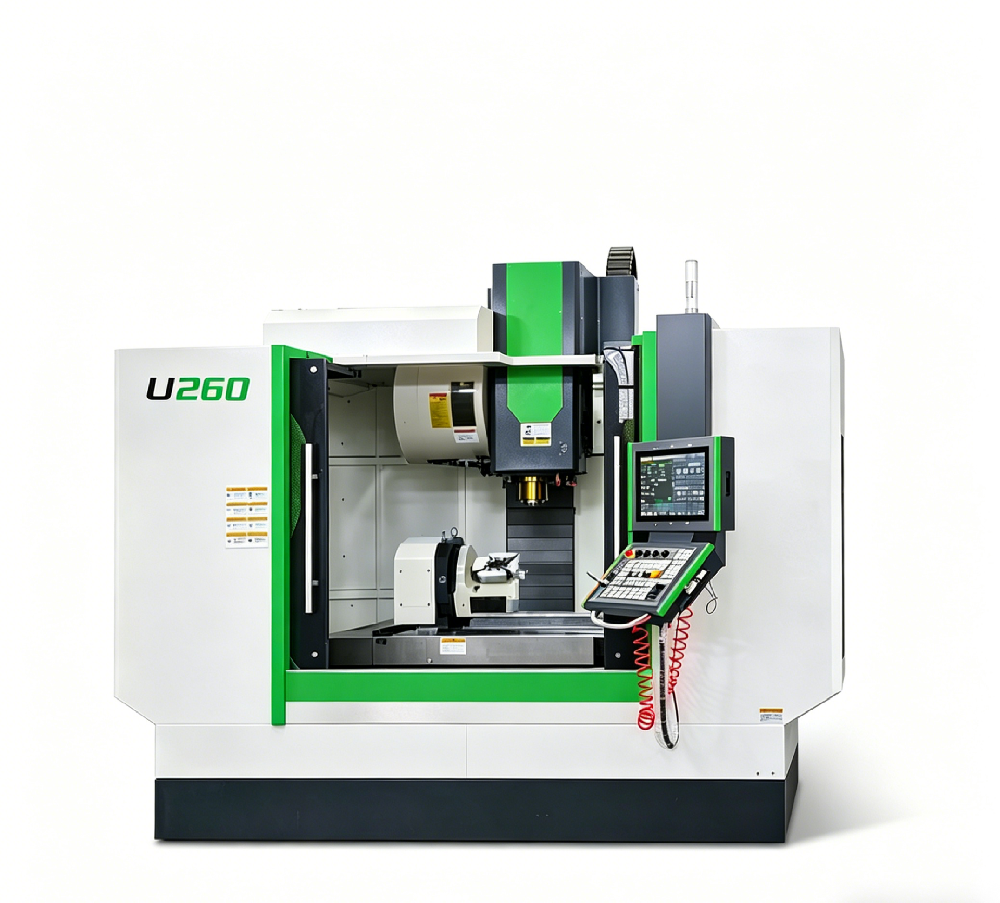
| Compact 5-axis | U260, U320, U400 | Small, up to roughly 400 mm envelope | Precision components, small complex parts, instrument and medical work |
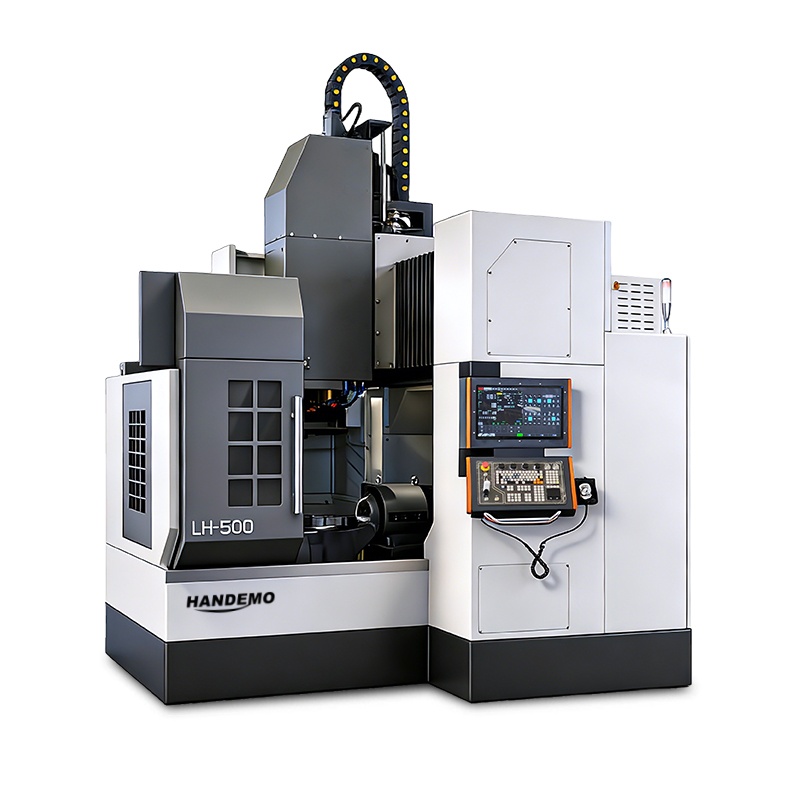
| Heavy-duty gantry 5-axis | LH400, LH500 | Large and heavy | Large complex workpieces, heavy stock removal, die and mould bases |
| High-speed 5-axis | TMC630, TMC800 | Medium, high spindle speed | Complex surfaces, moulds, aerospace components, aluminium structural parts |
| 5-axis mill-turn | HTMC500T, HTMC800T, HTMC800S | Disc and shaft type parts | Turning plus multi-angle milling in one setup, valve bodies, hubs, fittings |
How to Specify a 5-Axis Machine
Buyers usually start with "I need a 5-axis machine" and then discover the specifications that matter are the ones nobody mentions up front. These are the numbers to collect before requesting a quotation:
- Workpiece envelope. Maximum length, width, height and weight - including the fixture, not just the part. Rotary table load capacity is often the real limit.
- Rotary axis travel and speed. How far the A and C axes must tilt or rotate for your part, and how fast they need to move to hit cycle time.
- Spindle speed and torque. Aluminium and mould work want high rpm; steel and cast iron want torque at lower rpm. These trade off, so state the material mix.
- Tolerance and surface finish. Position tolerance on angled features and required Ra determine whether the machine needs thermal compensation and glass scales.
- Tooling and control. BT40 or HSK interface, number of tools in the magazine, and preferred control (Fanuc, Siemens, Mitsubishi) for your operators and existing programs.
- Automation plans. If a pallet pool or robot loader is coming later, the machine needs the interface and floor space for it now.
Send us the part drawing, material, batch size and required cycle time, and we will recommend a configuration rather than a catalogue number.
Typical Parts and Which Machine Fits
The same 5-axis category covers very different work. This is how the applications usually map to machine type:
- Hydraulic valve bodies and manifolds - multiple port faces at angles, cross-drilled passages, tight bore-to-face relationships. A 5-axis mill-turn or 3+2 compact machine handles these in one or two setups. See our hydraulic valve machining guide.
- Pump and compressor housings - bores on several faces, sealing surfaces, mounting flanges. 3+2 on a horizontal or compact 5-axis machine is usually enough. See machining pump housings.
- Impellers and blades - true free-form surfaces needing simultaneous 5-axis with high spindle speed.
- Mould cavities and cores - deep cavities with draft angles; high-speed 5-axis with good thermal stability.
- Wheel hubs and flanged components - bearing seats, mounting faces and bolt circles that must stay on one datum. Often better on a mill-turn machine than a 5-axis machining center. See machining wheel hubs.
What Buyers Get Wrong
Three mistakes come up repeatedly in 5-axis purchases:
Buying simultaneous capability for 3+2 work. If your parts have fixed-angle faces, you are paying for rotary dynamics and CAM software you will not use, and you inherit lower rigidity in the cut.
Ignoring the fixture and load path. A rotary table rated for 300 kg may only hold that with the load centred. An off-centre fixture can halve the usable capacity.
Underestimating programming. Simultaneous 5-axis CAM, post-processors and operator training are a real cost on top of the machine. Budget for them.
Frequently Asked Questions
When is 5-axis machining worth it over 3-axis?
When a part needs machining on several faces, has angled features with tight position tolerances, has genuinely curved surfaces, or when setup time dominates the total cycle. For simple prismatic parts on one or two faces, 3-axis is cheaper and simpler.
Do I need simultaneous 5-axis or is 3+2 enough?
If your angled features are flat faces, straight bores or bolt patterns, 3+2 is enough and holds tolerance more easily. Simultaneous control is only required when the tool must stay normal to a continuously changing surface.
Which 5-axis machine type should I choose?
Start from the workpiece: small precision parts suit compact models (U260-U400), large heavy parts suit gantry models (LH400-LH500), intricate surfaces on medium parts suit high-speed models (TMC630-TMC800), and disc or shaft parts needing turning plus milling suit the HTMC mill-turn range.
Can a 5-axis machine replace two separate machines?
Often yes for complex parts, because one setup replaces three or four. It does not replace high-volume dedicated turning or heavy roughing, where a dedicated machine is still more productive.
Get a 5-Axis Recommendation
Send your part drawing, material, batch size and target cycle time. We will come back with a specific machine configuration, fixture concept and cycle-time estimate - not a generic catalogue.