
CNC Machines for Hydraulic Cylinder Machining
Hydraulic cylinder machining: bore roundness along the stroke, concentricity to the gland, sealing face squareness and steady rest control on long barrels.
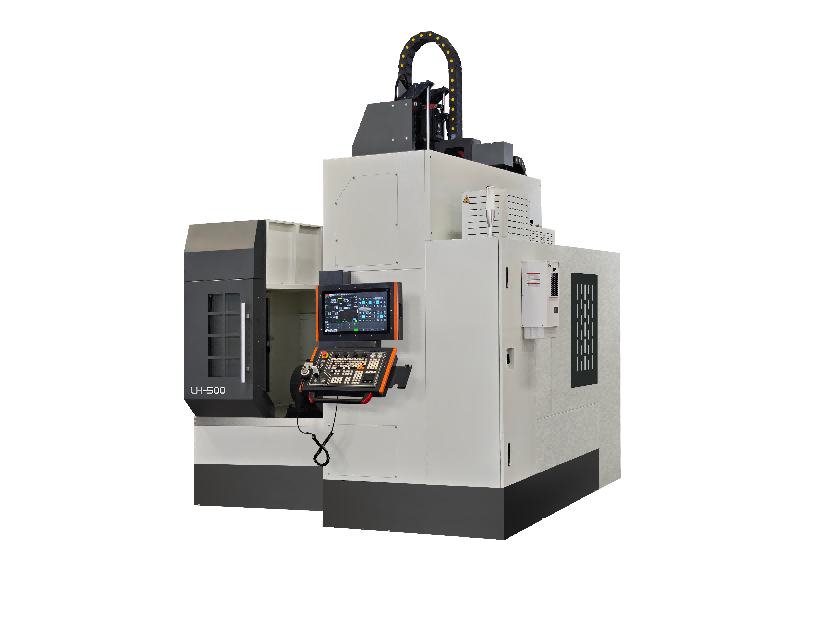
Machining Hydraulic Cylinder Components
A hydraulic cylinder is judged by two things it cannot show: whether it leaks, and whether the rod stays concentric to the barrel through a million cycles. Both are decided during machining, and both fail for the same reason — the bore and the sealing face were cut in different setups, so the error that the seal has to absorb was built in before the part was ever assembled.
This page covers the bore and sealing face relationship, how to sequence barrel and gland work, what decides between a lathe and a mill-turn machine, and how to hold a long barrel without the steady rest writing its own marks into the bore.
What a Cylinder Has to Hold
Bore roundness through the whole length
A cylinder bore is not judged at the ends. It has to be round and straight along its full stroke, because the piston seal travels the entire length and any tight spot loads the seal on every pass. A bore that is round at the mouth and oval in the middle is a bore that will leak in service, and the ovality usually comes from clamping or from a boring bar deflecting in the middle of a long unsupported cut.
Concentricity of bore and gland
The gland or end cap locates on the bore or on the barrel's outside diameter, depending on the design, and the rod runs through both. If the gland and the bore are not concentric, the rod is forced sideways on every stroke and the seal wears on one side. That concentricity is a machining decision: cut both in one clamping with the part indexed, or accept the fixture's repeatability as the limit of the part.
Surface finish inside the bore
A hydraulic bore is usually honed after turning, but the finish left by the turning pass determines how much honing is needed and whether the hone can correct the geometry. A torn or chatter-marked bore from the turning operation will not be fixed by removing a few microns on the hone; the hone follows the shape it is given. Getting the boring pass right is cheaper than adding honing time.
The sealing face is the leak path
Where the end cap seats, the face has to be square to the bore axis and flat enough for the O-ring or the metal-to-metal seal. A face that is square to the machine but not to the bore will leak no matter how well the seal is fitted, and a seal face machined in a second setup typically carries exactly that error.
How to Sequence Barrel and Gland Work
Bore first, then the sealing face in the same clamping
The most reliable route is to bore and face in one operation, so the face is generated from the same spindle that generated the bore. That removes the datum transfer between the two features entirely, and it is the reason a lathe with a boring bar and a facing tool in the same turret is worth more here than a faster machine that needs a second setup.
When the barrel is too long for one pass
A long barrel cannot always be bored from one end with a bar stiff enough to hold the tolerance. Boring from both ends and meeting in the middle works only if the two halves align, so the bore is usually roughed from both ends and finished from one, with a bar sized for the depth rather than the diameter. Where the length exceeds what a boring bar can hold, a deep-hole boring and milling machine earns its cost.
Gland and end cap as their own parts
Glands and end caps are shorter and stiffer than the barrel, so they can usually be turned complete in one setup, with the spigot, the seal bore and the mounting face all coming off one clamping. The critical feature is the spigot that locates in the barrel: its diameter and its squareness to the seal bore decide whether the assembly is concentric, and both are set by how the part is held, not by how it is cut.
Lathe, Mill-Turn or Machining Center
A slant bed lathe for barrels and rods
A barrel with a long bore and no features off the turning axis is a lathe part, and a slant bed lathe with a steady rest handles the length. The steady rest is also the risk: it presses on the outside of the barrel while the bore is cut, so the barrel springs and the bore comes out tight at the steady position. Setting the steady pressure low, using a roller steady rather than fixed pads, and checking the bore diameter at the steady position are what keep the part round.
A mill-turn machine when ports and flats are on the same part
Cylinder barrels and glands usually carry ports, mounting flats, or a bolt pattern that would force a second setup. A mill-turn machine keeps the part in one clamping and cuts the bore, the sealing face and the cross ports without re-chucking, which removes the datum transfer that causes most concentricity failures. This is where the machine pays for itself on cylinder work, because the alternative is a fixture that has to repeat to the tolerance the seal needs.
When a machining center is the right answer
Blocks with integrated cylinders — manifold blocks, valve bodies with a bore, castings that combine a cylinder with other features — are machining center work, not lathe work. The rule is the same as elsewhere: if the largest feature runs on one axis and everything else is arranged around it, it is a turned part; if there are two or more comparable bores on different axes, it is a milled part.
Process Notes for Cylinder Work
Rough, stress-relieve, finish
A thick-walled tube or a casting carries residual stress that is released as material comes off. Roughing the bore, letting the part settle, and then finishing avoids the bore closing down after the part has been measured and accepted. On a long barrel the movement can be enough to take the bore out of tolerance between the machine and the inspection bench.
Support the bore, not just the outside
A steady rest supports the outside of the barrel; it does nothing for the wall between the steady and the tool. On a thin-walled barrel, supporting the bore from the inside with a mandrel or a plug, or boring in short sections with the steady repositioned, keeps the wall from deflecting under the cutting force.
Deburr the port intersections
Ports drilled into a cylinder bore leave a burr on the inside that the piston seal will find. Deburring through the bore, with a tool that can reach the intersection, belongs in the process plan; leaving it to a hand operation after assembly is how a cylinder passes test and fails in the field.
Related Guides
- CNC machining hydraulic cylinders - the full process route
- Hydraulic valve body machining - bore and port work on the valve side
- Valve and hydraulic parts - the wider part family
- Slant bed CNC lathe explained - steady rest behaviour on long parts
- CNC mill-turn machines - one-setup cylinder work
More Application Guides
Handemo builds machines for each of these part families. Each guide covers what the part demands from the machine and how the process is sequenced.
Discuss Your Cylinder Project
Send the barrel length, bore diameter and tolerance, the port layout and the batch size, and we will suggest the machine and the steady rest arrangement that holds the bore.
Request a Process Review