CNC Machining Hydraulic Cylinders: An Application Guide
A hydraulic cylinder looks like a simple assembly until one comes back from the field. The seal weeps, the rod drifts under load, or the gland starts to leak after a few thousand cycles. When the cylinder is taken apart, nothing is obviously broken. The bore measures round, the rod looks straight, and the seals are the grade that was specified. The problem is almost never the drawing. It is the order in which the surfaces were made, and which of them were made while the part was still held by the same reference.
Cylinders sit in almost every branch of general machinery. They push and hold on presses, they lift and steer on agricultural and construction equipment, they open and close on injection moulding machines, and they work continuously on marine and mining equipment. The sizes change, the pressures change, and the seals change, but the machining problems repeat. This guide walks through the parts inside a cylinder, what each one has to do, and which machine is the natural place to make it.
What a Cylinder Job Actually Contains
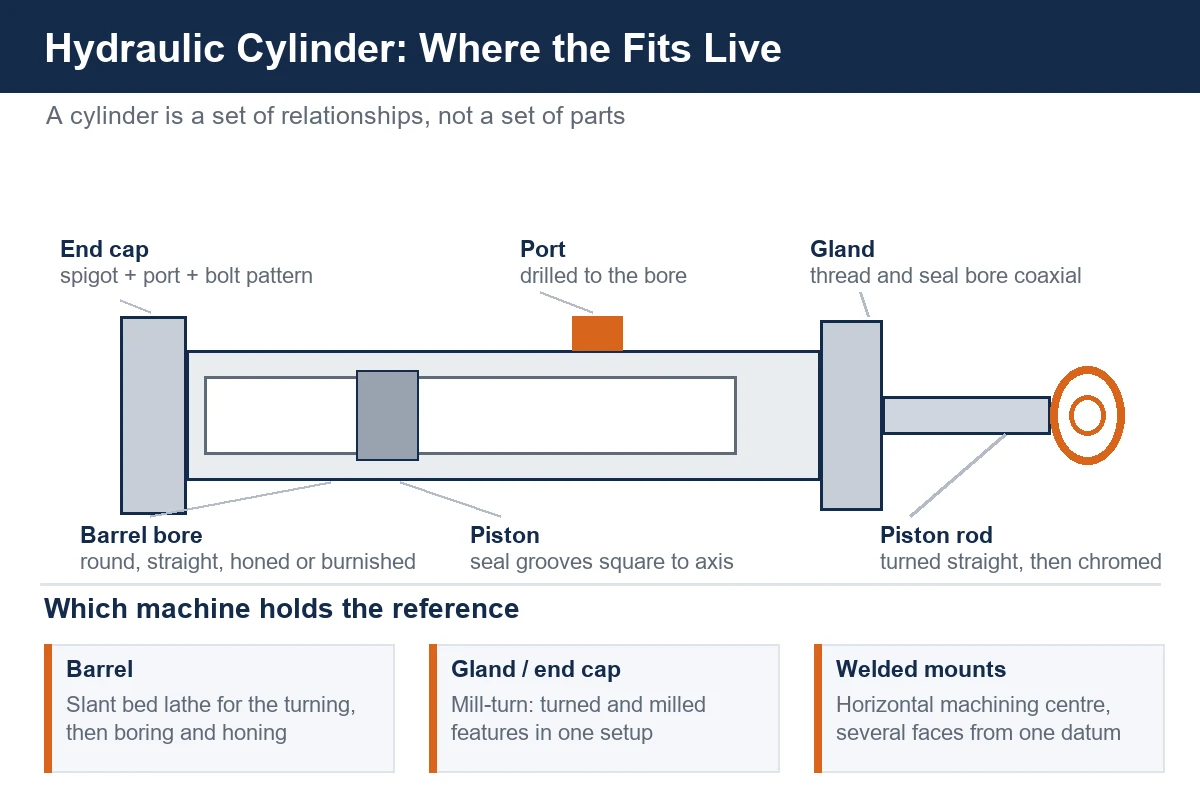
A cylinder is not one part, and it is rarely bought as one part. Most jobs arrive as a set: a barrel, a piston rod, a gland, a piston and one or two end caps or mounting blocks. Each of them carries a different kind of surface, and each surface fails in its own way.
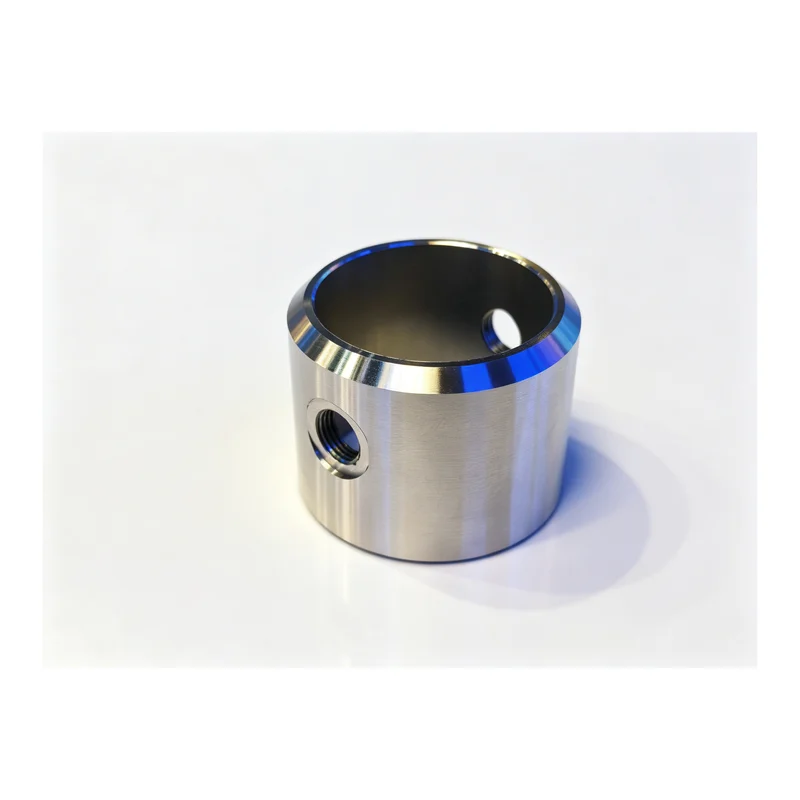
The barrel has to be round and straight inside, and the end that carries the thread or the flange has to be square to that bore. The rod has to be straight and hard and smooth on the running surface, with a thread or an eye at each end that lines up with the axis. The gland carries the seal and threads into the barrel, so its thread and its seal bore have to agree with each other. The piston has grooves that have to be parallel and concentric with the bore it runs in. The end cap usually carries a port, a mounting pattern and a spigot, and it has to close the barrel without cocking.
These parts are made in different shops, on different machines, and then assembled. That is why small process differences show up as field failures rather than as inspection failures. A cylinder can pass every dimensional check on the bench and still leak in service, because the leak is produced by the relationship between two parts that were measured separately.
The Barrel Is a Boring Job Before It Is a Turning Job
Barrel work is dominated by the inside. The outside of a barrel is usually a turned cylinder that only has to look right and take a thread or a flange at each end. The bore is where the pressure lives, and the bore is where the cost of the part is decided.
Boring, honing and roller burnishing are different answers
For a short barrel, a boring bar on a lathe or a boring mill takes the tube to size and the job is finished on the machine. As the barrel gets longer, a boring bar reaches its limit, and the usual answer is to rough the bore, then finish it with a honing operation or a skiving and roller burnishing operation. Skiving removes material with a multi-edge tool and burnishes the surface behind it in the same pass, which produces a hard, smooth wall and holds diameter well over a long length. Honing gives more control over the final geometry and is the usual choice when the tube is thin or when the bore has to be corrected after welding.
Which one to use depends less on the drawing tolerance than on the wall thickness and the length. A thick-wall tube holds its shape and tolerates skiving. A thin-wall tube springs, and a process that pushes a tool hard through the bore will leave the wall oval no matter how accurately the tool was set.
Support matters more than spindle speed
A barrel is a long, slender part, and on a lathe the dominant problem is deflection, not cutting speed. The tube wants a steady rest or a tailstock, and the steady rest wants to sit on a turned band rather than on the raw tube surface. Shops that skip the band and clamp the steady rest on the as-received outside diameter end up chasing ovality that was built in by the support, not by the tool.
The other habit that matters is to finish the bore and the end features without re-establishing a reference. If the thread at the end is cut in a second operation from a different statement of where the part is, the thread can be perfectly formed and still stand slightly off the bore axis. That is the classic cause of a gland that screws in tight on one side.
The Rod: Turning, Grinding and a Thread That Has to Follow the Axis
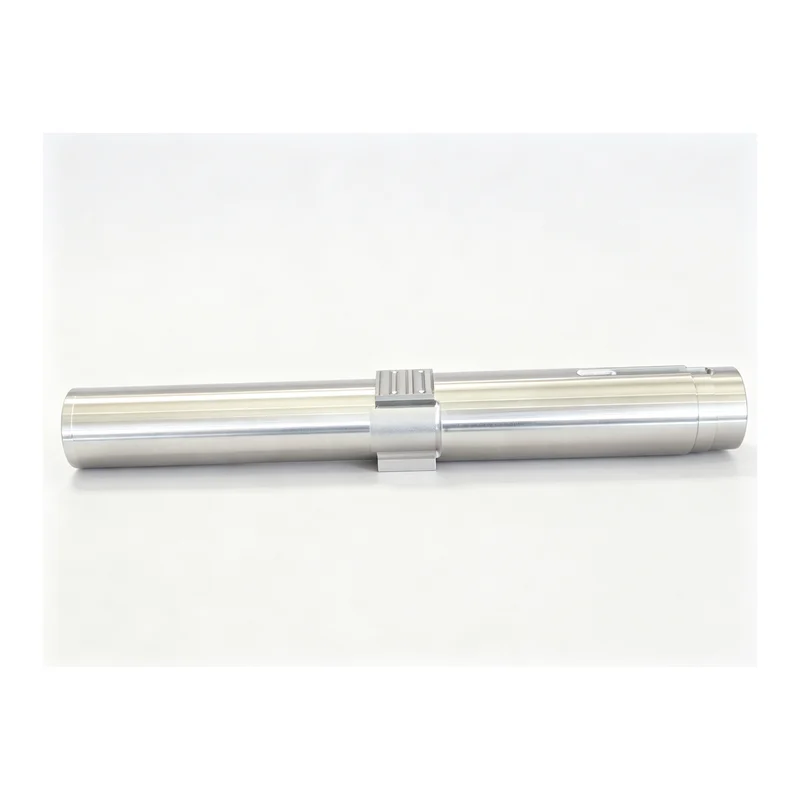
The piston rod is the part the customer can see, and it is the part that carries the side loading of the machine it drives. It usually begins as a bar, is turned to a stepped profile, has a thread or an eye at each end, and then gets a running surface that has to be smooth and hard.
Most rods are finished with hard chrome on the running surface. From the machining side, the important point is that the chrome goes onto whatever profile the lathe produced. If the turned surface has a taper, a step or a chatter pattern under the chrome, the chrome copies it. The plater cannot fix geometry, and a rod that goes to plating with a poor turned surface comes back looking shiny and running badly.
Where the rod loses straightness
A long rod has the same deflection problem as the barrel, and it adds one of its own. When a rod is turned between centres, the centres hold the ends, and the middle of the rod can still be pushed away by the tool. On a long rod, this shows up as a gentle barrel shape rather than as a visible error, and it reappears as a drift in the cylinder after assembly. A steady rest on a turned band, or a tailstock with a properly seated centre, is what keeps the rod true over its whole length.
On rods that carry an eye, a clevis or a flat at one end, the alignment between the eye and the axis is the whole job. The eye cannot be milled afterwards from an independent setup and then be expected to sit square to the rod, because a small angular error at the eye becomes a large side load at the seal. Machining the eye and the rod axis from one reference is worth more than any amount of subsequent inspection.
The Gland and the End Cap: Where Threads and Bores Meet
The gland is a small part that decides whether the cylinder leaks, because it holds the rod seal and it screws into the barrel. Two features have to agree on it: the thread that engages the barrel, and the seal bore that the rod runs through. If the thread and the bore are not coaxial, the gland will tighten against one flank and the seal will be loaded on one side, and the cylinder will weep on that side.
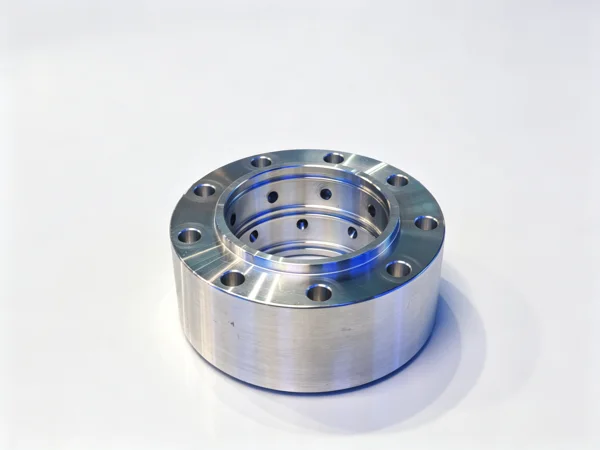
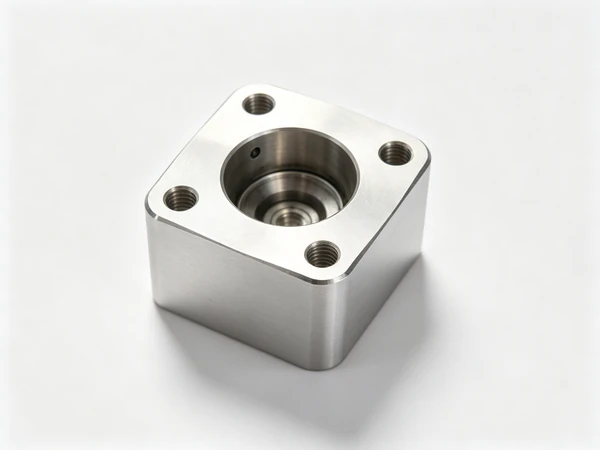
The same logic applies to the end cap and to the mounting blocks. A cap that carries a port, a spigot and a bolt pattern has to bring all three into agreement with the barrel axis. When those features come off separate setups, the cap will bolt down, the port will line up, and the spigot will still load the barrel wall unevenly. These sealing and porting surfaces are the same family as the ones described in our guide to machining hydraulic valve bodies, and they are covered from the shop-floor side on the valve and hydraulic parts page.
Why a mill-turn machine changes this job
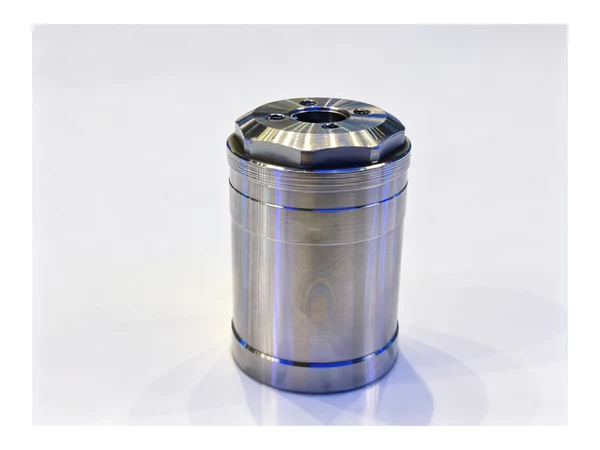
Glands and caps are turning jobs with milled features on them. A mill-turn machine holds the part on the main spindle, turns the thread and the seal bore on that axis, and then machines the ports, flats and bolt holes without letting go. The relationship between the features is then produced by the machine and not by a fixture, and it does not drift from the first part of the batch to the last.
On a plain lathe, the same job is done by turning in one operation and moving the part to a machining centre or a drill for the ports. That works, and it is how a great many glands and caps are still made, but only when the second fixture reproduces the same angular position on every part. A fixture that is loaded and unloaded all shift will not, and the error is invisible on the part.
The Piston and the Seal Grooves
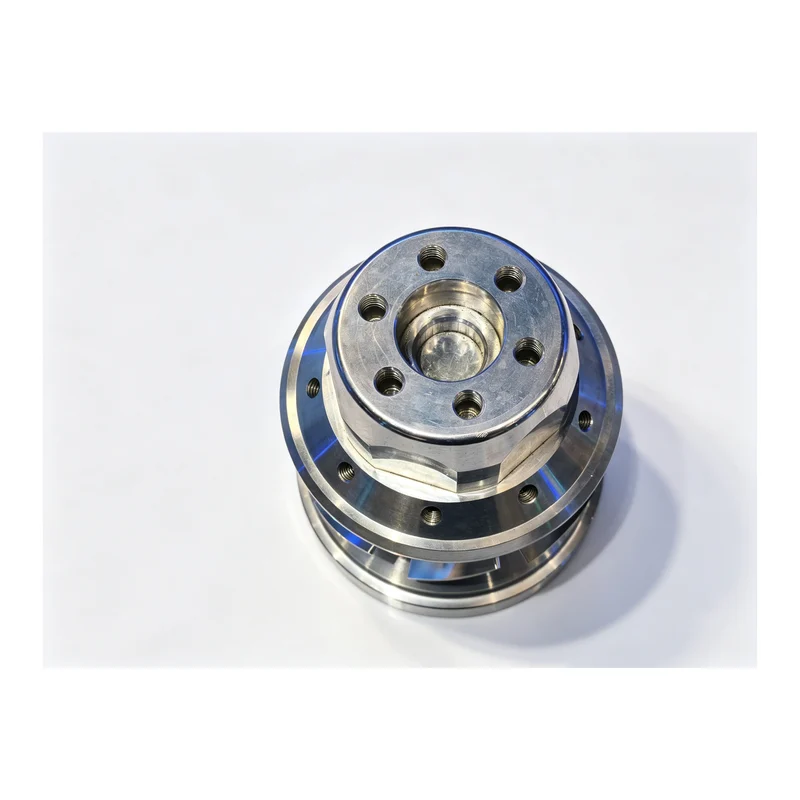
The piston is the simplest-looking part in the cylinder and the one that is most often made casually. Its grooves have to be parallel to each other, square to the bore axis, and concentric with the running diameter. The seal sits in a groove, and a groove that is not square to the axis will squeeze the seal on one side and let it pass oil on the other.
Pistons are almost always a turning job. The features that matter are the groove walls and the groove bottoms, and those are produced by a grooving tool working from a single setup. The groove width and the groove position are what the seal manufacturer cares about, and both come off the same reference as the piston's running diameter.
Machine Choice Follows the Shape of the Part
There is no single machine that makes a whole cylinder well. The right answer is to look at each part and ask which machine holds the reference while the critical features are cut.
Slant bed lathes for barrels, rods and pistons
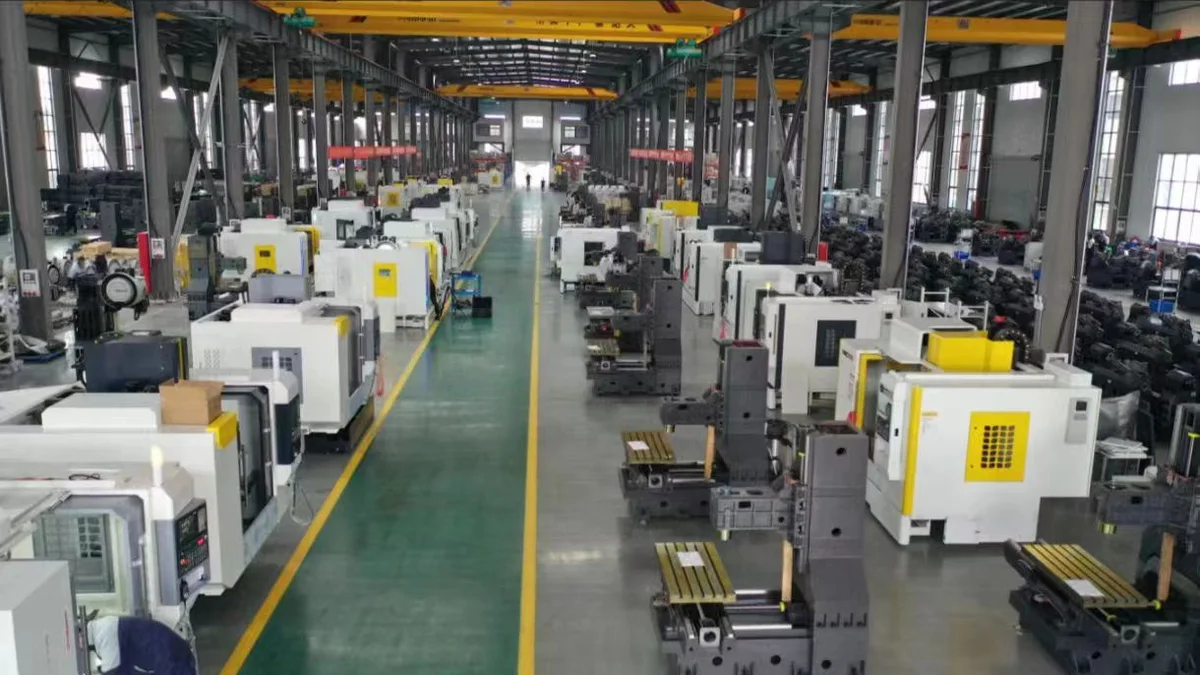
A CNC slant bed lathe covers most of the turning work in a cylinder. It turns the outside of the barrel, the stepped profile of the rod, the piston and its grooves, and the thread and seal bore of the gland. Slant bed machines clear chips away from the cutting zone by gravity, which matters on the long, stringy chips that cylinder steel produces, and they hold the part on one axis through the whole operation.
Size the lathe to the longest part in the family rather than to the average part. A cylinder shop that only fits the average barrel will turn away the long-stroke jobs, and long-stroke jobs are exactly the ones that come back. For heavy barrels and long rods, a lathe with a steady rest and a tailstock is the practical choice, and models such as the TCK6050 cover the small and medium range while the TCK6350B heavy-duty slant bed lathe takes the long and heavy work.
Mill-turn when the part carries ports and pads
Where a barrel, a gland or a cap carries ports, flats or a bolt pattern, a machine that turns and mills in one setup removes the whole question of alignment. A Y-axis mill-turn machine is the natural home for glands with cross ports and for caps with mounting pads, because the turned features and the milled features are made from the same statement of where the part is.
Horizontal machining centres for welded and bolted assemblies
Large cylinders are often built from a welded or bolted barrel with a mounting block, a trunnion or a set of pads. Those parts are box-shaped rather than round, and they are reached from several sides. A horizontal machining centre lets the part sit on one face and be machined on several sides by indexing the table, so the bore, the pads and the bolt pattern come from one coordinate system. For long or deep bores, a deep-hole boring and milling machine is the version that reaches inside the part rather than around it.
If you are comparing those two families for a cylinder or a machined housing, the same reasoning is set out in more detail in our guide on choosing a machining centre for box and housing parts, and in the comparison of a CNC lathe against a mill-turn machine.
Materials and Cutting Notes
Barrels are usually made from a cold-drawn steel tube or from a hollow bar, in a plain carbon or low-alloy grade that machines cleanly. The tube arrives either as a raw bore or as a honed bore, and the choice between the two decides how much boring the shop has to do. A honed tube is bought for its inside diameter and its straightness; a raw tube is bought for its price and finished in-house.
Rods are made from medium-carbon or alloy steel, often through-hardened or induction-hardened before the running surface is finished. Hardened steel is unforgiving on a lathe, because the cutting edge is loaded on a surface that wants to push it away. That is a tooling and approach decision more than a machine decision, and it usually means smaller depths of cut and a rigid setup rather than a bigger spindle.
Caps, glands and mounting blocks are often castings or forgings. Cast iron machines well, breaks a chip and takes a fine finish, and the only real cost is housekeeping. Steel caps bring interrupted cuts and a tougher material, which is normally answered by tool grade rather than by machine choice. Aluminium caps appear on lighter machinery and are the opposite problem: soft, sticky, and prone to chips welding to the cutting edge if the tool rubs rather than cuts.
Fixtures and Setup Discipline
In cylinder work, the fixture decided the result long before the machine did. A few habits separate shops whose cylinders hold from shops whose cylinders come back.
- Work from a finished datum on every operation. If the first part is set from the finished bore, the last part should be too, and everyone on the shift should know which surface that is.
- Turn a support band for the steady rest early, and keep it clean. The steady rest is only as good as the surface it rides on.
- Leave enough stock that the finishing cuts remove whatever the clamping did. On thin-wall barrels and on aluminium caps, the part springs back after unclamping and the last cut was taken on a shape that no longer exists.
- Cut the thread and the mating bore from the same setup. This is the single habit that removes most gland leaks.
- Record the setup for the part family. The next order is usually the same cylinder with a different stroke, and the setup is the expensive part of the job.
What the Customer Actually Measures
When a cylinder is rejected, it is rarely rejected on the dimensions the shop checked. The customer mounts it, runs it, and looks at whether the rod drifts, whether the seal weeps, and whether the gland loosens. Those are assembly-level results, and they are produced by the relationships between parts rather than by any single dimension.
The practical conclusion for a machining shop is to treat the cylinder as a family and to control the relationships inside it. Keep the bore and the end thread on one reference. Keep the rod axis and the eye on one reference. Keep the gland thread and the seal bore on one reference. Keep the cap spigot, the port and the bolt pattern on one reference. Do that, and the cylinder assembles and holds without the shop having to inspect its way out of the problem.
Frequently Asked Questions
Can the barrel bore and the end thread be machined on one machine?
On a short or medium barrel, yes. A lathe with a boring bar can take the bore and the end features from one setup, which is the cleanest arrangement. On a long barrel the bore is usually finished by honing or skiving as a separate operation, and the end features are then turned from the finished bore as the datum so the two still agree.
How do you keep a long barrel straight?
By supporting it. A steady rest on a turned support band and a properly seated tailstock do more for straightness than any change to cutting data. Roughing in a balanced sequence, so the tube is not cut away on one side only, matters almost as much.
Do you hone the bore or roller burnish it?
Roller burnishing, usually combined with skiving, suits thick-wall barrels where the tube holds its shape and the shop wants a fast, hard, smooth bore. Honing suits thin-wall barrels and bores that need geometry corrected after welding, because it removes material slowly and under control.
Can the rod and its eye be turned in one setup?
Yes, and it should be. Machining the eye from the same reference as the rod axis keeps the eye square to the axis, which is what protects the seal from side load. Turning the rod first and milling the eye from a separate setup is where the alignment is usually lost.
Which material should the barrel be made from?
Cold-drawn steel tube in a plain carbon or low-alloy grade is the normal answer, bought either as a raw bore or as a finished honed tube. The decision is less about the grade than about whether the shop wants to bore the tube in-house or to buy the bore finished and machine around it.
Working Through a Cylinder Family?
If you are quoting a cylinder, a gland or a set of caps and want to know which machine holds the relationships across the family, send the drawing or a photo of the parts with the material and the quantity. We will come back with a process route and a machine recommendation sized to the parts you actually run.
Contact Handemo CNC | Email: sales1@handemocnc.com | WhatsApp: +86 135 6320 3038
You can also upload your drawing and get a machining plan and a quote back from our process team.