CNC Machining for Mining and Quarry Wear Parts
A jaw plate arrives at the machine shop with its wear face already finished. That face is cast manganese, work-hardened by a few hundred thousand tonnes of rock, and none of it is our business. What arrives with it is a back face, two seating edges and a bolt pattern that has to line up with a frame cast somewhere else, on a different day, in a different mould.
That is the whole job. Mining and quarry parts are wear parts, and the wear surface is metallurgy rather than machining. The surfaces we cut are the ones that decide whether the part seats, whether it stays seated while the load comes through it, and whether the next liner goes in with a wrench or with a torch and a grinder.
This guide is written from the shop floor of a machine tool builder that also machines these parts for crusher manufacturers and repair shops. It covers the families, the materials, where the cut actually goes, and what to look at before a casting goes on the table.
The Machined Surface Is Never the Wearing Surface
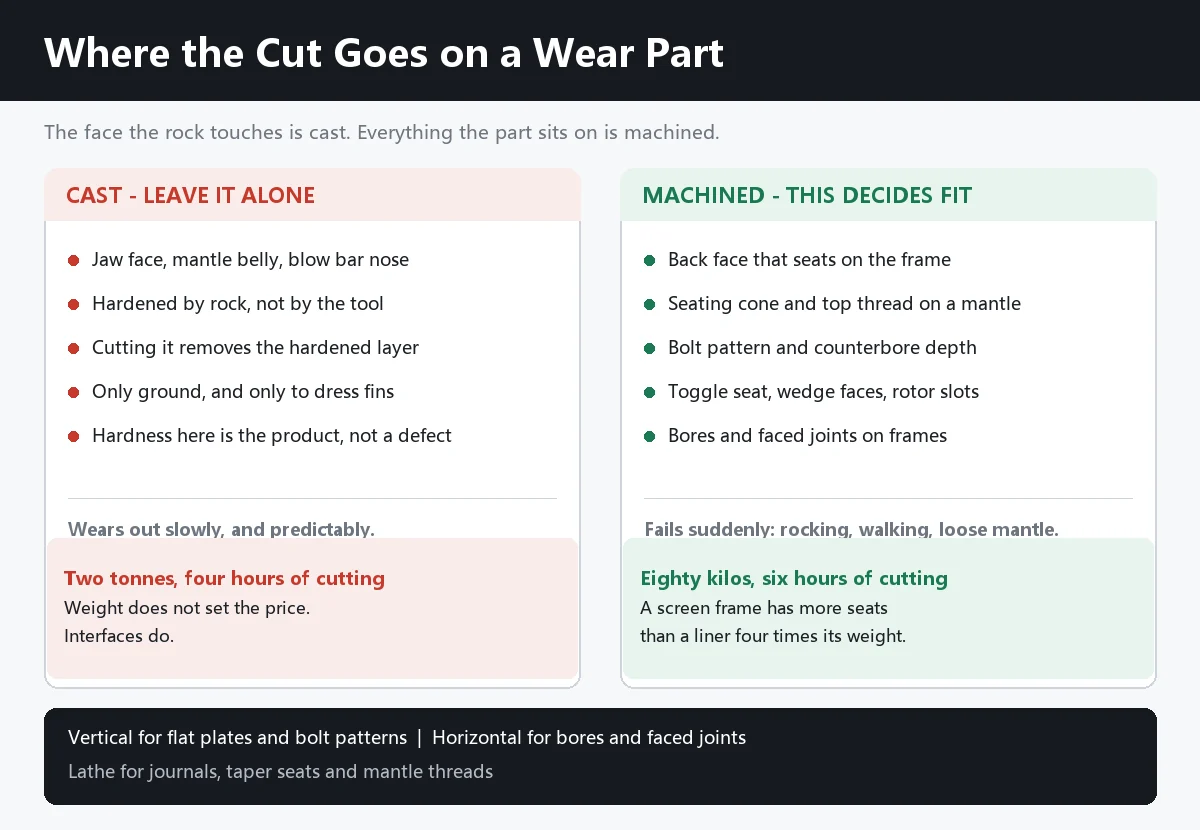
Take any wear part apart and you find two kinds of surface on it. The first is the one the rock touches: a jaw face, a mantle belly, a blow bar nose. It is cast, it is hard, and cutting it is usually the wrong idea because the hardness is the point.
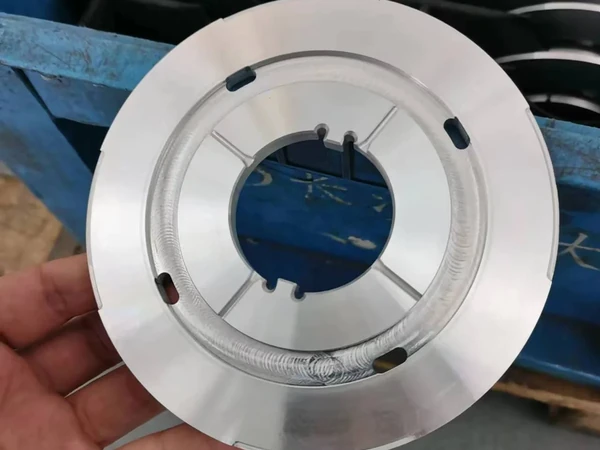
The second kind is everything the part touches besides rock. The back face that sits against the frame. The seating cone that pulls the mantle down onto the head. The counterbore the bolt head pulls into. The slot a wedge drives through. The bore that takes a shaft. Those surfaces have one job: to transfer load into the structure without moving.
That second set is where all the machining lives, and it explains a pattern that surprises buyers new to the category. A crusher liner can weigh two tonnes and carry four hours of machining. A screen deck frame can weigh eighty kilos and carry six. The weight has nothing to do with the work; the number of load-transferring interfaces does.
It also explains the failure mode that sends parts back. Wear parts almost never fail because the wear face wore out early. They fail because the backing gap was uneven, so the liner rocked; because the seating cone was out of step with the head, so the mantle worked loose and the thread hammered itself flat; because the bolt pattern was drilled from one datum and the frame was bored from another, so the plate went on with three bolts and a hammer. All three of those are machining problems, and all three show up months later as a broken casting.
The Families, and Which Surface Gets Cut
The category is wider than "crusher parts". Six families cover most of the enquiry traffic, and each one has a different machined interface.
| Part family | Typical material | Surfaces that get machined | Machine that does the work |
|---|---|---|---|
| Jaw plates (fixed and swing) | Mn13Cr2, Mn18Cr2 | Back face, two seating edges, bolt counterbores, toggle seat | Vertical machining centre, 1600 mm class table |
| Cone mantles and bowl liners | Mn18Cr2, martensitic steel | Seating cone, top thread or ramp, backing face, lifting lugs | Heavy lathe for the cone, horizontal machine for the bowl |
| Impactor blow bars and breaker plates | Martensitic steel, chrome white iron | Rotor slot, wedge faces, locating shoulders | Horizontal machining centre |
| Screen decks, side plates, feeder pans | Structural steel, wear plate | Bolt holes, edge prep, frame faces | Vertical machine, gantry for long decks |
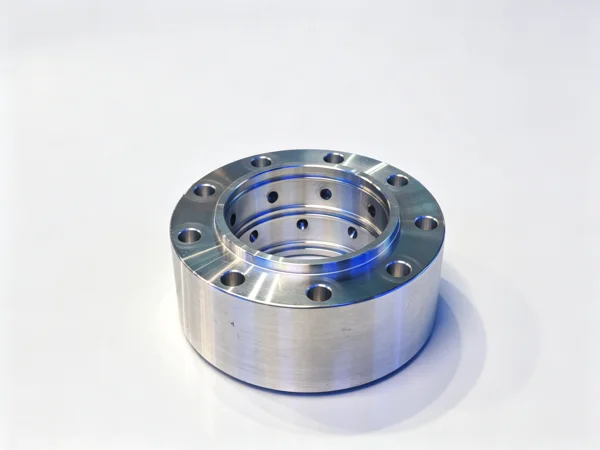
| Crusher frames, spiders, bearing housings | Cast steel, ductile iron | Bore fits, faced joints, dowel holes, seal registers | Horizontal machining centre, 1000 mm pallet and up |
| Eccentric and main shafts, sleeves | 42CrMo, 4140, bronze | Journals, taper seats, keyways, thread | Heavy slant bed lathe with tailstock |
The families split cleanly by machine type, and that is useful when you are costing a job. Flat, heavy, awkward parts with a bolt pattern go on a vertical machine. Anything with a bore that has to line up with a face ninety degrees away goes on a horizontal, because the pallet rotates and the bore and the face are cut without the part ever being lifted. Round parts with a seat and a thread go on a lathe.
Materials, and What Each One Does to the Cut
Four material groups cover almost everything in this category, and each one fails differently on the machine.
Hadfield manganese steel (Mn13, Mn18). The default for jaw plates, mantles and bowl liners. It work-hardens under impact, which is exactly why it lasts, and exactly why it is unpleasant to cut. A sharp insert will take a light cut on the cast skin and then the surface hardens under the tool and the next pass rubs. The rule in our shop is to get under the skin in one decisive pass with a tough edge and never dwell; a tool that rubs turns a two-hour job into a six-hour job and a burned edge. It also moves. A casting this size releases stress when the skin comes off, so any face that has to stay flat needs to be cut in a sequence that keeps the part clamped the same way throughout.
Martensitic and low-alloy wear steels. Blow bars, breaker plates and some liner backs. These cut more like a normal alloy steel and take a higher surface speed, but they are often already heat treated, so the hardness is in the part before it reaches the machine. If the drawing says the part is hardened and the surface still has to be cut, that has to be said at the quotation stage, not discovered on the table.
Chrome white iron. The hardest of the group and the least machinable. In practice you grind it, or you design the part so that the white iron is a tile bolted to a machinable backing. When a drawing asks for a bored hole in white iron, the honest answer is usually a design question rather than a machining question.
Cast steel and ductile iron for frames and housings. This is where a machining centre earns its cost, because these parts are not wear parts at all — they are the structure that everything else bolts to. Cast steel frames machine well but are never flat, never square, and always have a parting line somewhere inconvenient.
Jaw Plates: The Back Face Sets the Life
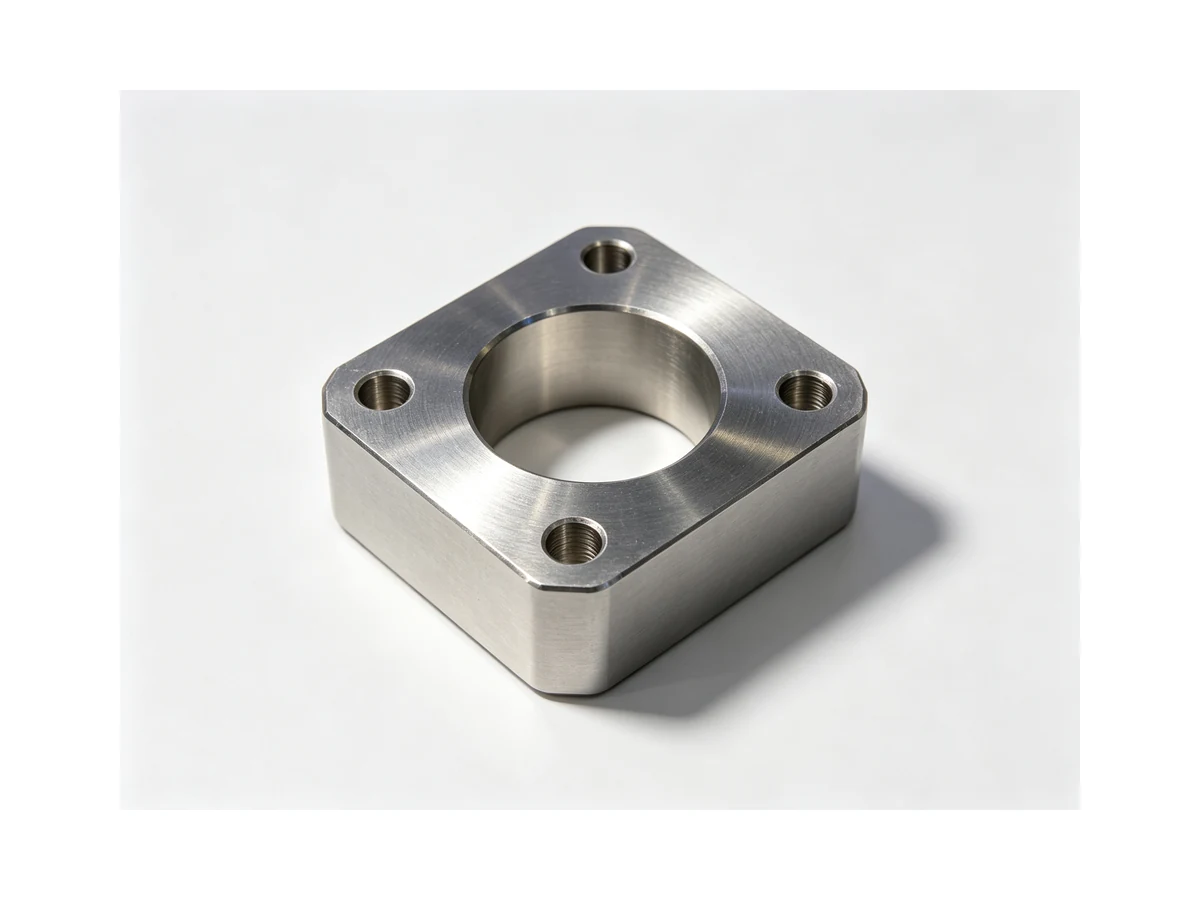
A jaw plate is a rectangular block with a toothed face on one side and three features on the other: a back face, two seating edges that fit into the frame's cheeks, and a row of counterbored bolt holes. The toothed face is cast. Everything else is cut.
The back face is the one that matters. It has to sit against the frame with no rocking, because the crushing load arrives as a series of impacts and any gap turns into a hammer. A plate that rocks will fatigue its bolts in weeks and crack the frame ear in months. On a rebuild, the frame's seat is usually worn and no longer flat, which means the plate cannot simply be made to nominal — it has to be made to the frame as it is now, or the frame has to be faced first.
That is a decision the buyer should make explicitly. Two routes exist. Face the frame seat on site or in a shop with a portable machine, then make the plate to nominal. Or measure the frame, map the wear, and cut the plate's back face to match. The first is better engineering and worse logistics; the second is faster and needs a real measurement, not a guess.
The bolt pattern is the second trap. It is usually drilled from the plate's own seating edge, because that edge is the only datum that survives casting. If the frame's holes were drilled from a different datum, the mismatch shows up as a plate that goes on with a pry bar. On a repeat order, always cut the pattern from the same datum as the last batch, and keep the fixture.
The toggle seat — the pocket at the bottom that takes the toggle plate — is the third feature and the one most often skimmed. It is a bearing surface in everything but name. A toggle seat cut shallow makes the crusher's closed side setting drift, and the operator compensates by adjusting the wedge, which loads the frame differently. It is worth cutting in the same setup as the back face so the relationship between the two is fixed by the machine rather than by the fixture.
Cone Crushers: The Seating Cone Is the Whole Part
A mantle is a cone with a thread or a ramp on top and a belly that wears. The belly is cast. The seating cone underneath, the top thread, and the backing face are machined, and those three decide whether the mantle stays on the head.
The seating cone has to match the head's cone closely enough that the backing compound fills a uniform gap. Too much gap in one place and the mantle cranes over under load; too little and the compound cannot flow, so there is a void exactly where the load is highest. Both end the same way: the mantle moves, the thread hammers, and the head is scrap.
Cutting that cone on a heavy lathe is a compound-angle job, and the setup is what makes or breaks it. We chuck on the mantle's top spigot, support the belly with a steady, and cut the seating cone and the thread in one clamping so the two cannot disagree. Doing them in two setups is faster and is how mantles come back with a thread that will not pull down.
Bowl liners are the mirror problem. The seating face is a cone inside a bowl, and the bowl itself has to be bored and faced so the liner seats against the adjusting ring rather than against the wear of the last ten years. When a bowl liner will not seat, the fault is usually in the bowl, and the fix is a boring job on a horizontal machine with the bowl fixtured on its own centreline.
Impactors: Slots, Wedges and the Cost of a Loose Bar
An impact crusher turns a blow bar into a projectile if it is not held properly. The bar itself is simple — a rectangular block with a hard nose — but the rotor slot it sits in is a machined feature with three surfaces that all have to agree: the floor the bar rests on, the face the wedge pushes against, and the shoulder that stops the bar walking sideways.
These are cut on a horizontal machine, typically with the rotor fixtured on a tombstone so several slots can be reached by rotating the pallet. That is the reason to use a horizontal here rather than a vertical: a rotor has slots on both sides and around its circumference, and re-clamping a two-tonne rotor to reach the far side is both slow and unreliable.
The wear pattern on the slot floor tells you what happened. A floor worn in a wave means the bar was rocking, which means the wedge was not pulling it down evenly. A shoulder worn in one corner means the bar was walking, which means the slot was cut with a taper that the bar did not share. Neither is fixed by a harder bar.
Screens, Feeders and Conveyor Work: Volume, Not Difficulty
The bulk of the tonnage in this category is not crusher internals. It is screen decks, side plates, feeder pans, chute liners and pulley hubs — flat or boxy parts with a lot of holes in them.
Nothing here is technically hard. The difficulty is that the parts are long, thin, and have hole patterns that must match a frame made by someone else. A screen side plate can be three metres long with forty holes in it; the holes are not the problem, the accumulated position along three metres is. Cut them from one datum in one setup on a machine with enough travel, and the plate bolts on. Cut them in two setups because the machine is short, and the middle two holes will not go.
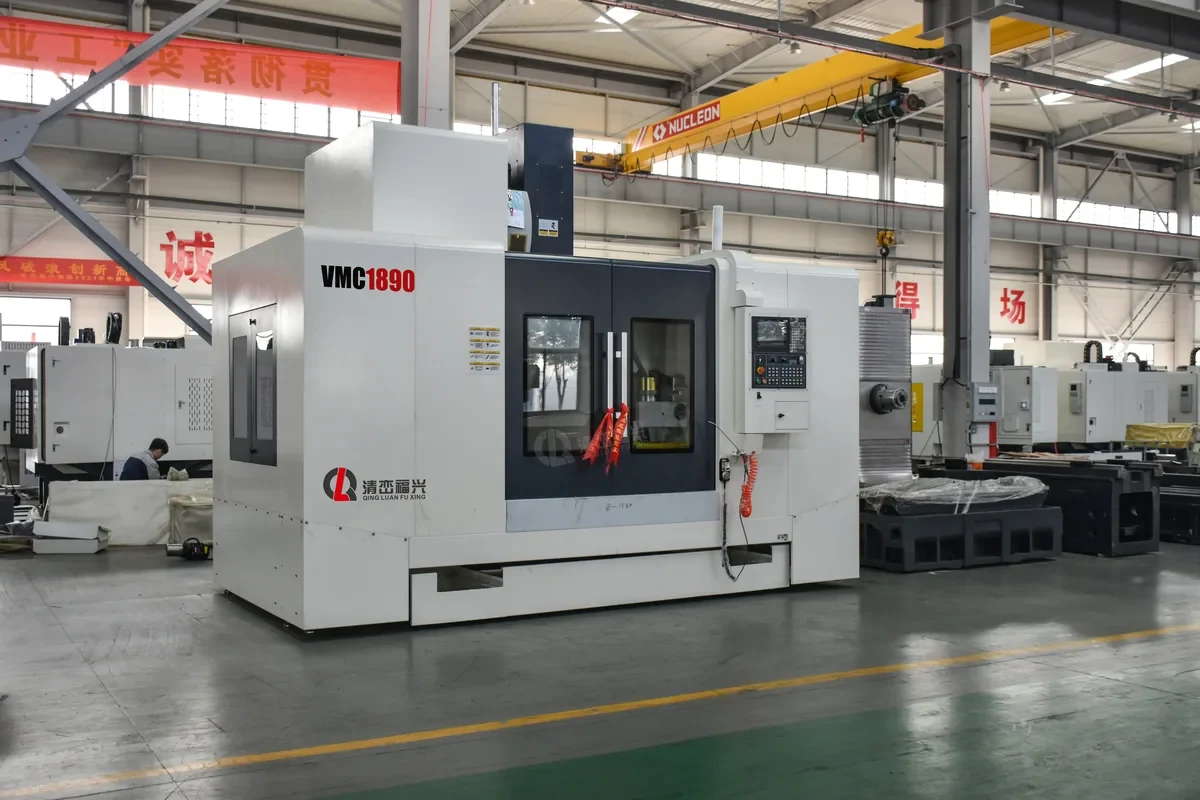
This is the argument for a large-table vertical machine in a plant that builds screens. A 2000 × 900 mm table with 1800 mm of X travel takes a full side plate, drills and taps it in one clamping, and removes the entire class of error that comes from flipping a long part.
Conveyor and feeder components — pulley hubs, bearing blocks, shaft ends — are ordinary turning and boring work and belong on a lathe or a horizontal, not on a big table.
Housings and Shafts: Where the Machine Choice Is Obvious
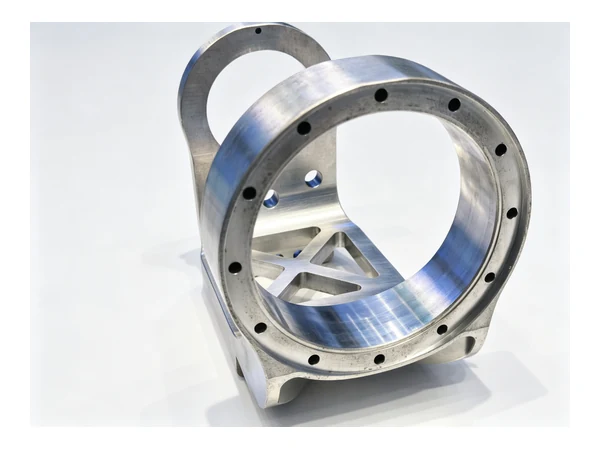
Crusher frames, spiders and bearing housings are the parts that make the machine tool decision easy, because they are defined by bores that have to line up. A spider has a central bore and three or four arm faces; a frame has a bore for the eccentric and a faced joint for the cap. Every one of those relationships is a 90-degree rotation away from the last.
On a horizontal machine with a rotating pallet, all of them are cut without the part being lifted. On a vertical machine, each face is a new setup and each setup re-introduces the fixture's error. That is the whole trade: a horizontal costs more and removes a category of scrap.
| Model | Table or pallet | Load | Travel X / Y / Z | Spindle | Machine weight |
|---|---|---|---|---|---|
| VMC1690 | 1600 x 800 mm | 1500 kg | 1600 / 900 / 700 mm | BT50-190, 6000 rpm | 12000 kg |
| VMC1890 | 2000 x 900 mm | 1600 kg | 1800 / 900 / 600 mm | BT50-190, 6000 rpm | 14000 kg |
| TH1000 | 1000 x 1000 mm | 3500 kg | 1300 / 1100 / 1200 mm | BT50-190, 6000 rpm | 18000 kg |
| HMC1400S | 1400 x 1400 mm | 5000 kg | 1800 / 1300 / 1500 mm | BT50, 2000 rpm | 19500 kg |
| TCK6350B | 630 mm swing, 96 mm bore | 85 mm bar | 500 or 1000 mm cutting length | 18.5 kW, A2-8 | 4300 kg |
Two numbers in that table are worth reading together. The HMC1400S carries five tonnes on a 1400 mm pallet and only turns its spindle at 2000 rpm — that is a machine built to bore, not to mill aluminium, and it is the right shape for a crusher frame. The VMC1890 has the longest table and the shortest Z travel of the group, which is the correct compromise for flat plates and the wrong one for tall castings.
For shafts and sleeves, the lathe is doing the ordinary work: journals, taper seats, keyways and thread on eccentric and main shafts, bronze sleeve bores, and the seating cone on a mantle when the mantle is small enough to chuck. A 96 mm spindle bore and 630 mm swing covers the great majority of the shafts that come with a crusher rebuild, and a tailstock with 500 mm of travel covers most of the length.
Fixtures for Castings That Are Never Flat
Every rule about fixturing a machined part is wrong for a casting. A casting does not have a flat face to sit on, its walls are not the thickness the drawing says, and its parting line is wherever the pattern put it.
Three habits make the difference in our shop.
Support on three points, then clamp. A casting rocked on four shims will bend when the clamps come down, cut flat, and spring back curved when they release. Three points define a plane without arguing, and the clamps only have to hold, not to bend.
Cut the datum first, then everything else from it. The first operation on any casting should produce the face that every later operation references, even if that face is not a functional surface. Trying to hold a cast surface as a datum is the single most common cause of a part that measures right and does not fit.
Expect movement, and leave the last cut for after it. A two-tonne casting that has just had its skin removed will move. Rough, release the clamps, let it sit, re-clamp on the machined datum and finish. It costs a re-clamp and it is the only reliable way to get a seat that stays flat in service.
What to Check Before the Part Leaves
Most of what goes wrong with these parts goes wrong at assembly, thousands of kilometres away, and the checks that catch it are simple.
Check the seat against its mating part, not against the drawing. If the frame is in the shop, blue it and look at the contact pattern; a seat that contacts at two edges and rocks in the middle will pass any drawing check and fail on the machine.
Check the bolt pattern by trying the bolts, not by measuring the holes. A pattern that is right in pitch and wrong in datum passes a caliper and stops a rebuild.
Check the counterbores for depth against the bolt head that will actually be used. Counterbores cut for a standard head and assembled with a flange head leave the bolt standing proud, and the plate then sits on the bolt heads instead of on its seat.
Check that the lifting points are cut after the weight is known. A liner that cannot be lifted safely gets dragged, and a dragged liner has a burred seat before it is even installed.
And check the paperwork. For a wear part, the traceable facts are the heat number, the casting date and the machining record. A buyer who receives a liner with none of those has bought a shape, not a part.
Frequently Asked Questions
Can you machine the wear face of a manganese liner?
You can cut it, but you should not. The wear resistance of Hadfield manganese comes from work hardening under impact, and cutting the face removes the layer that has already hardened while leaving a smoother surface that rock slides on rather than bites into. Where a wear face has to be dressed, it is ground, and only to remove casting fins.
Why is a crusher liner quoted with so much machining when it is mostly a casting?
Because the casting is the easy half. The quotation covers the seat, the thread or ramp, the bolt pattern and the counterbores, plus the fixture and the measurement of the mating part. A liner that is cast well and machined badly costs more in a lost production day than the machining costs in the first place.
Can you match a liner to a worn frame instead of to the drawing?
Yes, and on rebuilds it is usually the right answer. Send the measured wear map of the frame seat, or send the frame if it can travel. Cutting to a measured frame is faster and cheaper than shipping a portable machine to face the frame in place, but it locks the liner to that frame, so the record has to travel with the machine.
What is the largest part you can handle?
On the horizontal side, a 1400 mm pallet with five tonnes of load and 1800 mm of X travel covers most crusher frames and spiders. On the vertical side, a 2000 × 900 mm table with 1800 mm of travel covers screen side plates and jaw plates. Above that, the part is usually split for casting and the split has to be planned before the pattern is made, not after.
Do you machine white iron wear tiles?
We machine the backing plate they bolt to, and we grind the tile where a fit is needed. Boring or milling chrome white iron at production rates is not a real process, and a quotation that offers it is a quotation that will be renegotiated.
How do you handle the thread on a cone mantle?
Cut in the same clamping as the seating cone, with the part chucked on the top spigot and steadied on the belly. The thread and the cone have to share a datum or the mantle will pull down on one side, which is the failure that flattens the thread on the head.
Talking About a Real Part
If you build crushers, screen plants or aggregate equipment, the useful conversation is not about machine models. It is about one drawing: which surfaces are functional, which frame they mate to, and what that frame measures now.
Send the drawing with the functional surfaces marked, the material and its condition, the mating frame's measured wear if it is a rebuild, and the batch size you expect in a year. We will come back with the setup count, the machine the geometry actually needs and an honest answer about which faces are worth cutting and which are worth leaving cast. Upload a drawing and the reply is a process route, not a catalogue page.
Email sales1@handemocnc.com or message us on WhatsApp at +86 135 6320 3038. STEP, IGES and PDF all open here.
Related reading: construction machinery parts, eccentric shaft machining, machining welded machine frames, vertical versus horizontal for multi-face parts, and box ways versus linear guides.