CNC Machining for Elevator and Escalator Parts
The complaint came back from a building site in a way that made no sense at first. An elevator was running rough, and the ropes were wearing on one side. The maintenance crew replaced the ropes. Three months later the new ropes were wearing on the same side. The sheave had been checked, the diameter was right, the grooves looked fine in the workshop, and nobody could explain why a part that measured well in the shop behaved badly in a shaft.
Then someone put a dial on the groove circle and turned the sheave on its own bearing. The grooves were not concentric with the bore. Each groove was round. The set of them sat a little off centre relative to the hole the shaft went through, so the ropes were being pulled a few millimetres sideways on every rotation, millions of times a year, until they wore through on one flank.
That is the shape of most elevator and escalator machining problems. Every feature on the drawing is fine. What fails is the relationship between features, and the relationship is decided by which surface was used as the datum and how many times the part was moved between setups. This article walks through the elevator and escalator parts we see most often, the order we machine them in, and the machines that suit each family. It sits with the other industry write-ups in our application guides.
What the parts actually are
An elevator is a small machine with a large number of machined parts around it, and they fall into four groups.
The first group is the traction set: the traction sheave that the ropes run over, the deflector or idler sheave that turns the rope back down, and the machine bedplate the gearless machine or the geared machine sits on. The sheave is usually cast iron or ductile iron, sometimes steel for heavy duty, and it is the part that carries the rope load directly.
The second group is the guide system: guide rail brackets that fix the rail to the shaft wall, rail clips, and the fishplates that join rail sections. These are mostly plate and bracket work with slots, holes and a machined face that has to sit against the rail back.
The third group is the car and door: the car frame and sling, the door hanger plates and rollers, the door track, the sill, and the safety gear blocks with their wedges. Door hardware is where the volume is, and where the cost per part is decided by fixture design rather than by cutting time.
The fourth group is the escalator: the steps themselves, the step chain and its rollers, the drive sprocket and the handrail drive wheel. Escalator steps are die-cast aluminium or zinc parts with a tread, a riser, a cleat pattern and two pick-up points, and they are made in the thousands.
Different parts, but the same three machining questions repeat: which surface is the datum, how many setups does the part need, and does the machine have the swing, the bore and the table to do it in one.
The sheave is a groove problem, not a diameter problem
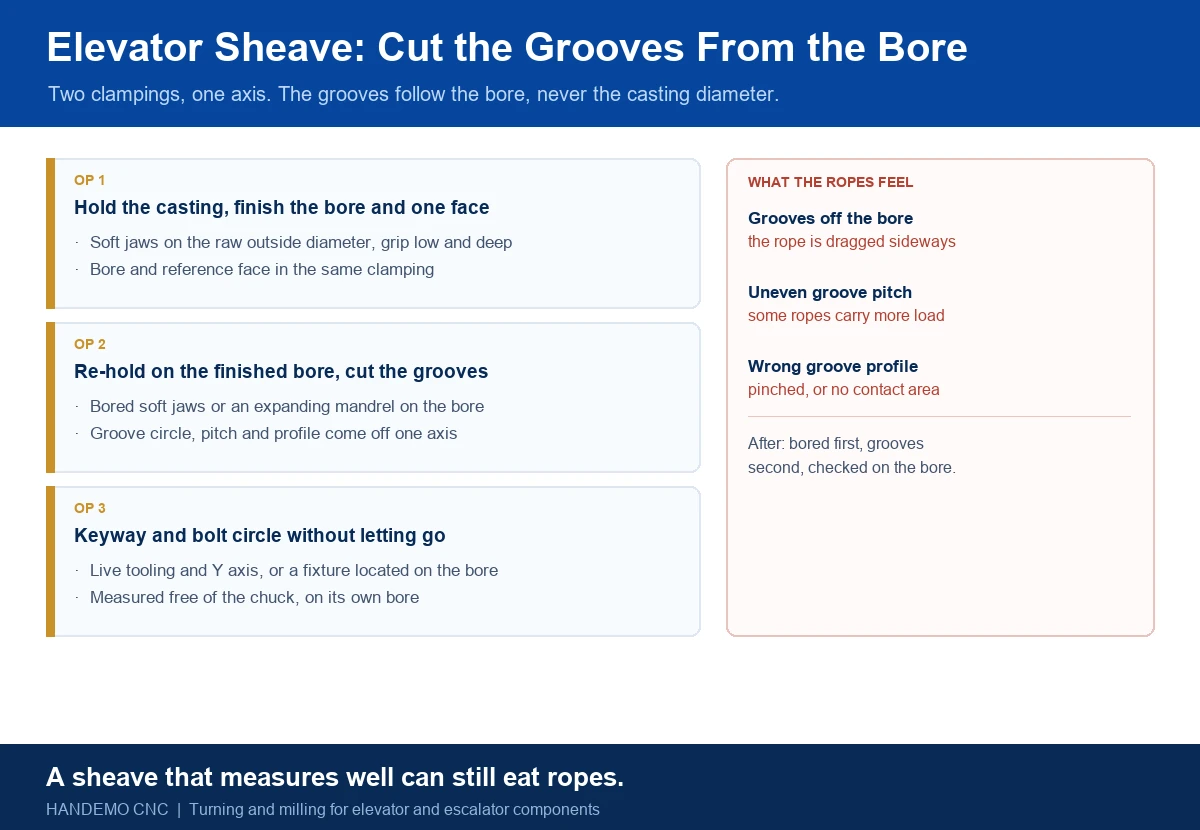
Everybody checks the outside diameter of a sheave, because it is easy to check. It is also the least interesting number on the part. What decides whether the elevator runs smoothly is the groove set: the profile of each groove, the pitch between them, and how that whole set sits relative to the bore and the mounting face.
A rope does not care how big the wheel is. It cares that it enters and leaves the groove without being dragged sideways, and that the groove supports it over the arc of contact. If the groove circle runs out relative to the bore, the rope is forced sideways once per revolution. If the groove pitch is uneven, some ropes carry more load than others and the set wears unevenly. If the groove profile is wrong, the rope sits too deep or too shallow, and either the rope is pinched or it loses contact area.
So the machining rule is simple and it is not negotiable: bore first, then everything else from the bore. The bore is the surface the shaft fits, so it is the surface that defines the axis the part will rotate about in service. Grooves cut from the outside diameter, or from a raw casting face, will always be a little off the service axis, no matter how carefully the turning was done.
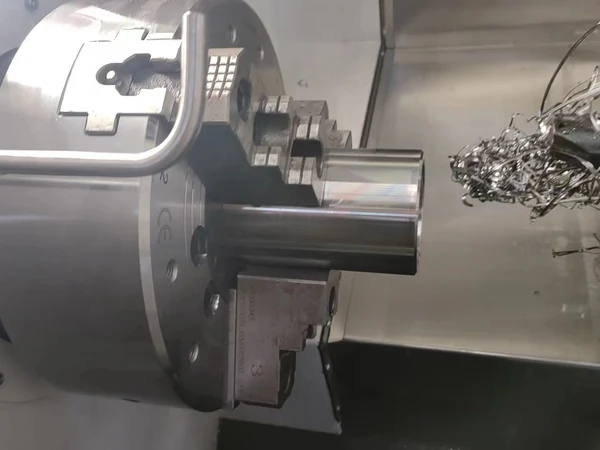
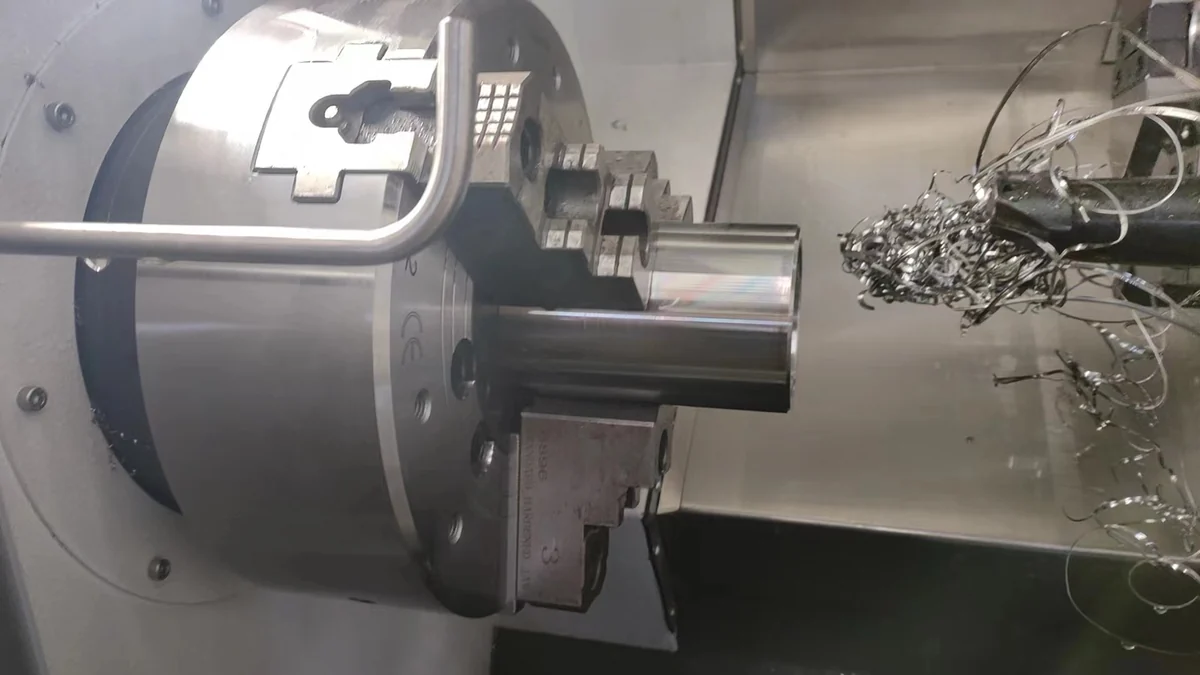
In practice we do the bore, one face and the groove set in a single clamping. The part is held on the raw outside diameter or on a fixture boss for the first operation, the bore and the reference face are finished, and then the part is held on the finished bore, either in soft jaws bored to size or on an expanding mandrel, for the grooves. The second clamping is what puts the grooves on the bore axis rather than on the casting axis. It costs one extra handling and it is the difference between a sheave that lasts and a sheave that eats ropes.
Which lathe: swing, bore and chuck, in that order
Buying a lathe for this work is usually argued in the wrong order. People start with spindle power, or with the control, or with the price. For sheave and rope wheel work the order is swing, then bore, then chuck, and only then everything else.
Swing decides whether the part fits at all. A traction sheave for a mid-rise passenger elevator commonly lands somewhere around half a metre across, and a heavy freight or high-rise machine goes well beyond that. The number that matters is not the maximum turning diameter over the bed, which is measured with the saddle far away, but the diameter the part can actually reach with the tool in cut.
Bore decides whether you can hold the part on its own bore for the groove operation, and whether bar stock is an option for the smaller wheels and the rollers. A machine with a generous through-bore lets you use an expanding mandrel or a between-centres arbor instead of building a dedicated fixture for every size.
Chuck decides how much of the part hangs in the air. A large diameter disc in a small chuck is a vibration problem before it is a cutting problem, and the fix is a bigger chuck, soft jaws with a deep grip, or a faceplate with counterweights.
Our own range covers this in two steps. The TCK6350B takes a 630 mm swing over the bed with a 480 mm maximum cutting diameter, a 96 mm spindle bore and 85 mm bar capacity, on a 10 or 12 inch chuck with an 18.5 kW spindle and a 12 station servo turret. It handles the mid-size sheaves, rope wheels, rollers and the smaller hubs, and it is the machine most of our elevator subcontractors start with. The TCK80B-1500 goes to a 1000 mm swing with an 800 mm cutting diameter, a 120 mm bore and 105 mm bar capacity, a 12 inch chuck and 22 kW, which is where the large freight sheaves and the machine bedplate bosses live. Both are slant bed machines with a horizontal 12 station turret, which matters for cast iron: the turret indexes the next tool in while the previous one is still clearing, and the chips fall away from the work instead of sitting on the ways. If you are still comparing lathe types, the lathe selection guide on swing, bore and chuck goes through the same three numbers in more detail.
The keyway, the bolt circle and the second setup
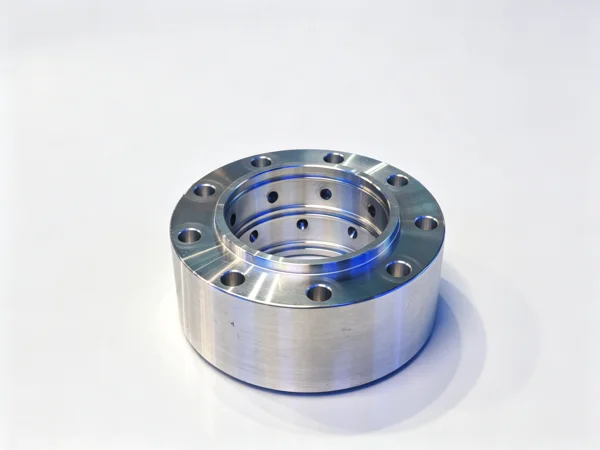
A sheave is not finished when it comes off the lathe. There is a keyway in the bore, a bolt circle on the flange where it fixes to the machine or to the rope wheel hub, sometimes tapped holes for a rope guard, and often a set of balance holes. On a plain lathe those are all second-operation work on a milling machine, and every one of them is a chance to lose the relationship the turning just built.
There are two honest ways to do it. The first is a proper second setup on a vertical machining centre, with the part located on the finished bore and the finished face, held in a fixture that repeats. This works well when the batch is large and the fixture can be justified, and it is what most shops do with a VMC1160 or a VMC1370 sitting next to the lathes.
The second is a lathe with live tooling and a Y axis, which broaches or mills the keyway and drills the bolt circle without letting go of the part. A TCK6050Y style machine is the natural fit for the smaller wheels and the door rollers, where the part is light enough for the turret to reach and the batch is large enough to matter. The trade-off is real: a Y-axis lathe costs more than a plain lathe plus a fixture, and it only pays when the second operation would otherwise be a bottleneck. We wrote about the same decision for shafts in the dual spindle turn-mill article, and the logic transfers.
What we do not recommend is drilling the bolt circle on a drill press from layout marks, which still happens in small shops and which is exactly how a sheave ends up with a bolt pattern that fights the bore.
Castings: the part is not the shape on the drawing
Most elevator sheaves and many escalator components arrive as castings, and a casting is a proposal rather than a promise. It comes with draft, with a parting line, with hard spots where the iron chilled against the mould, and with whatever stress the foundry left in it.
Three practical consequences. First, the first cut has to be generous and it has to be taken all over, because a casting that is machined on one side only will move when the other side is opened up. Second, hard spots are normal and the tool needs to survive them: a negative rake insert for the scale and the chilled skin, then a sharper geometry for the finishing pass, and no interrupted cut taken at full speed. Third, cast iron makes dust, not chips, and that dust gets into everything. Air blast and a well-placed coolant nozzle matter more than spindle speed.
Where the casting is thin, the same rules as any thin-wall part apply: do not clamp on the wall you are about to cut, and do not expect a wall to stay where you left it once the clamp pressure comes off. The pump housing article covers the same casting behaviour in a different part family, and the clamping advice is the same.
Escalator steps: a fixture problem, not a cutting problem
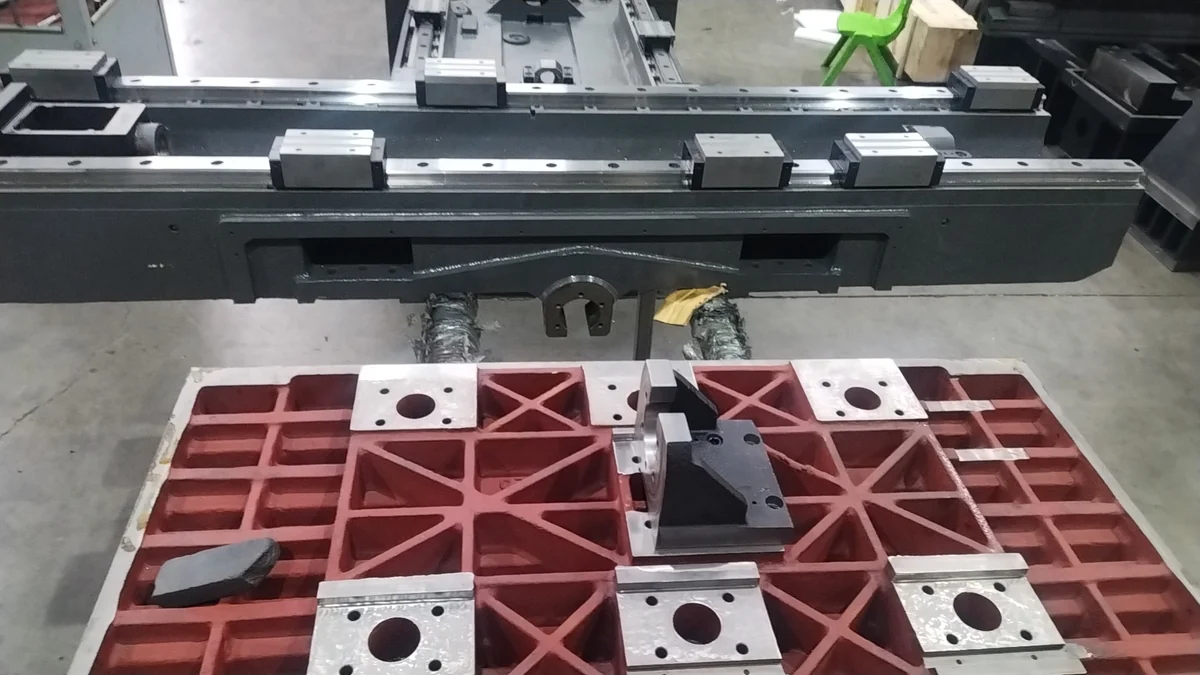
An escalator step is a die casting with a tread, a riser, a cleat pattern and two machined interfaces where the step chain attaches. The casting itself is cheap. What costs money is holding it.
The interfaces are two pads at the ends, and they have to be co-planar with each other because the step has to sit level on the chain. If one pad is machined in one clamping and the other in another, the step will rock, and a rocking step is a noise complaint and a wear problem at the same time. The fix is a fixture that holds the step in its service orientation and machines both pads without moving it, and a fixture that is quick to load, because the cycle time on these parts is short and the loading time is what people forget to count.
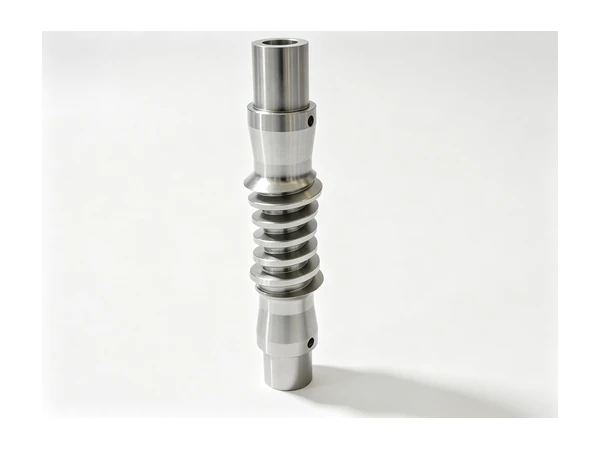
The same logic applies to the handrail drive wheel and the drive sprocket. They are turned parts with a bore, a keyway and a set of teeth or a friction surface, and they are made in batches where a dedicated expanding mandrel pays for itself in a week.
For the brackets, hangers and plates that make up the rest of the escalator, the work is ordinary vertical machining centre work: plate on a fixture, several parts per cycle, drilled and tapped and milled in one program. A VMC1160 with a 1200 x 600 mm table and 800 kg of table load is the usual size, and running a plate of six or eight brackets per cycle is what brings the cost per part down.
Door hardware: where the volume is
Door hanger plates, rollers, tracks and sills are the highest-count parts in the whole elevator. They are also the parts most often quoted badly, because a shop quotes the cutting time and forgets the handling.
Two things make the difference. The first is designing the fixture so that the part is located from a machined feature rather than from the raw edge, because a laser-cut or sheared edge is not a datum and never will be. The second is finishing the part in one clamping, including the holes that later carry the roller, because a hanger plate whose roller hole is drilled in a second operation will hang the door at a slightly different height from the one next to it, and the door will rub.
On thin plates the clamping is the whole job. Over-tighten and the plate bows, machine it flat, release it and it springs back into a bow. The standard answer is to clamp low and close to the feature, to support underneath the cut, and to take a light finishing pass after the clamps have been eased. The thin-wall article has the detail.
What we check before a sheave or a rope wheel leaves
Inspection on these parts is not about proving that a diameter is right. It is about proving that the features agree with each other. The list we work to:
1. The bore is round and straight along its length, checked at both ends and in the middle, because a bore that is tight in the middle will grip the shaft on a short length and let it rock.
2. The groove circle runs concentric with the bore, checked with the part rotated on the bore or on a mandrel that represents the shaft, not on the outside diameter.
3. The groove pitch is even across the full set, measured groove to groove rather than accumulated from one end.
4. The mounting face is square to the bore, checked with the part free of the chuck, because a face machined under clamp pressure can relax when the pressure is released.
5. The keyway is parallel to the bore axis and its width is checked with a gauge that represents the key, not with a caliper across the slot.
6. On the larger wheels, balance is checked after machining, and the balance holes are drilled before the final groove pass so that removing material does not change the groove geometry.
None of these checks needs a laboratory. All of them need the part to be measured in the state it will be in when it runs, which means out of the chuck and on its own bore.
Which machine for which part
Summarised, because this is the question we are asked most:
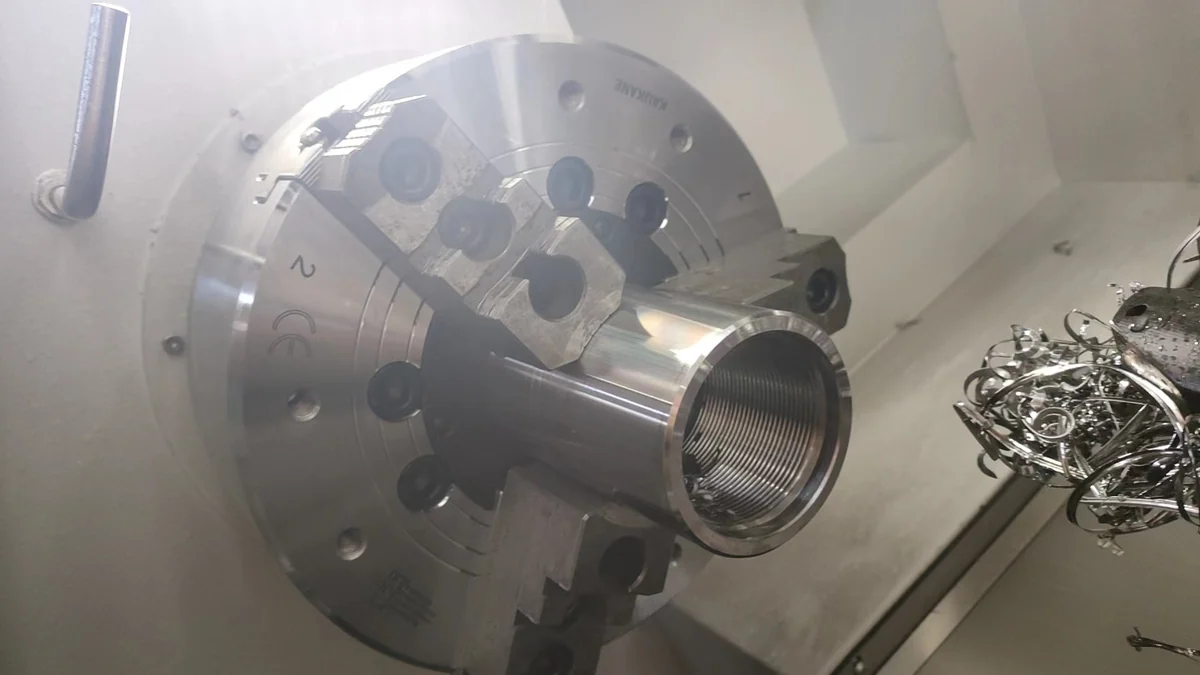
Traction and deflector sheaves, rope wheels, large rollers: a slant bed lathe sized by swing and bore. TCK6350B for the mid range, TCK80B-1500 for the large freight sizes and the bedplate bosses. Add a Y-axis machine or a milling fixture for keyways and bolt circles.
Door rollers, small wheels, handrail wheels: a lathe with a decent bar capacity and, if the volume justifies it, live tooling. The TCK6050Y is the one-setup answer for this family.
Guide rail brackets, hangers, sills, escalator plates: a vertical machining centre with a fixture plate. VMC1160 covers most of it, VMC1370 when the plate gets longer or the fixture gets heavier.
Escalator steps and step chain parts: a fixture that holds the step in its service orientation and machines both interfaces without moving it, on a vertical machine with enough table to take several parts per cycle.
Machine bedplates and frames: usually a boring and milling job rather than a turning job, and the vertical versus horizontal comparison covers which way to go when a part has machined faces on more than two sides.
Frequently asked questions
Can a sheave be turned on a lathe without a mandrel? Yes, for the first operation. The bore and the reference face can be machined holding the raw outside diameter in soft jaws. The grooves should not be cut in that clamping, because then they follow the casting rather than the bore. The second clamping, on a mandrel or bored soft jaws, is what puts them on the axis the part will run on.
How do you hold a large diameter disc without chatter? By reducing overhang, by using a chuck or faceplate that is large enough for the part, and by keeping the tool close to the work. A big disc held on a small chuck with the tool far out on a long boring bar will chatter whatever the spindle speed, and no amount of feed adjustment fixes a setup that is flexible.
Is ductile iron harder to machine than grey iron? It behaves differently rather than simply being harder. Ductile iron is tougher, so it produces a continuous chip in some conditions instead of the dust grey iron makes, and it needs a stronger edge and a more rigid setup. Grey iron is more forgiving on the tool but makes more dust, so the extraction and the way covers are arranged matter.
Do escalator steps need a dedicated fixture? Yes, if you make more than a handful. The two chain interfaces have to agree with each other, and the only reliable way to make them agree is to machine both without releasing the part. A fixture that holds the step in its service orientation also lets you check the tread relative to those interfaces, which is what the customer actually feels underfoot.
What should we send with an enquiry? The drawing, the material and the casting grade if it is a casting, the batch size and how often you reorder, and the interfaces that the part has to agree with in the assembly. For a sheave, tell us the rope diameter and the number of falls, because that decides the groove set, and tell us whether the part is held on a shaft or bolted to a hub, because that decides which face is the datum.
Next step
If you are machining elevator or escalator parts and losing time to second setups, or if you have a sheave that measures well and still wears ropes, send the drawing and tell us what it has to agree with. We will tell you which surface should be the datum, how many setups the part really needs, and which machine in our range covers it. Write to sales1@handemocnc.com or message us on WhatsApp at +86 135 6320 3038.