How to Choose a Machining Center for Box and Housing Parts
Box and housing parts are where machining decisions get expensive. The part looks simple on the drawing - a block or a casting with bores, faces and bolt patterns - and then the first setup reveals the problem: the features that matter are spread across four or five sides, and every time the part comes off the table you add a new chance to lose the relationship between them. Choosing a machine for this family of work is not about which machine is better in general. It is about how many setups the part needs, how big it is, and which surface you are going to trust.
What makes box and housing work different
A box part is a prismatic part with features on most of its sides: a gearbox housing, a pump body, a machine column, a valve block. A housing part adds a controlling bore or spigot that has to sit in a known relationship to the face it mounts against. Both share the same practical difficulty, which is not the cutting itself. It is the setup count.
Everything else follows from that. A machine that presents four faces of a part to the spindle without re-clamping removes setups, and removing setups removes the accumulation of error that comes with them. A machine with a big table and a long X travel that holds the part once and reaches every feature is doing the same job with different geometry. A machine that is fast but forces the part onto four different fixtures is the slowest option in the shop, whatever its spindle speed says.
Start with the part, not the machine
Three numbers from the drawing decide most of the argument. The first is the envelope: the largest machined face and the largest bolt circle or bore spacing. The second is the mass, including the fixture, because a housing that weighs 700 kg on a 400 kg table pushes the machine around instead of the tool. The third is the number of faces carrying features that must relate to each other.
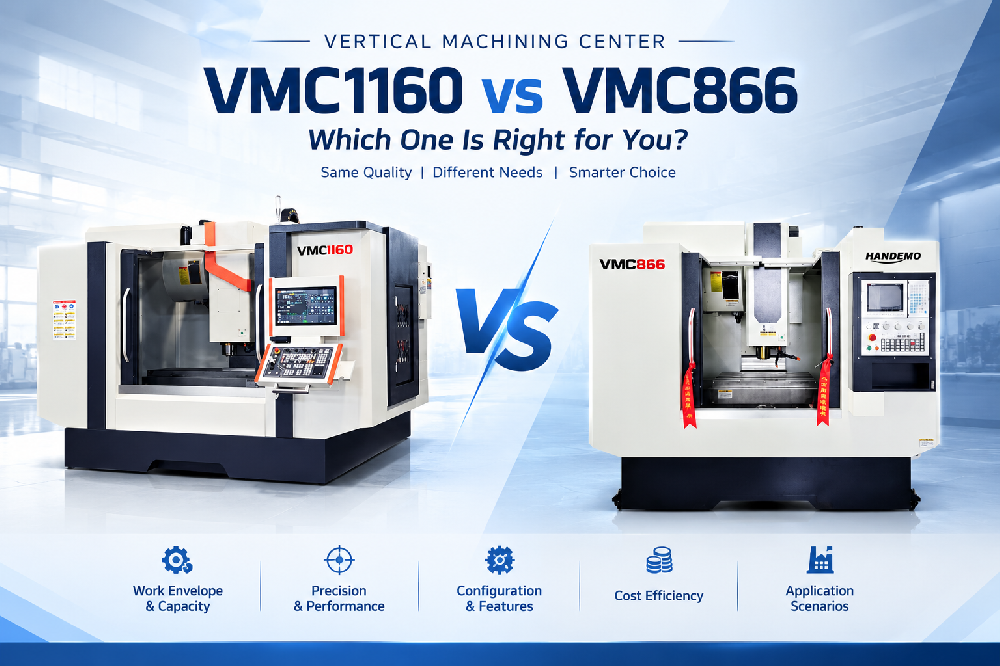
Take those three and the choice usually narrows to one family. A housing up to roughly 700 mm with a machined face, a bore and a bolt pattern is comfortable on a mid-size vertical machine such as the VMC1160, where the table is 1200 x 600 mm with an 800 kg load capacity and the X/Y/Z travels of 1100 / 600 / 600 mm leave room for a fixture and a boring head. Smaller end covers and flange units often fit on a VMC855. Once the part needs bores on both sides of the same wall, or the drawing calls for a mounting face on one side and a bore concentric to a large diameter, the vertical machine is no longer the cheapest answer and the next three sections apply.
Vertical machining centers: one face at a time, done well
A VMC is the default machine for this work and usually the right one. The part sits on a table you can see, the operator can reach into the work envelope, and a general-purpose machine with a BT40 spindle covers a wide range of housings, plates and covers. Around 8000 rpm on a belt-driven spindle and a 24-station ATC is enough for cast iron and aluminium housings in small and medium batches.
The limit is what the part presents. On a vertical machine the tool comes down from one direction, so a housing with a bore on the opposite wall needs either a right-angle head, a second setup, or a fixture that rolls the part. All three add cost and one of them adds error. For parts with a strong main face and secondary features, that is a fair trade. For a housing designed around a bore through two parallel walls, it is not.
Horizontal machining centers: four faces, one clamp
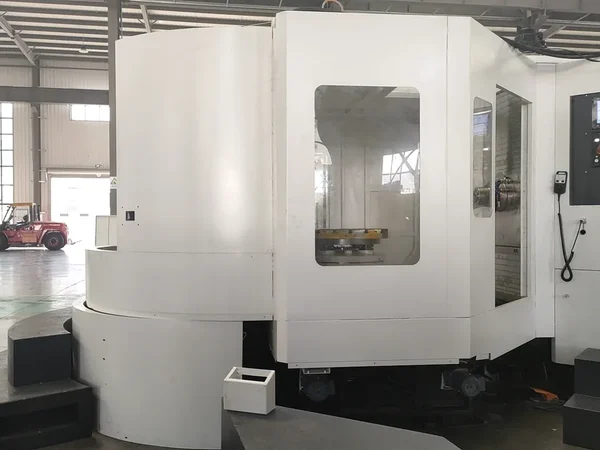
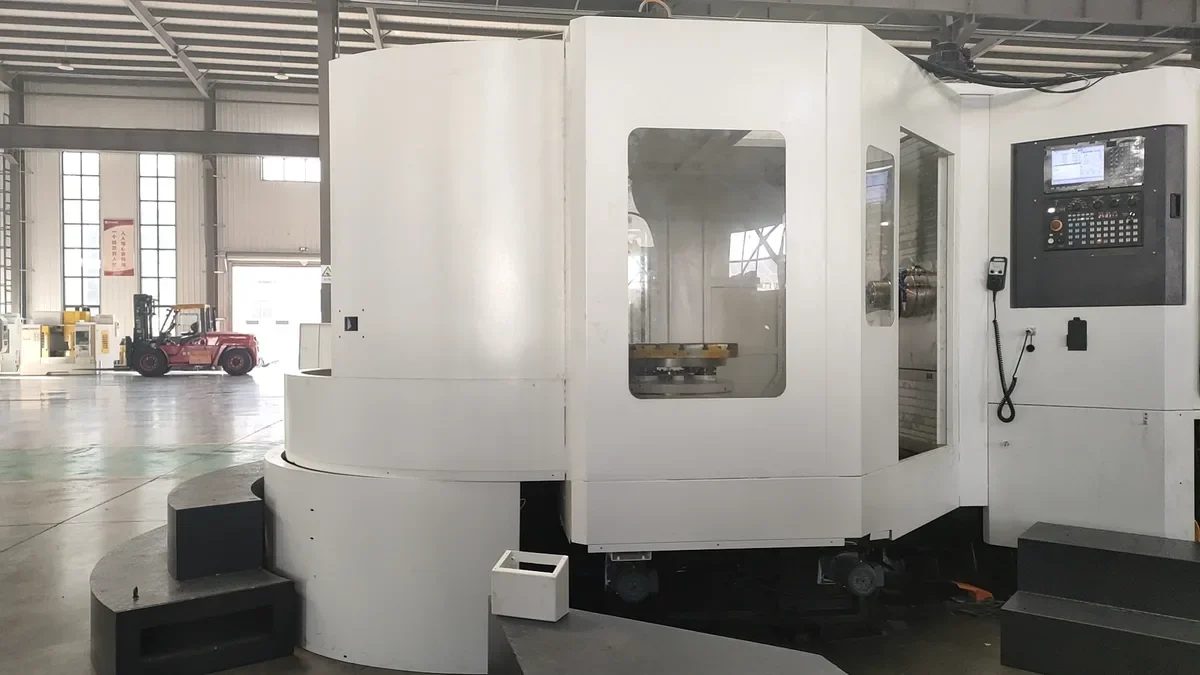
A horizontal machine presents the part from the side, so a tombstone or pallet rotates the work and the spindle reaches four faces in one setup. On a housing that has a bore through two opposed walls plus a face and a bolt pattern on the third, the horizontal machine cuts the bore, the face and the pattern from one datum, which is exactly what the part needs. There is no right-angle head and no re-clamping between the features that matter.
For mid-size housing work the HMC630-DT class is the natural size: a 630 x 630 mm table with a 1200 kg load, travels of 1100 / 900 / 1000 mm and a BT50 spindle at 6000 rpm, with rapid traverse at 18 / 15 / 15 m/min. Larger housings move up to the HMC800-DT, whose 800 x 800 mm table takes a 2500 kg load and reaches 1300 / 1150 / 1000 mm. Where the batch justifies it, multi-pallet versions keep the spindle cutting while the operator loads the next part outside the work envelope.
The horizontal route costs more than a vertical machine of the same size, and it needs a part that can be held on a tombstone without collapsing. On single-piece work and on parts with one dominant face it is the wrong purchase. On genuine boxes in batch, it is usually the machine that pays for itself.
Boring and milling machines, and the deep-hole cases
Some housings are less about faces and more about a bore: a long bore that has to be straight from end to end, or a bore large enough that a spindle with a boring bar is the only realistic tool. Compact boring and milling machines such as the TH500 are built around that job. Where the bore runs through the full length of a long casting, the T-shaped deep-hole machines in the 1000S-DT class exist to keep the bar supported over its whole travel.
The question to ask here is whether the bore is the part or one feature of it. If the bore is the controlling feature and the faces are secondary, a boring machine is the honest answer. If the faces and the bore have equal weight, a horizontal machining center with the right boring head is usually more flexible for the money.
Box-way or linear guide
This choice comes up on almost every quotation for housing work, and it is decided by the cutting, not the size of the part. A box-way machine carries the slide on hardened, ground guideways with a large contact area. It absorbs interrupted cuts, heavy boring passes and vibration from an out-of-balance casting, and it holds that behaviour over years of heavy work. The VMC1370 class is built this way, with a reinforced bed and column and a grid-rib layout for stability in medium and large mold, die and housing work.
A linear guide machine runs the slide on recirculating blocks. It moves faster and positions cleanly at speed, which suits lighter, faster work on aluminium and smaller castings, and it needs less maintenance attention. For a housing shop the usual split is straightforward: heavy castings and interrupted boring cuts want box ways, mixed light work and high feed rates want linear guides. If the same machine has to do both, choose the guide that matches the heaviest cut that will run on it, and accept the feed rate the machine was built for.
Round housings belong on a lathe
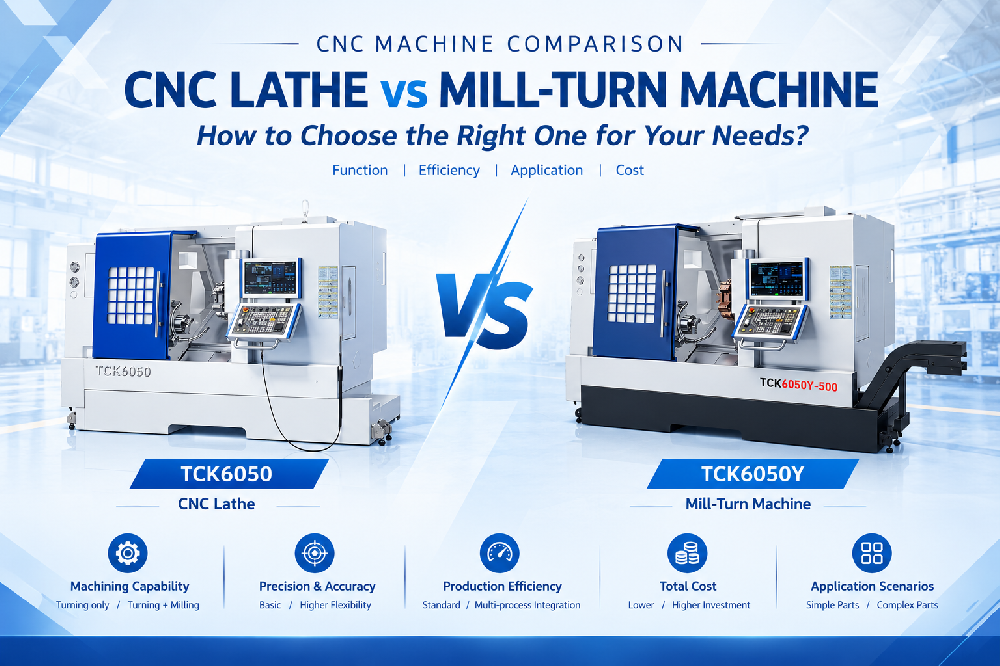
Not every housing is a box. A round housing or a flanged sleeve with a bore and a machined outside diameter is a turning part, and turning both surfaces from one axis in a single setup is cleaner than interpolating a bore and then trying to make the outside diameter agree with it. General-purpose work runs comfortably on a slant bed machine such as the TCK6050, while heavy, large-diameter housings go to the TCK6350B, where the base and the spindle carry the weight of the part rather than the slide. The decision point is simple: if the bore and the outside diameter have to be concentric, and the part is round, turn it.
Fixtures, pallets and the second setup
The machine choice and the fixture choice are one decision. A housing held in soft jaws on a machined face is stable and quick to load. A housing held on a tombstone needs a fixture that has been bored in place on that machine, so the locating features and the machine axes agree. Where the part is flexible, the fixture has to support the bore while it is machined rather than squeezing the walls.
This is also where pallets earn their place. If the cutting time is longer than the loading time, a pallet changer keeps the spindle productive and removes the temptation to rush the setup. If the part is small and the batch is short, a pallet system is capital that will not be used.
A short decision list
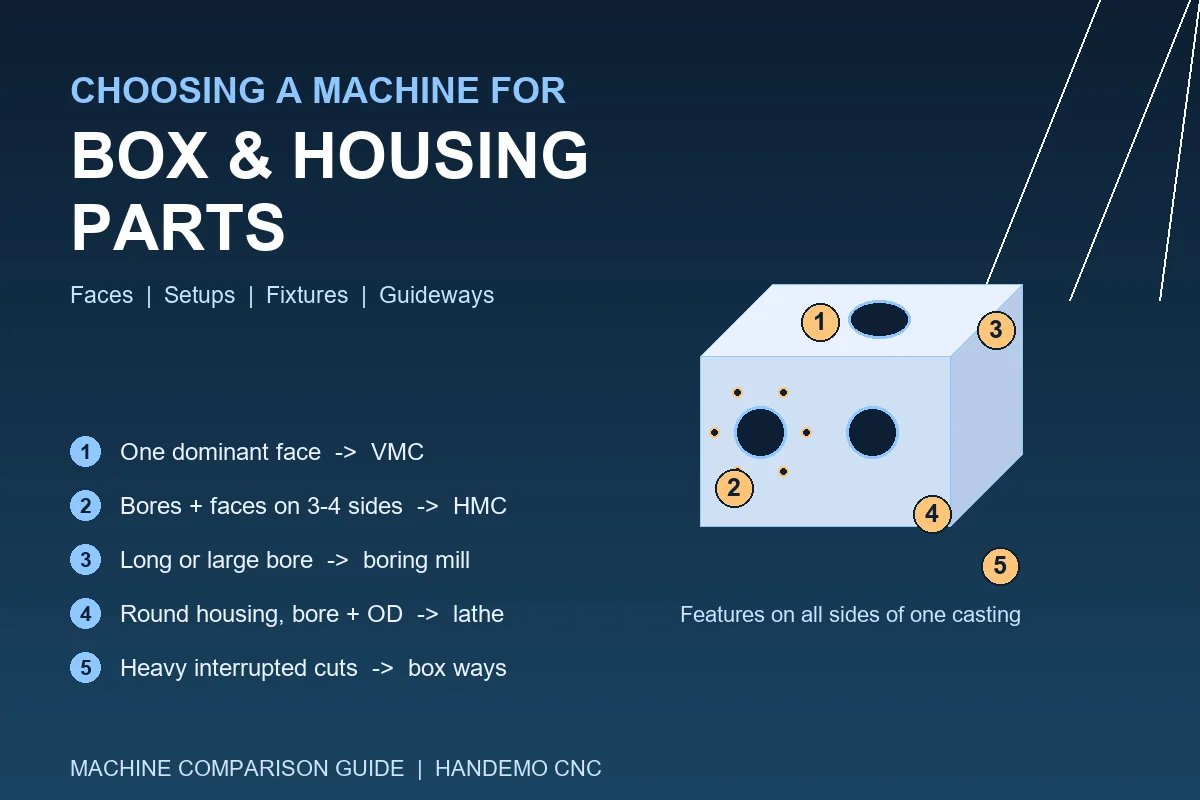
One dominant face and secondary features: vertical machining center. Bores and faces on three or four sides: horizontal machining center with a tombstone or pallet. One controlling long or large bore: boring and milling machine, or a deep-hole T-type machine. Round part with a bore and an outside diameter: slant bed lathe. Heavy interrupted cuts on castings: box ways. Fast, lighter work: linear guides. Over about 1200 mm or 2500 kg: step up in table size first and spindle power second.
None of this replaces looking at the actual part. Send the drawing with the datum marked and the batch size, and the family is usually obvious within a few minutes.
Frequently Asked Questions
Which is better for housing parts, a vertical or a horizontal machining center?
It depends on the number of machined faces. If the part has one dominant face and secondary features, a vertical machine is cheaper and easier to run. If the bore and the mounting pattern sit on different sides, a horizontal machine cuts them from one datum without re-clamping, which is usually worth the higher price for batch work.
How much table load do I need for a cast iron housing?
Add the weight of the part to the weight of the fixture and leave margin. A rule of thumb used in our quotations is to keep the part plus fixture under about two thirds of the machine's rated table load, so the slide and the guideways stay in their comfortable range under heavy cutting.
Can one machine cover both box parts and round housings?
Partly. A machining center can interpolate a bore in a round housing, and a lathe with live tooling can drill and tap on a turned part. Where the bore and the outside diameter must be concentric and the part is round, a lathe is the cleaner route; where the part is prismatic with many faces, a machining center is. Metal removal rate and batch size decide the rest.
Do I need a pallet changer for housing work?
Only if the cutting time is long enough that loading becomes the bottleneck. On parts with several faces and a cavity to rough, that is often the case. On small covers and short batches, a single-table machine with a well-made fixture is more economical.
Is a BT50 machine necessary for housings?
Not always. BT40 covers most mid-size housings in cast iron and aluminium. BT50 earns its place on larger bores, deeper cuts and bigger parts, where the extra stiffness of the taper and the larger boring capacity reduce chatter and the number of passes.
Get a Machining Plan for Your Parts
Send us the part drawing - the machined faces, the controlling bore, the datum and the batch size - and Handemo CNC will recommend the machine family and the setup sequence that fits it. Contact Handemo CNC | Email: sales1@handemocnc.com | WhatsApp: +86 135 6320 3038
Related reading: CNC Machining Guide for Gearbox Housings covers the datum problem on a large casting, CNC Machining Guide for Bearing and Flange Housings deals with bore to mounting face relationships, and VMC vs HMC compares the two families in more detail. Box and housing work also sits under box and housing parts in our application pages.