CNC Mill-Turn vs CNC Lathe: How to Choose
Two round parts sit on the bench. The first is a drive shaft with a plain turned profile, a chamfer and a thread. The second is the same shaft with a keyway, two cross-drilled holes and a milled flat. The first runs on a slant bed lathe in one pass and there is nothing else to say about it. The second is where the argument starts: keep it on the lathe and add a second operation on a mill, or put it on a mill-turn machine and never take it out of the chuck. This article covers what each machine actually does, where the cost really sits, and the questions that settle the choice for a specific part. It is written for shops deciding whether a CNC mill turn machine is worth the step up from a lathe, and for buyers comparing quotations where the same part has been priced on both.
What a Slant Bed Lathe Does
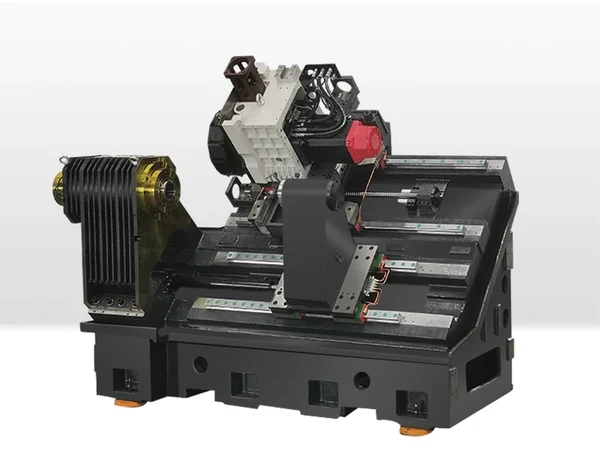
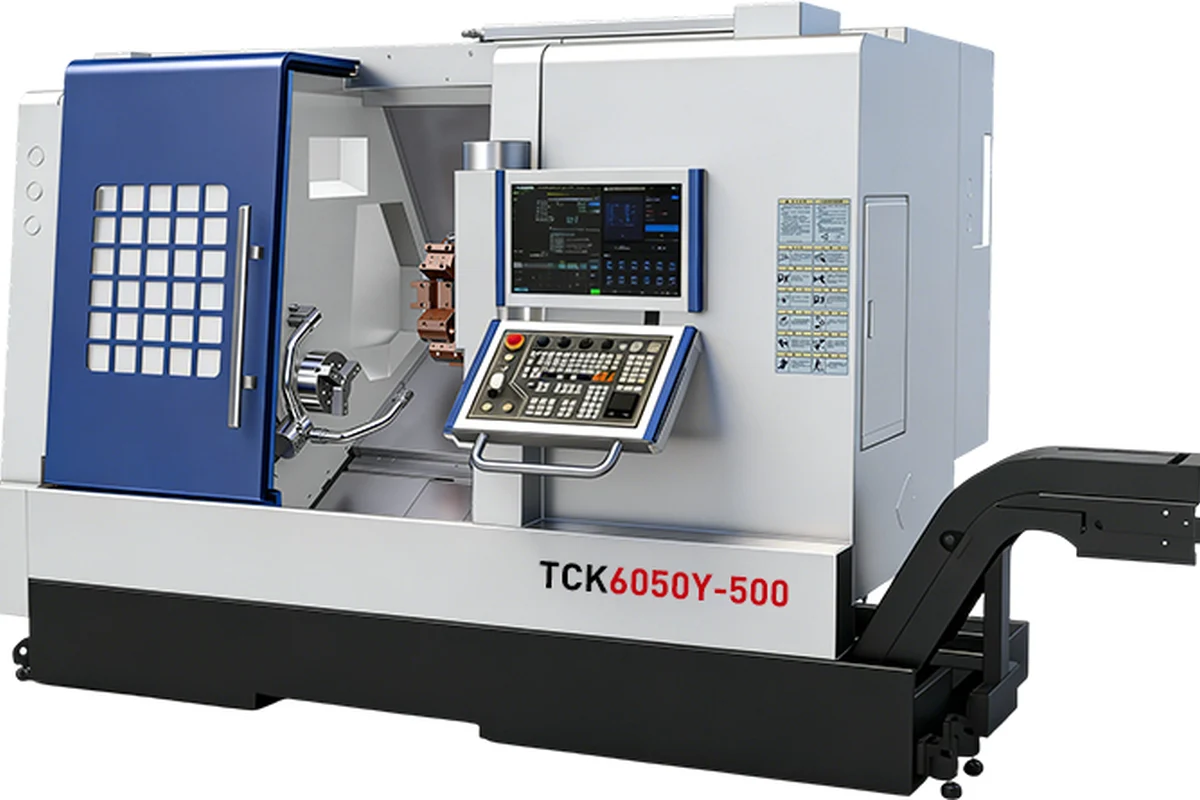
A slant bed lathe holds a round part in a chuck or between centers and turns it while the tool feeds along the axis. It is the fastest and cheapest way to produce shafts, sleeves, discs, bushes and flanges, and it is the machine that most turning shops are built around. The bed is inclined so that chips fall clear of the cutting area instead of piling up on the ways, and the tool stays close to the work on a rigid carriage.
What a conventional lathe does not do is cut features that are not on the axis of rotation. A keyway, a cross-hole, a flat, a bolt circle on a flange face - these need a rotating tool, which means either a driven tool position or a second machine. That single limitation is the whole reason mill-turn machines exist.
What a Mill-Turn Machine Adds
A mill-turn machine is a turning center that can also mill and drill. Its turret carries driven tool positions, or the machine has a separate milling spindle, or in the most capable layouts a second spindle and a Y axis. In many workshops this class of machine is simply called a mill turn lathe, because from the operator's side it is still a lathe - it just has more ways to cut. The part is turned and then the same program cuts the cross-features without releasing it.
The practical difference is not that the machine can mill. It is that the part is not moved. A shaft with a keyway that goes from the lathe to a mill loses its datum at the transfer, gets re-clamped in a new fixture, and picks up whatever error that fixture introduces. On a mill-turn machine the keyway is cut to the same axis that turned the journal, because it is still in the same chuck.
Where the Cost Actually Sits
On a round part with a couple of milled features, the cutting time is rarely the problem. The problem is everything around it. Every transfer from one machine to another means the spindle stops, the part is walked across the shop, it is re-clamped, and it is re-referenced. That handling time is charged to the part, and so is the scrap that comes from a second setup that was not quite right.
Run the numbers on a real example. A shaft with one keyway takes a few minutes to turn. Moving it to a mill, setting it up and cutting the keyway adds a setup, and the setup is billed whether the cut takes two minutes or twenty. On a mill-turn machine the keyway is folded into the turning cycle and the second setup disappears. Where the batch is large enough that the fixture cost is spread thin, that saving is what pays for the machine.
When a Slant Bed Lathe Is the Right Answer
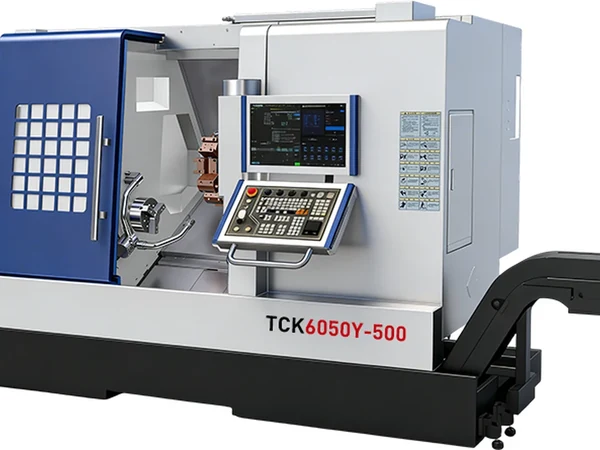
If the parts are pure turning work - shafts, sleeves, discs, bushes, flanges, hydraulic pins - a slant bed lathe is the better machine. It is cheaper, simpler to program, cheaper to maintain, and faster on the turning itself, because it is not carrying a milling spindle and a Y axis it never uses. The TCK6050 slant bed lathe is the machine in this class for general production, and the slant bed range covers the sizes above and below it.
The mistake to avoid is buying capability for its own sake. A shop that turns round parts and never milled them will not recover the price of a mill-turn machine by cutting a keyway twice a month. The right test is how often the second operation actually happens, not how often it might.
When a Mill-Turn Machine Earns Its Cost
A mill-turn machine earns its cost when round parts carry milled features as a matter of course. A hydraulic spool with cross-ports, a valve stem with a slot, a flange with a drilled bolt circle, a shaft with a keyway and a threaded end - these are the parts that pay for it. Doing them in one clamping removes a handling step, a fixture, and the datum error that comes with the transfer.
It is also the right machine when the geometry has to be established in one continuous run. If a bore and a milled face have to relate to each other, cutting them in different setups means relating them across two machines and hoping both setups were right. On a mill-turn machine they come off one spindle on one axis.
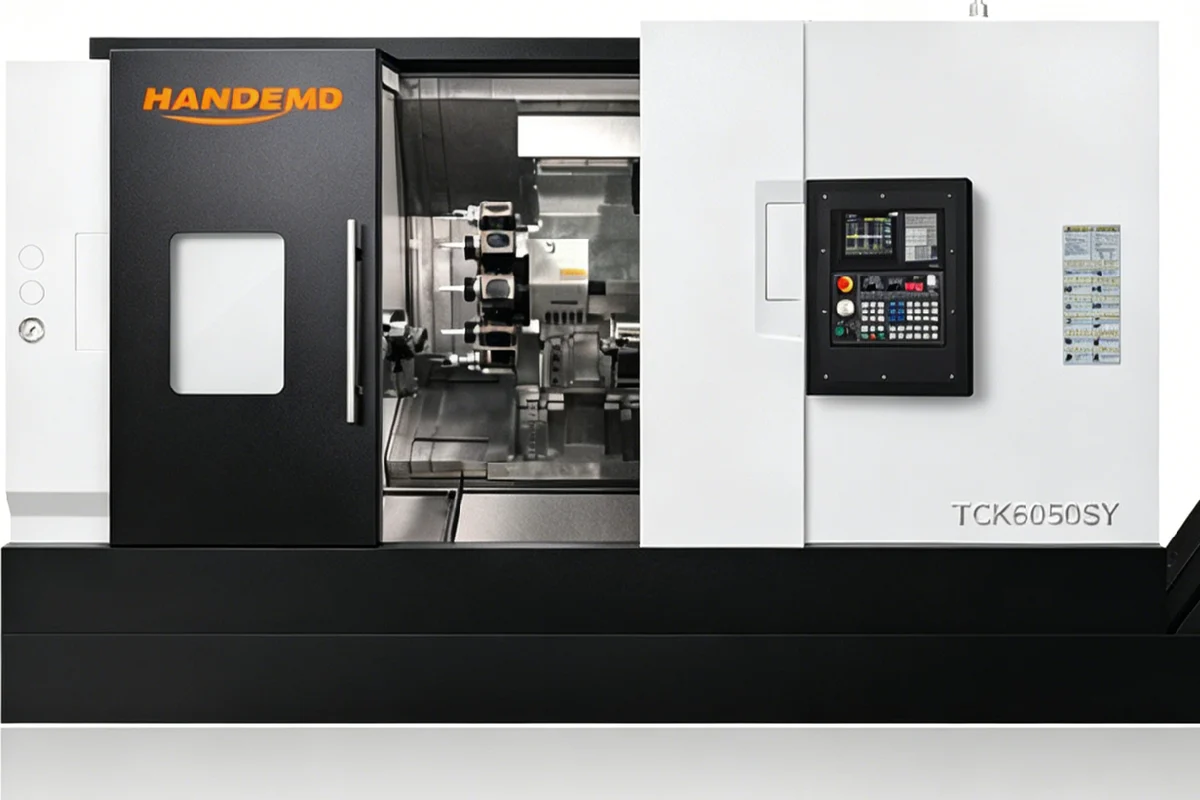
Handemo builds the class in three steps. The TCK6050Y is a power-turret Y-axis machine for parts that need cross-drilling and light milling alongside the turning. The TCK3100LY covers longer parts in the same family. The TCK6050SY adds a second spindle, so the back end of the part is finished without a reload. The full range is under CNC mill-turn machines.
Mill-Turn, Turn-Mill, Millturn - the Same Thing
The terminology causes more confusion than the technology. Mill-turn, turn-mill, millturn and multitasking turning center all describe the same idea: a turning machine that can also mill. Some builders use turn-mill for a lathe-based machine and mill-turn for a machining-center-based one, but in the market the words are used interchangeably, and a quotation that arrives under either name is describing the same capability.
The variants you will meet in search results and in supplier catalogs are all the same machine: mill turn lathe, millturn lathe, CNC turn mill, CNC turnmill machine, mill turn CNC machine, turn mill machine. Spacing and hyphenation change nothing about the hardware. A millturn lathe and a turn-mill center differ in the same ways two mill-turn machines differ from each other - by driven tools, Y axis, second spindle and tool count - not by the label on the front of the machine.
When comparing machines, ignore the label and ask what the machine physically has: driven tools or a separate milling spindle, a Y axis or not, a second spindle or not, and how many tool positions. Those four answers decide what the machine can actually do, whichever name is on the brochure.
The Trade-Offs, Side by Side
Before the list, one clarification on scope. Mill turn machines are not one specification - the family runs from a lathe with a few driven tool positions up to a dual-spindle machine with a full Y axis and a bar feeder. Comparing a lathe against "a mill-turn machine" in the abstract is therefore meaningless; compare against the specific configuration you are being quoted. CNC millturn machines with a second spindle solve a different problem from a single-spindle machine with driven tools, and the price difference reflects that.
- A lathe is cheaper to buy, simpler to program and faster on pure turning.
- A mill-turn machine costs more but removes a second setup on parts with milled features.
- A lathe needs a second machine and a fixture for any cross-feature; a mill-turn machine does not.
- A lathe holds roundness and concentricity within one axis; a mill-turn machine holds the milled features to that same axis.
- A mill-turn machine has more to learn, more to maintain, and a higher hourly cost - which only pays back where the second operation is a regular event.
The decision is not really CNC lathe vs mill turn in general - it is whether this part, in this batch size, spends enough time in a second operation to justify the step up. If the shop runs many parts with a milled feature attached to a turned body, the mill-turn machine usually wins on total time and on consistency. If the shop turns simple round parts with no cross-features, the lathe wins on cost per piece and on simplicity.
Frequently Asked Questions
Is a mill-turn machine just a lathe with a driven tool?
No. A lathe with a couple of driven tool positions can drill a cross-hole or cut a small flat. A mill-turn machine is designed around the mixed work: it has the tool positions, the spindle power and often the Y axis and second spindle to cut milled features as a core part of the cycle rather than as an occasional extra.
Can a slant bed lathe drill cross-holes?
Only with driven tools, and only within what those tool positions can reach. Simple cross-holes and small flats are possible on a lathe with driven tooling. Larger milled features, features off the axis at angles, or work on both ends of the part are what push a job onto a mill-turn machine.
What is the difference between mill-turn and turn-mill?
In practice, nothing that changes the machine's capability. Both describe a turning machine that can also mill. Some builders use one term for a lathe-based design and the other for a machining-center-based design, but quotations use them interchangeably, so the specification matters more than the label.
Do I need a Y axis on a mill-turn machine?
A Y axis lets the milling tool move off the part's centerline, which is what makes flats, keyways, pockets and off-center holes practical. Without it, a driven tool can only work on the part centerline. If the milled features are simple centerline holes, a machine without a Y axis is enough; if they are flats or off-center work, the Y axis is worth having.
Which parts are worth moving to a mill-turn machine?
Parts that are round but carry milled features, and parts that currently make two trips through the shop. Hydraulic spools and valve stems, flanged shafts, drive pins with cross-holes, and anything with a keyway or a bolt circle on the turned body. If the part leaves the lathe for a mill as a routine step, it is a mill-turn candidate.
Get a Machine Recommendation for Your Parts
Send us the part drawings - the turned features, the milled features, the material and the batch size - and Handemo will tell you whether a slant bed lathe or a mill-turn machine is the better fit, and which model in the range. Contact Handemo CNC | Email: sales1@handemocnc.com | WhatsApp: +86 135 6320 3038
If you are still at the stage of framing mill turn vs lathe for a specific family of parts, the fastest way through it is to list the cross-features on the drawing and count how often they appear. That count, not the machine brochure, settles the question. Related reading: Machine Comparisons covers the other selection questions we get, VMC vs HMC deals with the same handling-versus-capability question on machining centers, and Slant Bed vs Flat Bed CNC Lathes looks at the lathe bed itself.