What Is a Slant Bed CNC Lathe? Design and Benefits
Ask two people what makes a slant bed lathe different and you will get two answers. One will say it is about chips falling clear. The other will say it is about rigidity. Both are right, and neither explains why the bed is slanted at the angle it is, or what that angle costs in return. This article is about the design itself: why a turning center's bed is set at an angle, what the common angles mean, what the arrangement gives up, and how to tell whether the lathe in front of you is built for the work you have.
What a Slant Bed CNC Lathe Is
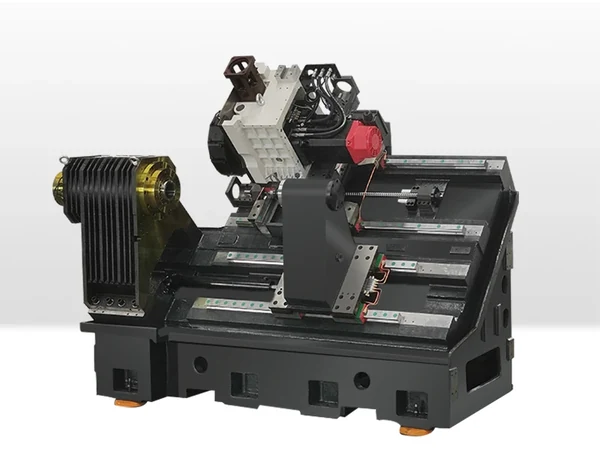
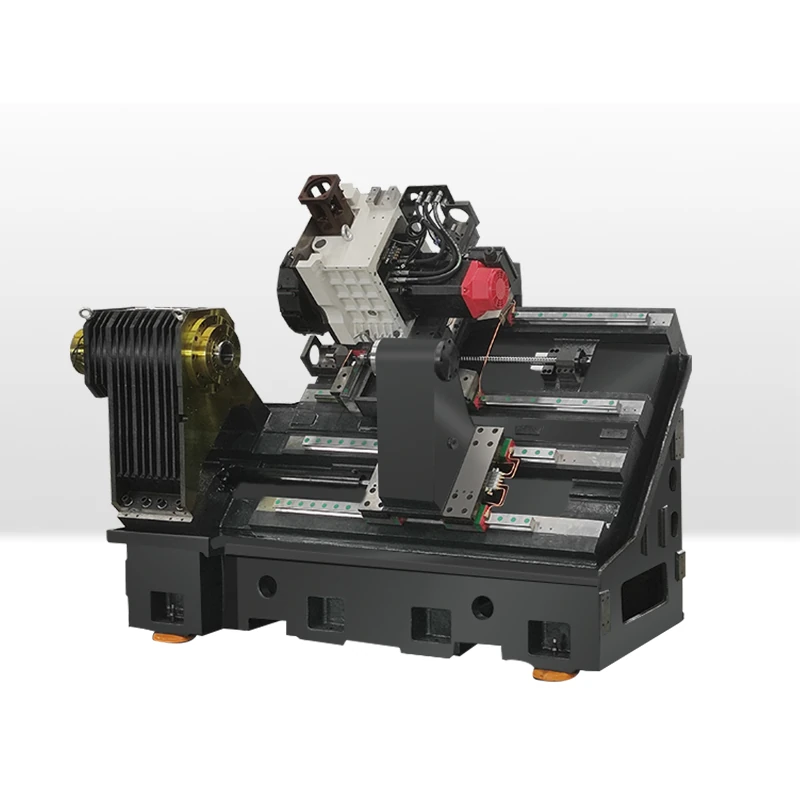
A slant bed CNC lathe is a turning center whose bed is inclined rather than horizontal. The spindle sits at the top of the incline and the turret travels along the slope below it, so the tool approaches the workpiece from above and to the side instead of straight in from the front.
The workpiece still turns horizontally on the spindle axis. The bed, the turret and the slideways are what is tilted. A vertical bed lathe takes the same idea further and stands the bed up until it is nearly vertical; a slant bed machine sits between the flat bed and the vertical bed in both geometry and behaviour.
That is the whole definition, and everything a slant bed lathe does well follows from it.
Why the Bed Is Slanted at All
Three problems with a flat bed lathe are solved by tilting the bed, and they are worth naming separately because they are often mixed together.
The first is chip evacuation. On a flat bed the chips fall onto the bed, the slideways and the part, and the operator has to clear them. Tilt the bed and gravity does the work: chips fall down the slope and away from the cutting zone, into the conveyor. This matters most in ductile materials and in deep turning, where a flat bed turns into a place for strings of swarf to collect around the tool.
The second is rigidity. A slanted bed puts the tool support closer to the line of the cutting force, so the load travels into the bed through a shorter path with less overhang. A flat bed lathe has the turret cantilevered forward and up to reach the workpiece; a slant bed brings the tool in along the slope, which is a stiffer arrangement for the same mass of casting. The casting can also be made deeper and heavier without making the machine taller or wider.
The third is access and loading. With the bed tilted back, the spindle face and the chuck are open and reachable. Loading a part, changing jaws and looking at the cut are all easier than on a flat bed machine, where the cross slide sits between the operator and the work.
What the 15 Degree Slant Bed Means
The most common angle in general-purpose turning centers is around 45 degrees, but a specific family of machines uses a much shallower bed angle - a 15 degree slant bed - and the angle is chosen for a reason rather than as a compromise.
A shallow angle keeps the machine's centre of gravity low and the bed geometry close to a flat bed in some respects, while still letting chips fall clear. On a 15 degree slant bed lathe the casting can be compact and the machine can be shorter front to back, which matters where floor space is tight or where the machine is one of several in a cell.
A steeper angle gives chips more help and gives the operator a wider opening to the work. The trade is a taller, deeper machine and a different casting. Machine builders who quote a specific angle are describing the casting and the layout they have standardised on, which is why the angle is a useful thing to ask about when comparing two lathes that look otherwise similar.
The Advantages, Stated Plainly
- Chips fall away from the cutting zone and clear themselves, so less operator time is spent clearing swarf and fewer finished surfaces are damaged by it.
- The tool support is closer to the work, which is a stiffer arrangement for the same casting mass and shows up in the finish during interrupted and heavy cuts.
- The spindle is open to the operator, so loading, jaw changes and inspection are quicker.
- The bed drains coolant toward the tank instead of letting it pool around the slideways.
- The casting can be made deep and rigid without making the machine awkward to reach into.
The one advantage often claimed for slant bed lathes that deserves care is accuracy. The angle does not create accuracy by itself. What it does is make a rigid, well-drained structure easier to build, and rigidity and thermal behaviour are what accuracy comes from.
What a Slant Bed Lathe Gives Up
A slant bed lathe is not better at everything, and the honest trade-offs are worth knowing.
It is a heavier casting than a flat bed machine of the same capacity, so it usually costs more and takes more floor space. A flat bed lathe used for long, slender shafts, or for work where a gap bed and a long bed length matter, still does things a slant bed machine does not. And on very long parts, a flat bed with a steady and a tailstock arrangement can still be the simpler answer.
Where the parts are short, numerous and need chip control, the slant bed machine wins clearly. Where the parts are long and slender, the choice is much more open.
How the Bed Is Built, and Why It Shows in the Cut
Two beds with the same slant angle can behave quite differently, and the differences are in the casting and the guideways rather than the angle.
A cast iron bed, aged properly and machined after ageing, holds its geometry over years. Box ways on the bed give a large contact area and heavy damping, which suits heavy cutting and interrupted work; linear guideways give lower friction and faster rapid moves, which suits production cycles where the machine spends more time positioning than cutting. Machines that use an integral bed - one casting carrying both the headstock and the guideway surfaces rather than several castings bolted together - avoid the joints that move with temperature and load.
This is also why bed construction is worth asking about in a quotation. The spindle, the turret and the control are all specified on the brochure. The bed is often described with a single word, and it is the part that decides how the machine feels after two years of work.
Reading a Specification Sheet for the Bed
When two slant bed lathes are compared, four things on the sheet are worth pulling out before anything else.
Maximum turning length and maximum turning diameter together decide the envelope the machine actually offers, and they are usually quoted in conditions that are more generous than the real ones. Spindle bore decides the largest bar the machine can feed through the spindle. Chuck size tells you the class of part more reliably than most other figures. And the bed type - box way or linear guide, one casting or several - tells you what the machine is built for.
The turret and the number of tool stations then decide how many operations the machine can carry without a tool change outside the program, which on a turning center is often the limit on how many parts come off the machine complete.
Frequently Asked Questions
What is a slant bed CNC lathe?
It is a turning center whose bed is inclined rather than horizontal, with the spindle at the top of the incline and the turret travelling along it. The workpiece still turns on a horizontal axis. The angled bed lets chips fall clear of the cutting zone and puts the tool support closer to the work.
What are the advantages of using slant bed CNC lathes?
Chips clear themselves instead of collecting on the bed and the part, the tool is supported more rigidly for the same machine mass, the spindle is open and easy to load, and coolant drains away from the slideways. The result is less operator time spent clearing swarf and a more consistent finish on heavy or interrupted cuts.
What does a 15 degree slant bed mean?
It describes how far the bed is tilted from horizontal. A 15 degree slant bed is a shallow angle, chosen when the builder wants a compact machine with a low centre of gravity that still clears chips. Steeper angles clear chips more aggressively but make the machine taller and deeper.
Is a slant bed lathe more accurate than a flat bed lathe?
Not because of the angle itself. The slant bed makes a rigid, well-drained structure easier to build, and rigidity and thermal stability are what produce accuracy. A well-built flat bed lathe can hold accuracy as well. The slant bed's real advantages are chip control, tool support and access.
Are slant bed lathes good for long shafts?
They are good for the short and medium parts that most turning shops run, and for parts where chip control matters. Very long, slender shafts are where a flat bed machine with a long bed, a steady and a tailstock can still be the simpler choice, because bed length matters more than chip clearance on that kind of work.
Should I choose box ways or linear guides on a slant bed lathe?
Box ways give a larger contact area and more damping, which suits heavy and interrupted cutting. Linear guideways give lower friction and faster positioning, which suits production cycles where the machine moves more than it cuts. The choice follows the work, not the fashion.
Choosing Between the Two Bed Types
If the decision is still open, the companion article Slant Bed vs Flat Bed CNC Lathes takes the buyer's view and works through the cases where each one wins. This one has stayed with the machine; that one is about the job.
If you would rather have the question answered for a specific part, send us the drawing and the batch size. Handemo builds the TCK6050 slant bed lathe for general production and the rest of the slant bed range around it, and we will tell you which one suits the work. Contact Handemo CNC | Email: sales1@handemocnc.com | WhatsApp: +86 135 6320 3038
Related reading: Machine Comparisons covers the other selection questions we get, and CNC Mill-Turn vs CNC Lathe deals with the question that follows this one - whether the part should come off a lathe at all.