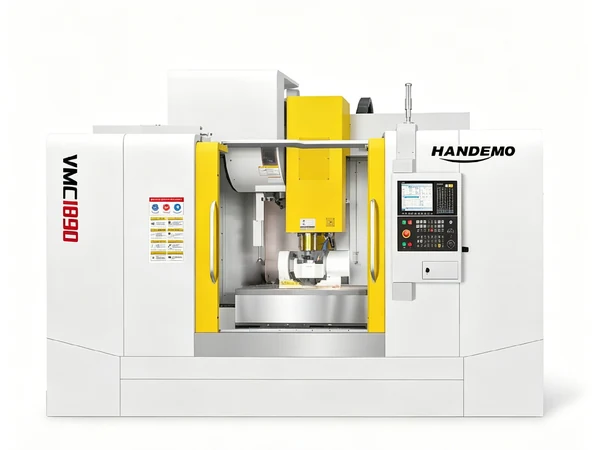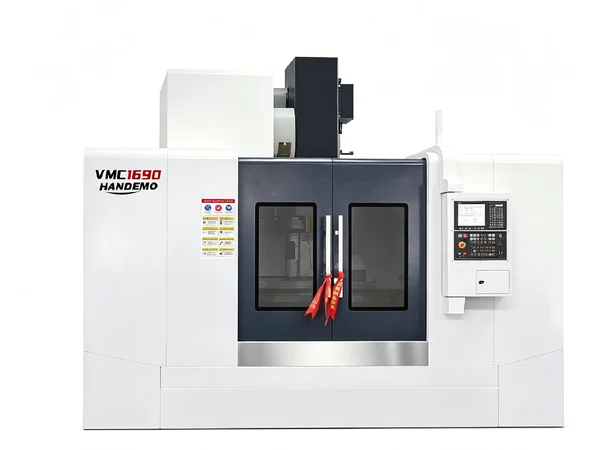
VMC1690 Vertical Machining Center Guide
The VMC1690 is the machine a shop moves up to when a 1160 has run out of table and the parts are getting heavier. It is a 1600 mm class vertical machining center with a BT50 spindle, a 1600 x 800 mm table and a 1500 kg load rating, and it is built for the work that sits between a general-purpose VMC and the flagship VMC1890. This article covers what the machine is, where it fits, what the numbers on the specification sheet actually mean when you are loading a part, and which jobs should be on it rather than on a smaller machine.
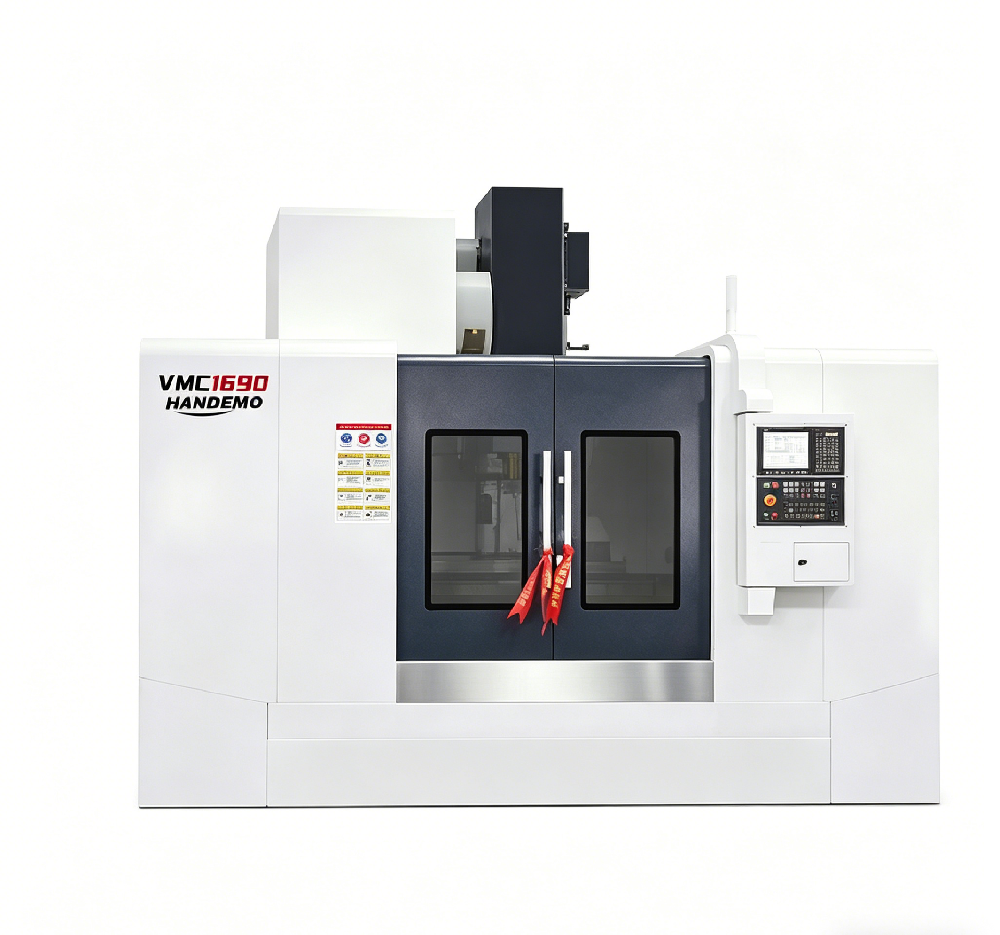
What the VMC1690 Is
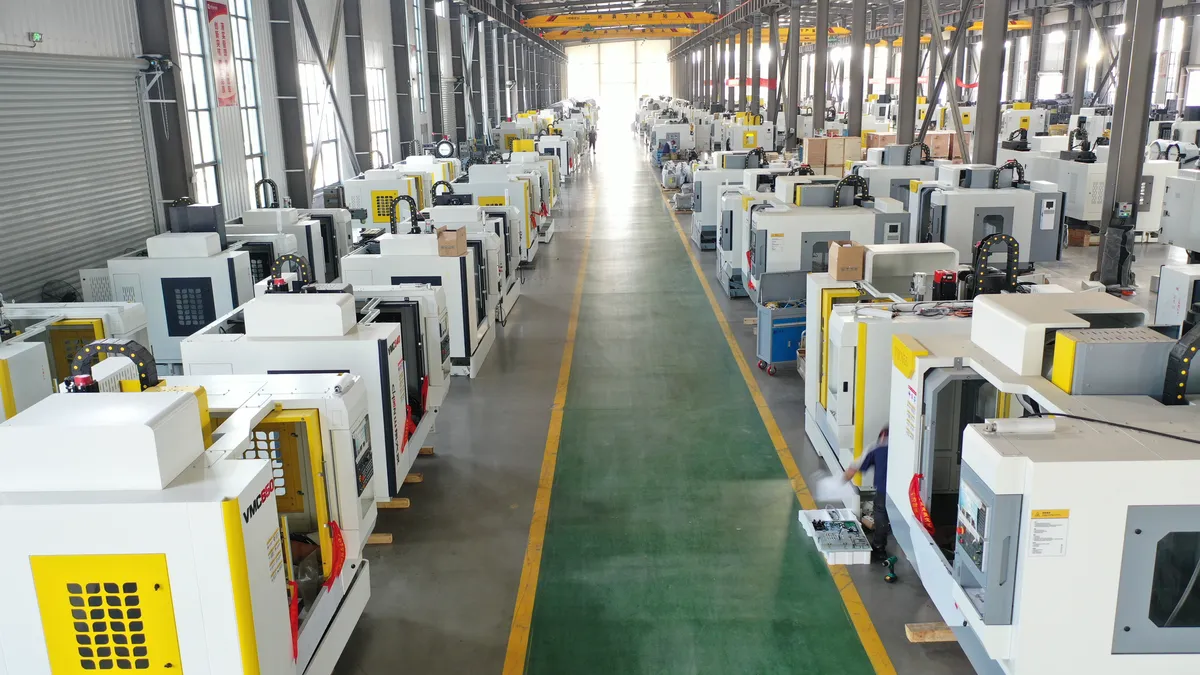
The VMC1690 is a vertical machining center in Handemo's heavy-duty range, sitting below the VMC1890 and above the VMC1560. The spindle is BT50, which is the step that matters: a BT40 machine running a 100 mm face mill is doing something different from a BT50 machine taking a heavy cut in a casting, and the difference shows up in how quiet the cut sounds and how consistent the finish is over a long run.
Its travel is 1600 mm in X, 900 mm in Y and 700 mm in Z, with a 1600 x 800 mm table rated to 1500 kg. Rapid traverse is 20 m/min in X and Y and 14 m/min in Z, the spindle runs to 6000 rpm, and the machine weighs 12,000 kg. That weight is not a boast; it is what lets the machine take a heavy interrupted cut without the structure ringing.
What the Numbers Mean in Practice
Specifications are easy to list and easy to misread. Four of them decide whether a part fits the machine.
The 1600 x 800 mm table is the limit on how many parts can be loaded at once. A single large plate that is 1400 mm long fits with room for clamps; a rail of smaller parts is limited by how they can be clamped, not by the table size alone. When a job is planned on the table, the useful area is always smaller than the nominal area, because the clamping and the tool clearance take their share.
The 1500 kg load rating is the limit on the part plus the fixture. A heavy casting in a tombstone fixture can reach that figure faster than expected, and the fixture is often the heavier half. The Z travel of 700 mm then decides whether the spindle can reach the far end of the part without the head running out of travel.
The BT50 spindle with 6000 rpm is the right combination for large parts and larger tools. It gives the tool the rigidity to take a serious depth of cut in steel and cast iron, at spindle speeds that suit face mills, large end mills and boring heads rather than small high-speed cutters.
Where the VMC1690 Fits in the Range
The range steps up in size for a reason. The VMC1160 vertical machining center is the general-purpose machine that most work goes on: a 1200 mm class table, well suited to housings, plates and most everyday parts. The VMC855 sits below it for smaller parts and shorter cycles.
The VMC1690 is the machine above that line, and it exists for two reasons. The first is size: parts that are too long or too heavy for the 1160 table. The second is cut severity: parts in cast iron or steel that want a deep, heavy pass and a structure under them that does not move. When the VMC1690 is still not enough - very large plates, big mold bases, machine tool components - the VMC1890 vertical machining center takes over with a 2000 x 900 mm table and an 1800 mm X travel.
Jobs That Belong on the VMC1690
The machine suits parts that are large, flat and heavy, and that need a big tool in a rigid spindle. Large mold and die plates, machine tool beds and columns, plates with long rows of holes and pockets, gearbox and machine housings with bores on one face, and heavy brackets for industrial equipment all fit the pattern. It is also the right machine for jobs that mix a large face with a set of precisely related bores, because the size of the table lets the whole face and its bores be cut in one setup rather than in two.
What it is not for is small parts at high volume. A machine of this size is carrying a 12,000 kg structure and a BT50 spindle; running small aluminium parts on it wastes the machine's capability and its cycle time. Those parts belong on the smaller frames, where the axes are faster and the spindle speed suits the tool.
Setting Up Large Parts on It
The work on this class of machine is decided as much by the setup as by the machine. A large plate is held on its machined face or on soft jaws faced in place, so the clamping force lands on a surface that will still exist after the job. Where a part has to be approached from more than one side, it is planned so that as much as possible is cut before the part moves, and the datum is re-established against a machined feature rather than against a stop set once.
Heavy and thin-walled parts are held with the clamp pressure kept as low as the job allows, because a plate that is clamped hard enough to be safe can be pressed out of shape before the finish pass is taken. Roughing and finishing are separated so the part has settled before the surfaces that matter are finished.
Frequently Asked Questions
What is the difference between the VMC1690 and the VMC1890?
The VMC1890 is the larger machine. It has a 2000 x 900 mm table against the VMC1690's 1600 x 800 mm, a 1800 mm X travel against 1600 mm, a load rating of 1600 kg against 1500 kg, and it weighs 14,000 kg against 12,000 kg. Both use a BT50 spindle at 6000 rpm. The VMC1890 is the choice when the part will not fit or will not sit still on the 1690.
What size part can the VMC1690 machine?
Guide figures: a part up to roughly 1600 mm in X and 900 mm in Y, weighing up to 1500 kg together with its fixture, and up to 700 mm in the spindle direction. In practice the usable figures are lower, because clamping and tool clearance take part of the table, and the part has to be reachable by the spindle over its full length.
Is BT50 necessary, or is BT40 enough?
BT40 is enough for the majority of general machining and for smaller parts. BT50 earns its place on large parts and heavy cuts: it carries bigger tools, takes a deeper pass in steel and cast iron, and holds the tool more rigidly over a long reach. If the parts are large and the material is hard, BT50 is the practical choice.
Can the VMC1690 run mould and die work?
Yes, and large mold bases are one of its main jobs. Molds and dies are also some of the largest parts a shop handles, so the table size and load rating are usually what put the job on this machine rather than on a smaller VMC. A 6000 rpm spindle at BT50 suits the large cutters used on big cavities and plates.
How do you choose between the VMC1690 and a horizontal machine?
By the number of faces that carry work. Parts with their features on one face or two suit the VMC1690, where the part sits on its datum and the spindle works from above. Parts with bores or features on four sides, or the same part made in a batch, are usually cheaper on a horizontal machine with a pallet set-up, where the part is presented to the spindle from several directions without being re-clamped.
Get a Recommendation for Your Parts
Send us the part drawings - size, weight, material, the faces that carry work and the batch size - and Handemo will tell you whether the VMC1690 has the table and the spindle for the job, or whether the work belongs on the smaller or the larger frame. Contact Handemo CNC | Email: sales1@handemocnc.com | WhatsApp: +86 135 6320 3038
Related reading: Machine Comparisons covers the other selection questions we get, VMC866 vs VMC1160 looks at the step below this one, and VMC vs HMC explains when a part has enough sides to leave the vertical machine behind.