
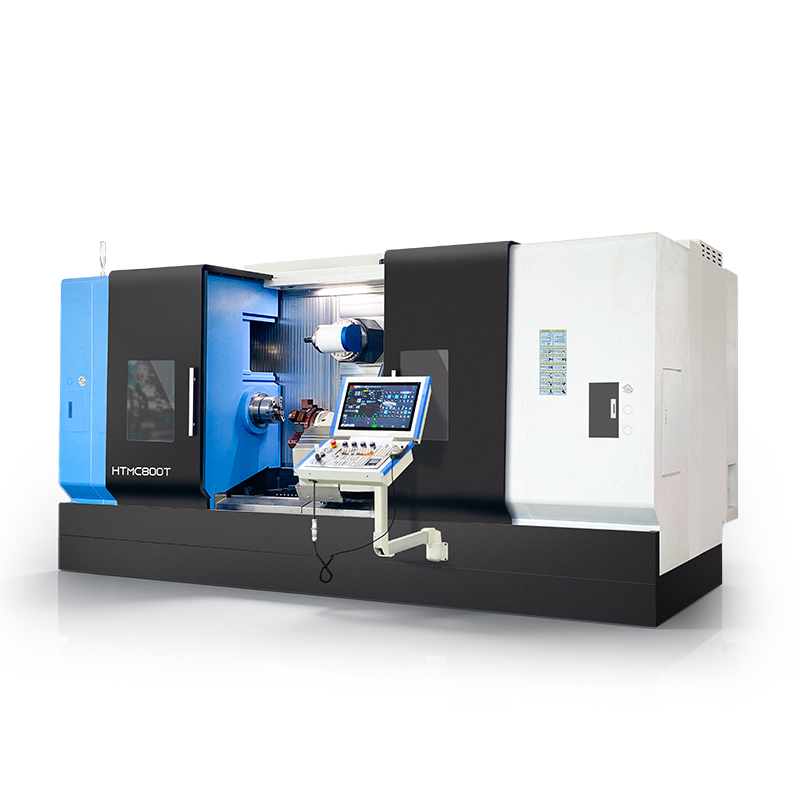
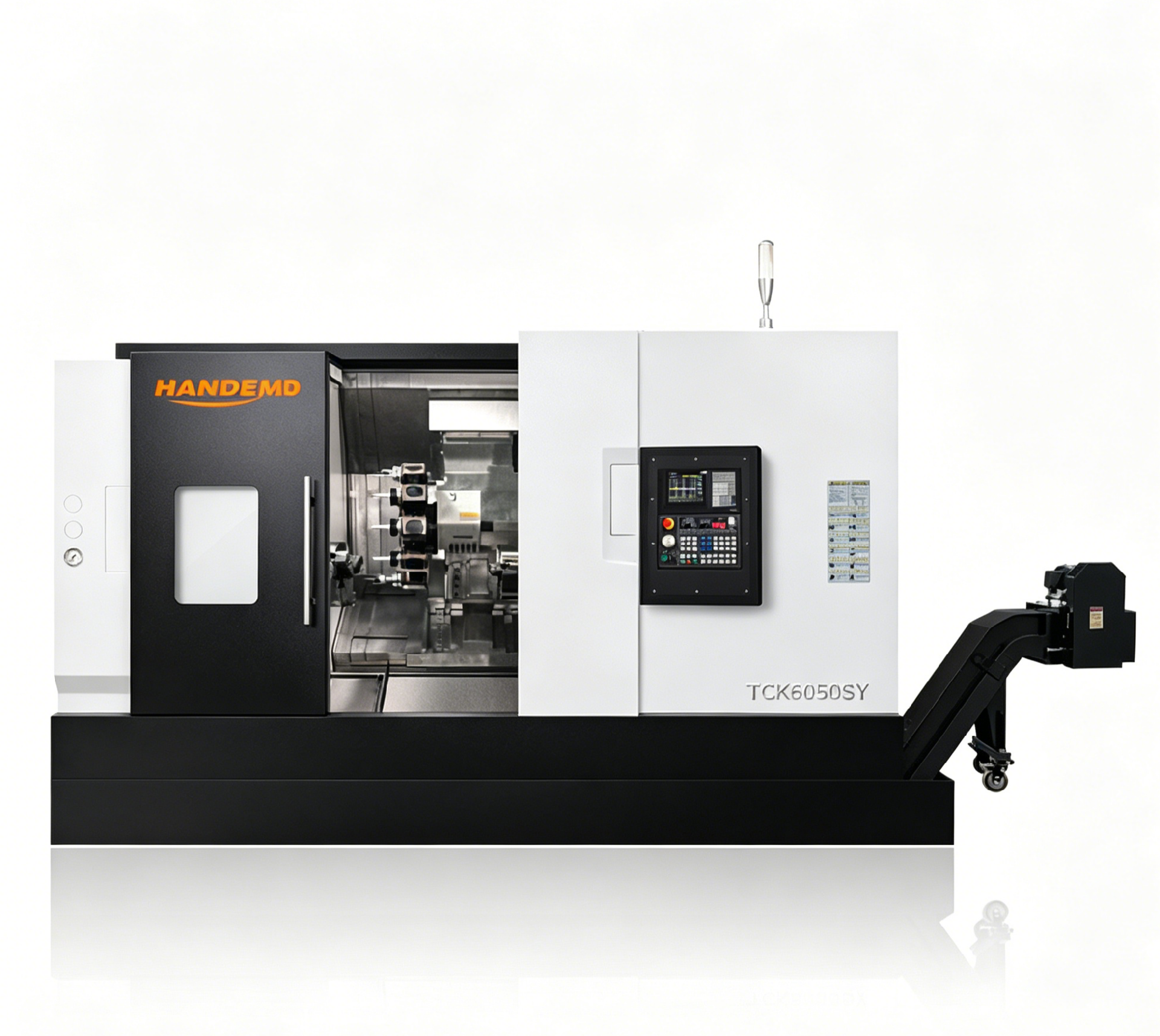
TCK6050SY CNC Mill-Turn Machine
CNC Mill-Turn Machines / Dual-Spindle CNC Mill-Turn Machines
*Max. swing over bed 600 mm, max turning length 450 mm, max turning diameter 400 mm, swing over cross slide 330 mm, standard turning diameter 300 mm
*Spindle1: A2-6, bore 67 mm, bar capacity 50 mm, speed range 50~4000 r/min, power 18.5 kW
*Spindle2: A2-5, bore 56 mm, bar capacity 45 mm, speed range 50~4000 r/min
*X-axis travel 230 mm, Z-axis travel 450 mm, Y-axis travel ±50 mm, X/Y/Z rapid traverse 20/20/10 m/min
*Machine dimensions 3307×1912×2250 mm
Technical Specifications
Product Details Parameters
Product Details
Product Parameters
| Specifications | TCK6050SY |
| Max. swing over bed(mm) | 600 |
| Max. turning length(mm) | 450 |
| Max. turning diameter(mm) | 400 |
| Max. swing over cross slide(mm) | 330 |
| Standard turning diameter(mm) | 300 |
| Spindle1 nose type | A2-6 |
| Spindle1 bore diameter(mm) | 67 |
| Bar capacity(mm) | 50 |
| Spindle speed range(r/min) | 50~4000 |
| Spindle motor output power(kW) | 18.5 |
| Spindle2 nose type | A2-5 |
| Spindle2 bore diameter(mm) | 56 |
| Bar capacity(mm) | 45 |
| Spindle speed range(r/min) | 50~4000 |
| X-axis rapid traverse(m/min) | 20 |
| Y-axis rapid traverse(m/min) | 20 |
| Z-axis rapid traverse(m/min) | 10 |
| Y‑axis travel(mm) | ±50 |
| X-axis travel(mm) | 230 |
| Z-axis travel(mm) | 450 |
| Machine dimensions(KG) | 3307L× 1912W× 2250H |
What the TCK6050SY can turn
The TCK6050SY takes work up to 400 mm maximum cutting diameter on a 30 degree cast bed. Maximum swing over the bed is 600 mm, and 330 mm over the cross slide. That envelope decides what fits in one setup: a flange that clears the turret at its largest diameter, or a shaft that runs the full length of the bed without a steady.
Maximum cutting length is 450 mm. For shaft work this is the usable length between the chuck face and the tool tip, not the distance between centres. Parts that approach this figure need the tailstock position and the steady arrangement checked against the drawing before the order is placed.
How the machine is built
The bed is a single high-density cast iron casting rather than a welded fabrication. Mass in the casting absorbs vibration before it reaches the cutting edge, which is what makes a heavy interrupted cut repeatable.
The internal rib pattern was optimised with Ansys finite element analysis. The ribs sit where the cutting force actually loads the casting, not in a uniform grid that adds weight without adding stiffness.
The guideways are hardened box ways with hardened steel inserts. Box ways carry a larger contact area than linear guides, which is why this machine holds up under interrupted cutting where a linear guide would brinell.
Roller bearings rather than balls are used in the guide blocks, so the contact is a line rather than a point. That is what keeps the slide stiff when the tool is buried in a heavy radial cut.
The spindle is an integral motorised unit. There is no belt and no gearbox between the motor and the tool, so there is no belt stretch to absorb the cut and no gear mesh to generate a vibration frequency of its own.
The turret uses a BMT driven tool interface. BMT mounts the driven tool on the turret body rather than through a radial coupling, which is what makes a 12-station turret able to run both turning and milling tools at full station count.
The Y axis is a real servo axis, not an interpolated approximation. Cross holes, milled flats and slots off the centreline are cut with the tool normal to the surface instead of with a wandering C-axis move.
A second spindle picks up the part after the first operation and finishes the back face without a manual reload. The two spindles are synchronised for the transfer, so the part keeps its datum through the handover.
Chip handling is matched to the chip form: a hinge-belt conveyor for tangled and blocky chips, a scraper for fine cast iron and aluminium, and a magnetic scraper for wet cast iron chips under 150 mm.
The electrical cabinet is cooled by a heat exchanger rather than by filtered air, so the cabinet stays sealed. That matters in a shop where the air carries abrasive dust.
Where this machine earns its cost
The TCK6050SY suits work where two spindles, a Y axis and a 360 degree C axis in one 450 mm cutting length envelope. Typical parts include:
- Valve bodies
- Hydraulic fittings
- Auto parts
- Sleeves and bushes
- Brass and copper fittings
- Small pump housings
If your part is not on that list it does not mean the machine cannot cut it. Send the drawing and we will check the envelope, the turret reach and the tooling against the actual geometry rather than against a category.
Questions that decide the configuration
| Question | Why it changes the machine |
| How long is the part in one setup? | The cutting length is 450 mm. Parts longer than that need a steady, a second setup, or a larger machine. Settle this before comparing prices. |
| Are there holes or flats off the centreline? | If yes, the Y axis removes a second operation. If every feature is on the centreline, a two-axis lathe does the same work for less money. |
| Does the part need both faces finished? | A second spindle turns a two-setup part into one cycle. The saving is per part, so the decision depends on volume as much as on geometry. |
| What is the heaviest single cut? | Depth of cut and feed on the OD decide whether the casting or the slide takes the load. Tell us the material and the heaviest pass, not the average one. |
| Will the machine run unattended? | Chip build-up and tool wear matter far more on a lights-out cell. That changes the conveyor, the coolant strategy and the tool-life monitoring. |
Frequently asked questions
What is the largest part this machine can turn?
Maximum cutting diameter is 400 mm with the standard turret, and maximum swing over the bed is 600 mm. The cutting diameter is the figure that matters: it already accounts for the turret sitting between the part and the operator.
How long a shaft can it handle in one setup?
Up to 450 mm of cutting length. Longer shafts need a steady or a second operation, and the tailstock travel has to be checked against the part.
Can it run driven tools?
Yes. The turret takes BMT driven tool holders, so milling, drilling and tapping run on the same turret as the turning tools.
How do I compare two quotations for this machine?
Compare five things: the turret station count and whether driven tools are included, the chuck and bar capacity, the control system and its options, the chip and coolant package, and what is excluded from the price. A lower figure usually means something on that list was left out.
Bar Stock and Bar Feeding
The spindle takes up to 50 mm bar through a 67 mm bore. That 50 mm is the working capacity with the collet, liner and bar feeder connected — the bare bore is larger than what you can actually feed. Stock above 50 mm is chucked and run as a billet.
The 17 mm between bore and bar capacity is what the liner and collet take up. If your stock sits close to 50 mm, send the tolerance on the bar itself: cold-drawn and hot-rolled stock of the same nominal size do not both pass a standard liner, and that difference shows up as feed stoppages rather than as a machining problem.
Bar Feeder, Magazine or Robot?
All three interfaces can be specified. A bar feeder suits round, hexagonal or square stock up to 50 mm running continuously and is the usual choice for parts turned from bar. A gantry or robot loader suits billets, castings and parts that need two operations or a flip. The choice changes the footprint and the foundation, so it has to be fixed before the machine is built.
With a 8-inch chuck the machine handles bar work and chuck work on the same spindle. Bar work is limited by the 50 mm feed capacity; chuck work is limited by the swing and the maximum cutting diameter in the parameter table above.
Bar Work, Billet Work and Where the Limit Is
Cutting length from bar in one setup is up to 450 mm, measured from the chuck face to the tool tip. Beyond that the bar leaves the spindle unsupported and the part needs a steady rest or a second operation. When you ask for a quotation, state the finished length and the raw length per part: together they set the remnant, and the remnant is what decides whether a bar feeder pays for itself on your batch size.
A practical rule for bar work: the remnant left in the feeder plus the part length has to divide into the bar length you can buy without leaving an offcut you cannot use. On short parts the remnant dominates the material cost, and that is a question about the feeder, not about the lathe.
Related Technical Guides
- Dual-Spindle Turn-Mill: Both Ends, One Setup — Joint turning and milling on one bed: how a dual-spindle turn-mill joins two ends, where quality is decided at the handover, and what to ask first.
- Center-Coolant Tool Holder in One Setup — Case study: turning a center-coolant tool holder complete in one clamping on a dual-spindle mill-turn center, coolant channel and cross ports from one datum.
- CNC Machining Bushings and Sleeves — How bushings, sleeves and ring parts are turned: materials, thin-wall holding, sequence, heat treatment and the checks that keep a batch round.
- Case Study: Pump Casing on an HMC — How a pump and valve maker cut a cast iron casing from four setups to two on an indexing horizontal machining center, including the clamp and datum plan.
Get a Quote for Your Application
Need a CNC machine tailored to your production line? Contact Handemo CNC for a detailed quote, technical support, and fast delivery worldwide.
Contact Handemo CNC now or email sales1@handemocnc.com / WhatsApp +86 135 6320 3038.
FAQs
Frequently Asked Questions
What is the minimum order quantity for this machine?
We accept orders from 1 unit. Each machine is manufactured to order with full quality inspection, and lead time depends on the model and customization requirements. Contact our sales team for current lead times.
Can the machine be customized for my application?
Yes. Handemo offers customization including spindle options, CNC control systems (Fanuc, Siemens, GSK or others), automation integration, 4th/5th axis configurations, chip conveyors and special tooling. Tell us your workpiece requirements and we will propose the best configuration.
Do you provide installation and training?
Yes. We provide on-site installation and commissioning, operator training, and technical documentation. Remote video support is also available for troubleshooting and optimization after delivery.
What is your warranty policy?
Standard warranty covers the machine tool for 12 months from installation, including spare parts support. Extended warranty and preventive maintenance programs are available on request.
How do you ship the machine and how long does delivery take?
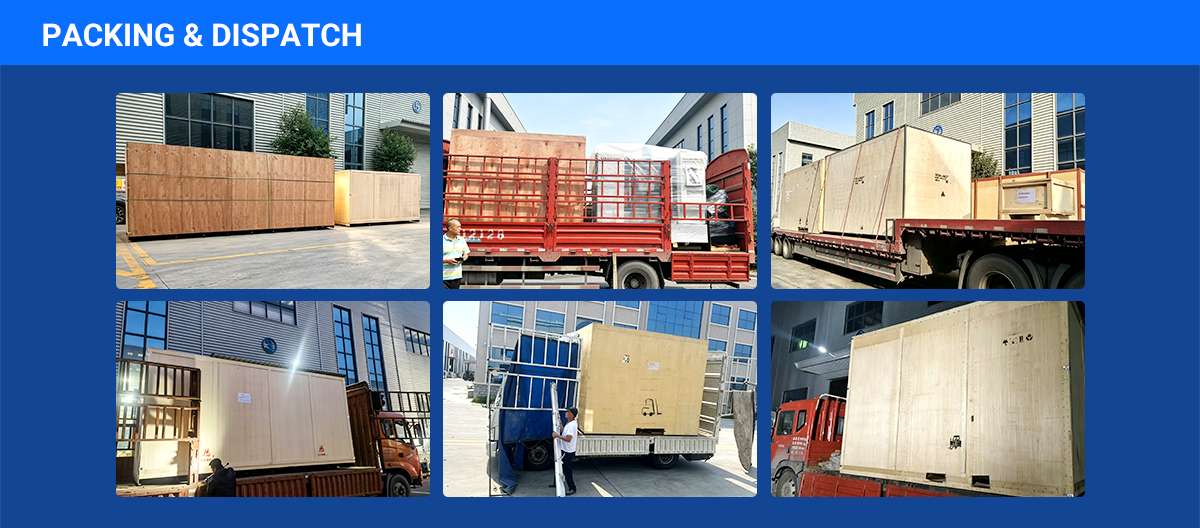
We export worldwide by container or break-bulk shipping with professional packing. Delivery time depends on the destination country and the model ordered. Our export team manages the full logistics process including customs documentation.
Can I visit the Handemo factory before ordering?
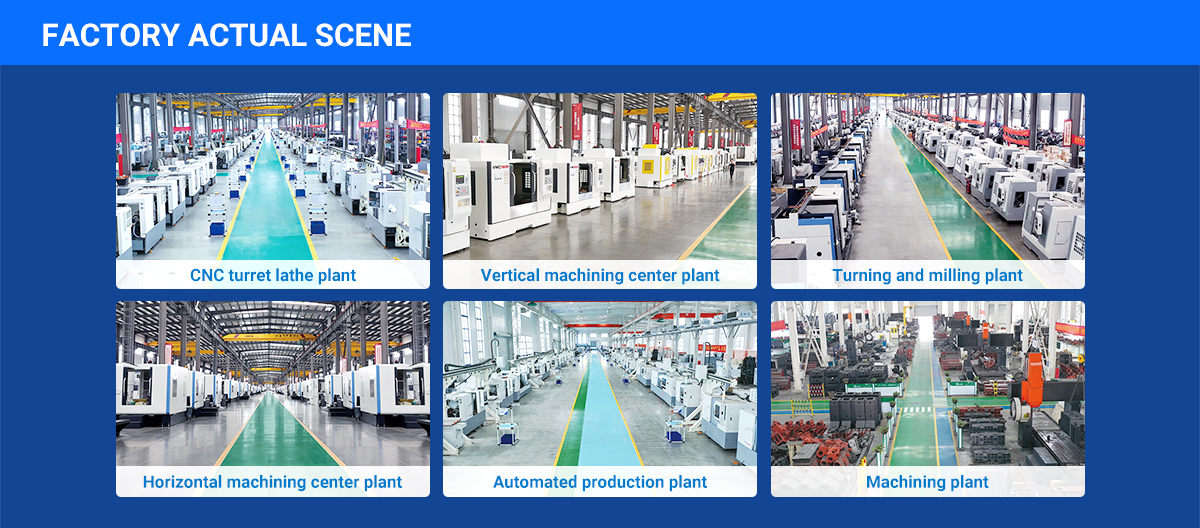
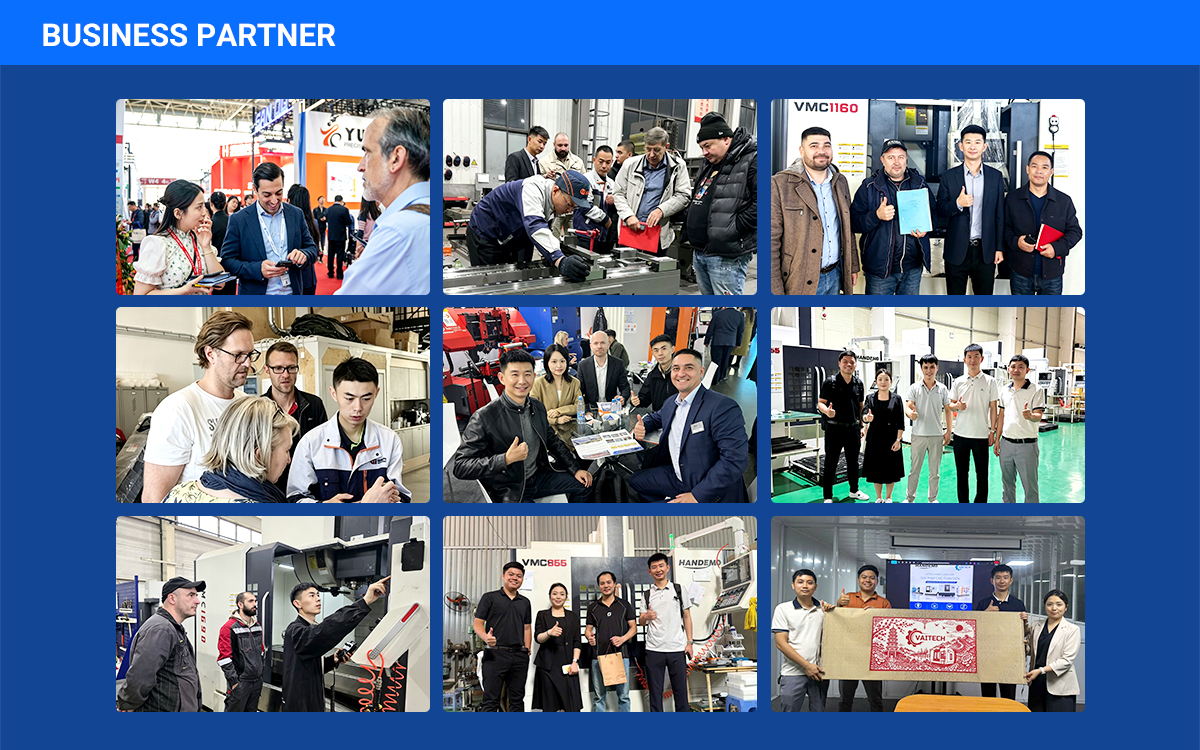
Certainly. Customers are welcome to visit our factory in Shandong, China for machine inspection, cutting tests and face-to-face discussion. We regularly host international customers from more than 150 countries.
Recommended Products
Related Products
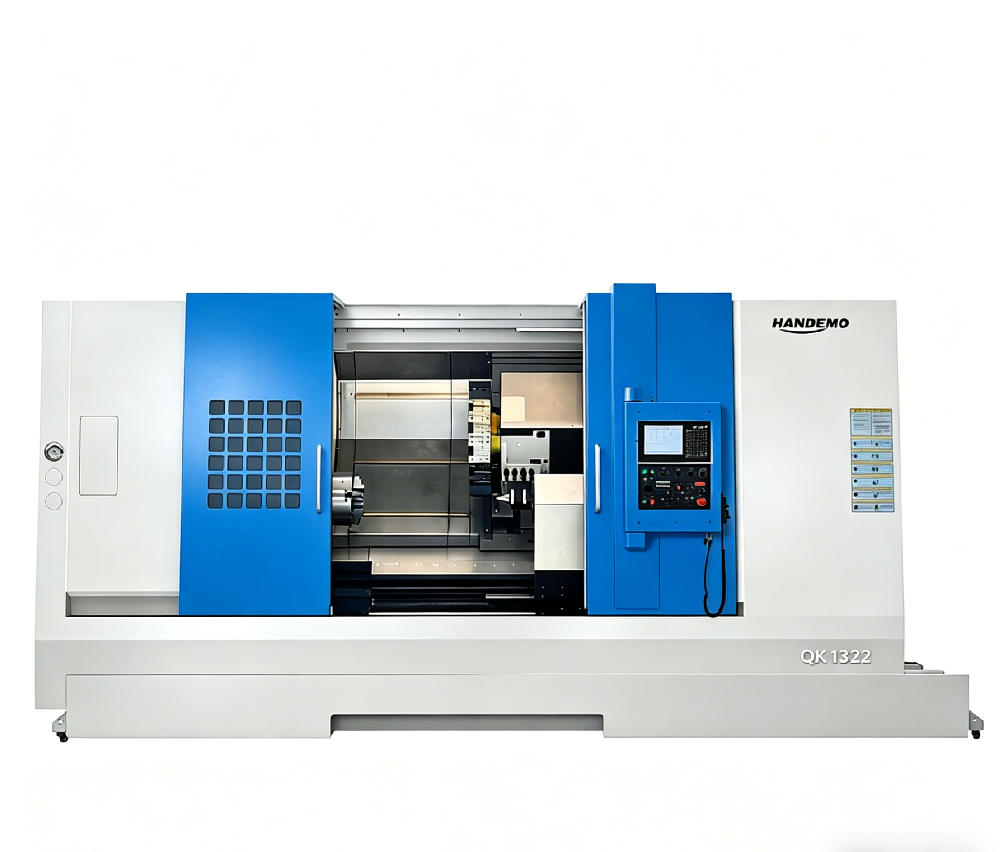
QK1322 CNC Mill-Turn Machine
View Details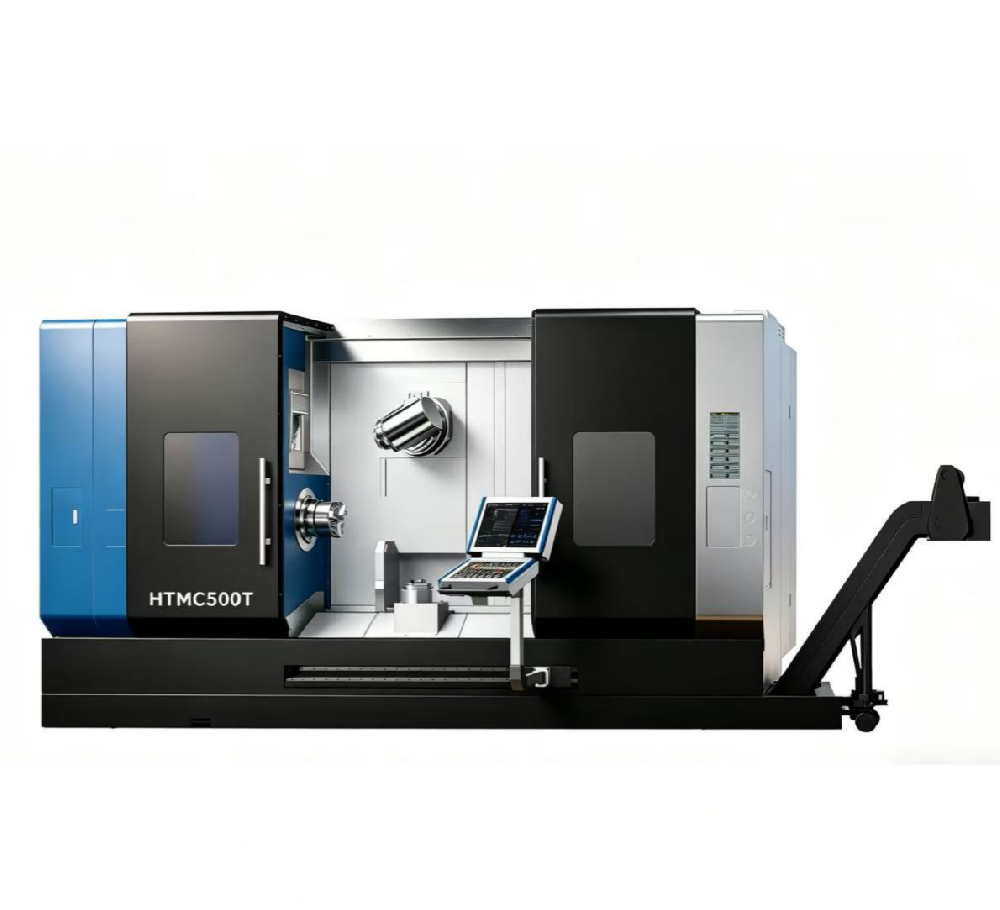
HTMC500T CNC Mill-Turn Machine
View Details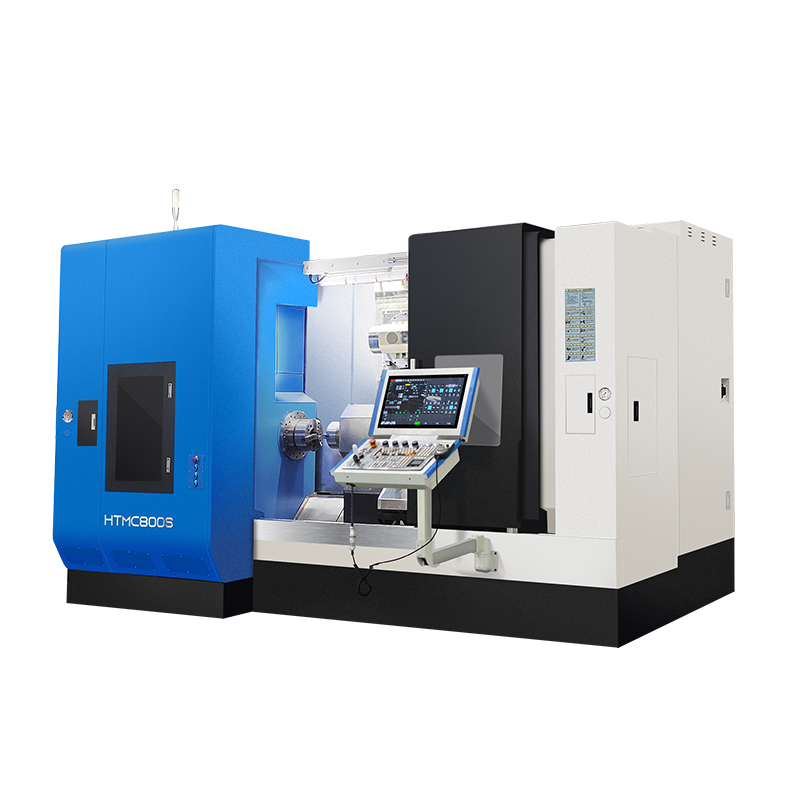
HTMC800S CNC Mill-Turn Machine
View Details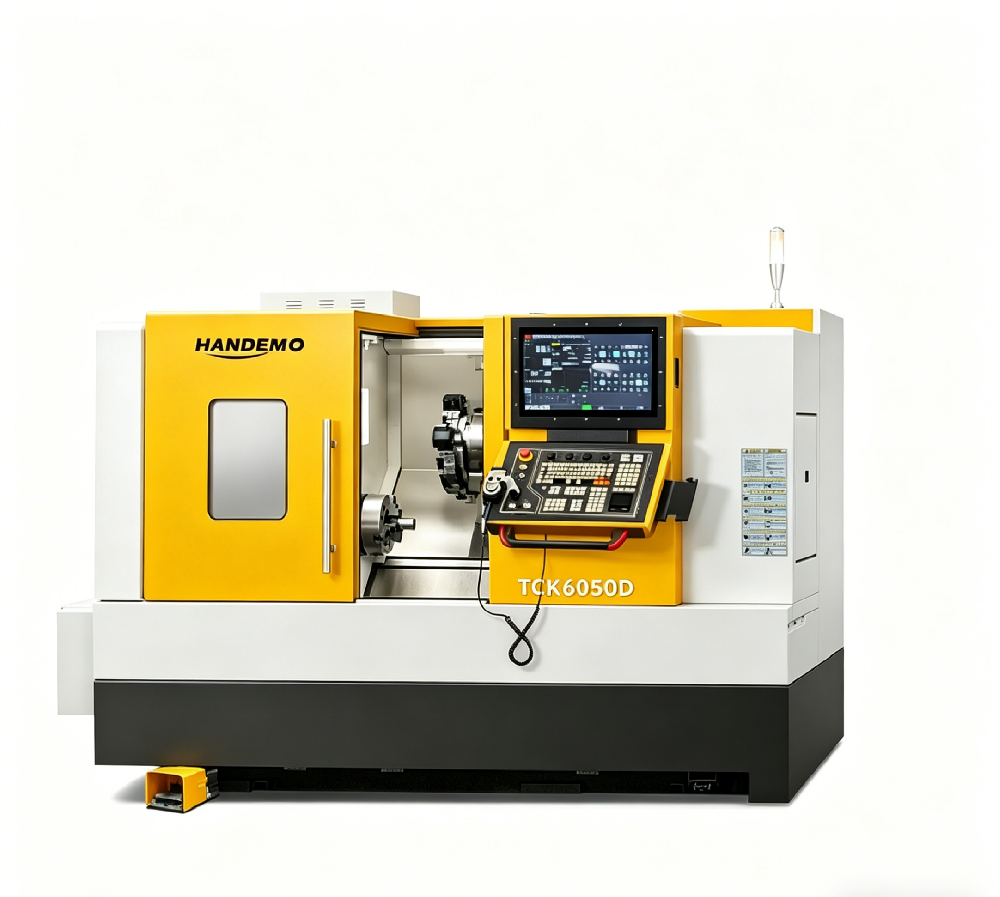
TCK2100SYY CNC Mill-Turn Machine
View Details
TCK80Y CNC Mill-Turn Machine
View Details
TCK600SD CNC Mill-Turn Machine
View Details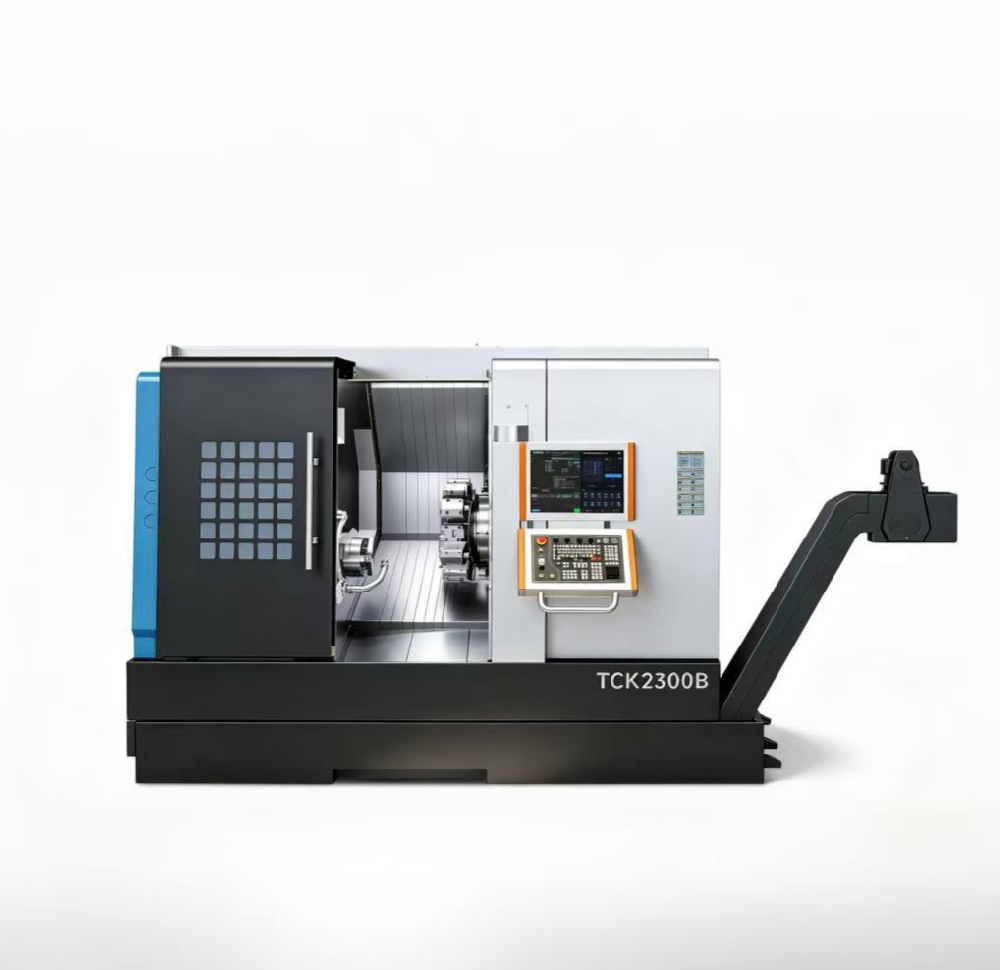
TCK2300B CNC Mill-Turn Machine
View Details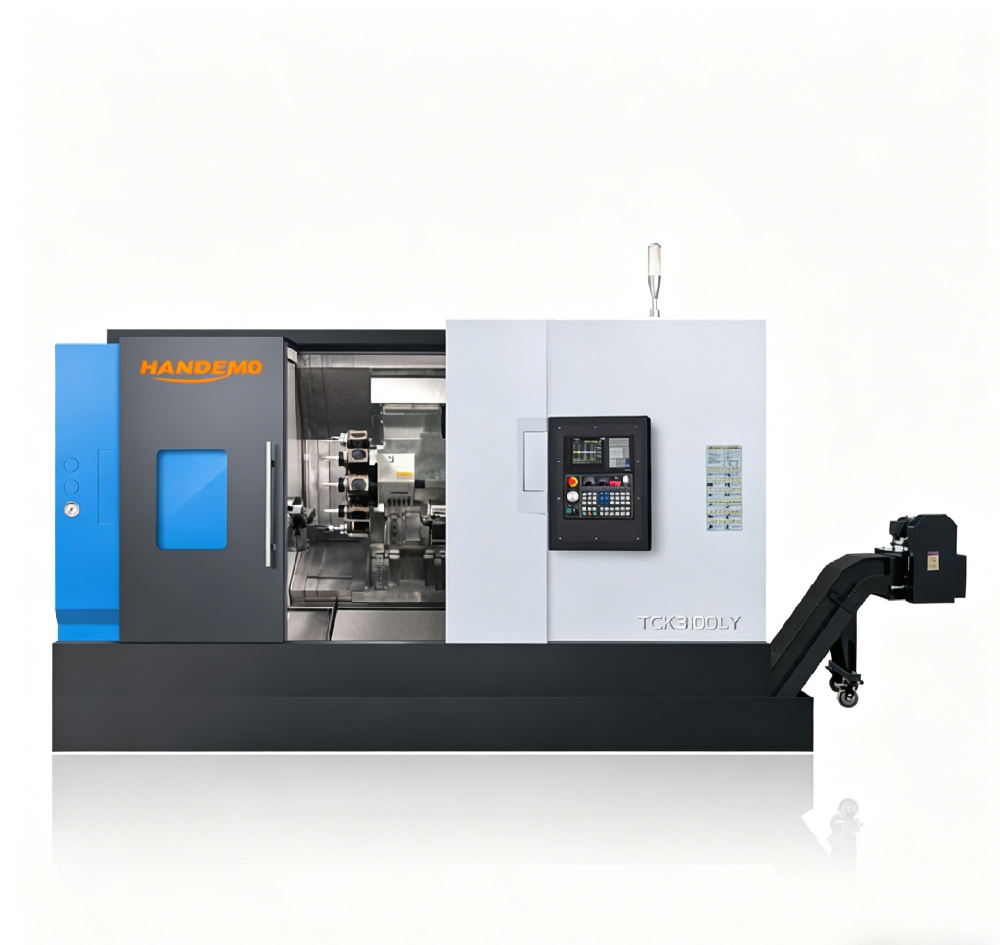
TCK3100LY CNC Mill-Turn Machine
View Details
TCK6050Y CNC Mill-Turn Machine
View Details
3100SY CNC Mill-Turn Machine
View Details
TCK600Y / TCK600SY CNC Mill-Turn Machines
View Details
2100LY CNC Mill-Turn Machine
View Details
70Y CNC Mill-Turn Machines
View Details
TCK56Y CNC Mill-Turn Machine
View Details
Contact Us
Get In Touch With Handemo
We are ready to provide you with professional solutions and reliable CNC machines.
Phone+86 135 6320 3038
AddressShandong, China
Business HoursMonday - Saturday: 08:00 - 17:30 (GMT+8)