Turning a Center-Coolant Tool Holder in One Setup
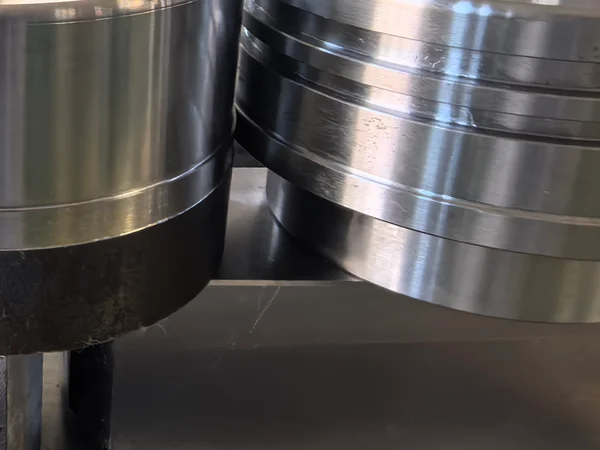
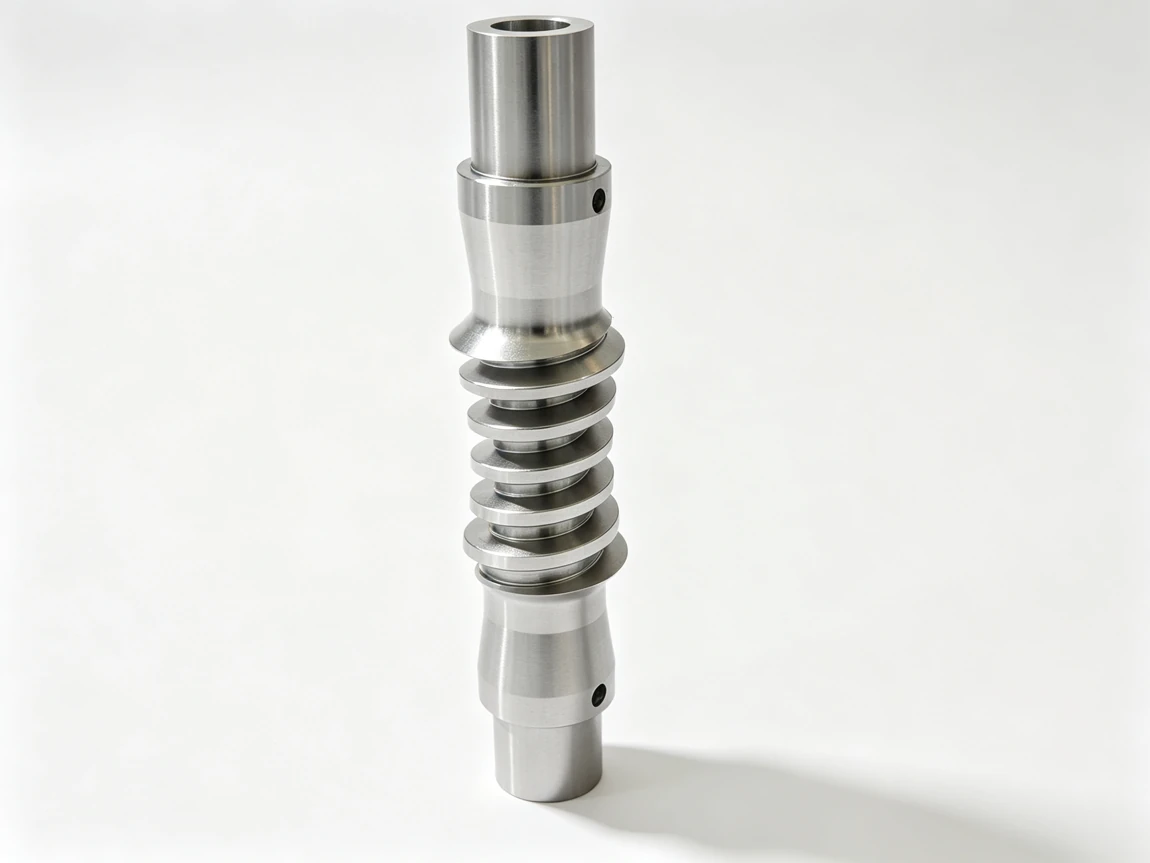
The enquiry arrived as a photograph, not a drawing. Two tool holders on a bench, the one on the left with a straight through-hole and the one on the right with a hole that stopped short of the cutting end. Underneath, one line: the second one is what we need, and we need it faster than we are getting it now. That photograph set the whole project — because the difference between the two parts was not the hole, it was how many times the part had to be set up to make it.
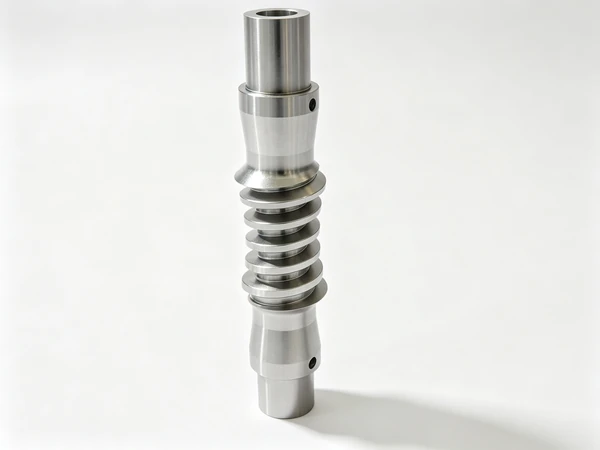
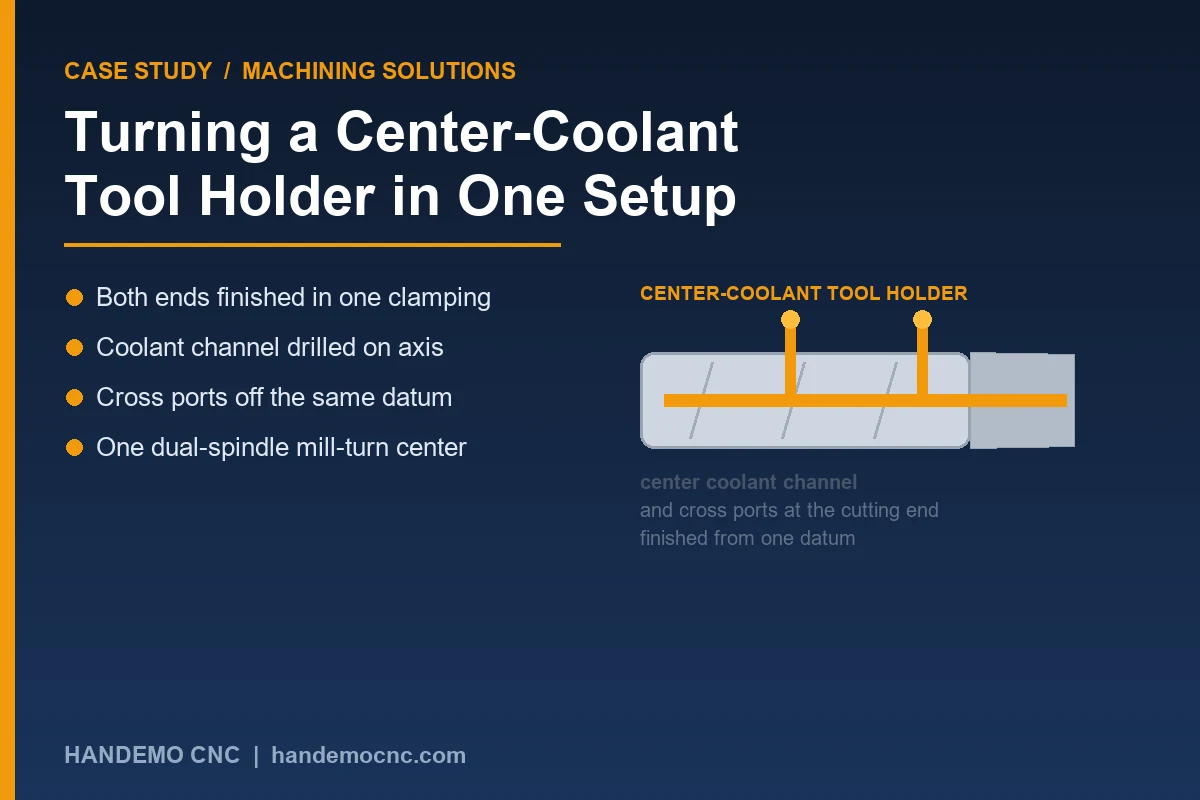
A center-coolant tool holder is a slender steel body with a deep channel running down its axis and a set of cross ports opening near the cutting end. On a conventional route it gets made in two operations on two machines: one lathe faces and turns the shank, the part goes to a mill or a second lathe for the cross ports, then back for the nose. Every one of those trips re-establishes the part on a new datum, and on a long thin body the second and third clamping events do more damage to the geometry than any cutting force does. The customer was not fighting their machines. They were fighting the number of times the part moved.
What the Part Has to Do
The holder carries a cutting insert at one end and is clamped in a turret or a spindle at the other. The coolant has to arrive at the cutting edge, not at the shank, so the internal channel runs the full length of the body and the cross ports must land in the right place relative to the nose — not to the shank, and not to whatever surface happened to be chucked at the time.
That single sentence is the whole job. The functional requirement is not a feature on one end or the other; it is the relationship between two ends. Which is exactly the requirement that a second setup destroys.
- Axial channel continuous and clear through the length of the body
- Cross ports positioned relative to the cutting end, on the same axis as the shank
- Nose face square to the axis so the insert seats correctly
- Shank diameter concentric with the nose, so the holder repeats when it is loaded into a turret
Written on a drawing, none of those lines look difficult. Held across two machines and three clampings on a slender steel body, they are the lines that come back.
Why the Two-Setup Route Keeps Failing
There is a version of this job that runs on a good lathe and a good mill, and plenty of shops make it work. It works best when the body is short and stiff. As the holder gets longer relative to its diameter, the failure pattern shows up in the same order every time.
The shank is turned first and it comes out clean. The part is then moved to a fixture for the cross ports, where it is located from the shank diameter. That location is fine in theory, but the clamp pressure on a slender body bends it slightly, and the ports get drilled into a part that will spring back straight afterwards. Then the nose is faced, again from a re-established datum, and the relationship between the nose and the ports drifts. Nothing is out by much. It is out by enough that the coolant jet does not hit the insert cleanly, and the operator cannot re-cut the part to fix it because the channel is already drilled.
The complaint that comes back from a shop in this position is almost never “our machines are not accurate”. It is “the second operation keeps moving on us”. Those are different problems, and they need different solutions.
Material Behaviour on a Thin Section
Tool holders are almost always made from alloy steel or a through-hardening grade, sometimes a hot-work steel for holders that see high temperatures at the cutting edge. These are materials with a lot of residual stress and a section that is thin in the middle of the body. Removing material from the outside releases that stress, and the part moves. The movement is small in absolute terms and completely predictable in direction once you have run the part once — but only if both ends are being cut in the same clamping. Split the operations and the stress release happens between setups, where nobody can measure it and nobody can compensate for it.
What We Did
We quoted the holder on a dual-spindle mill-turn center rather than a lathe-plus-mill route, and that one decision carried most of the project. Cutting the body complete in one machine removes the two re-clamping events that were causing the drift, and it removes the fixture that was bending the part for the cross ports.
The sequence runs like this. The blank is bar stock, sawn slightly long. Op one turns the shank, faces and centers the end, and drills the axial coolant channel from that end — deep, but on a straight axis while the part is still short and stiff. The cross ports are drilled and their intersection with the internal channel is checked before the part goes any further, because once the nose is finished there is no second chance. Then the part transfers from the main spindle to the sub-spindle and the back end is turned and faced without ever leaving the machine. The nose face, the cross ports and the coolant channel are all cut from one datum, and the part sees exactly one clamping.
The Machine and Why
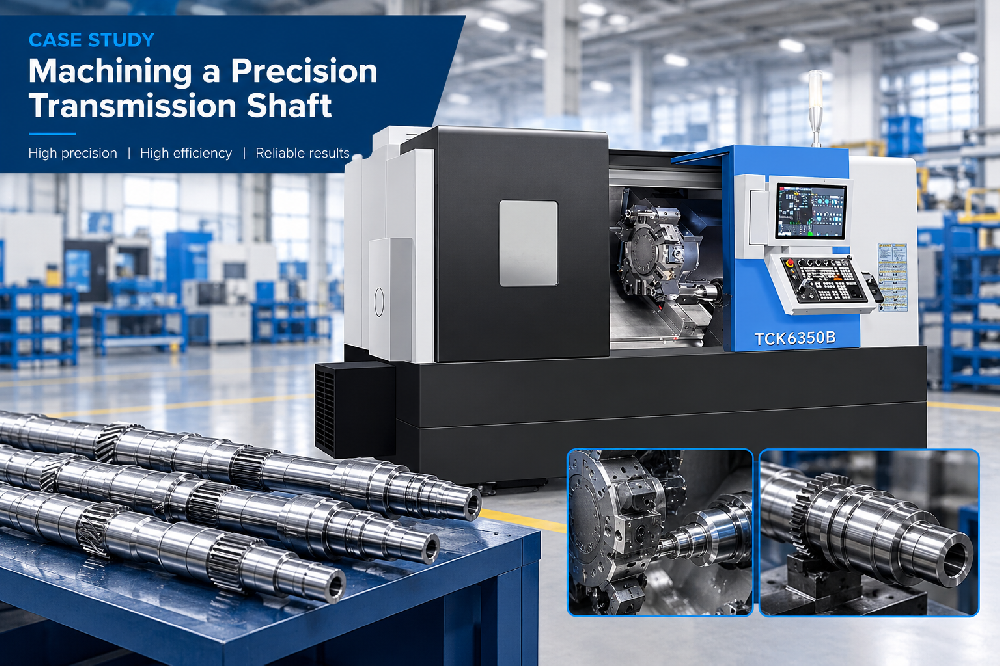
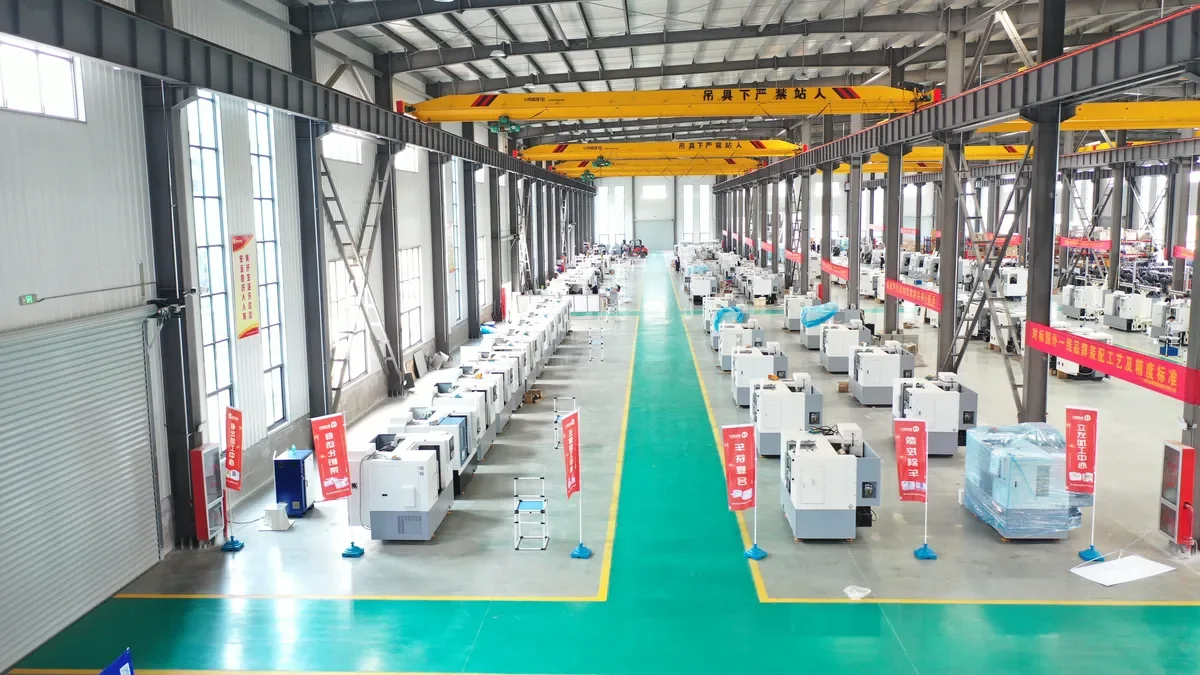
The work runs on a TCK6050SY dual-spindle CNC mill-turn machine. Two reasons decide it. First, the sub-spindle gives us the second end without a second fixture, which is the whole point of the project. Second, the Y-axis and the live tooling let the cross ports be cut on the same machine instead of going out to a mill — on a slender body that matters more than cycle time, because the port position is being cut from a datum that is still on the machine rather than a fresh one.
For longer holders, or where the customer wants the cross ports and any flats cut with more axis freedom, the 3100SY mill-turn machine covers the same route with a larger working envelope. Where the annual volume is lower and the holder is short enough to be stable in two operations, a TCK6050 slant bed lathe with a sub-spindle can still be the sensible quote. What we do not do, on this family of part, is recommend a plain lathe plus a separate mill, however good both machines are.
What We Put in Place to Keep It Stable
Two things beyond the machine made the job repeat.
The first is how the part is held. On a slender holder, the temptation is to grip hard so nothing moves. That is the wrong instinct. We run the shank in a collet or on soft jaws machined to the finished diameter, so the clamping pressure is distributed around the circumference instead of concentrated at three points, and we keep the grip as light as the cut allows. A steady rest supports the middle of the body on the longer variants. Gripping less hard sounds like a risk; on a thin body it is the opposite, because it is the clamp, not the tool, that puts the three-lobed shape into the part.
The second is rest. We rough the body, let it cool and settle, then take the finishing passes. On a long holder the settling is not instant and it is not visible on the machine. Building a deliberate pause into the sequence costs a little cycle time and removes the class of part that measures correctly at the machine and moves overnight.
Checking the Job Without Repeating It
We check the coolant channel by proving air or fluid through it before the part is finished, so a blocked or badly intersected channel is caught while it can still be corrected. Concentricity between the shank and the nose is held by cutting both ends in the same clamping rather than by gauging it afterwards — the fixture is the control, the check is the confirmation. Finished holders are inspected for the features the customer called out, and we keep a first-article record for the family so repeat batches run against a known result rather than against a fresh assumption.
If a customer has been running this part across two machines and losing position, the useful question is not which machine is at fault. It is how many times the part is re-clamped between the first cut and the last one. On this part, the answer went from three to one, and the complaints stopped.
FAQ
Can the coolant channel be drilled on the same machine as the outside?
Yes, and on this part it should be. Drilling the channel from the shank end while the body is still short and well supported keeps the hole on axis, and it means the channel and the outside of the part share one datum. Moving the channel to a separate machine re-introduces exactly the alignment risk the one-setup route is meant to remove.
Why a dual-spindle machine instead of two lathes?
For a slender part with features on both ends, the second lathe means a second clamping, and the second clamping is where the geometry drifts. A dual-spindle machine finishes the back end by transferring the part inside the machine. It is one clamping, one datum, and one operator watching the same part through the whole cycle.
What materials do you run for tool holders?
Alloy steels and through-hardening grades are the common choices, with hot-work steels for holders that see heat at the cutting end. The machining route does not change much between them; what changes is how much the part moves when material comes off, and that is handled by the rough-then-settle-then-finish sequence rather than by the grade.
Can you hold position between the shank and the cross ports?
That relationship is the reason we keep the cross ports on the same machine as the shank. When both are cut from one datum, the position is a result of the setup rather than a measurement taken afterwards. If the ports were cut on a second machine from a re-established datum, we would be relying on the fixture to reproduce something the machine had already established.
What kind of volume suits this route?
The one-setup route pays for itself from the first batch where the two-operation route is losing position. We run single trial holders to validate the process and fixture, then repeat batches on the same setup. Send the holder drawing, the material and the annual volume and we will recommend the machine and the sequence, and quote the tooling and workholding that goes with it.
Get a Quotation for Your Tool Holder Work
Tell us about the holder — material, length and diameter, where the coolant channel and cross ports sit, and the batch size — and Handemo will recommend the machine and the process, and quote the workholding that makes it repeat. Contact Handemo CNC | Email: sales1@handemocnc.com | WhatsApp: +86 135 6320 3038
Related reading: CNC Lathe vs Mill-Turn: How to Choose and CNC Machining a Hydraulic Piston Guide Sleeve — both cases where the decision was made by how many times the part had to move, not by the cutting data.