CNC Machining Steering Knuckles: Process and Machines
Ask a machinist which automotive part is the most awkward to hold and the answer is rarely the block or the cylinder head. It is the steering knuckle. It is not round, so a chuck has nothing to grip. It is not a clean box, so a vice has nothing flat to sit on. And the two features that decide whether the car steers straight — the strut bore at the top and the hub bore at the bottom — have to line up with each other and with the brake mounting face before the wheel ever goes on. Get the holding wrong and the part still passes inspection on the bench, then pulls on the alignment rack.
This is the third article in our series on CNC machining solutions for specific parts. Here we look at steering knuckles, spindle bodies and the small turned parts that go with them: what the part really is, why the setups matter more than the spindle speed, and which machines actually suit the job.
What a steering knuckle actually is
A steering knuckle (also called a spindle body, wheel carrier or upright) is the joint between the suspension and the wheel. On a MacPherson strut front end it carries the strut at the top, the ball joint and tie rod arm on the side, and the hub and brake caliper at the bottom. On a double-wishbone car it is a taller upright with a top and bottom ball joint instead of a strut clamp.
The shape is what makes it difficult. A knuckle is a casting or forging with three or four functional regions that point in different directions:
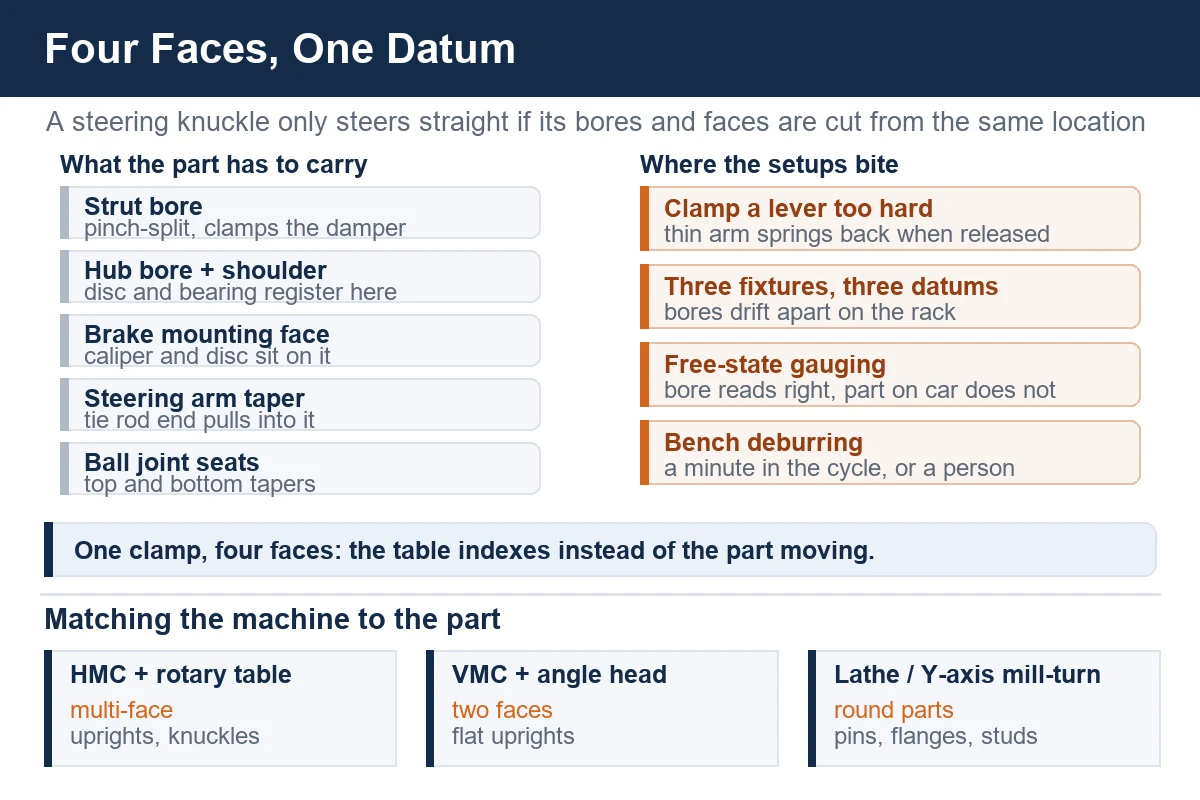
- a vertical or near-vertical strut bore, often split so a clamp bolt can pinch the damper body
- a hub bore with a shoulder and a brake mounting face around it
- a steering arm with a tapered hole for the tie rod end
- one or two ball joint seats, sometimes on tapers as well
None of these can be machined in a straight line from one another, and that is the whole problem. On a vertical machining centre each face means a new fixture and a new datum. On a horizontal machine with a rotary table the part can stay where it was clamped while the table indexes, which is why knuckles and similar steering and suspension parts are usually a horizontal machine job.
Materials you will see
The material drives the tooling and the clamping, not the other way round:
Ductile iron (nodular cast iron)
Still the default for volume knuckles. It casts close to shape, machines well, and damps vibration. The skin is abrasive and often hard, so the first pass cuts scale and the second pass cuts iron. Because it is a thin, arm-shaped casting, clamping force is the enemy: squeeze it and the bores move. Most knuckle scrap in a ductile iron shop is a clamping error, not a tool error.
Cast or forged steel
Used on heavier vehicles and performance applications. Forged knuckles have a tighter grain and a harder skin. They are tougher on inserts and slower to cut, but they hold their shape better and tolerate a firmer clamp.
Aluminium (A356, 6082 and similar)
Common on passenger cars where unsprung weight matters. Light, fast to cut, but soft enough that a careless clamp marks it and a blunt tool smears instead of cutting. Aluminium knuckles usually need more, lighter clamps rather than fewer heavy ones.
Machining the knuckle: where the time goes
Setup one decides the part
A knuckle only works if the strut bore, hub bore and brake face agree. Every shop that has fought one of these has learned the same lesson: pick the datum that the vehicle actually uses. On most knuckles that means the hub bore and the brake mounting face are machined from the same location in the same clamping, because the brake disc and caliper register there and everything downstream is measured from it.
The practical route is to hold the part on its own mounting bosses and pads — the surfaces the knuckle itself bolts to the car with — and to machine the hub bore, the brake face, the caliper mounting holes and the strut bore from that clamp while the table rotates. That is a horizontal machining centre with a B-axis table doing the job of three or four separate fixtures.
Holding without distortion
A knuckle is a lever, not a block. Two heavy clamps on a thin arm will bend it, cut it straight, and let it spring back when the clamp is released. The usual answer is a wider spread of lighter clamps, supported on machined pads rather than on raw casting, with the support pads prepared in an earlier, cheap operation. On thin aluminium uprights this matters even more than on iron.
The strut bore and the pinch split
Most strut bores are split, with a clamp bolt that pinches the damper. That split changes how the bore behaves when the bolt is torqued, so the feature to hold is the bore as it is clamped, not the bore as it sits free. Bore it in the clamped condition if the customer gauges it on the car.
Tapers, tapers, tapers
The tie rod end and the ball joints sit in tapered holes. A taper is not drilled and reamed by eye; it is cut with a taper tool or interpolated with a form tool, and it has to be checked for seat depth rather than for the bearing surface alone. The angle is what transfers load, and the depth is what lets the pin pull up tight.
Deburring in the cycle
A knuckle has a lot of edges that a car owner's mechanic will find with a bare hand. Chamfering the bores and the taper mouths inside the cycle adds a minute; doing it at the bench adds a person. On a horizontal machine with a palette changer and a few deburring tools in the magazine, the part comes off ready to gauge.
Which machines suit knuckles and spindle bodies
The honest answer depends on volume and on how many faces the part has. A rough guide:
Horizontal machining centres
For the multi-face, mid-to-high volume knuckle, a horizontal machine with a rotary table is the natural fit. The HMC630-DT covers small and medium uprights, with the larger HMC800-DT for truck and heavy-duty knuckles where the casting is too big to swing comfortably on a 630 table. The point of the horizontal is not the spindle; it is that the table indexes and the part never moves.
Vertical machining centres
Where volume is lower, or the knuckle is a flat-ish upright with only two faces, a vertical machine does the job at lower cost. A VMC1160 with a right-angle head and a tombstone keeps the fixture cost down. It is a sensible entry point for a shop taking its first knuckle job.
Turning machines
Not every steering or suspension part needs milling. The hub flange, the journal and the small turned pins and ball studs that go with a knuckle are turning work. A TCK6050 handles the smaller pins and bushings, and where the part needs both turning and cross-drilling or milling, a Y-axis mill-turn centre such as the TCK2300B takes the whole part in one chucking instead of two machines.
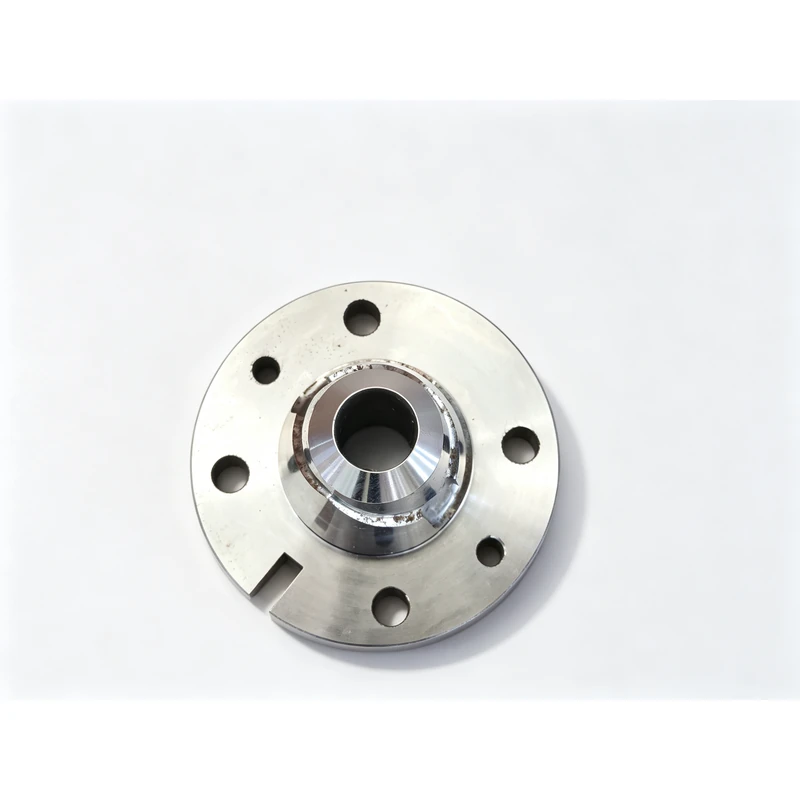
The small parts deserve the same care
Knuckles get the attention, but the parts a few centimetres away decide whether the assembly feels tight. Two examples from our shop's own order book:
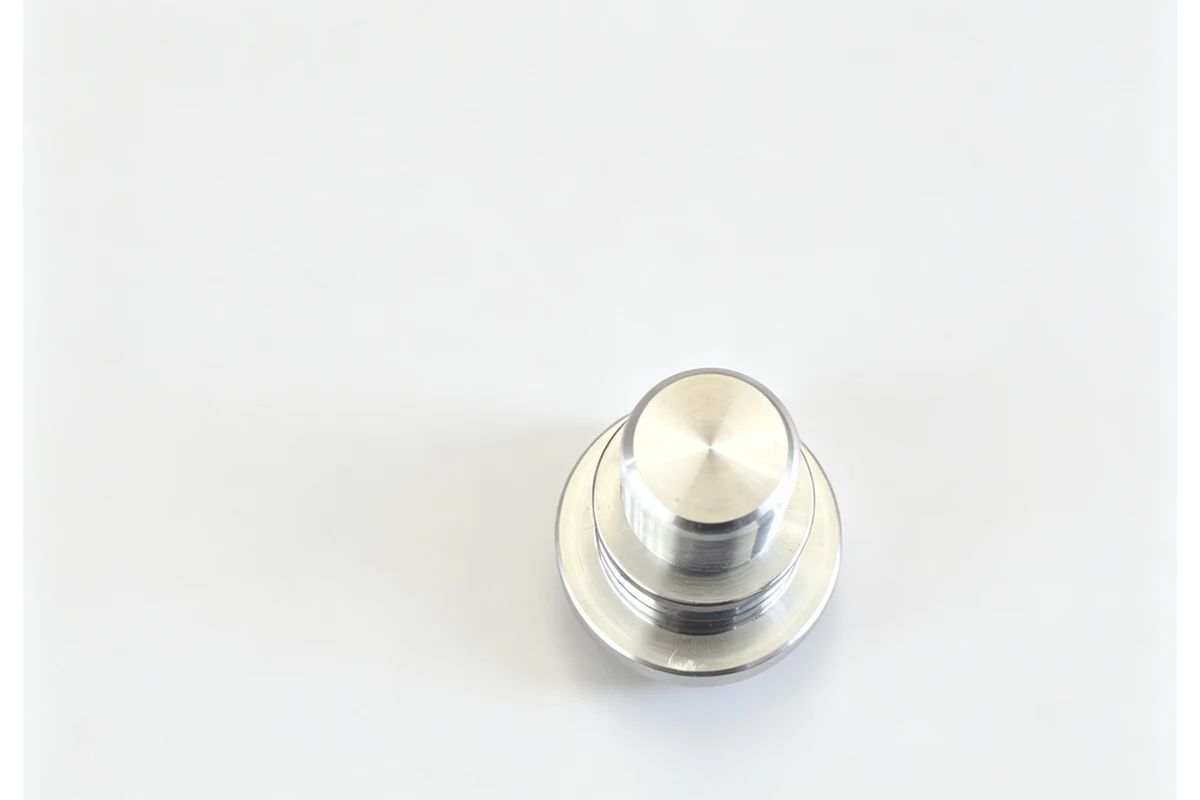
A ball pin is a small turned part with a spherical head, a seat face and a groove for a boot or a circlip. Turned in a bar feeder it looks like a two-minute job. Held badly, the sphere is out of round and the joint feels notchy from the first kilometre. On our own machines the sphere is turned and the seat face is cut in the same chucking so the two stay related.
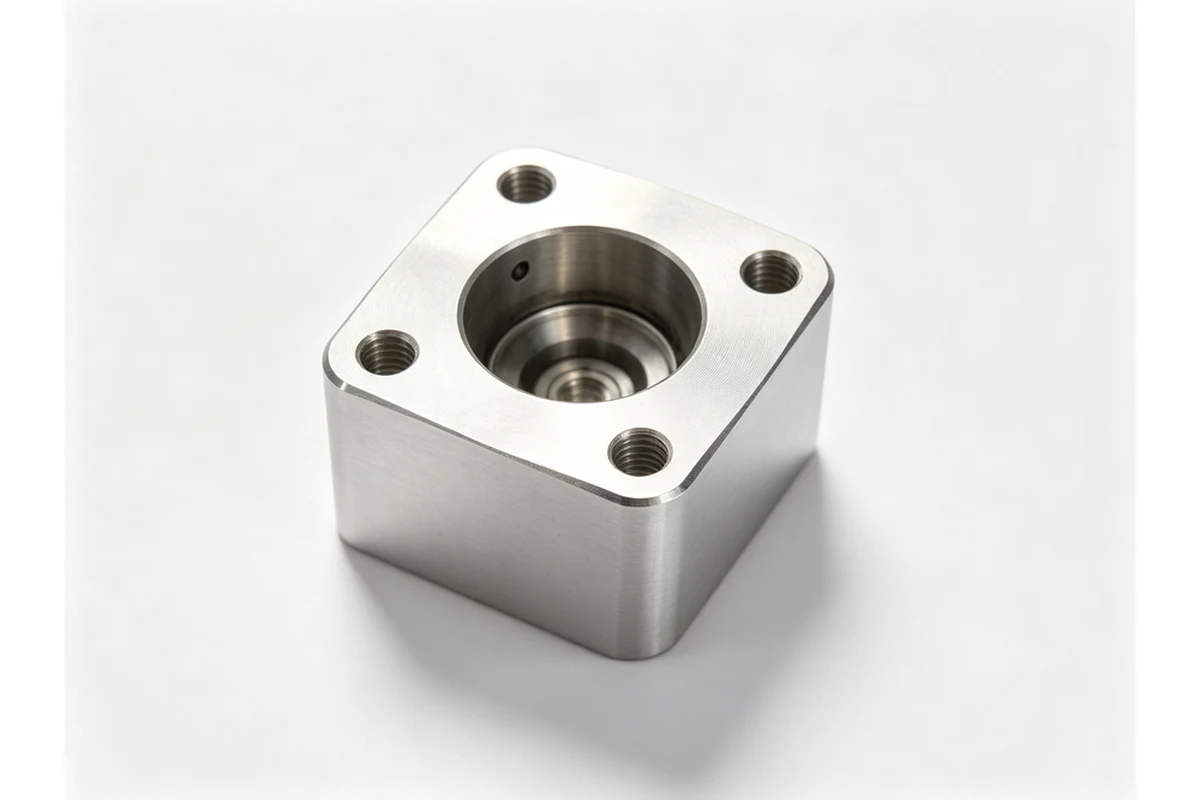
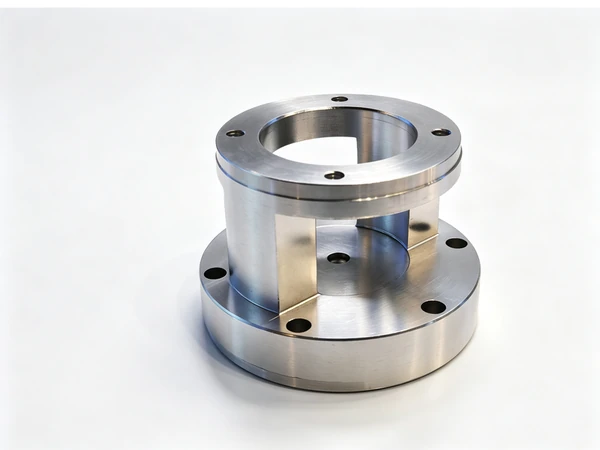
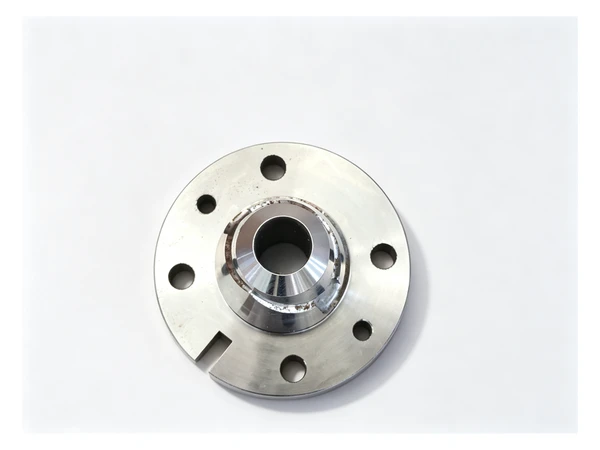
The same applies to mounting blocks and flange seats like the one above. Four bolt holes on a square pattern are easy; four bolt holes that line up with the bore in the middle, on a part that gets bolted hard to a casting, are a question of doing both features from one datum while the part is held once.
Quality without chasing numbers you cannot publish
Two things matter more than any single reading on a knuckle:
Consistency across the batch. A knuckle that measures well on the first part and drifts on the four-hundredth is worse than one that sits slightly off but sits there every time. The tactics that keep a batch together are boring and effective: machine the datum face lightly and early, keep the clamp force the same from part to part, change inserts on a count rather than on feel, and gauge against the fixture, not against a free-standing part.
Process control instead of part control. A steering part is a safety part. The shops that do well with it do not inspect quality in; they build the process so the same setup produces the same part, then spot-check and trend the results. That is a fixture decision and a machine decision long before it is an inspection decision.
Where automation fits
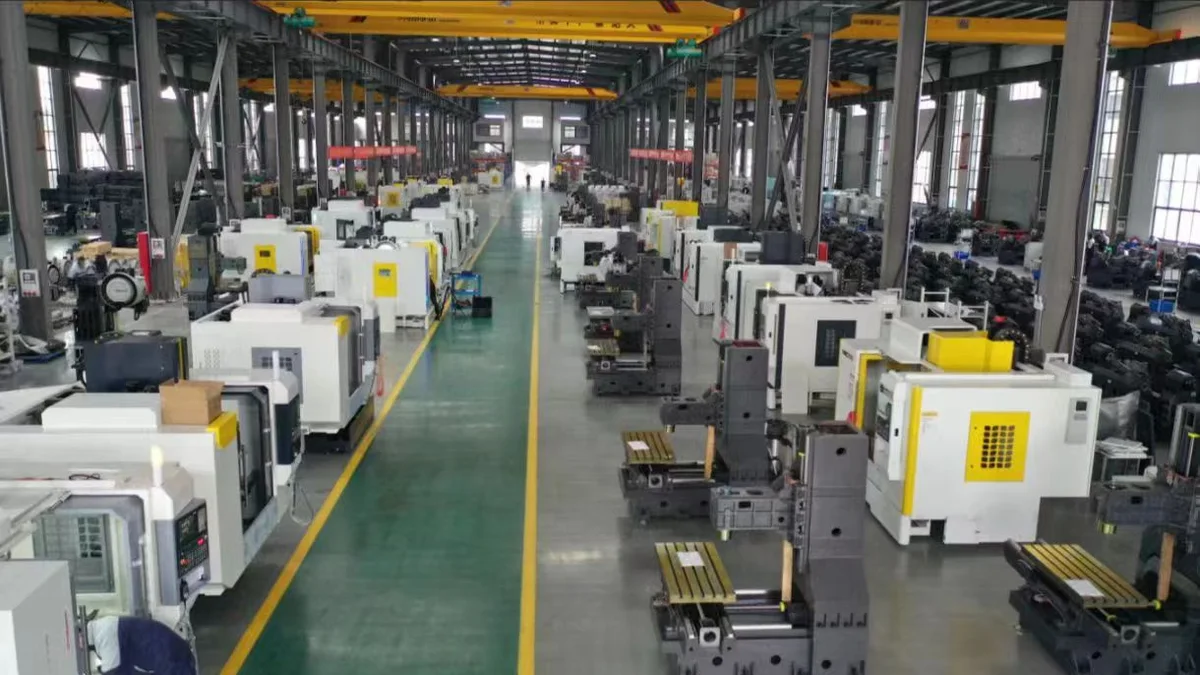
Steering and suspension parts are a sweet spot for robotic machine tending. The parts run in stable batches, the cycle is long enough to justify loading, and the fixture is repeatable. A gantry or robot cell in front of a horizontal machine lets one operator run several machines, and it removes the one variable a human still introduces: clamp force. The robot loads to the same pads, in the same order, every cycle.
What to send us
If you are quoting a knuckle, an upright or a spindle body, the useful starting points are the drawing with the datum callouts, the material and the annual volume. If you are not sure which machine class the part wants, that is exactly the question to ask before the fixture is designed. Our team works the setup out with the customer first and then matches the machine to it.
The same applies if you already have the part and want a route. Send the drawing and we will come back with a suggested process, the machines to run it on, and a quote.
Contact Handemo CNC | Email: sales1@handemocnc.com | WhatsApp: +86 135 6320 3038
Related reading: CNC machining flange bearing housings, CNC machining eccentric shafts, and an application guide to machining automotive parts. If you would rather send the drawing straight over, use our drawing upload page.