Case Study: Machining an Expansion Sleeve Without Grinding
The first message from this customer was not about a part at all. It was about a delivery date. They wanted a TCK50 slant bed lathe, they wanted it out of stock, and when we told them the lead time was closer to ten days they went quiet for a while. That is how a lot of enquiries die. What brought this one back was a second question, asked a few days later: what are you going to turn on it?
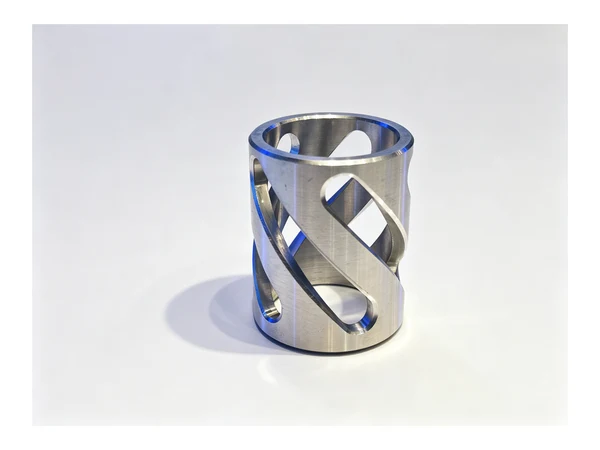
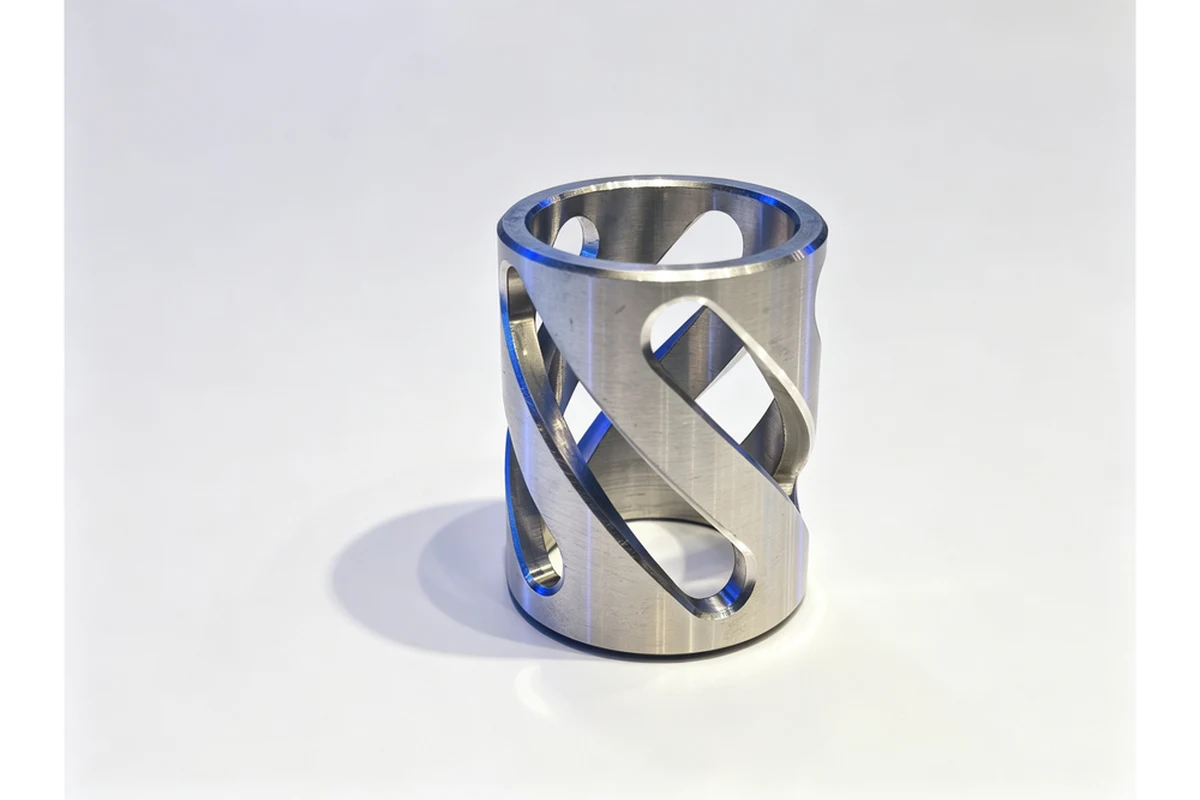
The answer changed the machine. This shop machines hardware and automotive fittings, and one family of parts in their order book is a slotted clamping sleeve — an expansion sleeve. The sleeve grips a shaft when it is pulled over a taper, and it is used in couplings, pulleys, sprockets and gear hubs where a keyway would be awkward. The outside, the slots and the taper were never the problem. The bore was the problem, because the bore was being turned on the lathe and then walked over to a grinder, and the grinder was the bottleneck in that shop, not the lathe.
What the Part Is, and Why the Bore Decides Everything
An expansion sleeve works by elastic deformation. The wall is slotted so the ring can open when the taper is pulled through it, and it is the bore — not the outside diameter — that has to make contact along its whole length. If the bore is bell-mouthed, the sleeve grips at one end and slips at the other. If it is lobed, the grip is uneven and the sleeve marks the shaft it is supposed to hold. If the fit is loose, the coupling creeps under torque and the customer blames the sleeve.
So the drawing usually calls out three things: the bore round and straight over its full length, the outside diameter running concentric to it, and a slot pattern cut cleanly through the wall without burrs that would stop the sleeve seating. None of that is exotic, and that is exactly why the job is easy to underestimate. The sleeve is a few millimetres of wall held in a chuck, and every operation after the first has to leave that thin wall where it was.
Why the Grinding Step Was the Bottleneck
The route this shop was on is a good route, and it is worth saying so plainly before criticising it. Turn the outside, the taper and the slots on a lathe. Turn the bore slightly small. Send the part to a cylindrical grinder, where the bore is brought to size and given the finish the sleeve needs to slide. Shops all over the world run sleeves this way, and when the volumes are modest and the grinder has capacity, it works.
The problem was the queue. The grinder in that shop was shared with every other hardened, tight-tolerance part on the floor, and the sleeves arrived in small batches with a long list of other work in front of them. The lathe would finish a batch in an afternoon. The batch would then sit for days. The customer had already thought about the size of the queue, which is why they wanted a machine quickly — they were trying to add turning capacity to a shop whose real constraint was somewhere else entirely.
There is a second cost that is easy to miss from the office. Every trip to the grinder is a second clamping. A slotted sleeve that was cut round in the chuck springs when the jaws come off, and by the time it reaches the grinding fixture it is no longer the shape it was when the bore was turned. The grinding setup then has to find that shape again from a different datum, and the part carries the difference.
The Decision: Finish the Bore in the Turning Cycle
Once we understood where the queue was, the argument for a plain lathe weakened and the argument for a turning platform with a second operation on the same machine became obvious. If the bore can be finished on the turning centre, the grinder drops out of the routing for most of this sleeve family, and with it goes the queue, the second clamping and the re-datuming.
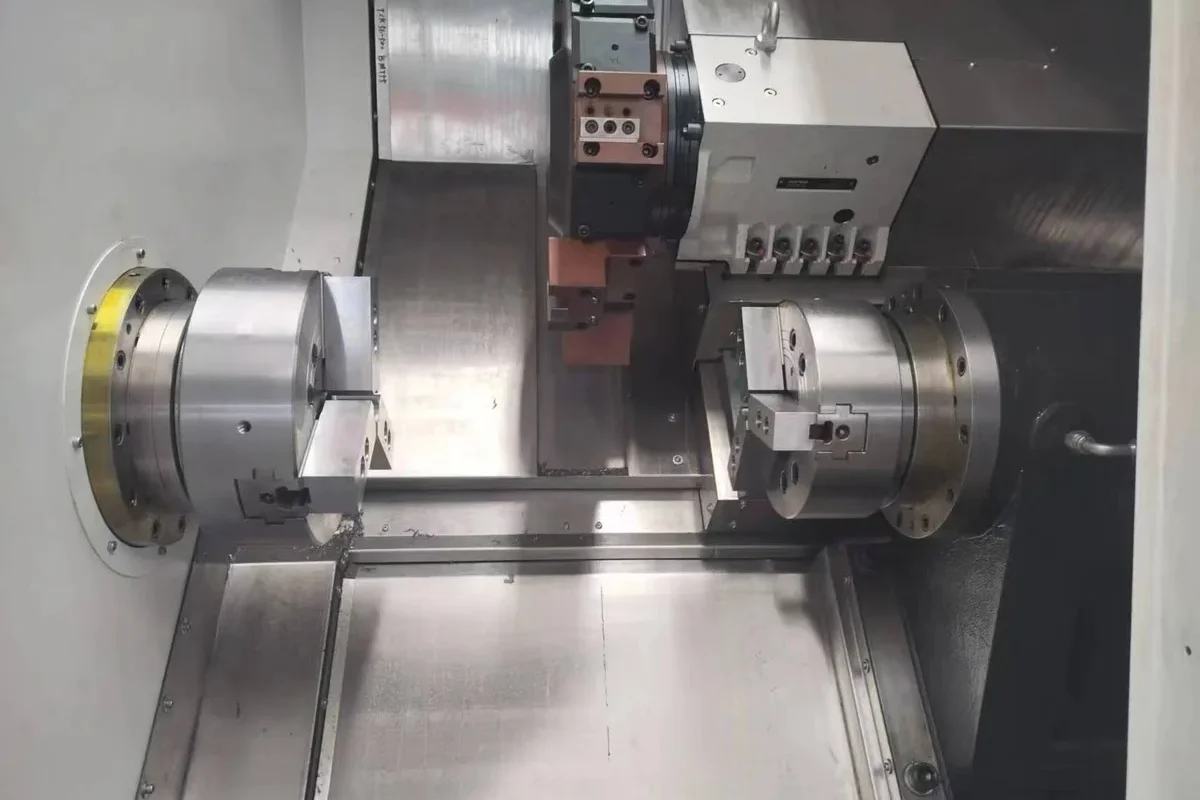
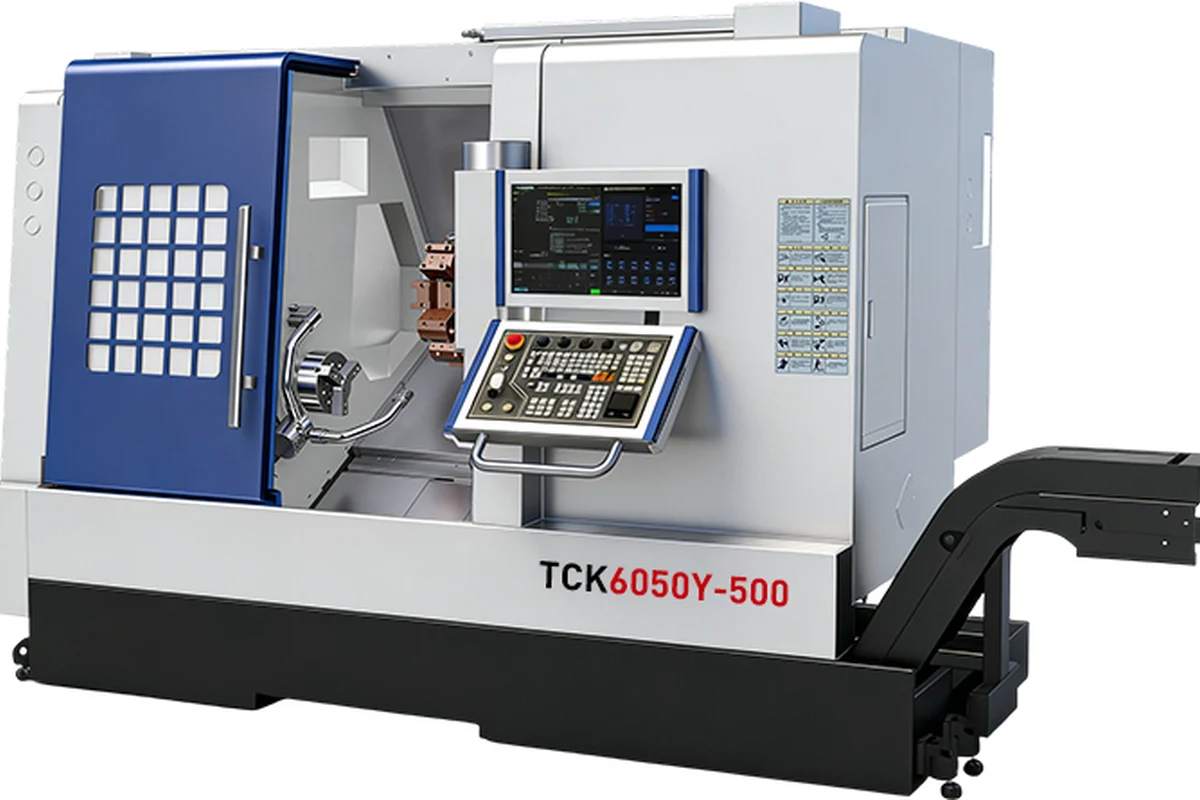
We put forward a dual-spindle turning and milling platform instead of the lathe they had asked for. The TCK6050SY dual-spindle mill-turn machine turns the sleeve in the main spindle and finishes the back face, chamfers and any second-end detail after the part transfers to the sub-spindle, so the sleeve leaves the machine complete rather than half-finished. Where the sleeve family does not need the transfer, the same work runs on the TCK6050 CNC slant bed lathe with a live tool turret doing the slot milling in the same setup, and the TCK6050Y power-turret Y-axis mill-turn centre covers the versions with off-axis holes or a slot pattern that wants a Y axis rather than a C-axis index.
The point is not which model name appears on the order. The point is that turning, boring, facing and slot milling all happen inside one enclosure, in one clamp, before the part is ever measured. That is the change that took the grinder out of the schedule.
Live Tooling Changes What the Slots Cost
On a plain lathe the slots are either a separate milling operation or a broached feature, and both of them mean the sleeve leaves the machine. With a driven turret, the same platform that just bored the sleeve indexes a slot drill or a small end mill and cuts the pattern with the sleeve still held on the axis it was bored on. The relationship between the slots and the bore is then a relationship the machine keeps, not a relationship a fixture has to reproduce. On a slotted sleeve, that is worth more than the cycle time it saves.
Two Ways to Hold the Bore, and When Each One Fits
Finishing the bore in the turning cycle only works if the holding method lets the bore stay round. There are two practical routes. The first is to grip on a prepared outside diameter in a bored collet, so the clamping load is spread around the circumference instead of landing on three jaws. The second is to grip on the outside and then take the last cuts with the ring backed up, letting the wall come back to shape against a lightly loaded support rather than against the jaws. Which one is right depends on the wall thickness and the slot depth, and on a sleeve it is worth running a few parts both ways before committing the batch.
Holding a Slotted Wall Without Distorting It
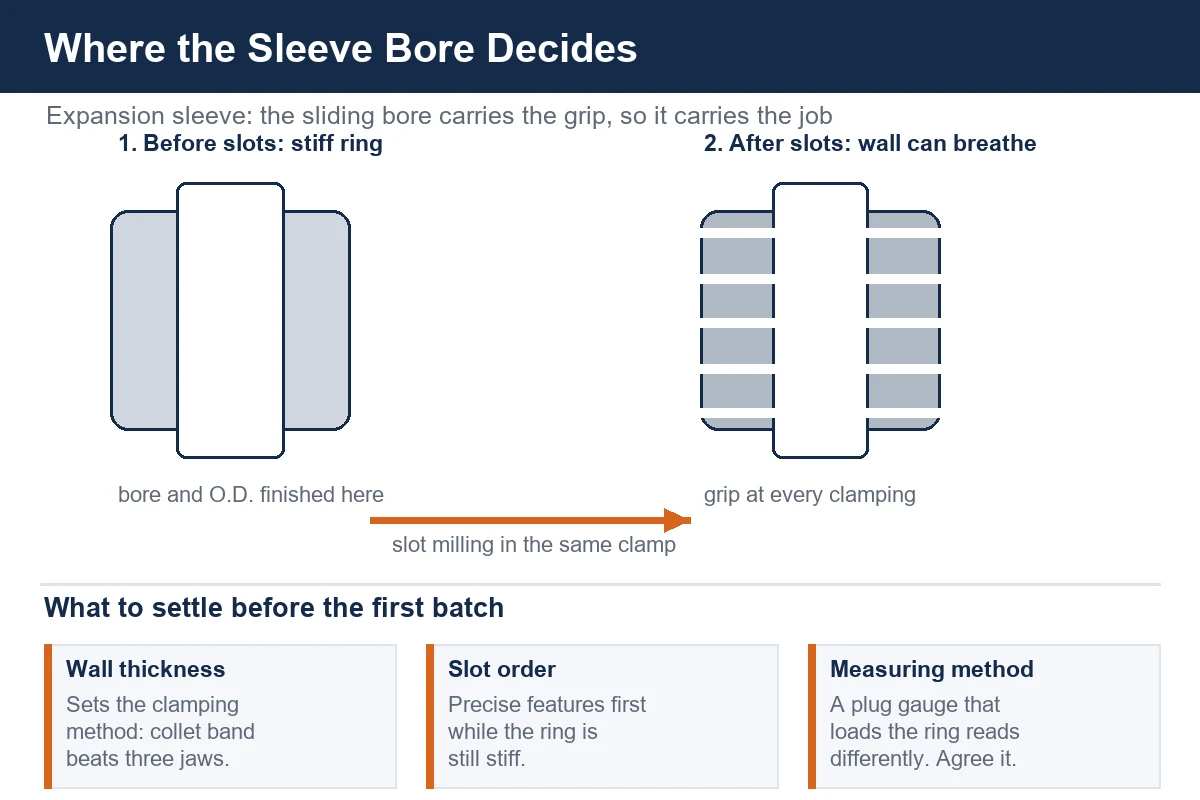
A sleeve with slots in it behaves like two different parts. Before the slots are cut it is a stiff ring that holds its shape under normal clamping. After the slots are cut the wall can breathe, and any clamping load that is not evenly distributed shows up immediately in the bore. That is the single most common reason a sleeve runs well for a week and then starts being rejected.
Three things kept this job on the rails. The first was the order of operations: bore and outside diameter finished before the slots where the drawing allows it, because a sleeve without slots is far easier to hold while the precise features are generated. The second was a bored collet with a wide contact band for every operation after the first, so the load stayed circumferential. The third was a light finishing pass with a spring pass behind it, which lets the wall settle against the tool instead of being pushed ahead of it.
Deburring deserves a mention here because it is where slotted sleeves quietly lose money. A burr left on the inside edge of a slot stops the sleeve seating on the taper, and the fit then measures short even though every diameter on the part is correct. Doing that deburring in the cycle, with a chamfer tool on the same platform, is far cheaper than doing it by hand at the bench and it removes one more reason for a batch to be reworked.
What Changed on the Floor
The sleeve now leaves the machine finished, with the bore generated in the turning cycle, the slots cut in the same setup and the edges chamfered before the part is unloaded. The grinding queue came out of the routing for this family, the second clamping disappeared, and the parts going to inspection are the same shape they were when the last cut was taken.
Nothing about the change required a different drawing or a different material. It required the shop to stop buying capacity for the operation they could see — turning — and start buying capacity for the operation that was holding the whole order book up. The customer asked for the lathe they knew. They bought the machine that finished the part.
Materials We See on This Family
Most expansion sleeves in this size range are cut from medium-carbon or alloy steel, often case-hardened or through-hardened after machining because the sleeve has to grip without deforming plastically. Some go out in bronze or a bearing-grade cast iron for lower load applications, and stainless grades turn up where the sleeve sits somewhere damp or hygienic. Hardened sleeves are normally finished before heat treatment and, if the drawing demands it, given a light clean-up afterwards. The material changes the insert and the cutting data. It does not change the logic of finishing the bore where it was bored.
What We Would Check on the Next Job Like This
Three questions decide a sleeve job before any machine is chosen. How thin is the wall relative to its diameter, because that sets the clamping strategy. Are the slots cut before or after the precise features, because that sets the operation order. And does the customer's measuring method load the part, because a plug gauge that spreads a slotted ring reads differently from a bore gauge, and the disagreement surfaces at goods-in rather than in the shop. Getting those three answers in writing before the first batch is worth an hour of anyone's time.
If the bores are currently being ground because the turning platform could not finish them in the cycle, the honest way to test that is to quote the sleeve on both routes and compare them on paper, including the queue. That comparison is usually where the decision gets made.
Frequently Asked Questions
Can an expansion sleeve bore be finished on a lathe instead of a grinder?
For many sleeves in this size range, yes — the bore and the outside diameter are generated in the turning cycle with a rigid setup and a light finishing pass, and the sleeve then slides on the taper the way the drawing intends. Whether it is the right answer for a specific sleeve depends on the finish the sliding surface needs and how the sleeve is held, so the drawing is what decides it.
Do the slots have to be cut after the bore?
Usually, and for a simple reason. A sleeve without slots is stiff enough to hold in a bored collet while the precise features are turned. A slotted sleeve is not, and any clamping after the slots are in has to be gentler. Where the drawing forces the slots first, the holding method has to be built around the slots from the start.
Why does the bore go out of round on a slotted sleeve?
Almost always because the clamping is concentrated at three points. The jaws push the ring into a lobed shape while the tool is cutting, the bore comes out matching the jaws, and the sleeve springs back as soon as the chuck is released. A collet or a split bushing with a wide contact band spreads that load and the problem usually goes away with it.
Which machine do you recommend for sleeve work?
It depends on where the second operation is. If the sleeve has features on both ends, a dual-spindle platform such as the TCK6050SY finishes both in one flow. If the work is mostly turning with a slot pattern, a slant bed lathe with a driven turret covers it. If there are off-axis holes, a Y-axis mill-turn centre earns its place.
Do you support small first batches?
Yes. Sleeves usually arrive as a sample batch before the volume order, and the holding method and the operation order are settled on that first batch. It is the cheapest place to find out that a three-jaw chuck was never going to hold the part.
Send Us the Sleeve You Are Grinding
If one operation in your routing has a queue in front of it, that is usually the operation worth quoting again. Send us the drawing, the material and the current routing for your expansion sleeve — including the grinding step — and our team will come back with a machine recommendation and a process note rather than a bare price.
Contact Handemo CNC | Email: sales1@handemocnc.com | WhatsApp: +86 135 6320 3038
Related reading: CNC Machining a Hydraulic Piston Guide Sleeve | CNC Lathe vs CNC Mill-Turn Machine: How to Choose | CNC Machines for Automotive Parts Manufacturing | CNC Machining Thin-Wall Parts