Gang Tool vs Turret Lathe: Which to Buy
The enquiry arrived as a photograph of a plastic tub full of brass fittings, maybe two hundred pieces, all the same shape. The shop had quoted them at eleven seconds a part on a small gang tool lathe and was now being asked for a price at ten thousand pieces a year. They had already decided to buy a second machine. The question in the email was whether the second machine should be another gang tool lathe or a turret lathe, and whether they were leaving money on the table by staying with what they knew.
That question comes up more often than the machine catalogues suggest, because the two layouts look like the same job from the outside: a slant bed, a chuck, a bar feeder, a control. Under the covers they are different machines with different limits, and the limits only show up when the part changes.
This is one of our comparison notes, written from what shops send us when they are choosing between the two. It is not an argument that one is better. On a small brass fitting a gang tool lathe will beat a turret lathe on cycle time every day of the week, and on a 300 mm steel hub with a bore through it the same gang tool lathe cannot make the part at all. Which one you should own depends on three numbers, and none of them is the price of the machine.
The Two Layouts, Described Plainly
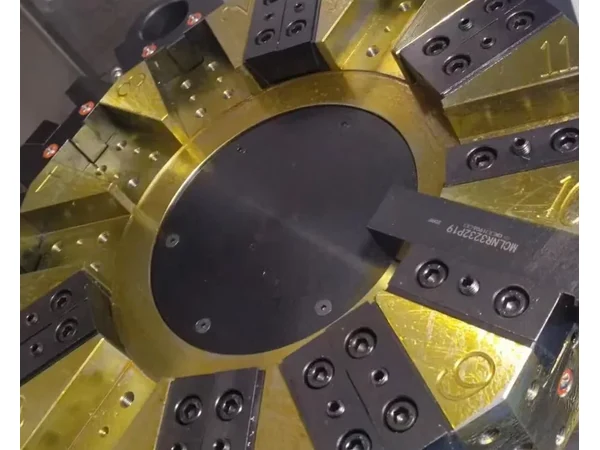
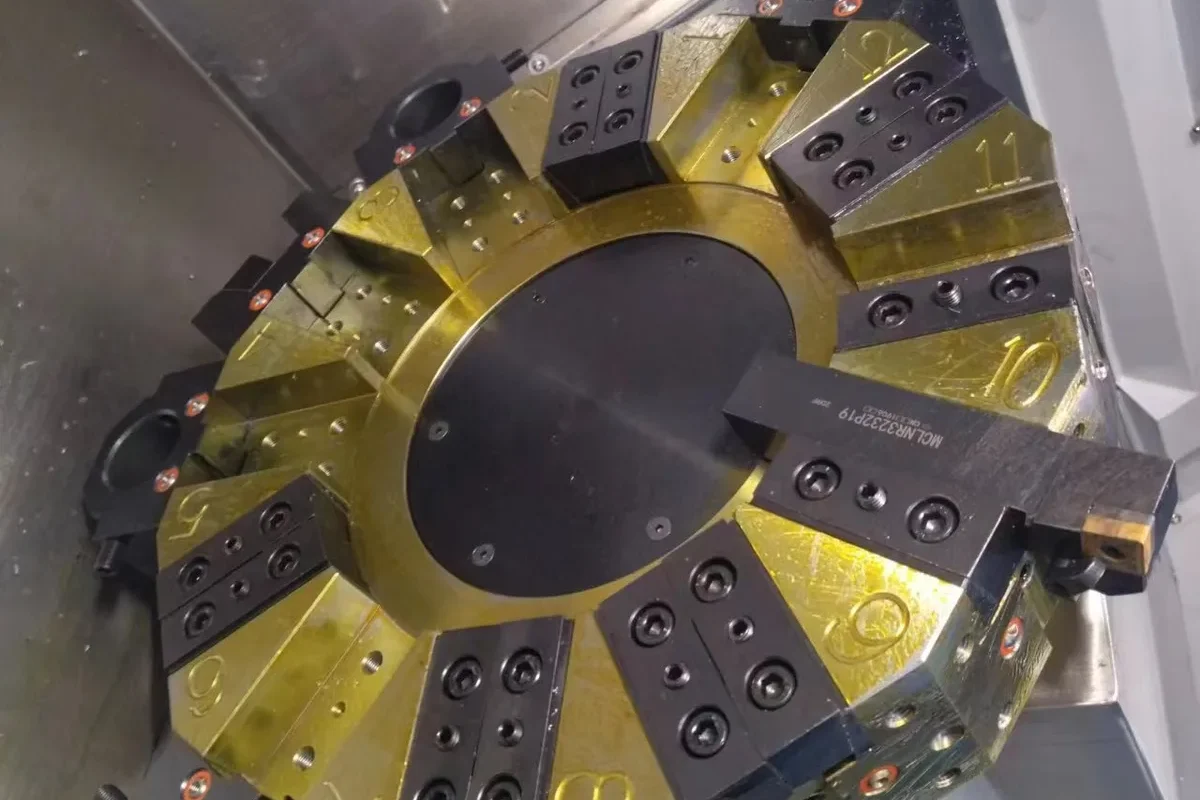
A gang tool lathe has no turret. Every tool is bolted to one plate that sits on the cross slide, and the plate moves in X and Z as a single unit. To change tools, the control moves the plate to the next tool's offset. Nothing rotates, nothing indexes, and there is no drum to clear. The tool is simply somewhere else.
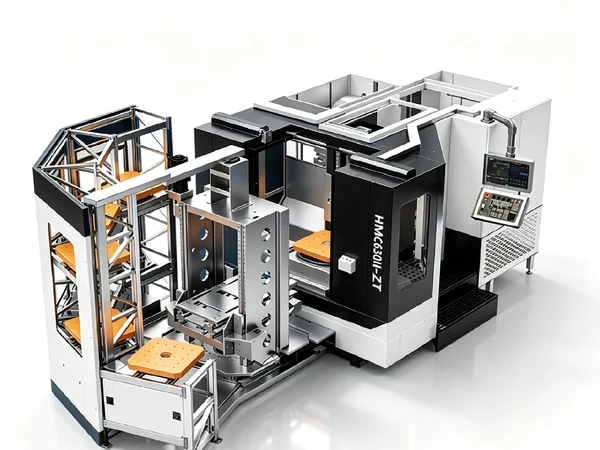
A turret lathe carries its tools on a drum that rotates to bring the next station to the cutting position. Eight stations on the simpler machines, twelve on the ones we build, and the drum indexes under servo control between operations.
The mechanical difference produces one big consequence and several small ones. The big consequence is that a gang tool lathe has no tool change time, so the more tools a part needs per cycle, the more the gang layout saves. The small consequences all cut the other way: less room for tools, shorter Z travel, no tailstock in the usual configuration, and a tool plate that puts every holder in the same small volume where a boring bar and an OD roughing tool can reach each other.
Everything else in this note follows from that.
Where the Cycle Time Actually Goes
The sales argument for a gang tool lathe is that it removes the index. That is true and it is worth putting a number on, because the number decides the whole comparison.
A servo turret index takes a fraction of a second per station. On a part that uses seven tools, that is a couple of seconds per part, plus the approach and retract moves that a turret needs in order to swing clear. Call it two to four seconds on a small part, and it is the same two to four seconds on every part for the life of the job.
On an eleven-second cycle, two to four seconds is a fifth to a third of the part cost. That is why the gang tool lathe exists and why it is still the right answer for a tub of brass fittings. On a forty-second cycle with a bar pull and a bore, the same two to four seconds is under a tenth, and the argument for giving up the turret's flexibility to save it gets thin.
There is a second-order effect that the cycle time comparison hides. A gang tool lathe's tools are all in cut position within a few millimetres of each other, so the rapid moves between them are short. A turret has to retract, index and come back, and on a part with a deep bore and an OD finish in sequence that retract-and-return is a real distance. Shops that move from a turret to a gang lathe usually find the saving is bigger than the index time alone.
And the reverse is true on the setup side, which is where the saving is often lost. Every tool on a gang plate needs its own offset, and the offsets of neighbouring tools interact: shift one and the clearance to the next changes. Changing over from one part family to another is a longer job on a gang tool lathe than on a turret, where each station keeps its offset and a changeover is a matter of swapping the holders that changed. A shop that runs one part for three weeks does not care. A shop that changes parts twice a day does.
The Three Numbers That Decide It
When a shop sends us a drawing and asks which layout, we look at three things before anything else.
How many tools the part needs, in one cycle
Count the operations, not the features. A part that needs OD rough, OD finish, face, groove, drill, bore, thread and a back chamfer is eight tools, and on a gang plate eight tools in that small volume will usually have at least one collision. The usual answer is to split the cycle and run the part twice, which gives back everything the gang layout saved.
A turret with twelve stations takes that part without thinking about it, and the stations that are not in use are simply not there.
How long the part is
A gang tool lathe's tool plate sits close to the chuck, and the usable Z travel is short by design. That is not a limitation anybody mentions in a brochure, and it is the one that ends the conversation on longer work. A shaft that needs 180 mm of turning length between the chuck face and the tool tip is a turret machine, and it is not a close call.
This is the same envelope question we go through in swing, bore and chuck selection, with the extra constraint that the gang layout takes Z travel out of the envelope before you start.
Whether the part needs support or a second operation
A tailstock, a steady, a subspindle with driven tools, a Y axis for an off-centre flat: each one of these moves the answer to the turret side, and once two of them are on the drawing the gang tool lathe is out. If the part has a milled flat or a cross hole, the honest comparison is not gang versus turret but turret versus a mill-turn machine, because the second operation is the cost that matters.
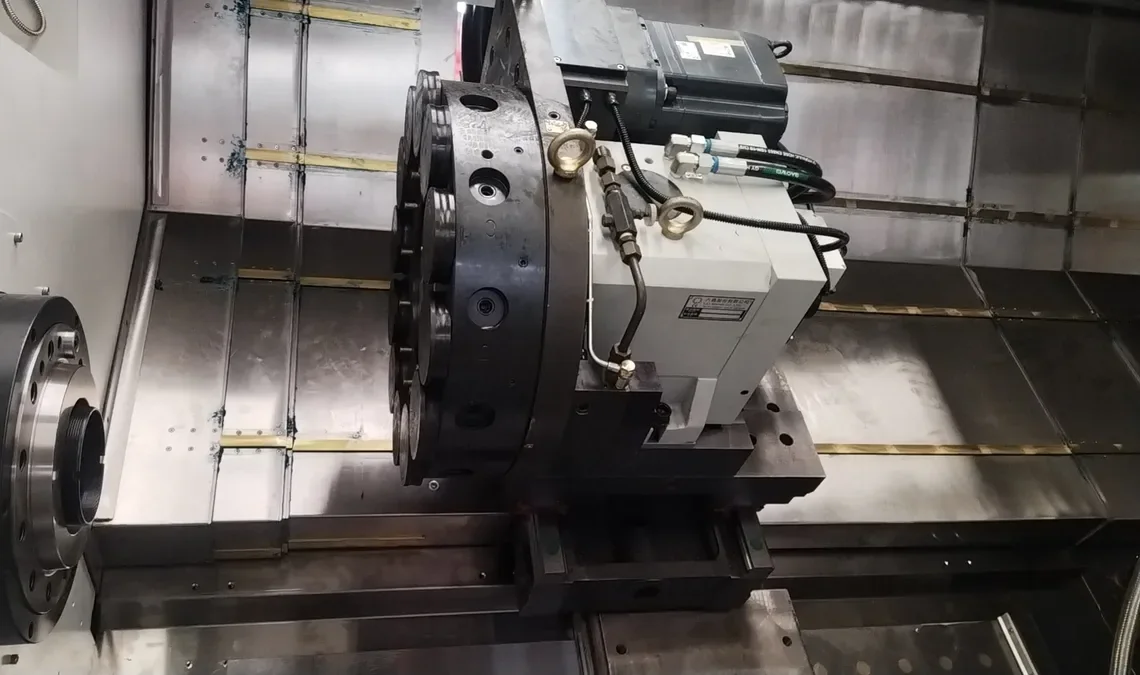
The Comparison, Side by Side
The table is the short version. Everything in it is a consequence of the layout, not a brand difference, and it holds for any builder's machines of either type.
| Question | Gang tool lathe | Turret lathe |
|---|---|---|
| Tool change | None. The plate moves to the next offset. | Drum indexes, then the tool approaches. |
| Tools available in a cycle | Limited by collision, not by station count. Eight is already crowded. | 8 or 12 stations, and the unused stations cost nothing. |
| Usable turning length | Short. The plate sits close to the chuck. | Set by bed length, up to 3,000 mm on the long models. |
| Tailstock | Unusual, and it fights the tool plate for space. | Standard, with travel matched to the bed. |
| Driven tools, Y axis | Rare. | Common. A power turret puts milling and cross drilling in the same cycle. |
| Chip control | Poorer. Chips land on the tool plate where the next tool has to reach. | Better. The drum and the tool holders sit away from the cut. |
| Changeover between part families | Slow. Every offset is re-established and the offsets interact. | Faster. Stations keep their offsets; swap only the holders that changed. |
| Bar work, small parts, high volume | The reason the layout exists. | Works, and gives away a few seconds a part. |
| Chucked work above 100 mm | Awkward. Reach and clearance both run out. | Normal work. |
Read the table down the middle column and the pattern is clear: the gang tool lathe is a specialist that wins one column decisively and loses most of the others. That is a fine machine to own if the one column is your business.
What a Gang Tool Lathe Does Better Than the Table Suggests
Two things, and they are worth saying because they are the reason a shop with a working gang lathe should think hard before replacing it.
The first is that the tool is always where the next operation needs it. There is no approach and retract, so the air time on a small part is close to zero and the cycle is almost all cutting. On a part with a lot of short features, a chamfer, a groove, a face, that adds up to a cycle the turret cannot match no matter how fast it indexes.
The second is rigidity in the direction that matters for small work. The tool plate is a short, stiff bridge close to the work, and a small diameter part does not need much reach. On brass and aluminium fittings, that short overhang is why a gang lathe can take a finishing pass that a turret with a long boring bar would sing through. Our own bushing and sleeve work benefits from the same principle when the part is short enough to keep the tool close.
What the gang layout cannot do is grow. The day the customer adds a cross hole, or the part gets longer, or the batch shrinks and the changeover starts to dominate, the machine that was the right answer becomes the bottleneck, and there is no option to add a station.
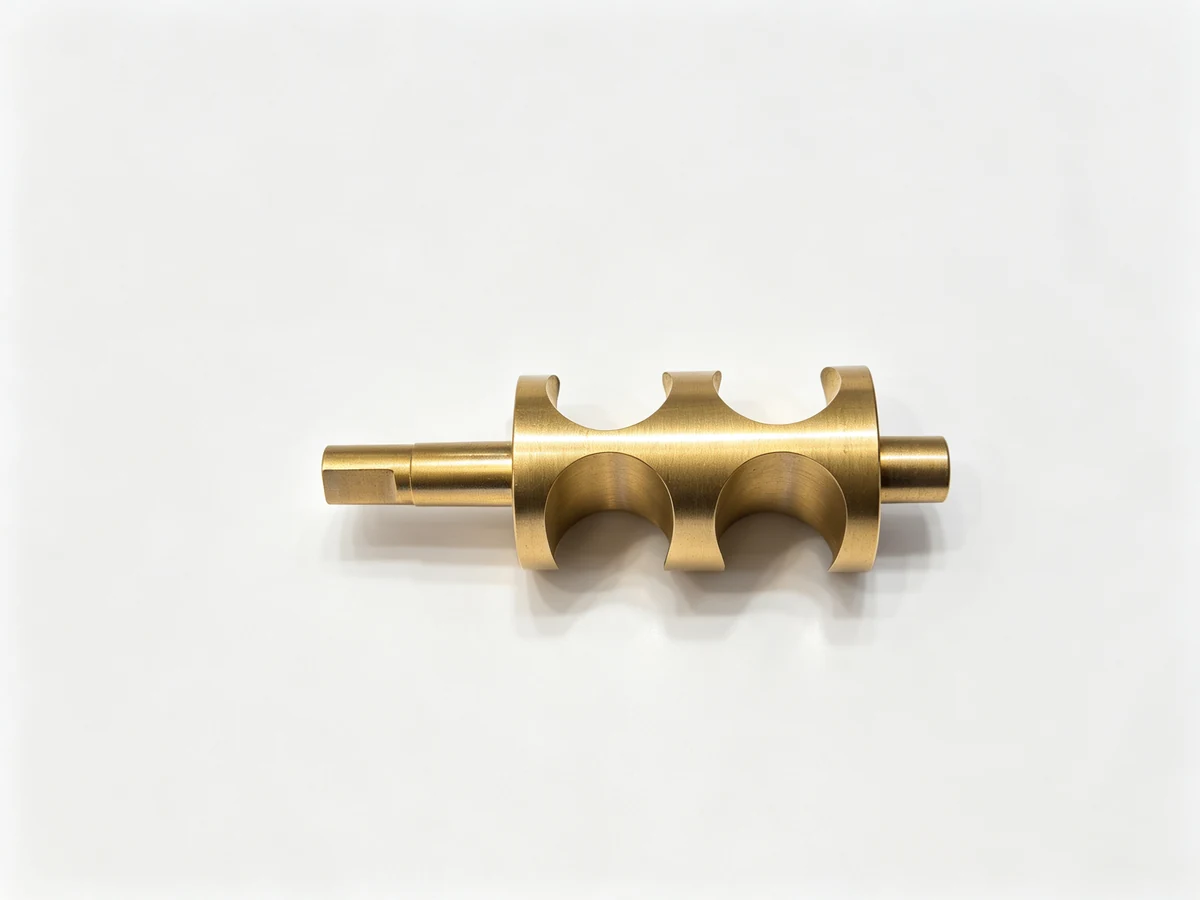
The Turret Side of the Argument, Honestly
A turret lathe's advantage is not that it is faster per tool. It is that it does not run out of options.
Twelve stations means a process with a roughing tool, a finishing tool, a grooving tool, a threading tool, a drill, two boring bars, a spot drill and a tap can all be set at once, and the cycle runs without a single re-clamp. Add a power turret and the same machine mills the flat and drills the cross hole, so the part leaves the machine finished instead of going to a second operation that costs a handling, a queue and a fixture.
That is the calculation that decides most real enquiries, and it is not about seconds. A part that needs two setups costs a second load, a second fixture, a second queue and a second chance to scrap it. If the second operation takes four minutes of queue time per part on a shop floor, no amount of index time saved on a gang lathe pays for it.
The other thing a turret buys is a boring bar with some length to it. Bores deeper than a couple of diameters, internal grooves away from the face, back chamfers: these need reach, and reach needs the tool to come from a drum that can swing clear rather than a plate that has to fit between the part and the spindle.
What a turret gives up is the air time and, at the small end, some of the stiffness. On a 20 mm brass fitting it is the slower machine, and there is no configuration that changes that.
Bar Feed, Unattended Running and the Real Cost per Part
Both layouts bar feed, and both run unattended. The difference shows up when the bar runs out or a tool breaks.
On a turret lathe a broken tool is one station, and if the process can survive without it the machine keeps running while somebody walks over. On a gang tool lathe a broken tool usually means the plate has to be cleared and the offsets checked before the next part, because the tool that broke shares the plate with the tools that follow it.
That matters more than it sounds at the quoting stage. The cost per part that wins the order is calculated at full speed with no interruptions. The cost per part that shows up in the month's numbers includes the stops. A gang lathe running three shifts on one part family with a tool life monitor and a spare plate is a very efficient machine. The same machine on a mixed order book is not.
If the plan is lights-out running, the question to ask is what happens at 2 a.m. when a tool goes. On a turret machine the answer can be "nothing, the next part runs". On a gang machine the answer is usually "the machine stops", and that has to be in the business case.
Which Machine We Would Quote, by Part
This is the part of the note shops find useful, so here it is without hedging.
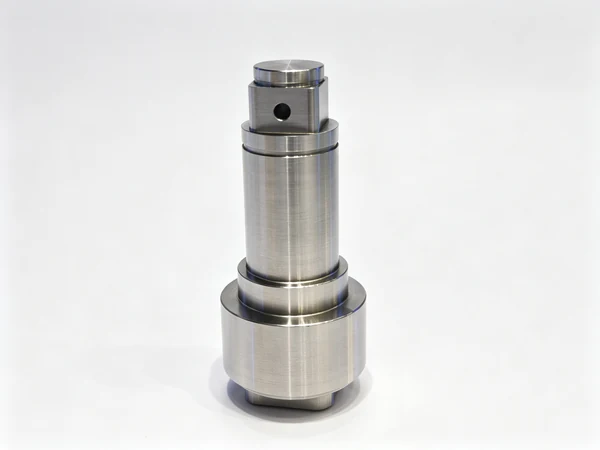
Brass and aluminium fittings under 40 mm bar, one or two diameters and a groove, ten thousand pieces a year: a gang tool lathe is the right machine and a turret is overkill. Buy the gang machine, keep a spare tool plate, and do not apologise for it.
The same fittings with a cross hole, or with a thread that has to be milled: a turret with a power turret, or a mill-turn machine if the volume justifies it. The station count is what makes the difference, not the speed.
Steel shafts, pins and stepped parts in small and medium batches: turret. The part length alone settles it, and the tailstock often settles it twice. This is the work our TCK56A with its eight stations and the TCK6050 with twelve were both built for, and the choice between those two is a station count question rather than a speed question.
Bushings and sleeves where the bore is the feature: turret, and preferably one with a boring bar holder that clears the part. A gang plate can bore a short bush and cannot bore a long one.
Hydraulic and pneumatic fittings with a milled flat and two cross holes: a power turret machine, or the same part run on a gang lathe plus a second operation if the volume is small enough that the handling does not matter. At small volume the second operation is often cheaper than the machine.
Flanges and hubs held on a chuck: turret, and check the swing and chuck before the station count. The TCK70 range exists for exactly this: one spindle platform, three bed lengths, so the machine grows with the part instead of being replaced by it.
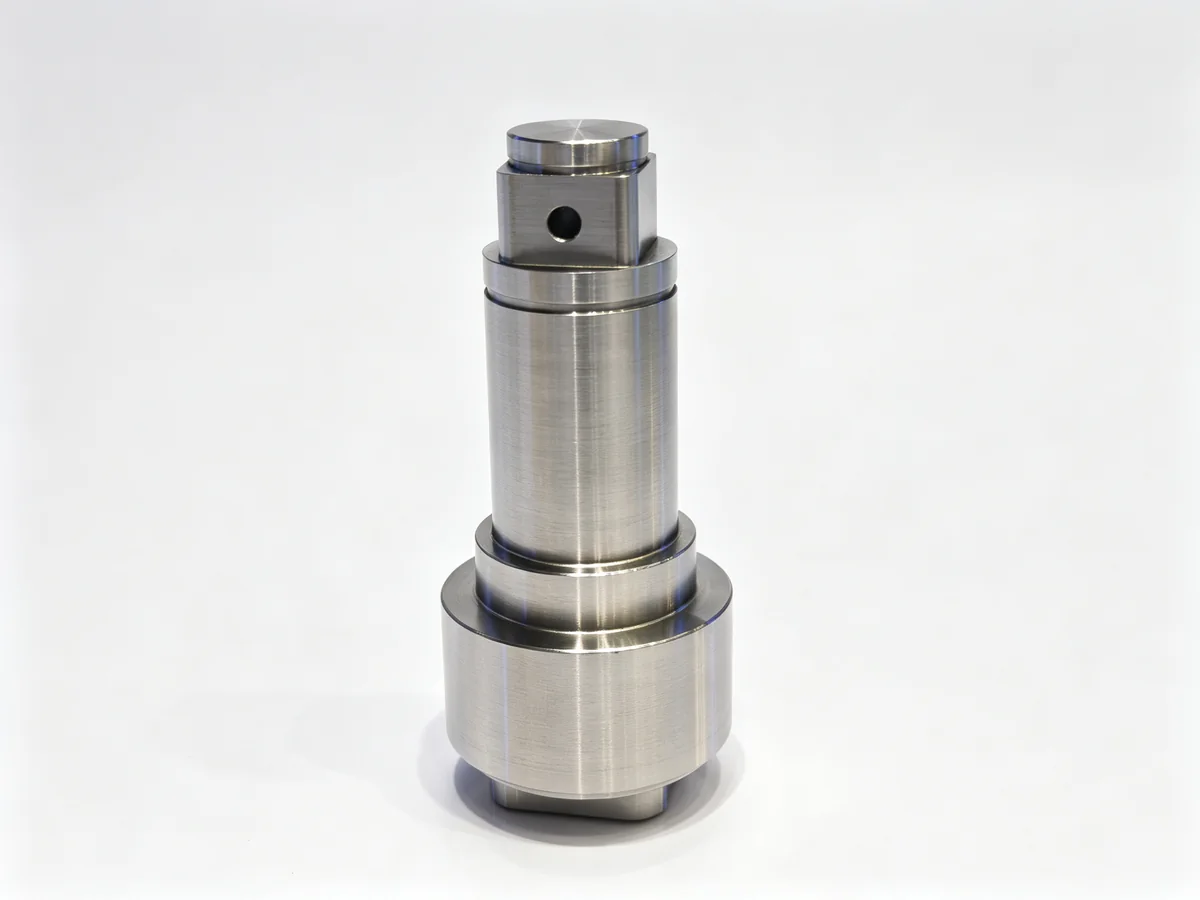
What We Ask Before Quoting Either One
Three questions, and if a shop can answer them we can quote without a second email.
The first is the operation list: every tool the part needs, in the order it needs them, with the feature each one cuts. A tool count from the drawing is not enough, because two tools can be one operation and one tool can be three.
The second is the longest dimension from the chuck face to the furthest feature, not the part's overall length. A 300 mm part with all its work in the first 40 mm is a very different job from a 300 mm part with a groove at the end.
The third is the batch pattern: how many pieces per run, how many runs per year, and how many different parts share the machine. A gang tool lathe is a machine for a narrow part family and a turret lathe is a machine for a wide one, and the order book answers that better than any comparison table.
If the answer to the third question is "many different parts, small runs", the honest recommendation is a turret and a quick-change tooling set, whatever the cycle time says on the first part you costed.
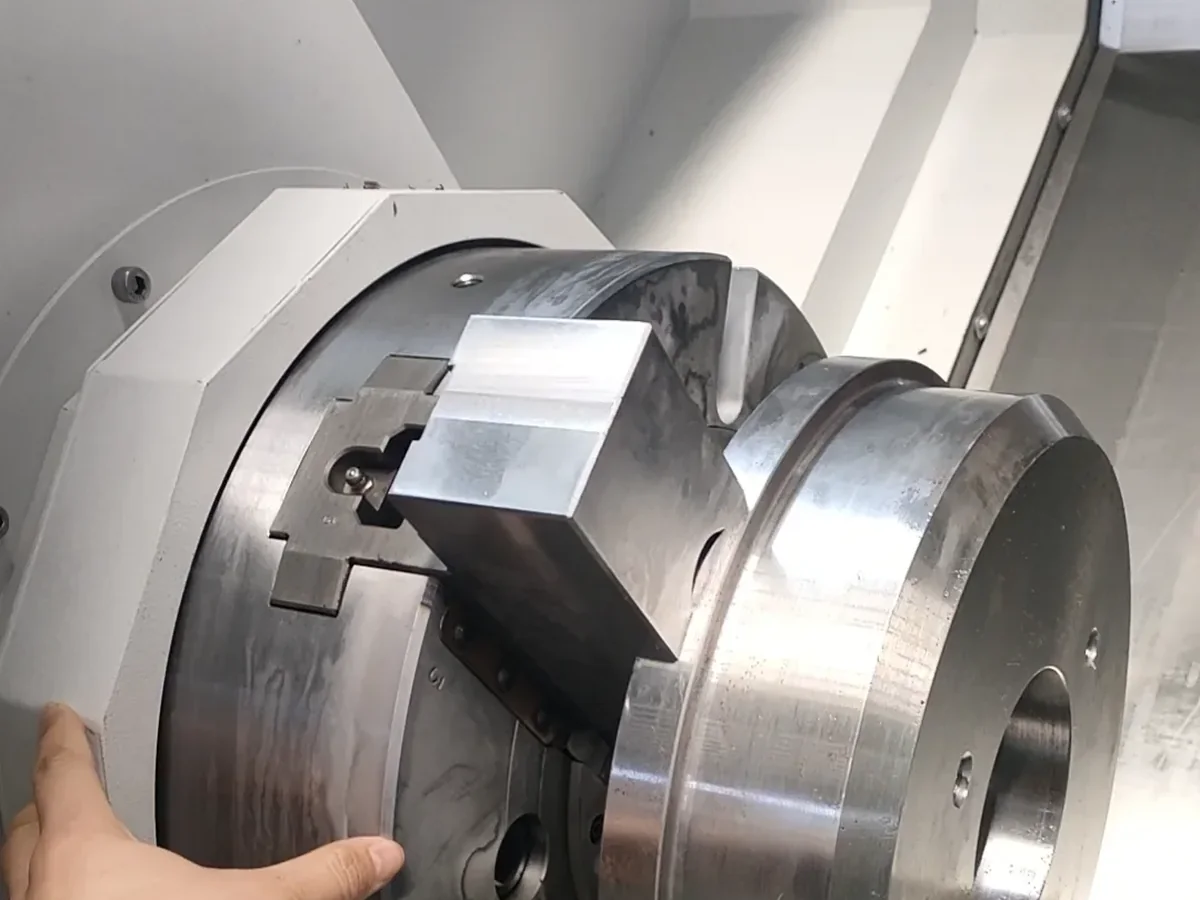
Questions We Get Asked About This Comparison
Can a gang tool lathe be converted to a turret later?
No. The slide, the bed casting and the control's axis configuration are built around the layout. A gang machine stays a gang machine, which is why the decision is worth getting right the first time rather than treating it as a first step.
Is a gang tool lathe cheaper to buy?
Usually, at the same work envelope, because there is no turret, no index servo and no drum casting. The gap narrows once the gang machine is specified with a bar feeder, a parts catcher and a subspindle, which is how most of them are actually bought. Compare the machines as configured for the job, not as advertised.
Which one holds a dimension better over a long run?
Neither layout has an advantage in itself. What matters is thermal behaviour: a gang plate sits in the chip and coolant stream and warms with the cycle, while a turret's mass is further from the cut. Both can be managed, and both need the first parts checked after the machine has run for a while rather than straight after a cold start.
Can I run a gang tool lathe with a tailstock?
On some machines, on a reduced envelope, and it takes the space the tool plate needs. If the part needs a tailstock, that is usually the signal that the part needs a turret machine and the gang layout is the wrong shape for the job.
What about a turret lathe with only eight stations?
Fine for a stable process that uses six or seven tools. It becomes a constraint the first time the customer adds a feature, because the eighth station is usually already taken by the parting tool. Twelve stations is the difference between a machine that grows with the part family and one that does not.
Does the answer change for aluminium?
It shifts the break-even. Aluminium cuts fast, so the cycle is shorter and the index time is a larger share of it, which favours the gang layout. It also makes chip control worse, which favours the turret. On small aluminium parts we would look hard at the gang machine and then check what the chips do, because that is where the cycle time is really lost.
Contact Handemo CNC | Email: sales1@handemocnc.com | WhatsApp: +86 135 6320 3038