Rail Parts Machining: Axles, Wheels, Discs and Boxes
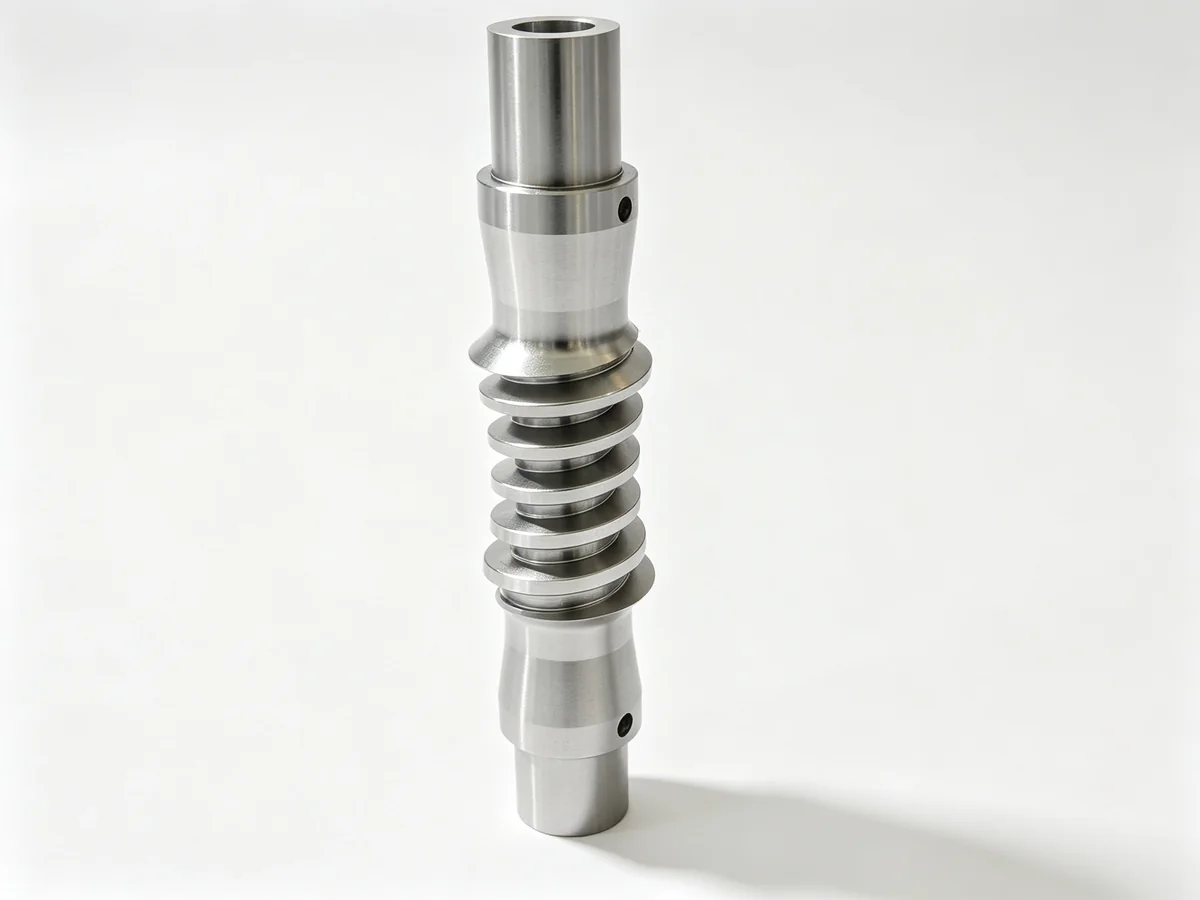
The job arrived as twenty-six axles for a maintenance depot. Every one had been in service, every one had weld build-up on at least one journal, and every one had been re-centred by the shop before us with a die grinder and a hand-held countersink.
The shop that took them on did the obvious thing. They set each axle between centres, turned the weld down, turned the journal to the drawing, measured it, and sent it back. The sizes were right. Then the axles would not press into their wheels inside the press capacity, and two of them had to have the wheel pressed off again and were rejected.
Nothing was wrong with the turning. Everything was wrong with the two small cones at the ends of the axle, which nobody had looked at since the axle left the depot.
This is one of our application notes, written from what maintenance shops and component suppliers send us. It covers the parts that make up a running gear set — axles, wheels, brake discs, axle boxes, bogie frames — and the one thing they all share: the surface that decides whether the part is good is usually not the surface the drawing dimensions point at. If you machine housings and brackets rather than rail parts, the first half of this still applies, because every long part with two centres has this problem in some form.
The Parts, and What Each One Is Actually For
A running gear set is five families of part, and they are made on four different kinds of machine. It helps to keep them apart, because the buying conversation goes wrong when they get mixed.
| Part | Usual material and blank | Surfaces that decide acceptance | Machine type |
|---|---|---|---|
| Axle | Alloy steel forging (25CrMo4 / EA4T family) | Journals, wheel seats, gear seat, both centre holes | Long-bed lathe with steadies |
| Wheel | Rolled or cast steel (ER7 / ER8 family) | Tread and flange profile, hub bore | Wheel lathe or large swing lathe, plus boring |
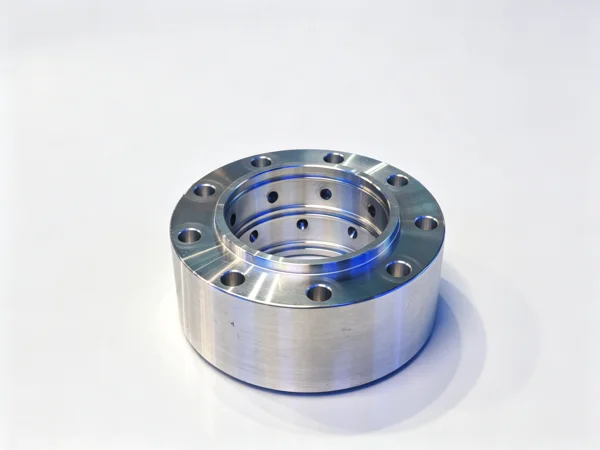
| Brake disc | Cast or forged steel, sometimes with a hub | Both friction faces, bolt circle, mounting face | Vertical lathe or heavy lathe with a faceplate |
| Axle box | Cast steel or ductile iron | Bearing bore, guide faces, cap face | Horizontal machining center |
| Bogie frame | Welded H-section, or cast | Axle box guide pockets, motor mounts, brake brackets | Large vertical or floor-type boring mill |
Four machine types, one shared problem. The axle sets the tone, because it is the part where the problem is most expensive.
An Axle Is a Pair of Centre Holes With Cylinders Hanging On Them
Look at an axle drawing and you see a shaft with five or six diameters on it, a shoulder between each, and a note about the ends. It reads like a set of independent features that happen to be on the same piece of steel.
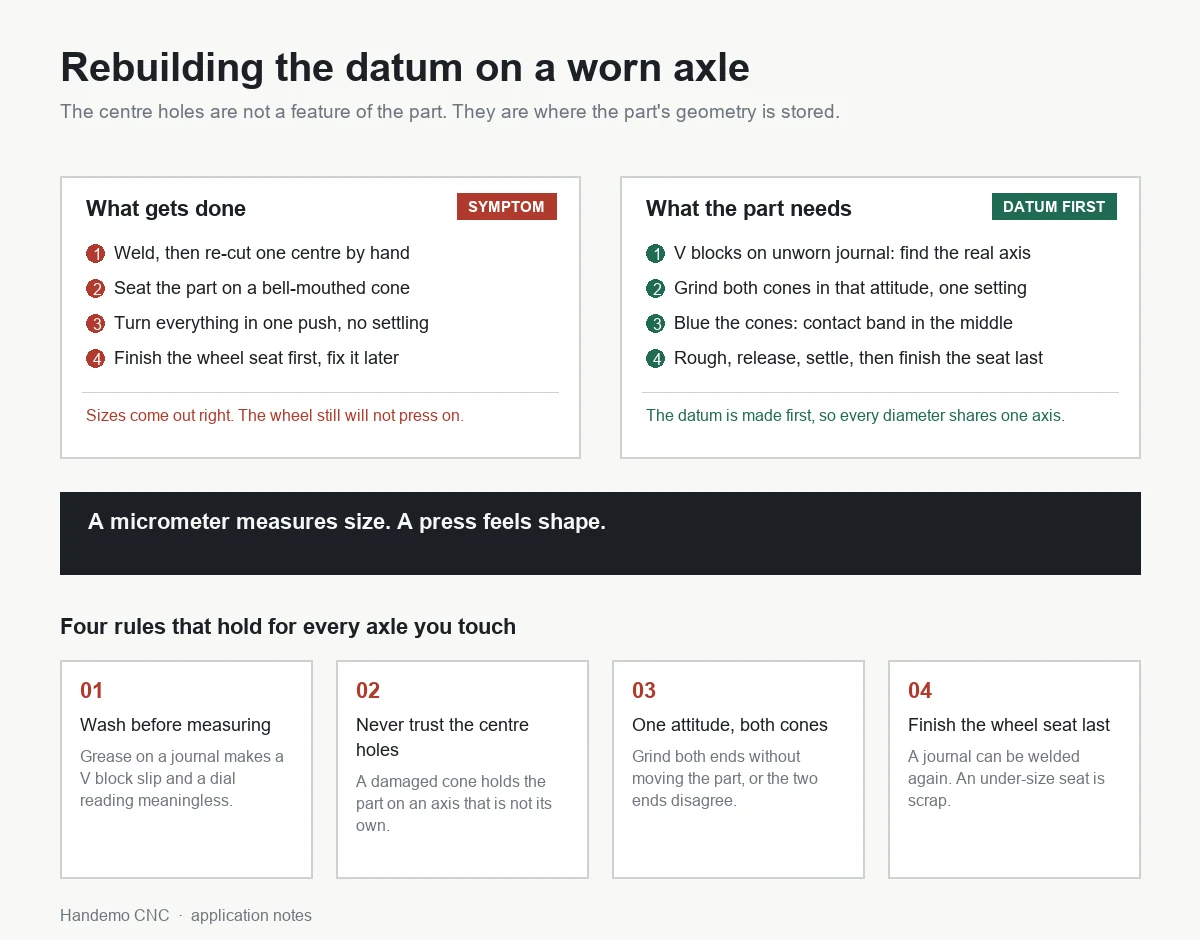
It is not. A finished axle is two 60-degree cones at the ends, and a set of cylinders that were all turned from those two cones without the part being re-chucked. Every diameter on the drawing is a distance measured from the line between those two cones. The cones are not a feature of the part. They are where the part's geometry is stored.
Which means the centre holes are the only surface on an axle that you did not make and cannot check with a micrometer. They are the one thing you inherit, and everything else is a consequence of them.
There is a second thing they have in common with the wheel seats: both are finished before the axle ever reaches the customer, and both are then abused for twenty years. The centre holes get knocked, rusted, filled with weld spatter, and re-cut by people who are in a hurry. The wheel seats get pressed, run, and occasionally spun.
Three Ways a Centre Hole Goes Wrong
A centre hole fails in three ways, and they produce the same symptom from three different directions.
It gets damaged in handling
An axle is a heavy, awkward, round object that lives in a rack, gets lifted by a crane with a sling, and sits outdoors at some depots. The cone at each end takes impacts, grit, and standing water. Rust in a centre hole is not cosmetic: the cone is a bearing surface, and a rust patch is a place where the cone no longer touches.
It gets filled with weld spatter
Journal repair is welding, and welding near an open centre hole throws spatter into it. Someone then removes the spatter with a grinder. A die grinder in an unskilled hand turns a 60-degree cone into something closer to a sphere with a flat in it. The axle will still sit on a centre, and it will still spin, and it will no longer be concentric with anything.
It gets bell-mouthed by the work itself
The third one happens on the machine, and it happens to good shops. A heavy roughing pass on a long part pushes the work into the tailstock. If the centre is dry, or the pressure is set too high, or the cone was not seated properly to begin with, the cone in the workpiece wears into a bell shape — wide at the mouth, narrow at the back. The part then runs on the narrow band at the back of the cone, which is a smaller diameter circle than the one the machinist thinks he is using. Every diameter comes out round, and every diameter is on a slightly different axis than the one before it.
The tell is a contact print. Blue the centre, seat the part, take it out, look. A good cone shows a continuous ring of contact around the middle of the face. A bell-mouthed one shows a line at the back, or a patch on one side only.
The Operation Order That Works on a Worn Axle
Here is the sequence we would use on a service-worn axle with weld build-up. It is longer than the obvious one, and it exists because the obvious one assumes the centre holes are still true.
1. Wash the axle before anything is measured
Not a wipe. A wash. Grease on a journal makes a V-block slip and makes a dial reading meaningless, and rail axles arrive with twenty years of it. Every inspection number taken before the wash is a guess.
2. Set it on unworn journals in V blocks, not on the centres
This is the step that gets skipped, and it is the whole trick. You cannot use the damaged centre holes to find out how damaged they are. You have to establish the real axis from the part itself, using the sections of journal that are still original — usually the band next to the shoulder that the bearing never touched.
Two V blocks, one under each end, on clean unworn journal. Rotate the axle by hand and read a dial indicator on the unworn band at each end and at the middle. What you are looking for is the attitude in which the two unworn bands agree. That attitude is the axis the axle was made on. Everything after this is measured from it.
3. Re-cut both centre holes in that attitude
With the axle sitting in the V blocks, in the attitude you just established, grind both cones. A portable centre hole grinder that clamps to the machine bed does this without moving the part. Both holes, one setting, same attitude — never one end today and the other end after lunch.
If you have no grinder, the alternative is to skip the centres entirely for the first operation: hold on the unworn journal with soft jaws or a four-jaw and drive from the face with a face driver. That works, and it costs you the ability to turn both ends in one setting, which is what you were trying to keep.
4. Blue-check both cones before the first cut
Seat the part, remove it, look at the print. If the contact is a band in the middle of the cone on both ends, you now have a datum. If it is a line at the back of the cone, the cone is still bell-mouthed and the grinder did not clean it up — go back a step, because cutting now wastes the whole axle.
5. Turn the weld down before you turn anything else
Weld build-up on a journal is not a surface, it is a lumpy deposit with hard and soft zones, porosity, and a boundary where it meets the parent metal. Take it down in a way that keeps the load even: light radial cuts, tool engaged continuously, no dwelling. A tool that sits in one spot work-hardens the deposit and then breaks.
Expect the first pass to be interrupted, expect the edge to be gone after it, and plan the tool change rather than being surprised by it.
6. Re-check the centres after welding heat
If you welded with the axle between centres, the heat went into the ends too. Weld, cool, then blue-check the cones again before finishing. This is the second most common place an axle job turns into a scrap report: the welder did his part correctly and the finishing operation ran on a cone that moved while he was working.
7. Rough everything, then let it sit
Rough the journals and the seats, leave the finishing allowance, then release the tailstock and let the part settle before finishing. An axle that has been welded and roughed in one continuous push is carrying stress that will move it after it leaves your shop. The delay is a day, not a week, and it is the difference between an axle that measures right on your machine and one that measures right on the customer's press.
8. Finish the wheel seats last, in one continuous pass
Details in the next section, because this surface has its own rules.
The Wheel Seat Is the One Surface You Cannot Repair
A wheel goes onto an axle as an interference fit — the seat is made slightly larger than the wheel bore, the wheel is heated or pressed, and the friction between the two surfaces carries the load for the next decade. The amount of interference is on the drawing and is not negotiable.
What matters for machining is that the seat is a friction surface, and friction surfaces care about three things that a size check does not see.
The first is that the seat has to be one continuous turned surface. A seat that was cut in two passes leaves a step, and a step is a place where the press load spikes. If the step is at the wrong end, the wheel goes on crooked and stays crooked. So the seat is the last thing you turn, and it is turned in one pass with the tool engaged from start to finish.
The second is lead. Turning leaves a helix, and a coarse helix on a press fit acts like a screw thread: the wheel walks on as the press pushes, and the press tonnage climbs. A fine feed and a sharp tool leave a helix shallow enough that the fit behaves as designed. This is not a number you chase on a gauge; it is a reason to finish the seat with a fresh edge and a feed you would use for a bearing fit, not the feed you used for roughing.
The third is that you cannot fix a bad seat afterwards. A journal can be welded and re-turned. A wheel seat that comes out under size cannot be built back up, because the deposit changes the fatigue behaviour of the most highly stressed section of the part. Under-size seat means the axle is scrap, and that is why the sequence above finishes it last — everything else on the axle can be saved, and this cannot.
One workshop habit worth naming: polishing a seat with emery cloth to make it look better. Emery cloth does not make a surface more accurate. It flattens the tops of the tool marks and leaves the waviness underneath intact, and it can round the edge of the seat where the wheel has to start. If the seat does not look right off the tool, the tool or the feed is wrong, and cloth will not fix it.
Wheels, Discs, and the Faces That Have to Stay Parallel
Wheel tread and flange
The tread is a profile, not a cylinder, and the flange is a curve that wears into a shape nobody wants. Re-profiling a wheel is a copying operation, and it is done on a wheel lathe or a large swing lathe with a profiling attachment. What matters for the machine choice is swing and the ability to drive the wheel on its own hub bore rather than on the outside diameter — driving on the OD when the OD is what you are cutting is circular reasoning.
The hub bore is a press fit like the axle seat, with the same rules: one continuous bore, fresh edge, and a check that the bore is round at both ends rather than only at the mouth.
Brake discs
A brake disc has two friction faces, one on each side, and a bolt circle joining it to the hub or the wheel. The two faces have to be parallel to each other and square to the bolt circle, and the only way to guarantee that is to machine both faces from one setting of the part.
That usually means a vertical lathe or a heavy lathe with a faceplate and a fixture that holds the disc on its bolt circle. Turn one face, flip on the same fixture, turn the other. Because the fixture repeats on the bolt holes, the two faces come out parallel to each other and square to the holes, which is what the brake caliper actually cares about.
If a disc is machined by holding it on the outside diameter and flipping it in a three-jaw, the two faces will each be square to the OD and not necessarily to each other. On a bench check it passes. On the vehicle, one face runs in and out and the caliper knocks.
Where these parts overlap with other industries
Nothing about a wheel hub or a brake disc is unique to rail. The same geometry appears on road vehicles, and we cover the wheel hub case in wheel hub machining and bearing seat runout and the disc case in brake disc machining. If you are quoting both rail and road work, read those two before you decide on fixtures, because the fixture is where the money is and it is reusable.
Axle Boxes and Bogie Frames: The Other Machine
Everything above is round work, and round work on a lathe is a well-understood problem. The other half of a running gear set is box work, and it is a different purchase.
Axle boxes
An axle box is a housing with a bearing bore through it, two guide faces that slide in the frame, and a cap face. The bore and the guide faces have to be related to each other, because the box has to sit in the frame square while the bearing sits in the bore square. If the box is machined in three setups on a vertical machine, those relationships are rebuilt three times and each rebuild costs you a setup error.
This is the classic case for a horizontal machining center with a pallet changer: bore one face, index the pallet, bore the next, and the relationships are maintained by the machine rather than by the operator. A 630 mm pallet machine with a BT50 spindle handles the size and the cast skin comfortably — our HMC630II-ZT covers a 630 x 630 mm pallet at 1,200 kg, with 1,100 / 900 / 1,000 mm of travel, which is the right order of size for a wagon axle box and for the smaller passenger boxes.
Bogie frames
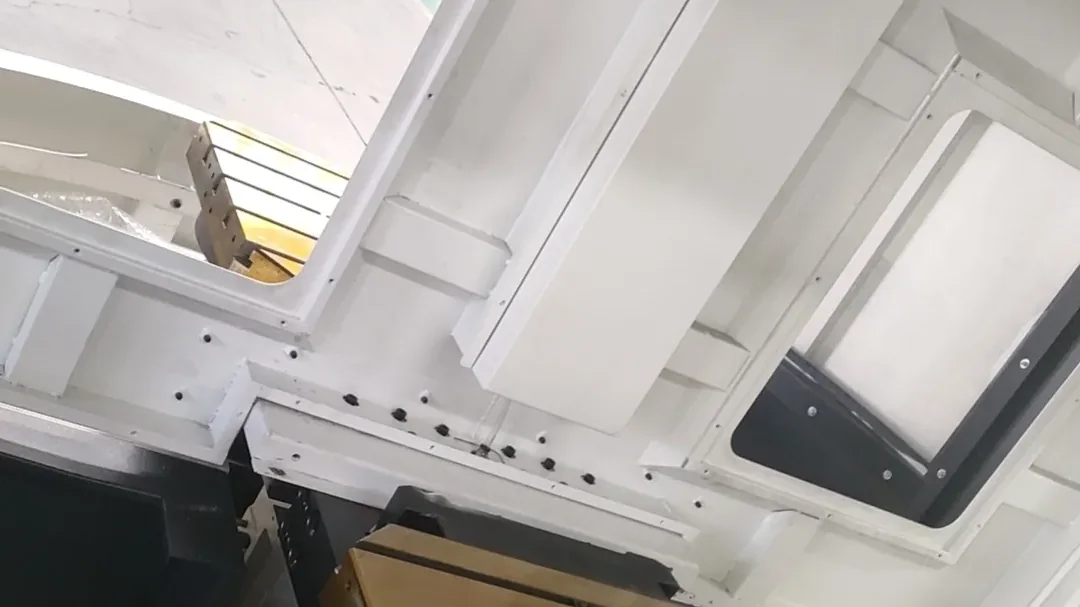
A bogie frame is usually a welded fabrication in H-section, sometimes a casting. Welding moves steel, and it moves it unevenly: the axle box pockets end up not co-planar, the motor mounts end up at slightly different heights, and the whole frame has a bow in it that was not in the drawing.
You cannot machine a welded frame by clamping it flat first, because clamping a bowed frame flat puts the bow into the fixture and takes it out again when you release. The first operation on a fabrication is to create the surface that everything else will be measured from — machine one reference face properly, then work from it. We wrote about that problem in more detail in forged blank machining and datums, and it is the same argument with different metal.
The machine for a bogie frame is a large vertical with a big table and a BT50 spindle, or a floor-type borer if the frame is long enough to need one. A 1,600 x 800 mm table with 1,600 / 900 / 700 mm of travel and a 1,500 kg load, which is what a VMC1690 gives you, will do the end pockets and the mount faces on a wagon bogie if the frame is presented one end at a time. It will not do a long passenger frame in one setting, and pretending otherwise is how projects get late.
Machine Choice, and Where Each One Stops
The table below is the honest version of the choice: what each machine does, and the point at which it stops being the right answer. All figures come from our own product pages.
| Machine | Working envelope | What it is for here | Where it stops |
|---|---|---|---|
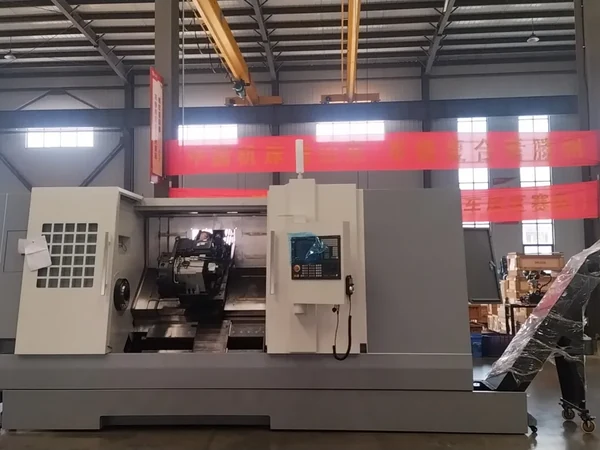
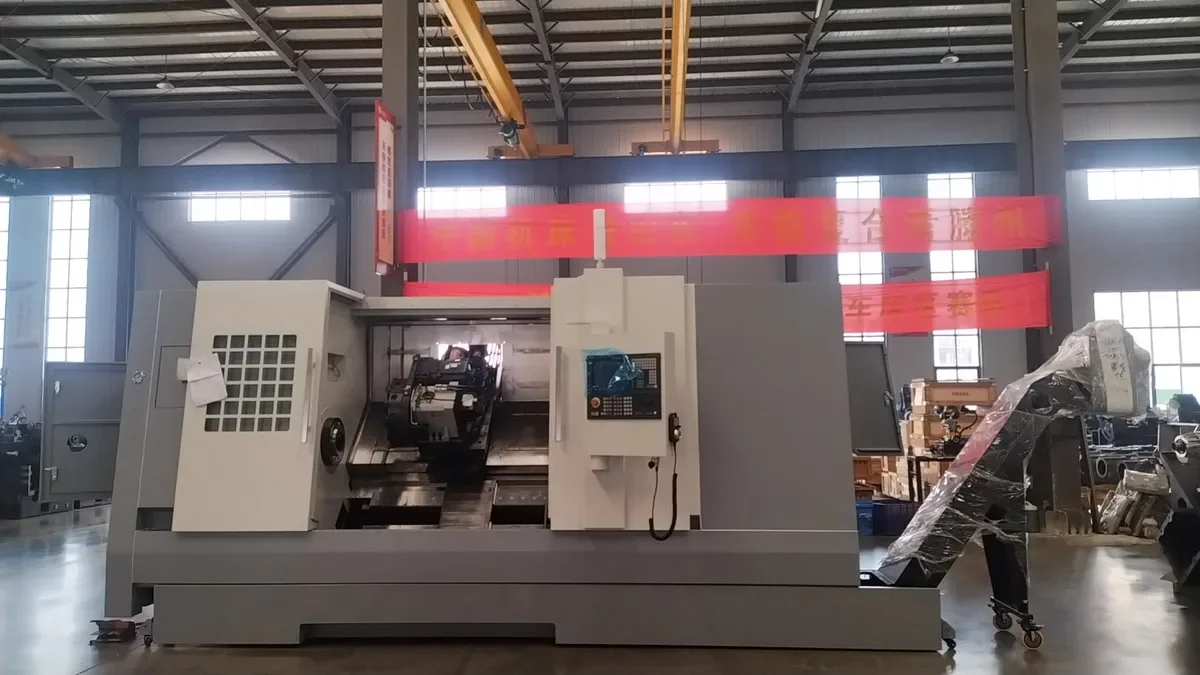
| TCK80B-1500 | 1,000 mm swing over bed, 800 mm cutting diameter, 1,500 mm cutting length, 120 mm spindle bore, 22 kW, 12,000 kg | Wagon and light passenger axles between centres, with a steady for the middle; wheel and disc work within the swing | Axles longer than the cutting length. A passenger axle that will not fit needs a longer bed, a second setting, or a different machine — not a bigger chuck. |
| TCK6350B | 630 mm swing, 480 mm cutting diameter, 500 mm cutting length (1,000 mm on the -1000), 96 mm bore, 18.5 kW | Smaller axle journals and seats in a second operation, brake disc hubs, axle box covers, general round work in a rail workshop | Long parts. It is a 500 mm machine; using it for a full axle means two settings and two datums. |
| TCK80D-1500 | Same family envelope as the 80B, high-end build | Where the axle work is steady enough to justify the higher-spec build | Same length limit as the 80B. |
| HMC630II-ZT | 630 x 630 mm pallet, 1,200 kg, BT50, 6,000 rpm, 1,100 / 900 / 1,000 mm travel | Axle boxes, bearing caps, brake caliper brackets, gearbox hangers — parts with features on four or five faces | Long frames and anything that needs a table bigger than the pallet. |
| VMC1690 | 1,600 x 800 mm table, 1,500 kg, 1,600 / 900 / 700 mm travel, BT50 | Bogie frame end pockets, mount faces, welded bracket work, fixture plates | A full-length passenger bogie frame in one setting. That is a different class of machine. |
One more decision that catches people: whether to buy a lathe long enough or to add a steady to a shorter one. A steady lets you support a long part, and it does not lengthen the bed. If the axle is longer than the cutting length, the steady does not help; you still need two settings, and two settings means the two ends have to be brought back into relation by a method, not by hope. Settle the part length first, and let that decide the machine — the general rules are in how to choose a lathe by swing, bore and chuck.
Three Things to Check Before You Quote a Rail Job
Ask what the previous shop did to the centre holes. Not as a courtesy — as a technical question. If the answer is "they re-cut them", you have a re-datuming job on your hands and the quote has to include it. Most shops quoting axle repair quote turning, because that is what the drawing shows.
Ask whether the weld is on a journal or on a seat. Journal weld is routine repair. Seat weld is a design change and usually means the part should be replaced, not repaired. Knowing which one you are being asked to do protects both of you.
Ask how the part will be inspected after machining. An axle that is checked on centres on your machine and on a surface plate at the customer's site will produce two different reports, and the difference will be blamed on your machining. Agree the inspection setup at the quotation stage, in writing, and note which surfaces it references.
What We Would Want to See
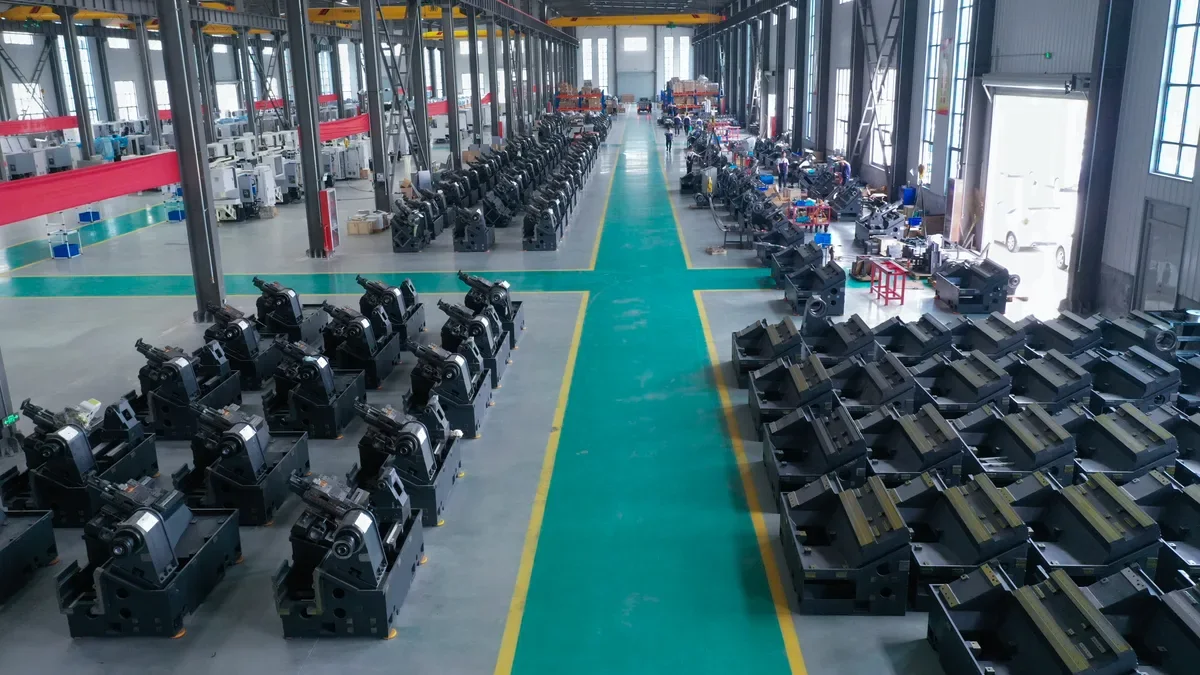
If you are setting up or expanding a rail component line, the drawings are only half of what decides the machine. We would want the part list with lengths and weights, the process you intend (bar, forging, or repair of worn parts), the surfaces that are inspected, and the fixtures you already own. With those four things the machine choice is usually obvious and occasionally surprising — long parts and box parts rarely want the same building.
Handemo CNC builds slant bed lathes from the compact 6050 up to the 80 series heavy machines, horizontal machining centers on 500 to 630 pallets, and vertical machines up to the 1890. We have been making machine tools in Tengzhou, Shandong since 2008, on a 220,000 m² site with around 660 people, and we ship to more than 150 countries. If your rail work is repair rather than new build, say so in the first email — repair changes the sequence more than it changes the machine.
Questions We Get Asked About Rail Parts
Can you turn an axle between centres if the centre holes are damaged?
You can turn it, and the result will be round and wrong. Damaged cones put the part on an axis that is not its own, so every diameter comes out correct to a line that does not exist on the drawing. Re-cut the cones first, or drive from the face and skip them for that operation — but do not pretend the old cones are still a datum.
How much weld can go back onto a journal?
The limit is set by the repair specification for the part, not by the machine. What machining contributes is the ability to take an uneven deposit down without breaking tools or pushing the part, and the discipline to re-check the centres after the heat. If the deposit is thick enough to need more than a couple of passes, ask whether the journal is still inside its repair limits before you spend the time.
Why did the wheel seat fail the press when it measured right?
Because a micrometer measures size and a press feels shape. A seat cut in two passes has a step, a seat cut with a coarse feed has a helix that acts like a thread, and a seat polished with emery cloth has its waviness pressed flat but not removed. All three measure on size at the ends and all three climb in tonnage on the press.
Do I need a centre hole grinder, or will the lathe do?
A lathe can hold a part on a re-cut cone, but a lathe cannot cut the cone it is standing on. For anything above occasional repair work, a grinder that mounts on the bed and works while the part sits in its V blocks pays for itself in the first rejected axle it prevents. The alternative that also works is a face driver plus soft jaws, at the cost of one setting per end.
How much bed length does a wagon axle need?
Measure the axle over its centres and add the room the steady and the tailstock need. Our 80-1500 gives 1,500 mm of cutting length, which covers a large share of wagon axles and not all of them. Give us the length and we will tell you which side of the line you are on rather than quoting the nearest machine.
Can the same lathe cut the wheel tread?
Only if it has the swing and a way to drive the wheel on its bore. Tread work is a profile, and the wheel has to be held by something other than the surface being cut. Most rail workshops keep wheel re-profiling on a dedicated wheel lathe and use a general lathe for axles and discs.
What do you need to quote an axle line?
The axle drawing with overall length, the material, whether the blanks are new forgings or worn parts for repair, and the surfaces that are inspected. Add the number of pieces per month and the fixtures you already have. Send them through our drawing upload page or by email and we will come back with a sequence and a machine, not just a price.
Talk to Us About Your Running Gear Work
Rail work rewards shops that ask about the datum before they ask about the spindle. If you are quoting axles, wheels, discs, boxes or frames, send us the drawings and tell us which of the five families you are actually chasing — the answer changes the machine, and it changes the fixtures more.
Contact Handemo CNC | Email: sales1@handemocnc.com | WhatsApp: +86 135 6320 3038
More application notes by industry are collected in our application guides section.