
CNC Machines for Automotive Parts Manufacturing
Plan CNC machining for automotive housings, shafts, brackets and production parts with HANDEMO machines and automation.
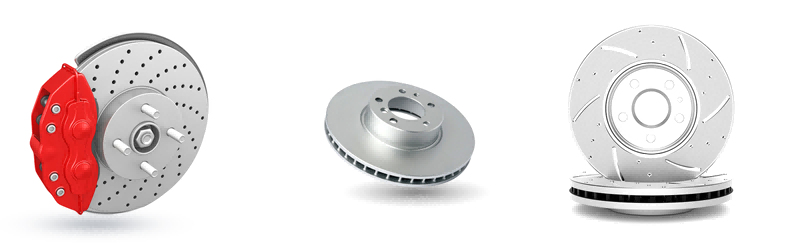
Machining Automotive Components
Automotive work is defined by volume and consistency rather than by any single difficult feature. A part that takes ninety seconds longer than planned is a costing problem when it repeats fifty thousand times, and a part that drifts out of tolerance at hour six of a shift is a quality problem. Both are decided by the process, and the process is decided by the machine.
This page sets out how to match machine architecture to automotive part families, where automation belongs, and what data is needed before a production line can be specified.
What Automotive Parts Demand
Cycle time is the primary constraint
Most automotive parts are geometrically simple. The difficulty is doing them fast, repeatably, with minimal non-cutting time. Tool change time, rapid traverse, acceleration and chip-to-chip time matter as much as spindle power. A machine with more axes but slower tool changes can lose to a simpler machine on a high-volume simple part.
Process capability, not just tolerance
A drawing tolerance is a limit. What production needs is a process that sits comfortably inside it with margin for tool wear, thermal drift and material variation. That usually means specifying a machine with accuracy headroom rather than one that just meets the drawing.
Every second of loading is lost cutting time
On a part with a two-minute cycle, thirty seconds of manual loading is a twenty percent capacity loss. That is why pallet changers, gantry loaders and robot tending appear so early in automotive planning, and why automation should be considered at the machine selection stage rather than afterwards.
Matching Machine to Part Family
Housings, covers and brackets
Gearbox housings, clutch housings, covers and brackets need work on multiple faces. A horizontal machining center with a pallet pool indexes between faces without losing datum and keeps loading off the spindle. Where the part is essentially prismatic with two working faces, a vertical machining center with a twin-pallet changer is usually more economical.
Rotational drivetrain parts
Shafts, hubs, flanges and brake components are turned, and many carry cross holes, slots or flats. A slant bed lathe with a powered turret handles the turning and simple cross work; a mill-turn machine completes parts that would otherwise need two operations and lose concentricity between them.
Structural and battery components
Thin-wall aluminium housings, battery trays and structural castings bring their own problems: distortion from clamp force, heat build-up in long cuts, and features on faces that are hard to reach. These parts benefit from machines with high acceleration and good thermal control, and from fixtures designed to distribute clamp load.
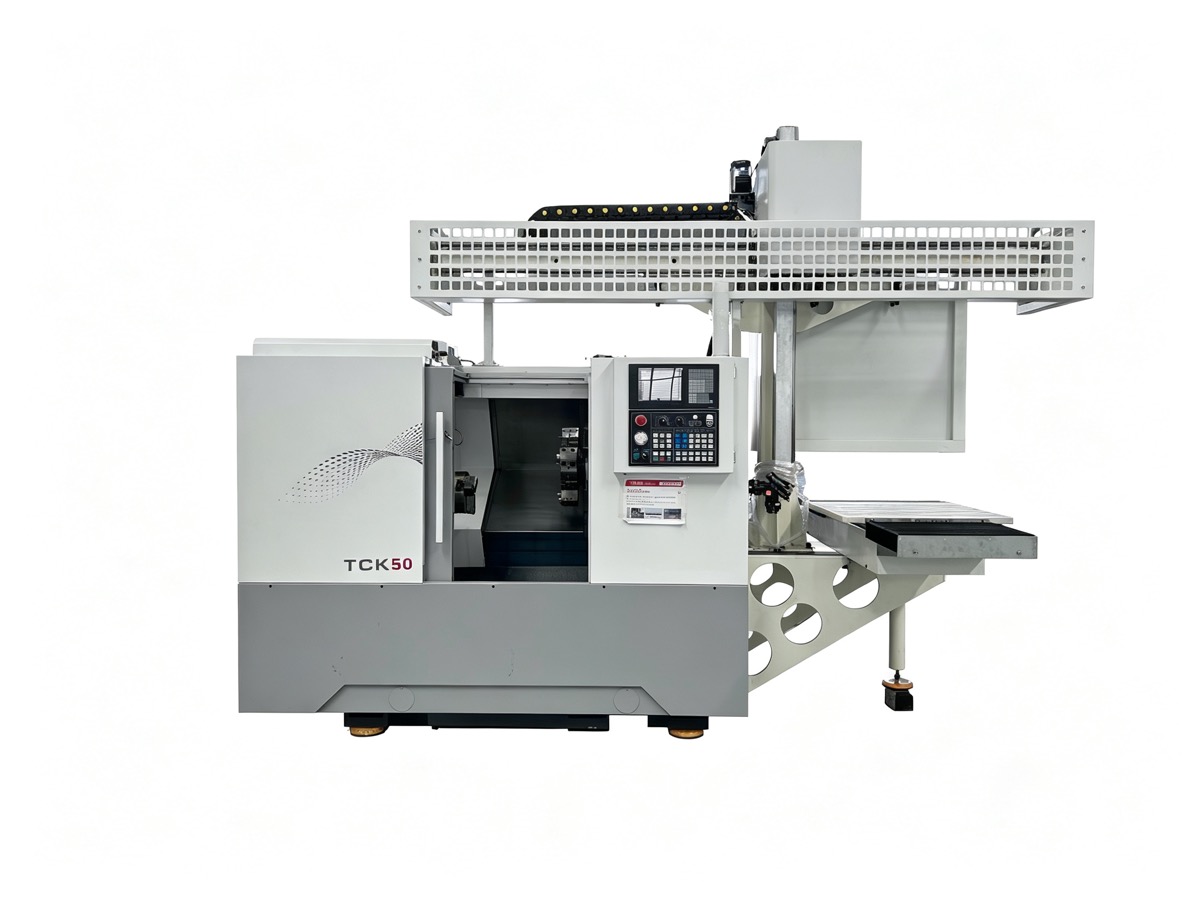
Planning Automation Early
Pallet systems before robots
A pallet pool is usually the cheaper way to recover loading time: the operator loads while the machine cuts, and the part simply waits in a queue. Robots make sense when part weight, cycle time or the number of machines makes manual pallet handling impractical.
Gantry loaders for one or two machines
A gantry loader over a single machine is a compact, low-footprint answer for small to medium parts at high volume. It is covered in CNC gantry loader automation.
Robot tending for cells
When several machines serve one process, an articulated robot sharing work between them keeps utilisation up. See robotic machine tending for the layout considerations.
What automation needs from the machine
An automatic door, a pallet interface, a parts-present sensor, a clean chip path and a control that can accept an external handshake. Retrofitting these is possible but expensive, which is why the question belongs in the original specification.
Data Needed to Specify a Line
Part and process data
Finished drawings, blank condition, material and hardness, annual volume, batch size, required cycle time and the operations currently performed. The current process route is often the most useful single input, because it shows where time is being lost.
Quality data
Critical characteristics, tolerance bands, the inspection method and whether the customer requires process capability studies. Gauge repeatability matters here: a process cannot be shown capable against a gauge that is not.
Facility data
Available floor space, power capacity, compressed air, coolant handling, chip disposal and the skill level of the operators who will run the line. A highly automated cell in a shop without maintenance capability becomes a bottleneck rather than a solution.
Related Guides
- Automotive parts machining application guide - part families and routes
- Machining transmission shafts - turning and cross-feature work
- Machining brake discs - high-volume turning
- Machining steering knuckles - multi-face prismatic work
- Machining wheel hubs - bearing bore and flange faces
- Machining gears - blank and finishing routes
- Case study: automotive gearbox housing
More Application Guides
Handemo builds machines for each of these part families. Each guide covers what the part demands from the machine and how the process is sequenced.
Discuss Your Machining Project
Send HANDEMO your part drawing, material, annual volume and cycle time target for machine, fixturing and automation guidance.
Request a Project Review