Case Study: Hydraulic Manifold Blocks
A hydraulic manifold family sounds like a simple job until you count the setups. Four block sizes, between six and eleven ports each, five faces that carry work, and a customer who orders in mixed batches of twenty to sixty. Machining them on a vertical machine meant a setup for the top face, a flip, and a second operation for the side ports, with the part going back and forth between two machines. This is how the job was moved to a horizontal machine with pallets, and what changed.
The Parts
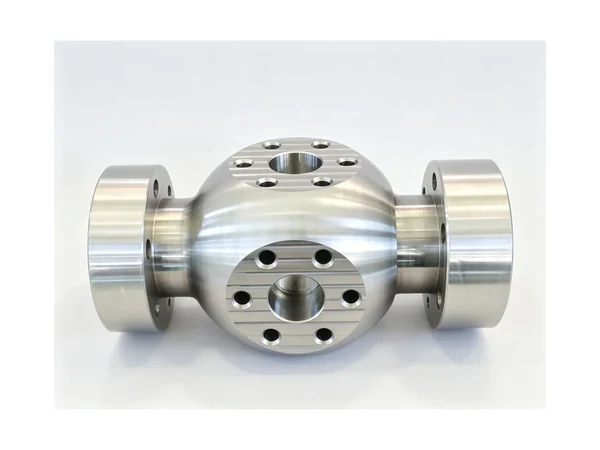
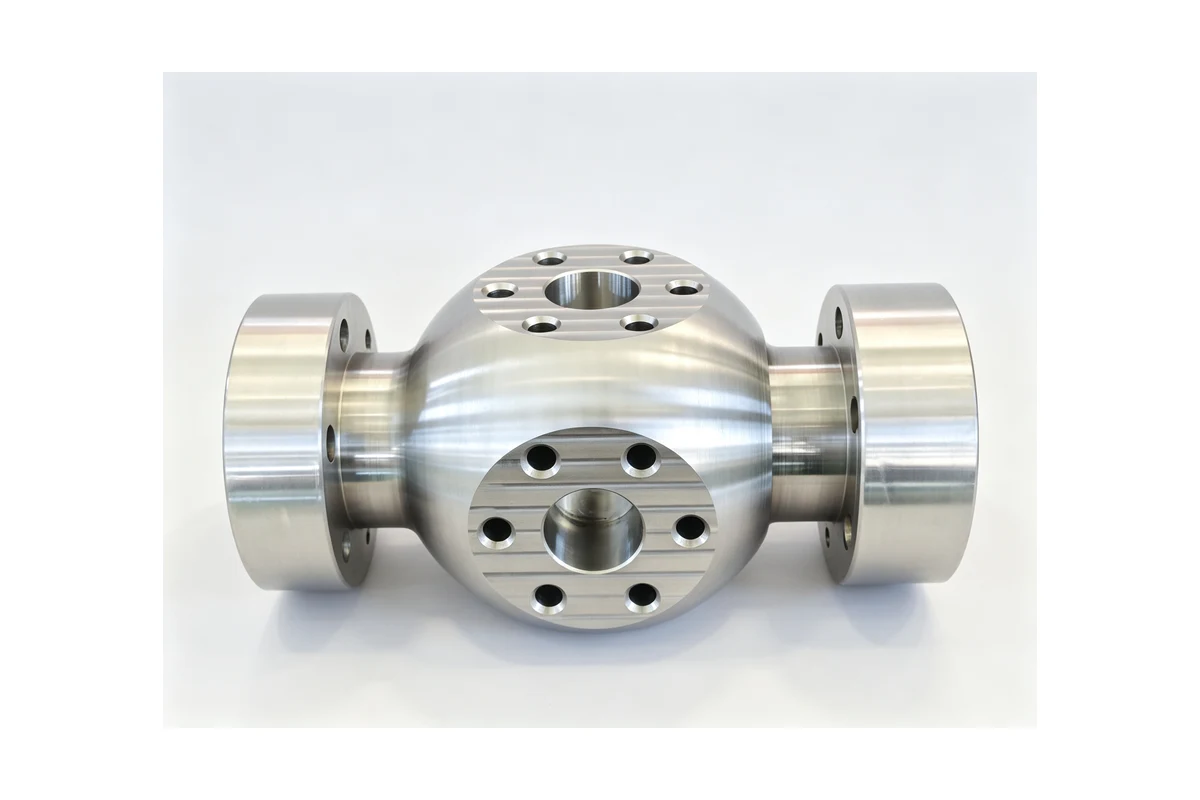
The family is four sizes of hydraulic manifold block, cast in ductile iron, from roughly 180 mm to 340 mm on the longest side. Each block routes fluid from a pump inlet to a set of valve and cylinder ports, so every block carries a flat sealing face, a pattern of drilled and tapped ports, O-ring counterbores on the sealing faces, and in two of the sizes a set of mounting holes on the base. The customer assembles them into power units, so the ports have to land on the mating valve bodies without any fitting on the bench.
The feature that made the job expensive was not the size or the tolerance. It was the number of directions the work comes from. Ports face up, sideways and on the base. On the vertical machine that meant three setups per block and two machines in the route, which is a lot of handling for a part that spends most of its time on a pallet rather than under a tool.
Why the Vertical Machine Stopped Fitting
Nothing was wrong with the machining quality. The problem was that each setup needed its own fixture and its own re-datuming, and every re-clamping is a chance for the part to move. On a manifold the ports are referenced to the sealing face, so a small shift in the second setup shows up as a port that will not line up. The operator was spending more time indicating and re-checking than cutting, and the scrap risk sat in the second operation, where it is hardest to catch.
The other problem was throughput. Two machines and three setups meant three queues. A batch of forty blocks moved through the shop in two days of calendar time even though the cutting time was a few hours.
What Was Changed
The job was moved to a horizontal machining center with a pallet changer, so the work could be presented to the spindle from more than one face without the part being taken off. The blocks are held in a tombstone fixture on the pallet: one fixture carries two blocks of the mid sizes, or four of the smallest, and the fixture is set up once and proved on a trial part.
With the part on the tombstone, the sealing face is cut first and becomes the datum for the job. The side ports and the base ports are cut by indexing the pallet, so they are all positioned from the same machined face rather than from a second setup. The O-ring counterbores are cut in the same cycle as the ports they sit on, which is the detail that removes the second operation entirely.
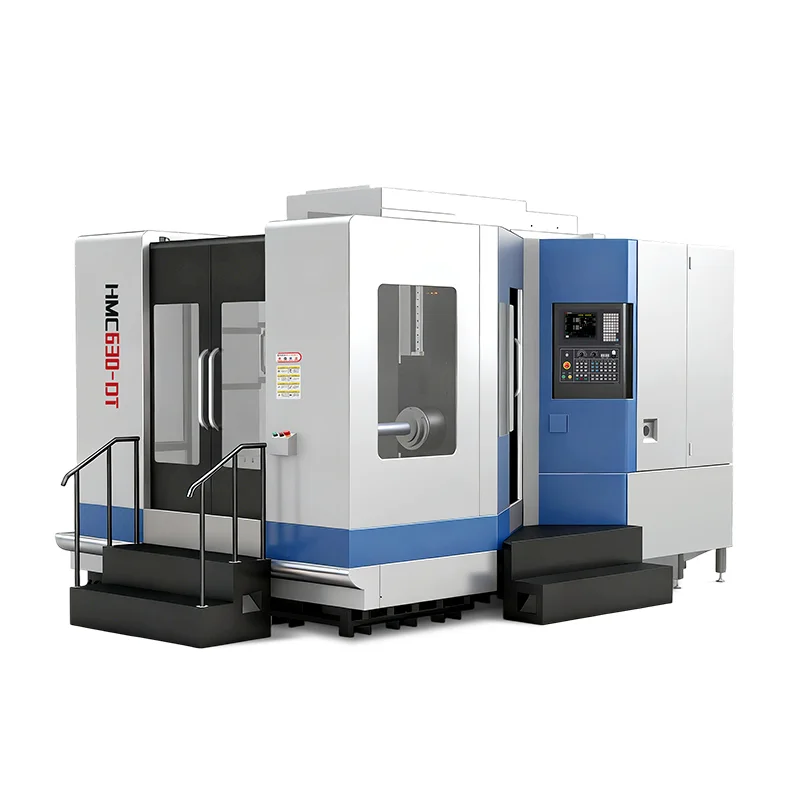
The HMC630-DT is the machine in this class for the mid-size blocks: a through-spindle coolant supply that reaches the deep ports, and enough travel that the base holes are cut in the same setup as everything else. For higher volume the pallet system keeps the load and unload outside the cutting time, which is where the largest part of the gain came from.
What the Change Delivered
The three setups became one. The part is clamped once, on a fixture that was bored and faced in place, and the four faces that carry work are cut in one cycle. Re-datuming between operations disappeared, so the port-to-sealing-face relationship is set by the fixture and the index positions rather than by an operator indicating a casting twice.
In round numbers, a batch of forty mid-size blocks moved from a two-day route through two machines to a single-machine route that clears in a shift, with the load and unload happening on the second pallet while the first is cutting. The bigger change was on the quality side: because the ports and the counterbores come from one datum, the trial fit of the mating valve body stopped finding blocks that needed rework.
Two things made the difference more than the machine itself. The first was proving the fixture on a trial part before the batch was released, which is how the index positions were confirmed rather than assumed. The second was taking the casting skin off in the first operation and letting the blocks settle before the finishing cuts, because a ductile iron block that has just been roughed will not measure the same an hour later.
What This Means for a Similar Job
The pattern repeats on any part that carries work on more than three faces, or that gets machined in two operations with a re-clamp in the middle. A block, a housing, an end cover with holes on several faces, a valve body: if the part is being picked up and put down between operations, a horizontal machine with a pallet and a proven fixture is usually the cheaper route once the batch is real. The test is simple. Count the setups, count the re-datuming steps, and see how much of the route is handling rather than cutting.
Frequently Asked Questions
How many faces can be machined in one setup on a horizontal machine?
With a tombstone fixture and a pallet that indexes, four faces are routine and five are possible with an angle fixture, which is usually enough to finish a manifold block in one clamping. The limit is set by the fixture and by which faces can physically be reached without the tool hitting the fixture, not by the machine alone.
Is a horizontal machine worth it for a batch of forty parts?
It depends on how many setups the part needs on a vertical machine. A part with two faces and one setup rarely justifies the change. A part with three or four setups, a re-datuming step and a second machine in the route usually does, because the saving is in handling and scrap risk rather than in cutting time.
What is the biggest risk when moving a job to a tombstone fixture?
Assuming the index positions are correct instead of proving them. The fixture has to be bored and faced in place on the machine that will run it, and a trial part has to be cut and checked before the batch is released. Skipping that step is how a well-planned job produces a batch that all needs rework.
Talk About Your Own Batch
Send us the part, the faces that carry work, the batch size and how the parts are ordered, and Handemo will come back with a machine recommendation and a setup plan - including whether a horizontal machine with a tombstone fixture is the cheaper route than the vertical machine you are on now. Contact Handemo CNC | Email: sales1@handemocnc.com | WhatsApp: +86 135 6320 3038
Related reading: Case Studies collects the other jobs we have taken apart, CNC Machining Guide for Hydraulic Valve Bodies covers the same part family, and VMC vs HMC explains when a part has enough sides to justify a horizontal machine.