CNC Machining Stainless Steel Shafts: Process and Machines
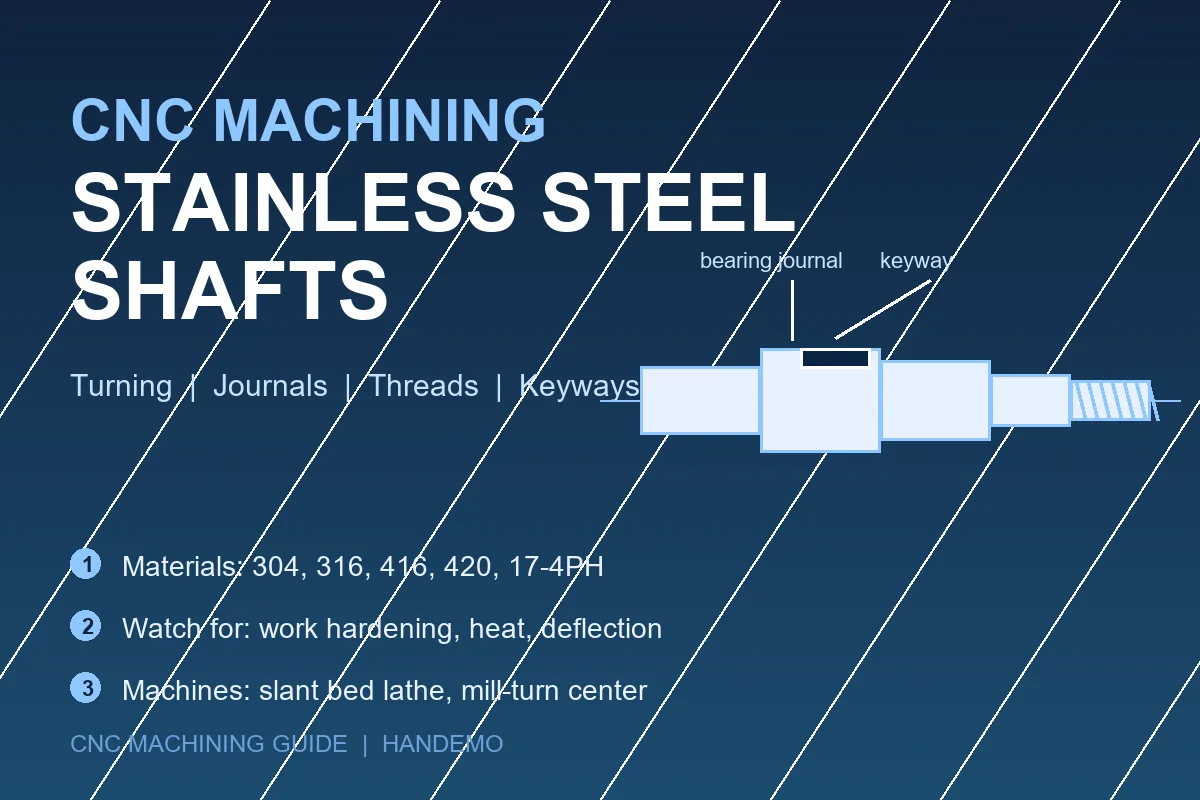
A stainless steel shaft rarely fails on the drawing. It fails in service - at a seal lip that has worn oval, at a bearing journal that has lost its fit, or at a thread that will not hold its torque. Turning stainless is where most of those problems are created, and where they are prevented. The material fights the cutting edge in ways that carbon steel does not, and a shaft is a long, slender part that moves away from the tool the moment the load gets heavy. This article explains how Handemo CNC machines stainless steel shafts - the grades we see most, the features that decide whether a shaft is accepted, the machines we put the work on, and the process rules we follow from the first roughing pass to the final inspection.
What Makes a Stainless Steel Shaft Different
Not every stainless grade machines the same way, and the first decision on any shaft job is which family we are cutting. Austenitic grades such as 304 and 316 are the most common in pumps, food equipment and process machinery. They are tough and corrosion resistant, but they work harden - the surface gets harder as the cutter rubs it, and the next pass meets a skin that is tougher than the core. Ferritic and martensitic grades such as 420 and 416 are used where the shaft needs hardness or wear resistance; 416 is free-machining and behaves far better in the cut, while 420 rewards a controlled process because it is harder on tools. Precipitation-hardening grades like 17-4PH sit in between: they machine to a good finish before aging, then gain strength in heat treatment.
What all of them share is that they conduct heat away from the cutting edge slowly. In carbon steel a good part of the heat leaves with the chip; in stainless a larger share stays in the tool and in the workpiece. That single property drives most of the practical rules on a shaft: keep the cutting edge sharp, keep it cool, keep the load steady, and never let the tool sit and rub.
Where Stainless Steel Shafts Are Used
Our stainless shaft work falls into a few clear families. Pump shafts carry an impeller at one end and a coupling at the other, with a seal running on a finished journal in between. Motor shafts and valve spindles have similar shapes but different surfaces that matter. Mixer and agitator shafts are long and slender, so deflection is the whole problem. Food and pharmaceutical equipment uses 316 shafts where the surface has to be smooth and cleanable. Hydraulic and instrumentation parts need a shoulder or a step that locates something else, which means the faces and diameters have to work together. In every family the shaft is judged less by its overall shape than by a small number of surfaces: the bearing journals, the seal seat, the shoulder that controls runout, the thread that has to hold, and any keyway, flat or spline that transmits the torque.
Why Shaft Turning Is Hard
Work hardening
A dull edge or a too-light pass on austenitic stainless rubs the surface instead of cutting it, and the surface hardens under the tool. The next pass then has to cut a harder skin, which dulls the edge further and hardens the layer again. The fix is a sharp, positive cutting edge, a real depth of cut that gets under the hardened layer, and a feed that keeps the tool engaged rather than skating. Re-cutting the same surface with a light pass is the fastest way to make a stainless shaft harder than the tool.
Heat and the tool
Because the heat stays near the edge, tool grade and coolant matter more than they do in steel. We use grades and coatings intended for stainless and keep coolant delivered where the chip actually forms. Running a shaft dry on stainless, or with coolant aimed at the wrong spot, shortens tool life and hides the early signs of a bad cut until the finish is already marked.
Deflection on a slender part
A shaft is long relative to its diameter, so the cutting force pushes it away from the tool. The result is a taper, a barrel shape, or a diameter that is right at the chuck and wrong at the tailstock end. On long shafts we control this with a tailstock or steady rest, by taking balanced passes on both sides, and by keeping the cutting load modest so the part does not bend away from the cut.
Chatter and finish
Shafts ring. A slender shaft with a lot of unsupported length will vibrate at its own frequency, and the tool marks the surface with a pattern that gets worse with every pass. The answers are the same as they are on any thin part: a shorter overhang, a rigid setup, a tool path that enters the cut smoothly, and enough support behind the work to damp the vibration.
Galling on threads and fits
Stainless tends to gall - material welds to itself under pressure. On threads, on press fits and on any surface that slides, this shows up as torn metal or a thread that will not assemble cleanly. Sharp tooling, correct thread geometry and a finish pass that does not rub are what keep the surfaces from tearing.
Recommended Machines for Stainless Steel Shafts
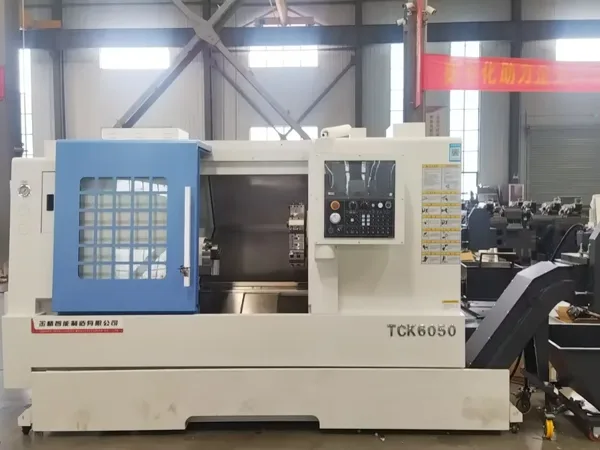
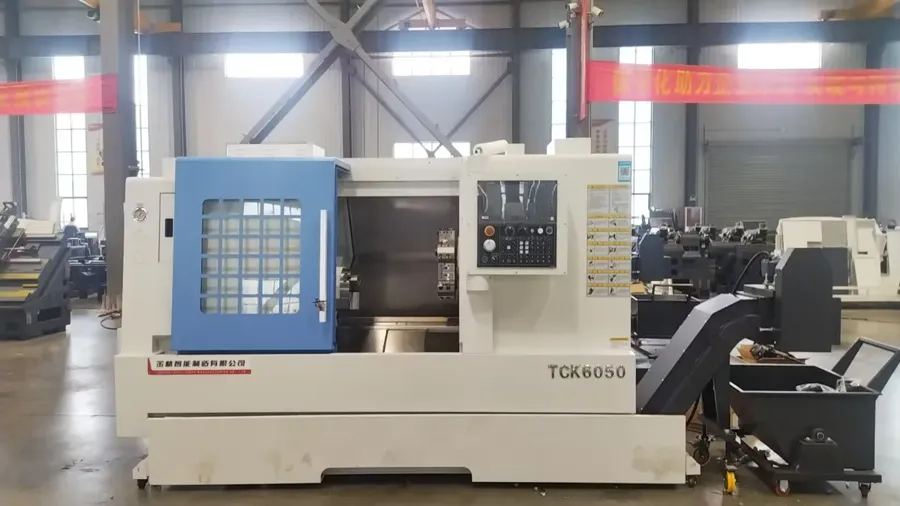
Shaft work is turning work, and our starting point for most stainless shafts is the TCK6050 CNC slant bed lathe. The slant bed lets chips fall away from the cut instead of piling up around the tool, which matters on stainless where a chip trapped under the edge is a chip that will rub and harden the surface. The machine is quick to set up and comfortable with the mixed batches of short and long shafts that arrive together.
When the shaft is heavy, long or has to hold its shape along its full length, the TCK6350B heavy-duty CNC lathe brings the rigidity and the larger working range that keeps a long part stable between centres. For shafts with fine finishes on the journals and seal seats, the TCK6050D high-precision lathe is built around the lighter finishing passes that stainless surfaces respond to, and the TCK70D covers the same kind of work on a larger envelope.
Shafts are not always pure turning jobs. A shaft that also needs a keyway, a flat, a cross hole or a flange face is the case for a machine that turns and mills in one setup. The CNC mill-turn machines let us cut the turned diameters and the driven features without moving the part to a second machine, which removes a re-clamp and the runout error that comes with it. Where a shaft only needs a short milled feature, we run that operation on a vertical machining center instead. Across the range - see the full CNC slant bed lathe range - the rule is the same: the fewer times the part is re-clamped, the fewer chances it has to lose concentricity.
Process Rules We Follow on Stainless Shafts
Cut under the hardened skin
On austenitic stainless we take a real depth of cut rather than a series of light passes, so the edge stays under the work-hardened layer instead of riding on top of it. A positive, sharp geometry with a small nose radius keeps the cutting force low while still removing material. This is the single habit that separates a stainless shaft that comes out straight from one that comes out hard and gummy.
Keep the part cool and the chip clear
We flood the cutting zone and deliver coolant where the chip forms, and we plan the tool path so the chip breaks and leaves instead of wrapping the part. On slender shafts, chip evacuation is not just housekeeping - a chip caught between the tool and the work is a chip that rubs, hardens and tapers the diameter.
Support the shaft, then cut it
Long shafts are supported with a tailstock at minimum, and with a steady rest when the unsupported length is large. Passes are balanced so the cutting force does not push the part in one direction. Where the geometry allows, we leave the shaft slightly oversize and let it settle before the finishing operation, so any movement from released stress happens before the final surfaces are cut rather than after.
Rough, settle, finish
Stainless shafts that have had a lot of material removed move as the internal stress in the bar is released. We rough the shaft, let it settle, and then finish - including a check of the journals before the finishing passes so the last cuts are taken on a stable part. On shafts where straightness matters, the sequence includes a straightening or stress step before the final turning.
Cut threads and keyways in the right order
Threads are cut after the diameters that locate them are finished, so the thread runs concentric with the journal it works with. Keyways, flats and cross holes are placed relative to the same datums, and where those features are done on a second machine we keep the shaft on the same centreline. The finishing passes on the seal and bearing surfaces come last, with the part supported the way it will be supported in service.
Quality and Consistency
A stainless shaft is rejected for journals that are not concentric with each other, a shoulder that does not sit square to the axis, a taper along a long diameter, a thread that will not accept its nut cleanly, or a seal seat that tears under load. Every one of those faults traces back to a process decision - how the shaft was supported, how much heat was left in it, whether the tool was sharp enough to shear rather than smear, and whether the part was given time to settle before finishing.
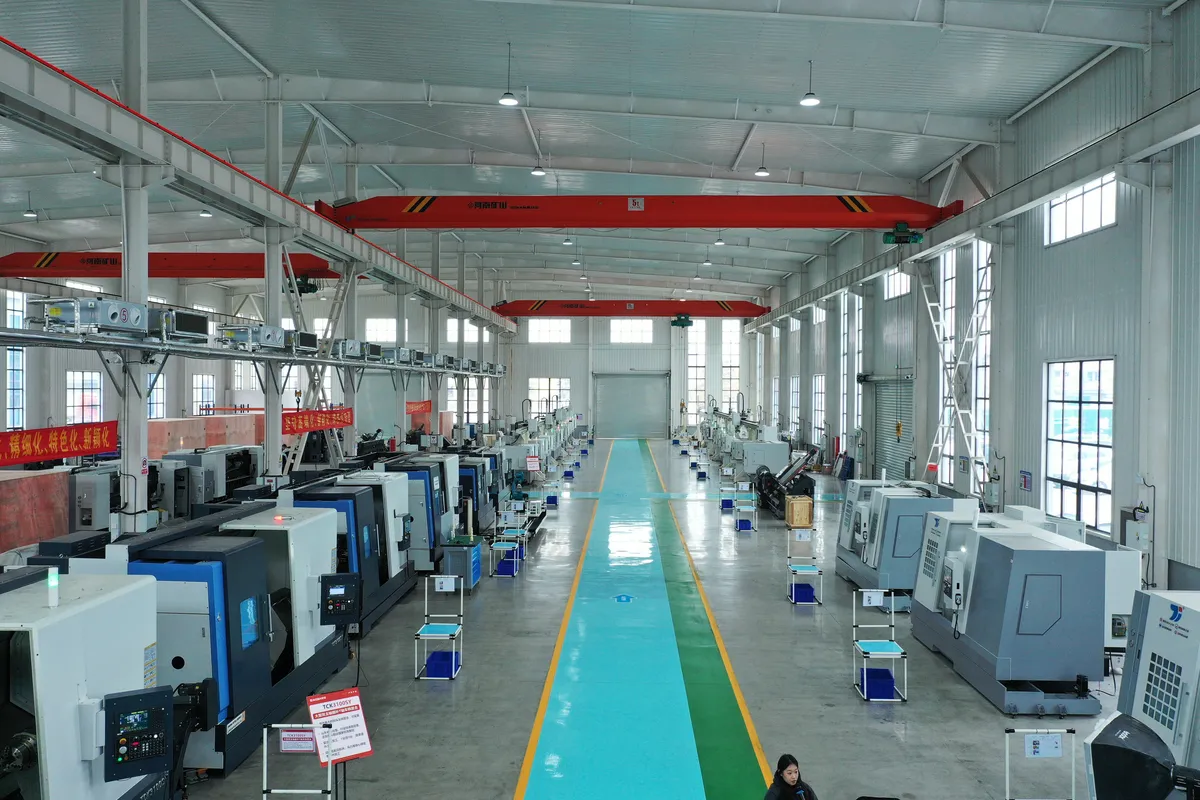
Handemo has been building machine tools in Tengzhou since 2008, across a plant of 220,000 square meters with more than 660 staff, and the stainless shaft programs we run here start the same way: prove the setup and the sequence on a trial shaft, then run the batch on that same setup. If you are looking at a shaft job, the drawing that tells us the most is the one with the critical surfaces marked - the journals, the seal seat and the datum the rest of the part is measured from.
Frequently Asked Questions
Which machine is best for turning stainless steel shafts?
For most short and medium shafts a slant bed lathe such as the TCK6050 is the right starting point, because chip control and quick setup matter more than size. Longer or heavier shafts need the rigidity of a machine like the TCK6350B with tailstock support, and shafts that also carry keyways, flats or cross holes are best run on a mill-turn machine so the turned and driven features are cut in one setup.
Why do stainless steel shafts come out tapered?
Almost always because the shaft deflected under the cutting force. A slender shaft pushes away from the tool, so the diameter is right near the chuck and wrong at the far end. Supporting the part with a tailstock or steady rest, balancing the passes and keeping the cutting load modest is what keeps a stainless shaft straight along its length.
How do you stop stainless from work hardening during turning?
By cutting under the hardened layer instead of on top of it. A sharp positive edge, a real depth of cut and a steady feed keep the tool shearing material rather than rubbing it. Light repeated passes over the same surface are what cause the surface to harden and the finish to fail.
Which stainless grades do you machine for shafts?
Mostly the austenitic grades 304 and 316 for pumps, valves and process equipment, along with 416 and 420 where wear resistance or hardness is needed, and precipitation-hardening grades such as 17-4PH where the part gains strength in heat treatment. Each one is planned differently - 416 free-machining stock behaves very differently from 316 in the same setup.
Can you machine a shaft that needs both turning and milling?
Yes. A mill-turn machine cuts the turned diameters and the keyways, flats or cross holes without the part leaving the spindle, which keeps those features concentric with the journals. Where only a small milled feature is needed, the operation can be run on a vertical machining center with the shaft located from the same datums.
Get a Stainless Steel Shaft Machining Plan
Tell us about the shaft - the grade, the diameters and length, the surfaces that have to stay concentric, whether it carries a keyway, spline or cross hole, and the batch size - and Handemo will recommend the right lathe or mill-turn machine and the process to go with it. Contact Handemo CNC | Email: sales1@handemocnc.com | WhatsApp: +86 135 6320 3038
Related reading: CNC Machining of Transmission Shafts and Case Study: Machining a Precision Transmission Shaft - two more looks at how shaft geometry, support and sequence decide the result.