Case Study: Machining a Transmission Shaft
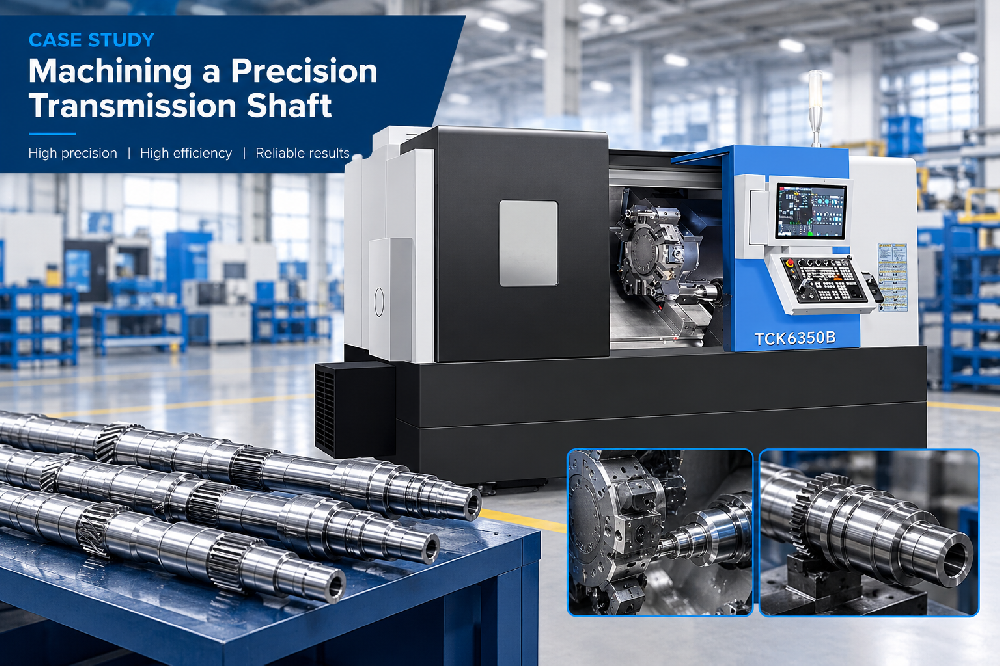
A transmission shaft has to be round, straight and consistent. It carries the load and the rotation of the whole drive, so if it is out of round or out of line, the bearing it runs in will suffer and the machine it belongs to will not last. This case study looks at how we machine one on a Handemo slant-bed lathe.
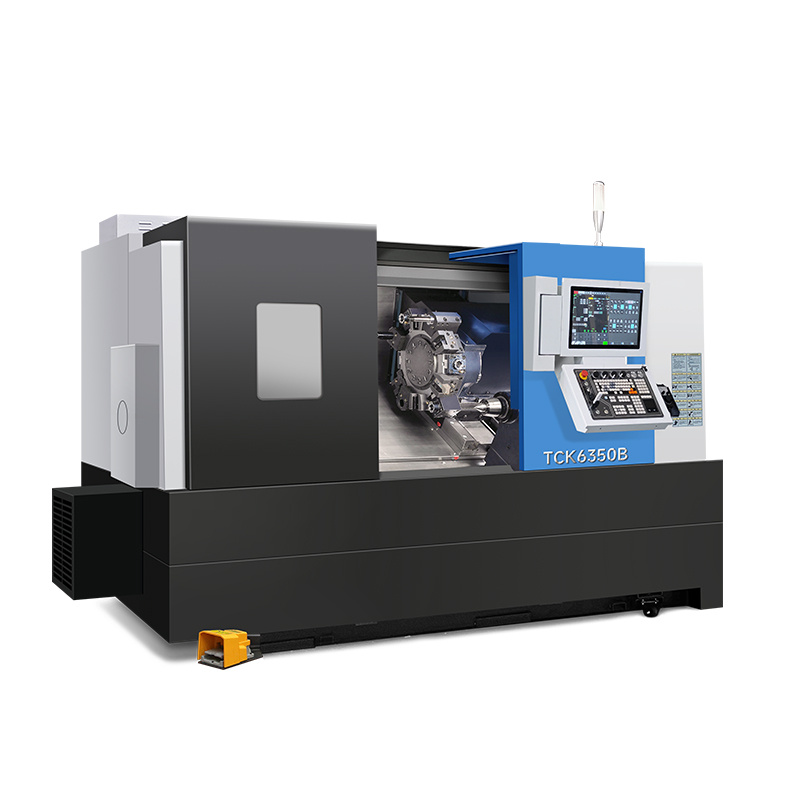
The Workpiece
The shaft is a stepped round part with several journals, a shoulder, and a set of splines or keyways. The customer needs the journals on a common axis and the shoulders square to it. A stepped shaft is a classic turning job, but the features have to stay true to the axis.
The journals are where the bearings sit, so they have to be round and true. The shoulders are where a gear or a collar seats, so they have to be square to the axis. If either is off, the shaft will not run well.
The Setup
We turn the part between centers so it runs true. A Handemo CNC slant-bed lathe holds the centers and cuts the journals and shoulders in one setup, keeping everything on one axis. Turning between centers is the standard way to hold a shaft true.
By turning between centers, the part is referenced to the centerline rather than to the outside of the blank. This keeps the journals and shoulders on the same axis, which is what the shaft needs.
Turning the Journals
The journals are turned to the size the print calls for, and they have to be round and consistent. We take a roughing pass to remove stock, then a finishing pass to bring the journal to size and finish. The finishing pass is light, so the journal stays round and does not whip.
We check the journal at the end of the run for roundness and size. If the tool wears, the journal size will drift, so we watch the tool.
Machining the Shoulders
The shoulders are machined square to the axis. A shoulder that is not square will let a gear or collar run off the axis. We face the shoulder and check that it is square to the journal.
For a shaft that runs on a bearing, a square shoulder is what seats the bearing correctly. If the shoulder is off, the bearing will sit at an angle and wear unevenly.
Splines and Keyways
If the shaft has splines or keyways, they are cut after the turning. A keyway holds a gear or a key, and it has to be in the right position relative to the splines. We cut the keyway with the shaft on the same axis so it lines up with the splines.
The position of the splines and keyways has to be consistent with the journals. If they are not, the gear will not time correctly with the shaft.
How a Slant-Bed Lathe Helps
A slant-bed lathe is a good fit for a shaft because the inclined bed is rigid and the chips fall away. The tool stays close to the work, and the part runs true between centers. This is what lets a shop turn a long, stepped shaft without it whipping or wobbling.
For a long shaft, the machine has to hold the part steady along its length. A rigid bed and a steady rest can help. This keeps the shaft straight while it is cut.
Quality Checks
Before the shaft leaves the machine we check the things that matter:
Journal size and roundness.
Shoulder squareness to the axis.
That the splines and keyways are in the right position.
Surface finish on the journals.
That the shaft is straight along its length.
These checks confirm the shaft is fit for the drive it belongs to.
The Result
Once the process is set, the shaft holds its journal alignment across the batch. The shaft work shows how a rigid lathe and a clean setup deliver the consistency a transmission part demands. Turning between centers and holding one axis is what makes it work.
If you machine shafts, spindles or other round parts, we are happy to talk through your work and suggest a machine. Use the contact form below and we will come back to you.