CNC Machining Machine Bases and Beds
A machine base is the part nobody photographs and everybody blames. It holds the column, the table and the slideways, and it decides whether the machine sitting on it can hold a cut or whether it rings and walks. What makes bases awkward to machine is not the tolerance on the drawing. It is the shape: a long, thin-walled casting with pockets and ribs, where the surfaces that matter are far apart and the part wants to move every time you unclamp it. This article covers how machine bases and beds are machined, the materials they are cast in, the machines that suit the work, and the sequence that keeps the guide surfaces and the mounting pads in the right relationship.
What a Machine Base Has to Do
A base is a foundation with machined surfaces on it. Depending on the machine, those surfaces are a set of slideways for a saddle or a column, a square face where the column bolts down, machined pads for the leveling screws, and drilled and tapped holes for the assemblies that sit on top. On a lathe bed the guide surfaces run the full length of the machine, so the bed has to be straight over a long distance and stay that way when the machine is loaded. On a machining center base the work is more concentrated, but the base still carries the column and takes the reaction from the cut.
Three things decide whether a base is usable. The guide surfaces or column seats have to be flat and parallel to each other. The mounting pads have to sit on one plane so the machine does not rock. And the whole part has to stay stable after it is unclamped, because a base that is straight in the fixture and bent on the floor is a base that has to be scraped or re-cut on site. The last point is where most of the trouble in this job lives.
Materials
Most machine bases are cast in grey iron. HT250 and HT300 grade irons machine cleanly, damp vibration, and hold their shape once they have been stress-relieved, which is the reason they have been the standard for machine tool structures for a century. Heavier machines and bases with thin ribs sometimes use ductile iron because it takes shock without cracking. Welded steel bases are common on special-purpose machines and on large one-off work, and they bring a problem of their own: the weld pulls the part out of shape, and the base has to be stress-relieved and rough-machined before any finishing cut is worth taking.
Two habits matter with these materials. The first is that a casting arrives with a hard skin and a lot of internal stress, so the first cut is heavy and the part moves after it. The second is that a base is long and open, so it turns with temperature and with clamping force. Time spent letting the part settle between roughing and finishing is not lost time on this job.
Machining a Base
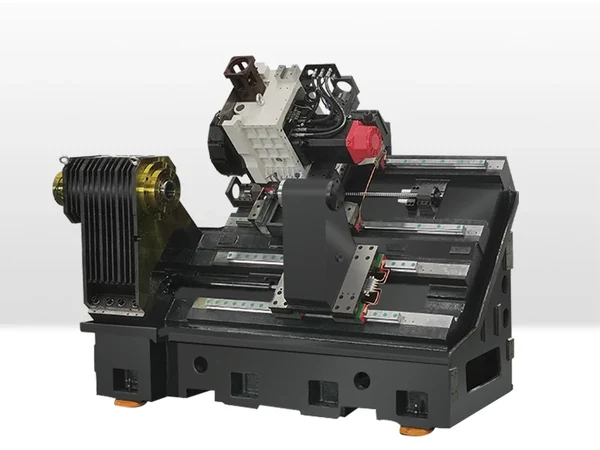
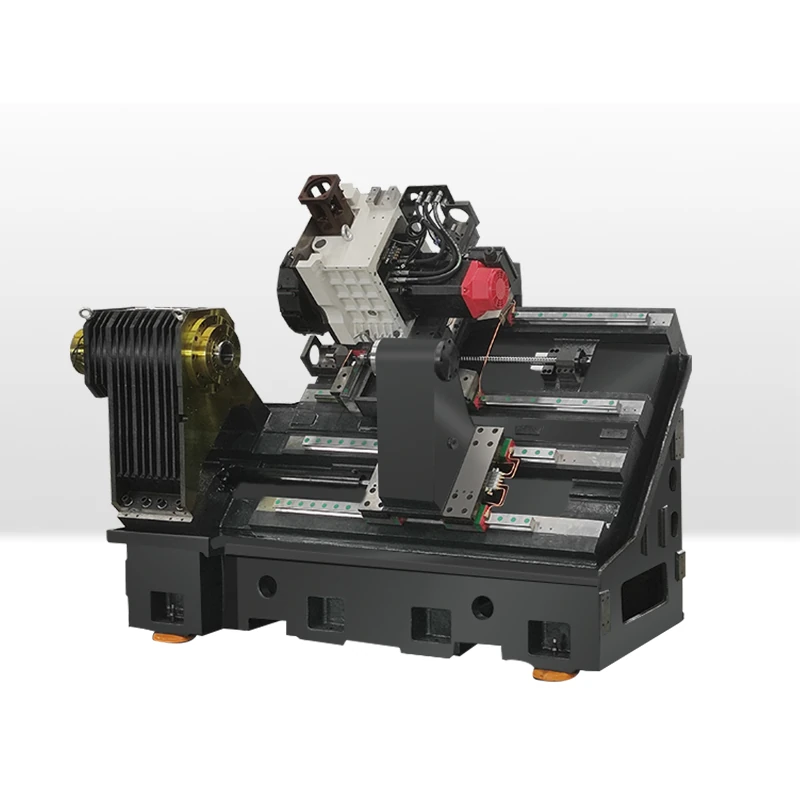
Bases are too big and too heavy for a standard vertical machining center, so they usually go onto one of two machine types. Long beds with continuous guide surfaces are cleaner on a long-travel machine where the whole length can be cut without re-positioning the part, and the high-precision heavy-duty machining center range is built for that class of work: a wide, heavy base under the column, and enough travel to face a guide surface in one pass rather than stitching it from several positions.
Where a base has features on more than one face, or where the same base is made in a batch, a horizontal machine earns its place. The part is presented to the spindle from more than one direction without being re-clamped, and the pallet system keeps the load and unload outside the cutting time. The HMC630-DT handles the mid-size castings in this family, and the multi-station models take the work when the volume justifies them. Round bases and flanged machine components are turning work instead, and those run on the TCK6350B heavy-duty slant bed lathe, where a large diameter and a heavy wall need a rigid machine under them.

Datum and Sequence
On a base, the datum is one of the machined surfaces, never the raw outside of the casting. The casting is drafted and it varies, so using the outside as a reference puts every subsequent surface somewhere the machine on top of it cannot reach.
The workable order runs like this. Rough-machine the main reference surface and the pads. Let the part settle. Finish the reference surface and use it as the datum for everything else. Cut the parallel guide surface or column seat from that datum, then position the pads, the leveling points and the hole patterns from the same reference rather than from the casting edges. Where a base has guide surfaces on both sides, they are cut in one setup wherever the machine allows it, because two surfaces cut in two setups are two surfaces that have to be re-referenced to each other.
Holding the Part Without Distorting It
The reason a base springs is the fixture. A base is a shell with ribs, not a solid block, and a clamp that presses hard enough to be safe also presses hard enough to close the opening and pull the guide surfaces out of line. Cut the surface in that condition and it comes out straight on the machine and bent on the floor.
We hold bases on machined pads with supports placed under the ribs, so the clamping load lands where the part is stiff and the walls are not squeezed. Clamp pressure is kept as low as the job allows, and the finishing cuts are taken with the part as close to free as the setup permits. Roughing and finishing are separated by a stabilising period so the heat from the heavy cut has somewhere to go before the surfaces that matter are finished.
Checks Before a Base Leaves the Machine
A base is checked as a structure, not as a list of dimensions. The guide surfaces are checked for flatness and for parallelism to each other. The pads are checked to sit on one plane, so the machine does not rock when it is leveled. The column seat or slideway is checked for squareness to the surface it locates against. And the whole part is measured with the clamps released and the base resting the way it will sit in the plant, because that is the only condition that describes how the finished machine will behave.
On a batch, the check that catches the most problems is a trial assembly or a master check against the mating part. That is the test that shows whether the surfaces are working together, which is the thing no single dimension on the drawing describes.
Frequently Asked Questions
What material are machine bases usually made from?
Grey iron is the standard, in grades such as HT250 and HT300, because it machines well, damps vibration and holds its shape after stress relief. Ductile iron is used where the base has to take shock or has thin sections that would crack in grey iron. Welded steel is common on large special-purpose machines and one-off work.
Why does a machine base move after machining?
Two reasons, usually together. A casting carries internal stress from cooling and from the heavy first cut, and it relaxes over the following hours. On top of that, a base is a thin-walled shell, so clamping force pulls it out of shape while it is held. The fix is rough-machining first, letting the part settle, holding it on machined pads with support under the ribs, and finishing with the clamps as light as the job allows.
Can a large base be machined on a vertical machining center?
Short bases with features on one face can be, provided the machine has the table size and the travel. Long beds with continuous guide surfaces are usually better on a long-travel machine, because the guide surface can be cut in one pass instead of being stitched from several positions. Bases with work on more than one face suit a horizontal machine, where the part is not re-clamped between operations.
Do you machine machine bases for other builders?
Yes. Handemo has been building machine tools in Tengzhou since 2008, across a plant of 220,000 square meters, and machine structures are the work the shop knows best. Send the base drawing with its guide surfaces, pads and hole patterns, the material and the batch size, and we will come back with a machine recommendation and a process sequence.
Get a Machining Plan for Your Bases
Send us the base or bed drawing - the guide surfaces, the pads and their flatness requirement, the column seat and hole patterns, the material and the batch size - and Handemo will recommend the right machining center, horizontal machine or lathe and the process sequence to go with it. Contact Handemo CNC | Email: sales1@handemocnc.com | WhatsApp: +86 135 6320 3038
Related reading: Machining Solutions covers the other large-part jobs we run, CNC Machining Guide for Gearbox Housings deals with the same datum and distortion problem on a cast housing, and VMC vs HMC explains when a part has enough sides to justify a horizontal machine.