Why Your CNC Machine’s Accuracy Starts with the Chuck
The Part Most Shops Overlook
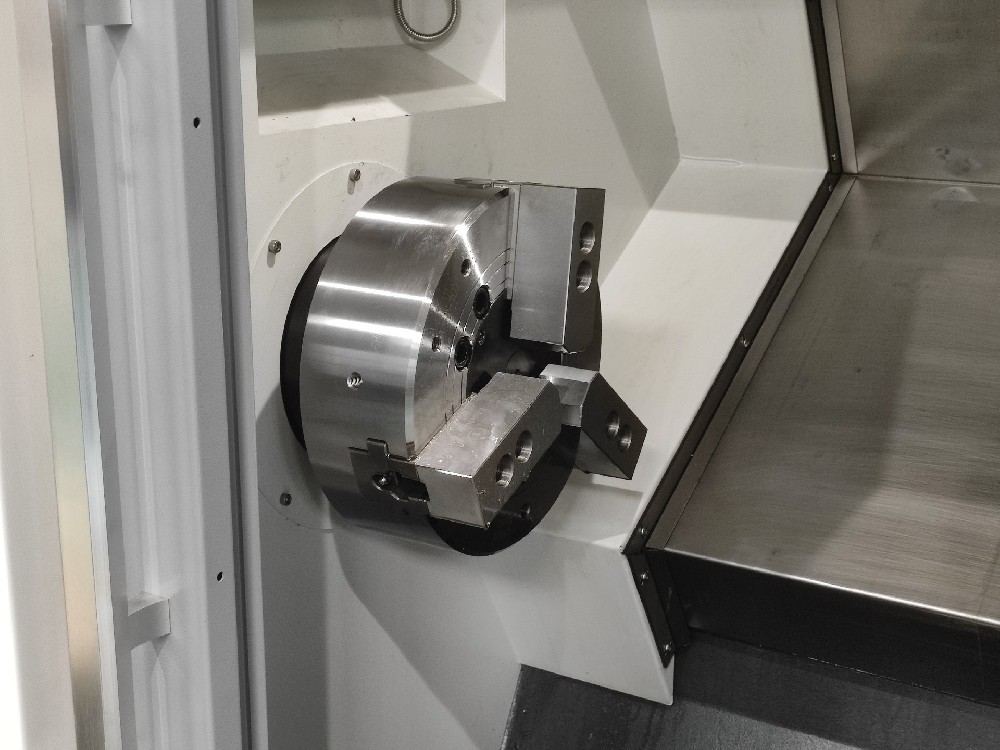
Walk into any machine shop and the big CNC gets all the attention. Spindle spinning, chips flying, the whole setup looks powerful. Almost nobody looks at the disc bolted to the front of the spindle.
That disc is the chuck.
It costs a fraction of the machine, yet it controls a large share of your accuracy and how steady the process runs. Experienced guys will tell you: if you want to know how a machine really performs, watch how the chuck holds.
Pick the wrong one and even a good CNC starts missing targets. Small variations in machining consistency can scrap a whole batch. Extra clamping time adds up fast across hundreds of parts. Uneven force sends reject rates up.
One automotive plant in China saw first-pass yield fall from 99.5% to 92% with no clear reason. Engineers changed tools, adjusted parameters, checked the machines for two weeks. Nothing fixed it. The chuck had worn after long high-load runs and lost a few microns of clamping accuracy. Those microns cost them tens of thousands in scrap.
This happens more often than people admit. Shops spend heavily on the machine and then fit the cheapest chuck they can find. They save a little up front and pay for it later in scrap and downtime.
Why Pneumatic Chucks Became the Default
A few years ago pneumatic chucks were mostly for high-end shops. Now they show up on new lines and on older machines being upgraded.
The reasons are simple.
Speed. A skilled operator needs more than ten seconds to tighten a manual chuck. Multiply that by a few hundred parts and you lose real cutting time. A pneumatic chuck clamps and releases in under a second. On a busy shift that can free up an hour or more.
Consistency. Manual force depends on who is turning the key. One operator tightens harder than the next. Dimensions drift. Pneumatic chucks use air pressure, so the force stays the same part after part. In batch work that shows up directly in yield.
Maintenance. Hydraulic chucks can clamp hard, but they have more seals and more points that wear. Pneumatic units are simpler, easier to keep running, and cost less over time.
Shops made the switch because the numbers worked, not because of marketing.
Domestic Chucks Have Closed the Gap
For a long time the default was imported brands. Good quality, high price. A set could run thousands of dollars, too much for many smaller shops.
That has changed. Domestic quality has improved while the price difference remains clear.
Handemo is one of the names that comes up often on the shop floor. The brand does not advertise much. Word of mouth does the work. “What chuck are you running?” “Handemo.” “I’ll try that.” That kind of talk spreads because people trust what actually holds parts day after day.
Three things stand out.
Accuracy that lasts. Many chucks are fine when new. The real test is after one or two years of daily use. Cheap ones start losing clamping accuracy within months. Handemo grinds the critical parts to tight tolerances. Users report that after three or four years the chucks still hold close to the original numbers. In production, steady accuracy usually matters more than peak numbers on day one.
Range. Bar work needs solid chucks. Through-hole work needs hollow. Round parts take three-jaw. Irregular parts need four-jaw. Handemo covers the common types — KS series three-jaw solid pneumatic, KL series hollow, four-jaw models. Sizes like 6-inch, 8-inch, 10-inch, 160, 200, 250 and 320 are usually in stock.
Price. Compared with imports, Handemo chucks often cost half or even a third. For most everyday jobs the performance is close enough that the price difference is hard to ignore.
Extreme high-speed or ultra-precision work may still favor imports. For regular production, domestic options already cover the need.
Four Practical Checks Before You Buy
New buyers often start with price and later wish they hadn’t. A few simple questions help.
Match the specs first. Size, clamping range and mounting must fit your machine and the parts you run. The wrong size cannot be fixed by any brand.
Solid or hollow? Solid for most bar work. Hollow when you need to feed long stock through the spindle. It depends on the job, not on which type is “better.”
Three-jaw or four-jaw? Round parts work with three-jaw. Square or odd shapes need four-jaw. The right setup keeps the part stable and the cycle short.
Look at total cost, not just the sticker. A cheaper chuck may save money on day one but lose accuracy faster, raise scrap and need replacement sooner. A better one costs more at the start, holds longer and produces less waste. The same logic applies to the machine itself.
Final Thought
Machining lives in the details.
The limit on a machine is often not the most expensive part. It is the one people ignore. The chuck is that part. It sits quietly and still affects precision, output and profit every shift.
Progress in manufacturing is not only about advanced chips. It is also about the basic pieces — chucks, bearings, seals. When those are made well, the whole chain gets stronger.
From manual to pneumatic, from imported to domestic, the change has been steady. Brands like Handemo have spent years improving accuracy, widening the range and bringing prices down.
Next time you walk the shop floor, take a second look at the chuck on the spindle. How it runs and how it holds is the result of a lot of careful work over time.
If you need chucks that match your Handemo lathes or other CNC machines, check the current options or contact the team for sizing and availability. Happy to help match the right one to the parts you run.