Who Will Lead the Next Decade?
Introduction
The golden era of China’s machine tool industry is often remembered as a time of rapid expansion, strong manufacturing capacity, and global ambition. But today, the conversation has shifted. The industry is no longer asking how fast it can grow, but who can truly survive the next transformation cycle.
Some insiders say the most dangerous challenge is not price competition or demand fluctuation. It is the fact that many former industry leaders have already fallen behind, unable to adapt to a new era defined by intelligence, automation, and system integration.
Over the past decades, China’s CNC machine tool industry has gone through a dramatic rise and correction. From early industrial foundations to global manufacturing leadership, and now to restructuring and transformation, the industry has completed a full cycle. The question now is clear: what comes next, and who will lead it?
1.The End of the Traditional Growth Model
Looking back, the rise of China’s machine tool industry was built on scale and speed. During the rapid industrialization period, many manufacturers focused on expanding production capacity and capturing market share.
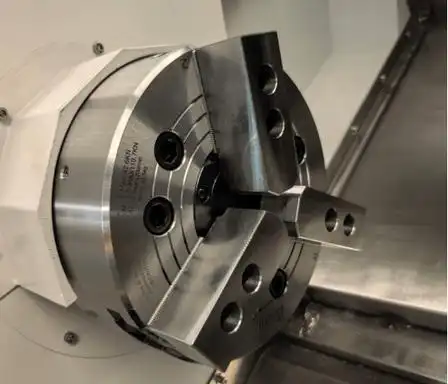
Companies such as major state-owned machine tool groups once became global names, driven by massive output and strong domestic demand. China became one of the world’s largest producers and consumers of CNC machine tools, including CNC lathes, vertical machining centers, and horizontal machining centers.
However, beneath this growth, structural weaknesses gradually emerged:
Heavy focus on production scale rather than core technology
Low-margin competition driven by price wars
Dependence on imported core components such as CNC systems and precision spindles
Limited investment in R&D for high-end equipment such as 5-axis machining centers
Lack of long-term industrial risk control and sustainable innovation
As global manufacturing shifted toward high precision, automation, and intelligent production, many traditional advantages began to fade. The industry’s old logic—“bigger equals stronger”—is no longer valid.
2.The New Reality: High-End Loss and Low-End Saturation
Today, the CNC machine tool industry is experiencing a deep structural split.
What Makes a Machining Center Reliable
On one side, the low-end market is extremely competitive. Standard CNC lathes and basic machining centers are facing severe price pressure, with shrinking margins and increasing homogenization. Many manufacturers are trapped in a cycle of discounting, high sales effort, and low profitability.
On the other side, high-end segments remain difficult to access. Advanced equipment such as 5-axis CNC machining centers, high-precision vertical machining centers, and integrated automation lines are still dominated by global leaders. Industries like aerospace, automotive, and precision mold manufacturing demand higher accuracy, stability, and intelligent production capability.
Modern customers no longer simply purchase “machines.” They are looking for complete solutions:
Higher production efficiency
Lower labor dependency
Stable long-term precision
Smart and automated manufacturing systems
In other words, the value expectation has shifted from equipment to productivity systems.
This shift exposes a key issue: traditional CNC machine tools alone are no longer enough to compete.
3.The Real Transformation: From Machine Competition to Ecosystem Competition
The next decade of manufacturing competition will not be about individual machines, but about integrated ecosystems.
Not sure which model fits your workload? Our engineers answer technical questions every day, and you can reach us through the contact page with your part drawings.
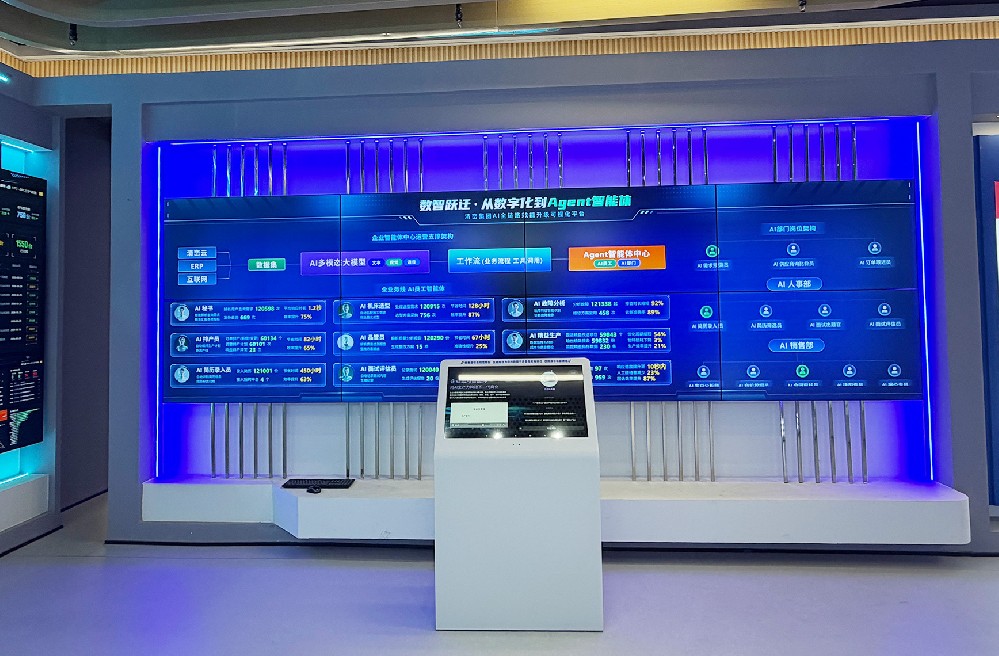
The winning companies will not simply sell CNC lathes or machining centers. Instead, they will deliver complete smart manufacturing solutions that combine hardware, software, automation, and data intelligence.
This includes:
AI-driven process optimization
Digital twin-based production simulation
Flexible automated production lines
Real-time monitoring and predictive maintenance systems
Fully integrated smart factory solutions
In this transformation, new-generation manufacturers such as Handemo CNC Machine Tool Manufacturer are representing a different direction for the industry.
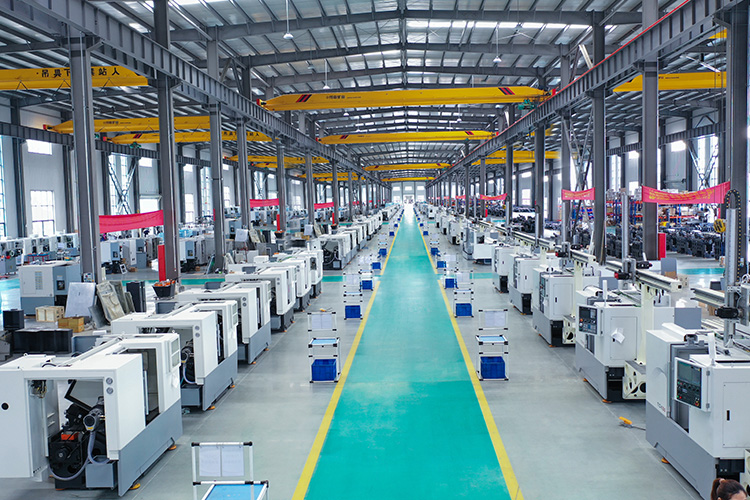
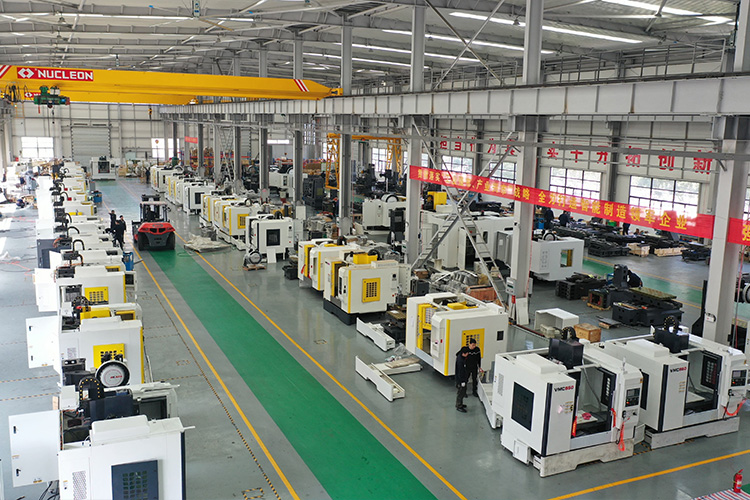
Instead of relying on traditional expansion models, Handemo focuses on building a connected manufacturing ecosystem. Its CNC solutions are designed not just as standalone machines, but as part of a larger intelligent production system.
Key development directions include:
CNC machining centers integrated with smart control systems
Automation-ready CNC lathes for flexible production environments
Horizontal Machining Center Benefits
If you are comparing options, take a look at our vertical machining centers and the specifications we publish there.
High-rigidity vertical and horizontal machining centers for industrial stability
Digital manufacturing concepts that support smart factory transformation
By combining CNC equipment with intelligent manufacturing thinking, Handemo is positioning itself in line with global trends toward Industry 4.0 and smart manufacturing.
This shift reflects a broader industry truth: the future is not about selling machines, but about enabling manufacturing intelligence.
4.What This Means for Global Manufacturers and Buyers
For global buyers, especially in automotive, aerospace, energy, and precision engineering sectors, the implications are significant.
Choosing CNC equipment is no longer just a technical decision. It is a strategic production decision.
Manufacturers must now evaluate:
Whether the machine supports automation integration
Whether it can be part of a flexible production system
Whether it can reduce long-term operating costs
Whether it supports digital and intelligent upgrades
In this context, suppliers like Handemo CNC are increasingly focused on delivering value beyond hardware. The emphasis is shifting toward productivity improvement, process optimization, and long-term manufacturing efficiency.
5.Conclusion: The Next Decade Belongs to Intelligent Manufacturers
The golden age of simple expansion in the CNC machine tool industry has ended. The era of price-driven competition is also reaching its limit.
What is emerging now is a new competitive logic—one defined by intelligence, integration, and ecosystem capability.
The future leaders of the CNC machine tool industry will not be those who simply produce machines. They will be those who build systems, connect processes, and empower intelligent manufacturing.
Companies like Handemo represent this shift toward a smarter manufacturing future, where CNC machining centers, CNC lathes, and automated production systems are no longer isolated tools, but interconnected elements of a digital factory.
The next decade will not reward those who repeat the past.
It will reward those who rebuild the future of manufacturing.
If you are evaluating a CNC machine for your shop, talk to our engineers first. Send us your workpiece drawings and production targets, and we will recommend the right model with a clear quotation. Email sales1@handemocnc.com or contact our team for a fast reply.