CNC Machining EV Motor Housings: Process and Machines
An EV motor housing does not look like a hard part - until you stand next to one. It is a die casting the size of a small toolbox, with thin walls, a big bore that has to seat the stator, two machined faces that bolt to the gearbox and the inverter, and thirty or more tapped holes around the rim. The material is soft aluminum, which sounds easy, but soft aluminum is exactly what moves when you unclamp it. Shops that machine these housings fight the same three problems: distortion after the part leaves the fixture, chatter on the thin sections, and keeping a large bore round when the casting relaxes. This article covers how Handemo CNC machines EV motor housings - the materials, the machines we recommend, and the process sequence that keeps housings within drawing.
The Part: Materials and Geometry
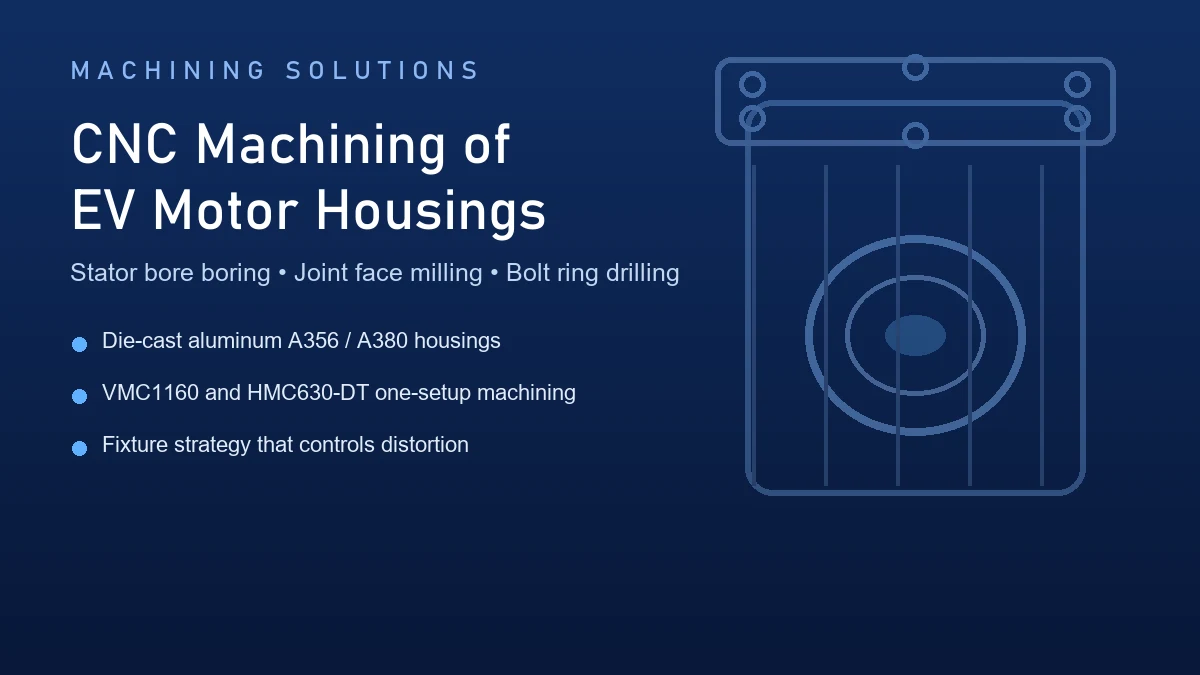
An electric vehicle motor housing does two jobs. It carries the stator and rotor in precise alignment, and it connects the motor to the rest of the drivetrain through machined faces. The stator bore dominates the part - a large, usually blind or stepped bore machined from a die casting. Around it sit the gearbox mounting face, the inverter face, cooling passages and a ring of fastener holes. Because the housing is the structural backbone of the drive unit, its machined faces and bore determine how quietly the motor runs and how long the bearings last.
Aluminum die castings - A356 and A380 families are the most common - make up nearly all passenger-vehicle housings. Die casting gives thin, consistent walls and complex cooling jackets in one shot, but it also brings the machinist problems: cast skin with hard spots, porosity that shows up in the bore wall, and internal stresses that release as material comes off. Commercial and industrial motor housings are often gray iron or aluminum sand castings, which machine differently again - iron is forgiving and stable, while sand-cast aluminum needs careful first cuts through the scale. We machine all of them, and the process planning starts with the casting quality, not the machine.

Recommended Machines for EV Motor Housings
For prototype and small-batch housing work, a VMC1160 vertical machining center is our usual starting point. The stator bore, the gearbox face and the bolt ring can all be machined in one setup, which is what keeps the bore square to the faces. The VMC1160 has the work envelope and table strength for housings up to medium passenger-vehicle size, and swapping between housing variants in a batch is simply a fixture change.
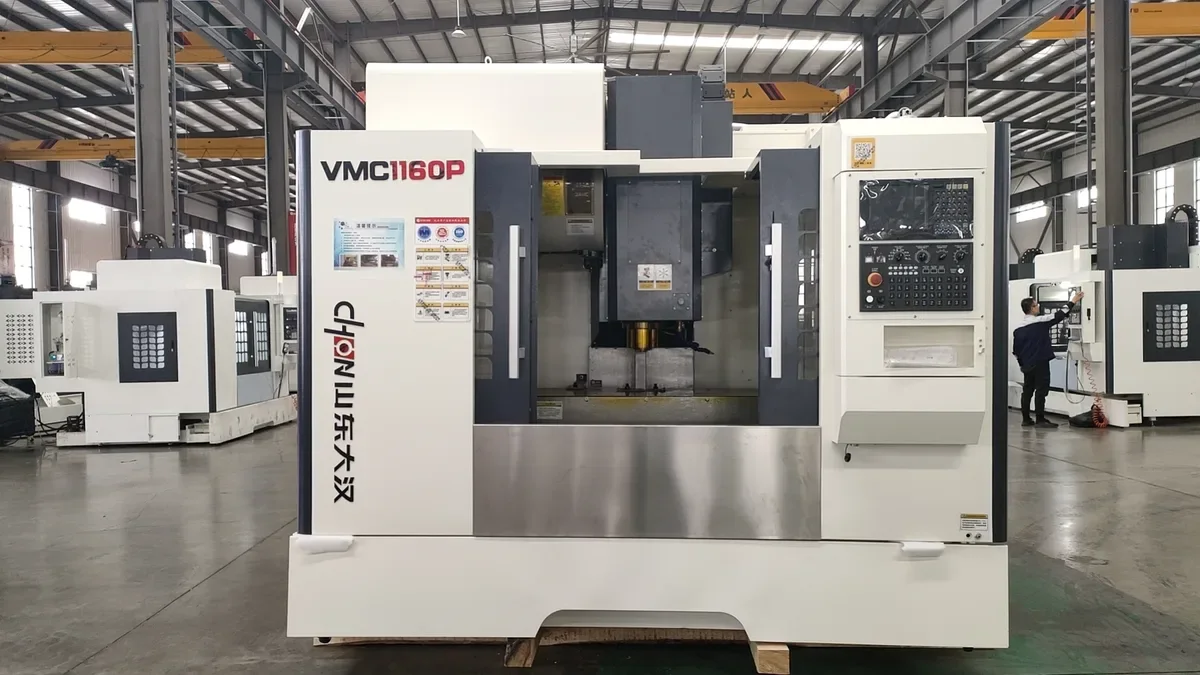
Once volumes climb or the housing needs machining on several faces - the gearbox side, then the inverter side - a HMC630-DT horizontal machining center earns its keep. Its rotary table indexes the part so the spindle reaches multiple faces in one clamping, and chips fall away instead of sitting in the bore. For large traction-motor housings and truck applications, the VMC1370 heavy-duty vertical machining center carries the extra table load and handles deeper cuts through the heavier castings. Whatever you select from our vertical machining center range, the rule is the same: machine the bore and the faces it relates to without unclamping the part between them.
Machining the EV Motor Housing: Process Points
Fixture the casting, not the finished shape
Aluminum housings spring when you unclamp them, so the fixture has to hold the casting the way it will sit in service - supported under the bearing areas and the bolt ring, never just clamped across the middle of a thin wall. We use fixtures that locate off the casting datum points first, machine a reference face, then re-locate off machined surfaces for the rest of the operations. Trying to hold a thin-walled casting hard against a flat table is the fastest way to cut a housing that looks right on the machine and is out of shape on the CMM.
The stator bore is the reference
The stator bore gets machined first or second, and everything else is positioned from it. Bore sizing is done with a rigid boring bar, short overhang, and light finishing passes - a long bar in a soft aluminum bore is a recipe for taper and chatter marks. If the casting has porosity near the bore wall, we bring it up before machining so the customer can decide between welding, impregnation or a revised casting before we cut a hole that cannot be moved.
Faces, bolt rings and cooling connections
The gearbox and inverter faces are machined in the same setup as the bore where possible, so face flatness and bore squareness are controlled together. Bolt holes around the rim are drilled and tapped from the same datum; a spot drill first keeps the tap drill from walking on a curved or as-cast surface. Cooling connections are usually drilled and tapped at an angle or into blind pockets - the kind of feature that needs a program check and a trial part before production runs, not a guess on the floor.
Chip control inside a closed housing
Blind bores and angled coolant ports trap chips, and a chip left in a cooling passage is a warranty claim waiting for a customer. Through-spindle coolant helps clear deep holes, and every tapped hole that breaks into a cavity gets a cleaning step before the housing moves to assembly. On horizontal machines, gravity does most of this work for you - another reason high-volume housing shops run HMCs.
Let the casting settle before finishing
Die castings release stress as material is removed. For housings with tight functional requirements, we rough the bore and faces, let the part sit - sometimes overnight in the fixture - then finish in a second pass. It adds a day to the schedule and saves weeks of field complaints. It is the kind of step that only shows up in the process sheet of a shop that has actually machined these parts.
Quality and Consistency
Motor housing buyers reject parts for out-of-round stator bores, faces that rock on the gearbox joint, and tapped holes that fail assembly. Those faults come from moving the part between operations, long tool overhangs, and clamping a thin-walled part as if it were a block of steel. Our approach is a fixture that supports the casting, a process that machines related features in one clamping, and a trial part before the batch runs. When the first housing and the five-hundredth housing go through the same fixture and the same sequence, the customer gets consistency they can build a production line around.
Frequently Asked Questions
What CNC machine is best for EV motor housings?
For prototype and small-batch work, a vertical machining center such as the Handemo VMC1160 machines the stator bore, mounting faces and bolt ring in one setup. Higher volumes or housings needing several machined faces suit the HMC630-DT horizontal machining center, and large traction housings fit the VMC1370 heavy-duty model.
Do you machine die-cast aluminum housings with thin walls?
Yes. Thin-wall die castings are handled with fixtures that support the casting in service position, controlled cutting on the wall sections, and a rough-then-finish sequence that lets the part settle between passes. We also flag porosity or casting defects to the customer before machining critical bores.
Can you support prototype to production volumes?
We do. A customer can start with a single trial housing to validate the process and fixture, then scale to batch production on the same setup. Send the housing drawing, casting source and annual volume, and we will recommend the machine, fixture approach and process sequence - and quote options such as through-spindle coolant and chip conveyors that suit housing work.
Get an EV Motor Housing Machining Plan
Tell us about your housing - material, size, casting quality, machined features and batch size - and Handemo will recommend the right machining center and process. Contact Handemo CNC | Email: sales1@handemocnc.com | WhatsApp: +86 135 6320 3038
Related reading: CNC Machining Hydraulic Valve Bodies and CNC Machining Flange Bearing Housings - more block-style parts where bore position and face geometry decide the result.