CNC Machining Guide for Hydraulic Valve Bodies
A hydraulic valve body is one of the most common workpieces a machine shop has to make. It is a block that routes pressurized fluid through ports, so the main job is holding the port positions and the passages consistent from part to part. A valve body might be a simple two-port block or a multi-section manifold with dozens of drilled passages. Here is a practical guide to machining valve bodies, the machines that suit them, and the process points that keep a batch repeatable.

What a Valve Body Needs
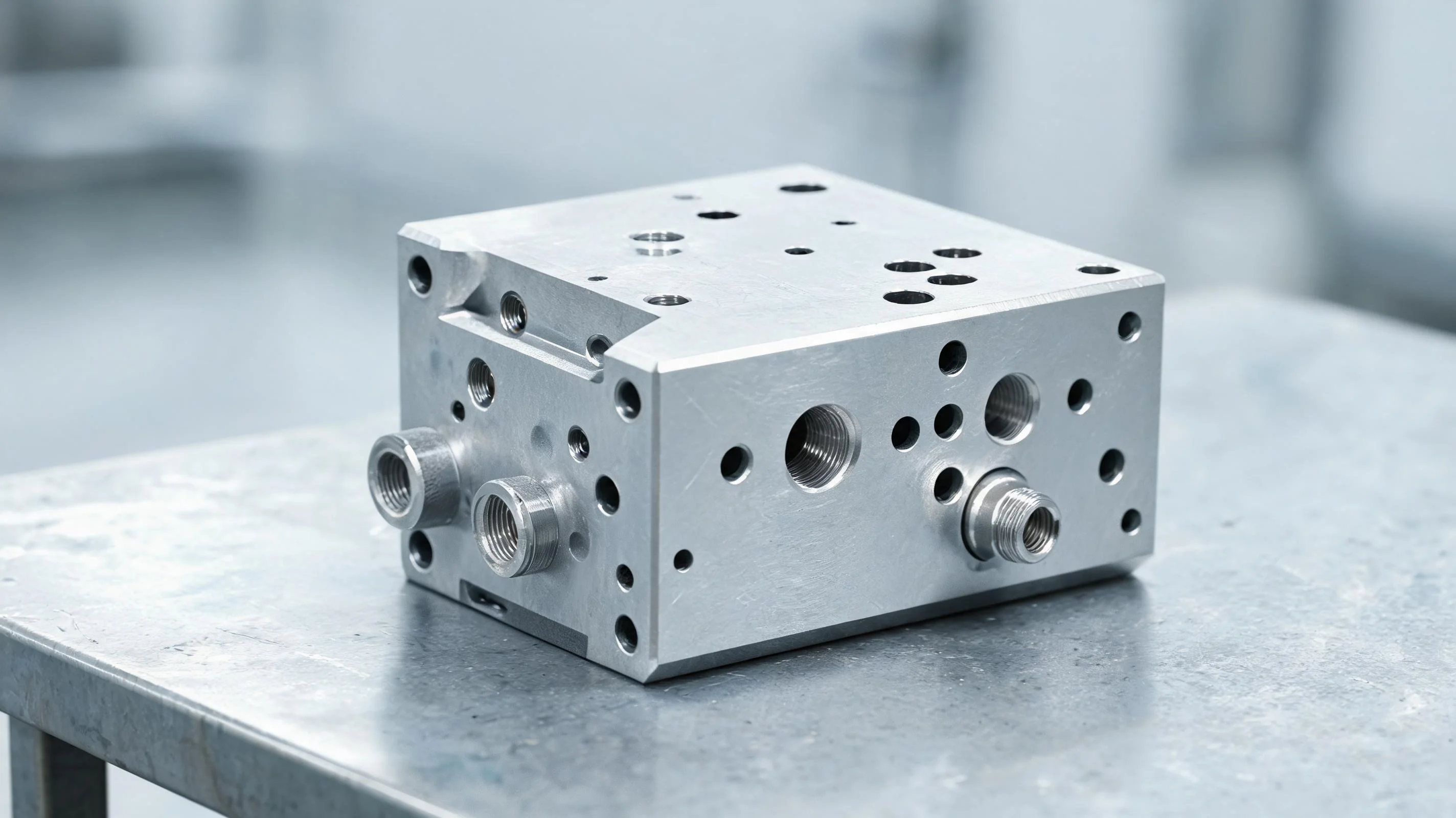
Most valve bodies are cast aluminum or ductile iron. The machining calls for flat faces, through ports, tapped ports and O-ring grooves. The critical requirement is that the ports line up with the passages and that the sealing faces stay flat and clean. Because a valve body has features on several sides, the part usually needs multiple setups, or a machine that can index the workpiece.
The ports are what make a valve body a valve body. They control where the fluid goes, and they have to be in the right place at the right angle. If a port is off, the valve will leak or move fluid the wrong way. So the machining is really about holding the geometry of the passages.
Choosing a Machine for Valve Bodies
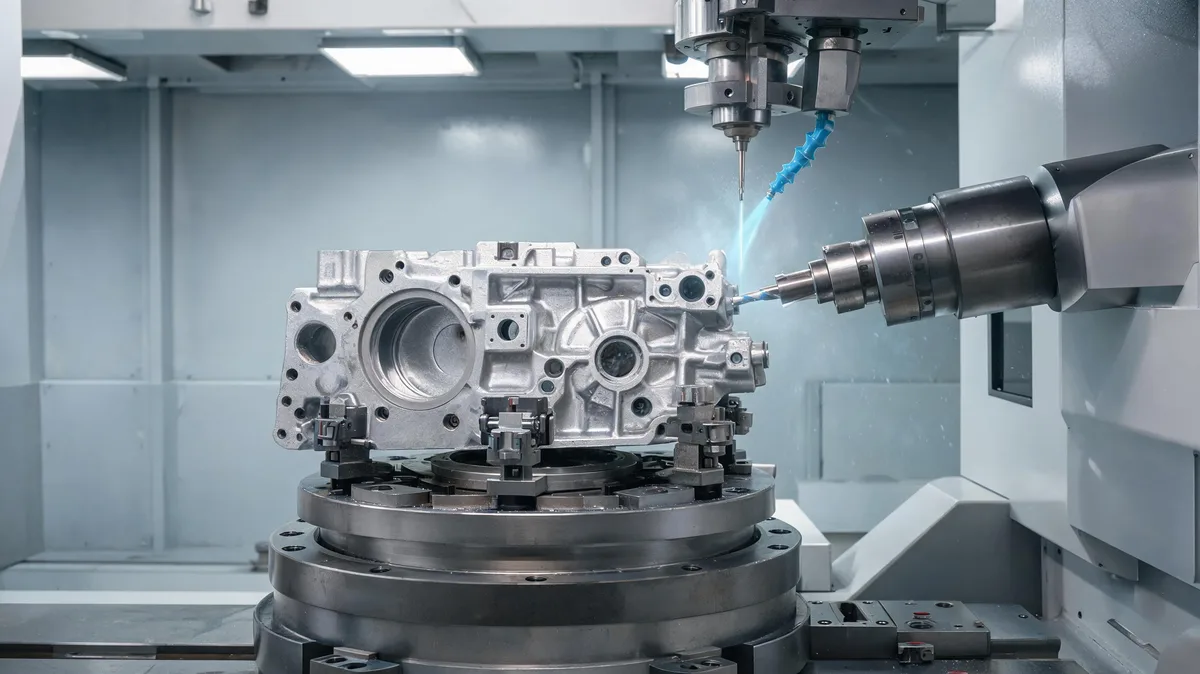
For a valve body, a machining center with a fourth axis is a strong fit, because it lets you rotate the part to reach the side ports in one program. The Handemo VMC1160 handles medium valve blocks. For larger hydraulic manifolds, the HMC series delivers the rigidity and pallet work that raises throughput on high-volume runs.
The machine needs to hold position across the full travel and handle both drilling and tapping. A valve body has many small holes, and they all have to be in the right place. A machine that repeats well is what makes the difference.
Establishing a Datum
As with any prismatic part, the datum sets the reference. We start with the largest flat face as the primary datum and square the part to it. From there we machine the face that the manifold seals against, then the ports that are drilled into it.
Holding the datum is critical because the ports are referenced to it. If the datum moves, every port moves. So we set the datum once and we keep the part on it through every operation.
The Machining Sequence
The sequence for a valve body usually runs like this:
- Machine the largest flat face as the datum.
- Machine the sealing face that the manifold joint sits on.
- Drill and ream the through ports.
- Tap the threaded ports.
- Cut the O-ring grooves on the faces.
Each step builds on the last. The ports are drilled after the face is established, so they sit square to it. The grooves are cut last so they are clean and do not pick up chips from the drilling.
Keeping the Ports Clean
The biggest issue in a valve body is chips. The drilled passages run deep into the block, and if a chip is left in a passage it can end up in the valve and stop it working. We blow the passages clean and we inspect them before the part leaves the machine.
We also watch the edges of the ports. A burr on a port edge can catch and hold a chip, or it can cut the O-ring. Deburring is a small step but it matters.
Flatness and the Sealing Face
The sealing face has to stay flat and clean because it meets another face and holds pressure. If it is not flat, fluid will bypass the seal. We machine the face with a stable cut and we take a finishing pass only after the part has settled.
We leave a small allowance and take a light finish. This keeps the face flat and gives a clean surface for the seal.
Quality Checks
Before a valve body leaves the machine we check the things that matter:
- Port position and angle against the datum.
- Flatness of the sealing face.
- Thread quality in the tapped ports.
- That the passages are clean and free of burrs.
- O-ring groove dimensions and position.
These checks turn a batch of blocks into a batch of usable valve bodies.
Thinking About Your Valve Bodies
If you machine valve bodies, manifolds or similar hydraulic blocks, the same principles apply. Establish a clean datum, machine the ports square to it, keep the passages clean, and finish the sealing faces after the part settles. A machine that repeats well will serve you best.
If you are choosing a machine for valve work, we are happy to talk through your parts and suggest a fit. Use the contact form below and we will come back to you.