Deep-Hole Boring on a Machining Center
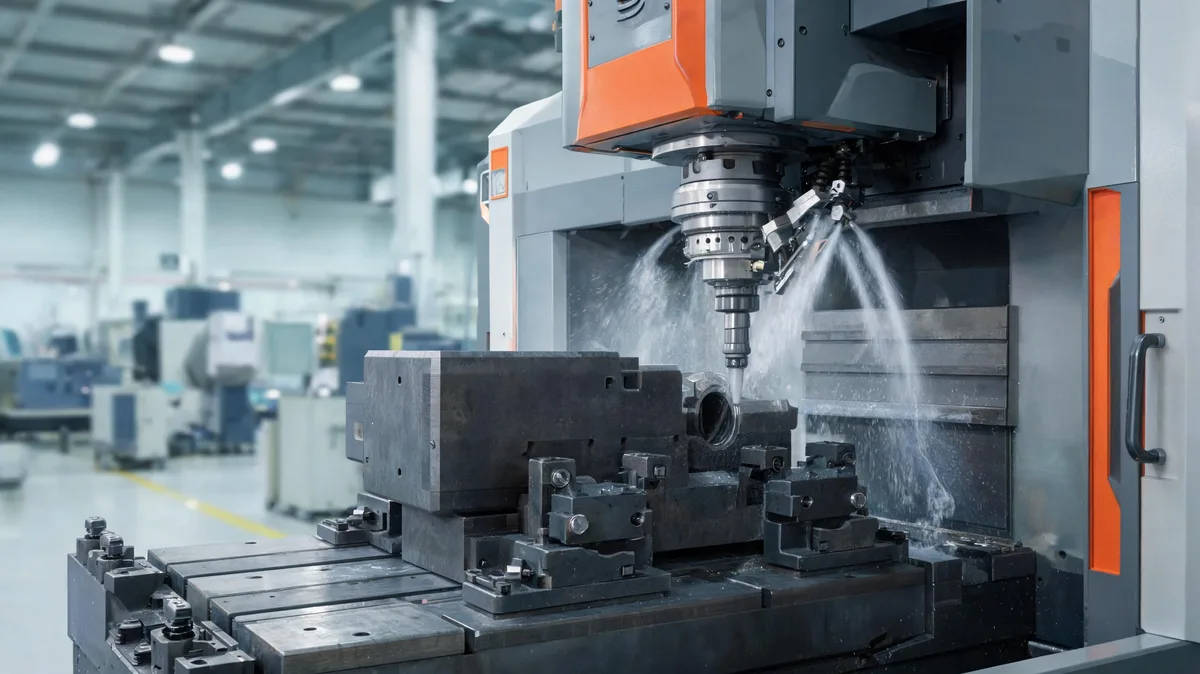
Deep-hole boring is one of the harder operations in a machine shop. The tool has to reach deep into the part, keep the hole straight and avoid vibration, all while the workpiece is clamped and the chips are trying to pack into a narrow passage. This case study looks at how we machine a deep hole on a Handemo horizontal machining center, and why a horizontal machine is often the right tool for the job.

The Workpiece
The part in this case is a large steel block that needs a deep through-hole for a fluid passage, plus several cross-ports that intersect it. The customer needs the hole straight and the ports to line up at depth. A bent or wandering hole would make the passage useless, and a cross-port that does not meet the main hole would not function.
Deep holes are challenging because the tool is long and thin. A long tool is not rigid, so it can wander, chatter or break. The deeper the hole, the more the tool is unsupported, and the more careful the process has to be.
Why a Horizontal Machine Helps
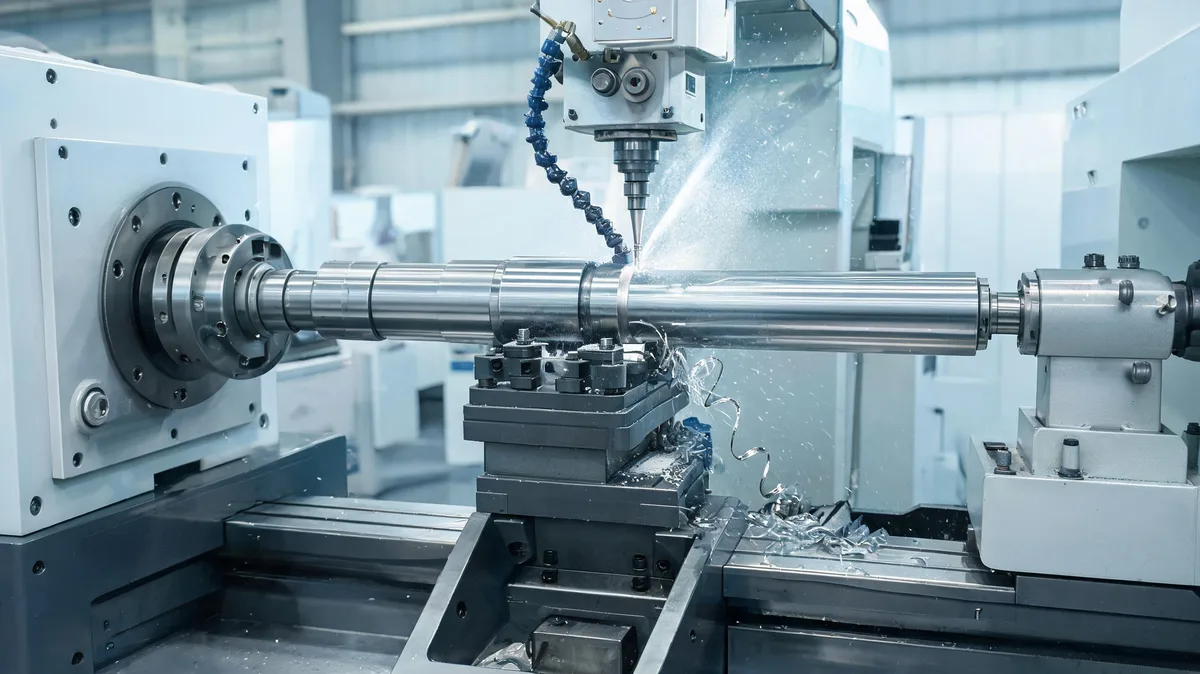
On a horizontal machine the spindle faces the side of the work, so the tool can run the full length of the hole without the workpiece getting in the way. The part is clamped so that the hole axis is level, and the spindle comes in from the side. This lets the tool and the coolant reach the cut without fighting gravity.
The horizontal arrangement also lets chips fall out of the hole as the tool cuts, rather than packing in at the bottom. Chip clearing is one of the hardest parts of deep-hole work, and a horizontal machine makes it easier.
The Setup
We clamp the part level and align the hole axis with the spindle. A stable setup is critical - if the part moves at all, the hole will not be straight. We use a fixture that locates the part firmly and supports it along its length.
We also set the tool up so it is as short and rigid as the hole allows. For a deep hole, we may use a gun drill or a long drill with a steady feed. The key is to keep the tool from wandering, which means a rigid spindle, a steady feed and a hole that starts accurately.
Holding the Hole Straight
The hardest part of deep-hole work is keeping the hole straight. A long tool will drift if it is not supported, and the drift shows as a hole that is not true. We control this with a steady feed, a sharp tool and a pilot hole that starts in the right place.
We also check the tool for wear. A worn drill or boring bar will start to wander. Replacing the tool before it loses its edge keeps the hole straight across the batch.
The Cross-Ports
After the main hole is bored, we drill the cross-ports that intersect it. These have to meet the main hole at the right angle and the right depth. If a cross-port is off, it will not connect with the passage.
We locate the cross-ports from the same datum as the main hole, so they reference the same point. This keeps them consistent with the passage and avoids any mismatch at depth.
Coolant and Chip Control
Coolant does the heavy lifting in deep-hole work. It keeps the tool cool and flushes the chips out of the hole. If the coolant is not reaching the cut, the tube can jam and the chips will re-cut, which spoils the surface and wears the tool.
We use a high-pressure coolant through the tool where the hole is deep, so the chips are pushed out instead of packing in. This is what keeps a deep hole clean and the tool cutting well.
Quality Checks
Before the part leaves the machine we check the deep hole against the requirements:
- Hole straightness and position against the datum.
- That the cross-ports meet the main hole at the right depth.
- Surface finish inside the bore.
- That the hole is free of chips and burrs.
These checks confirm the passage is fit for purpose.
Why the Right Machine Matters
The horizontal arrangement makes the deep-hole operation far more stable than it would be on a vertical machine, because the tool runs level and the chips fall away. For a deep hole in a large part, that stability is what keeps the hole straight and the process repeatable.
If you machine deep holes, blocks or large castings, a horizontal machining center is worth considering. We are happy to talk through your parts and suggest a setup. Use the contact form below and we will come back to you.