VMC vs HMC: How to Choose a Machining Center
Choosing between a vertical machining center (VMC) and a horizontal machining center (HMC) is one of the first decisions a shop makes. The two are built for different jobs, and picking the wrong one can mean idle spindles or expensive setups. This guide gives a practical side-by-side so you can decide which one fits the work you actually run, rather than going with the machine that looks familiar.

What a Vertical Machining Center Is
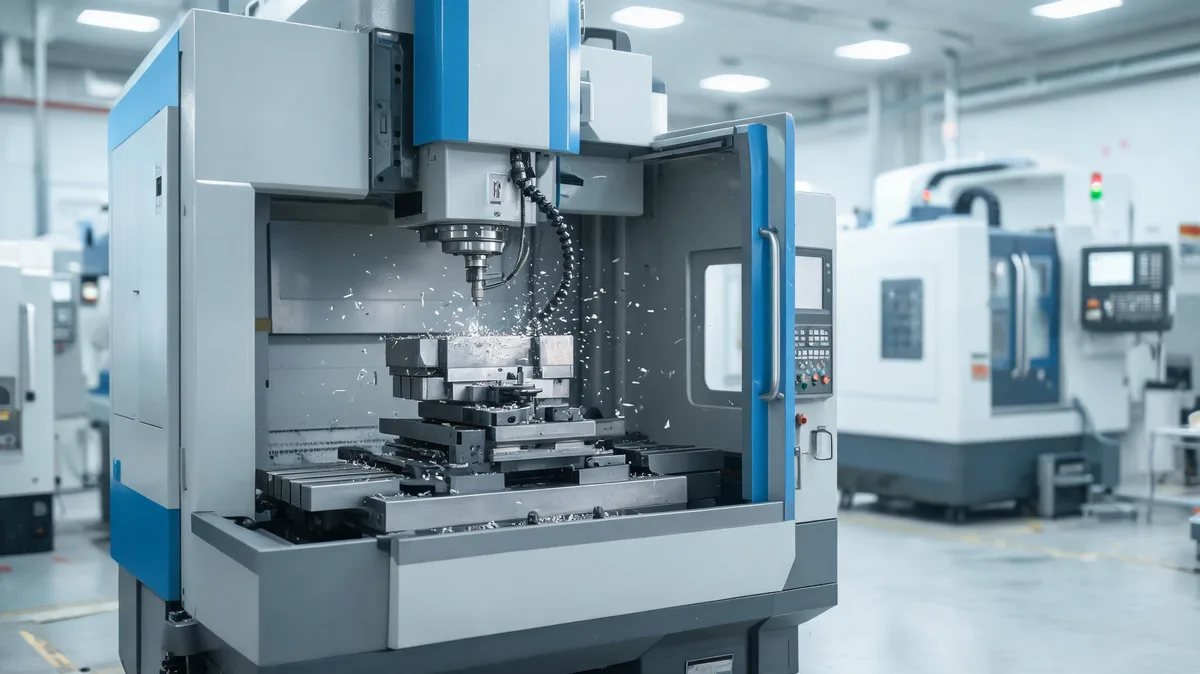
A vertical machining center has the spindle facing down over the table. The tool points at the workpiece from above, so it is the natural choice for flat plates, dies, molds, brackets and anything that needs face milling, drilling and tapping from the top. A VMC is simpler to set up, costs less, and is very familiar to most operators.
Because the spindle comes down from above, a VMC is easy to load and to see. The operator can watch the cutting and reach the part without much trouble. That makes it a very approachable machine for a shop that is just starting to do its own machining, or for a job shop that runs a wide mix of parts.
What a Horizontal Machining Center Is
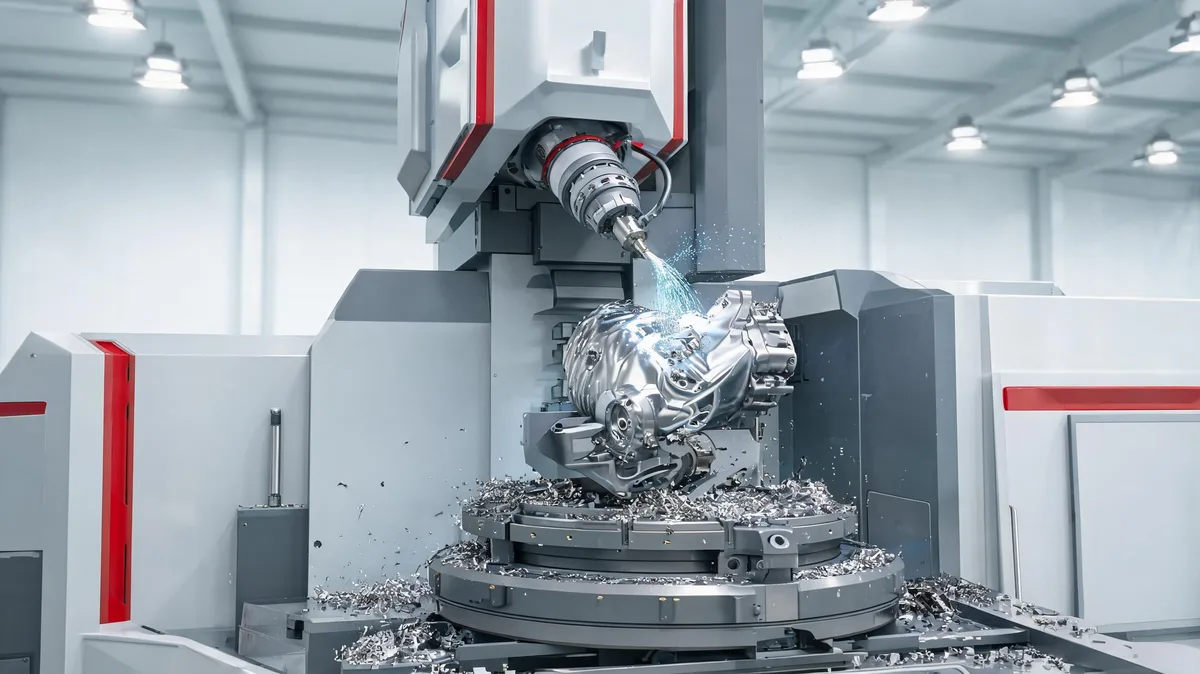
A horizontal machine has the spindle parallel to the table, so the tool comes in from the side. Chips fall away from the cut instead of piling up on the part, which helps in deep pockets and heavy cuts. The part can be a box, a manifold or a casting that needs work on several sides.
The real strength of an HMC is that the workpiece can be indexed. With a pallet system or a fourth axis, the machine can rotate the part so the spindle reaches several faces in one sitting. This is what makes an HMC productive on high-volume runs - it keeps the spindle cutting while the operator loads the next part.
How the Two Differ
The spindle orientation drives most of the difference. A VMC has the tool working down onto a horizontal surface. An HMC has the tool working sideways into a part that can be rotated. That single change affects chip clearing, how many faces you can reach in a setup, and the cost of the machine.
In practice, this means:
- A VMC is better for flat work, dies, molds and one-offs.
- An HMC is better for boxes, manifolds and multi-face castings in volume.
- A VMC is usually cheaper and faster to set up.
- An HMC is more expensive but more productive when you run many identical parts.
Where a VMC Wins
A vertical machining center is the more versatile choice for a job shop. If your work is mostly flat shapes, dies, molds and brackets, a VMC covers it well. It is easy to program, easy to set up and easy for an operator to learn. For toolroom work and one-offs, a VMC is the fastest way to get a part done.
If you are not sure what kind of work the shop will run next month, a VMC is the safer bet. It will machine almost anything a small shop makes, and it does not need a pallet system or a rotary axis to be useful.
Where an HMC Wins
A horizontal machining center earns its cost when you machine many identical parts with features on several faces. The pallet system lets one part cut while the operator loads the next, so the spindle is not waiting. The rotary index lets one setup cover several sides, which removes handling time.
If a part is a box, a housing or a manifold that needs work on three or four sides, an HMC can do it in fewer setups than a VMC. On a high-volume run, that is where the throughput comes from. The machine costs more, but it pays for itself with the time it saves.
The Trade-Offs at a Glance
The choice comes down to what you make and how much of it you make.
- Versatile toolroom and one-offs: VMC.
- High-volume boxes and manifolds: HMC.
- Lower upfront cost: VMC.
- Lower cost per part on long runs: HMC.
There is no right answer for every shop. There is only the right answer for the work you run.
How to Decide
Start by listing the parts you make most. If they are mostly flat, a VMC1160 is a solid all-rounder that handles plates, dies and molds. If they are boxes and castings with features on several sides, a HMC series will raise your throughput.
Also consider volume. A single part a week does not need a pallet system. A hundred parts a week might. Match the machine to the workload, not to what the brochure sells.
Factor in Floor Space and Budget
An HMC is often a bigger machine with a pallet changer, which takes floor space and a larger budget. A VMC is more compact and easier to fit into a small shop. If floor space is tight or the budget is limited, a VMC is the easier fit.
The running cost matters too. An HMC has more moving parts - a pallet changer, maybe a rotary axis - and more to maintain. A VMC is simpler to keep running. For a small shop, that simplicity is worth something.
Thinking About Your Parts
If you are choosing between the two, look at your largest common workpiece and the volume you run. If the part fits a new machine and you make a lot of them, the extra cost of an HMC may pay back. If your work is varied and low-volume, a VMC is the practical choice.
We are happy to talk through your parts and help you pick. Use the contact form below and we will come back with advice for the work you actually run.