CNC Machining of Transmission Shafts: Process, Machines and Quality
Transmission shafts are among the most common turning jobs in any machine shop, and among the most demanding to get right. A shaft has multiple diameters, shoulders, keyways, threads and sometimes splines - all on one axis, all needing to stay concentric. Get the setup right once and a shaft program runs for years. Here is how we approach shaft machining, the machines that fit, and the process points that matter.

What a Transmission Shaft Needs
Transmission shafts are usually machined from alloy steel (4140, 1045) or stainless, in diameters from 20 mm to over 100 mm and lengths from 100 mm to 1500 mm. The key challenge is concentricity between the centers and the turned diameters, plus consistent sizing across the length. Depending on the spec, shafts also need keyways, splines, threads and sometimes cross-drilled holes.
Recommended Machines for Shaft Turning
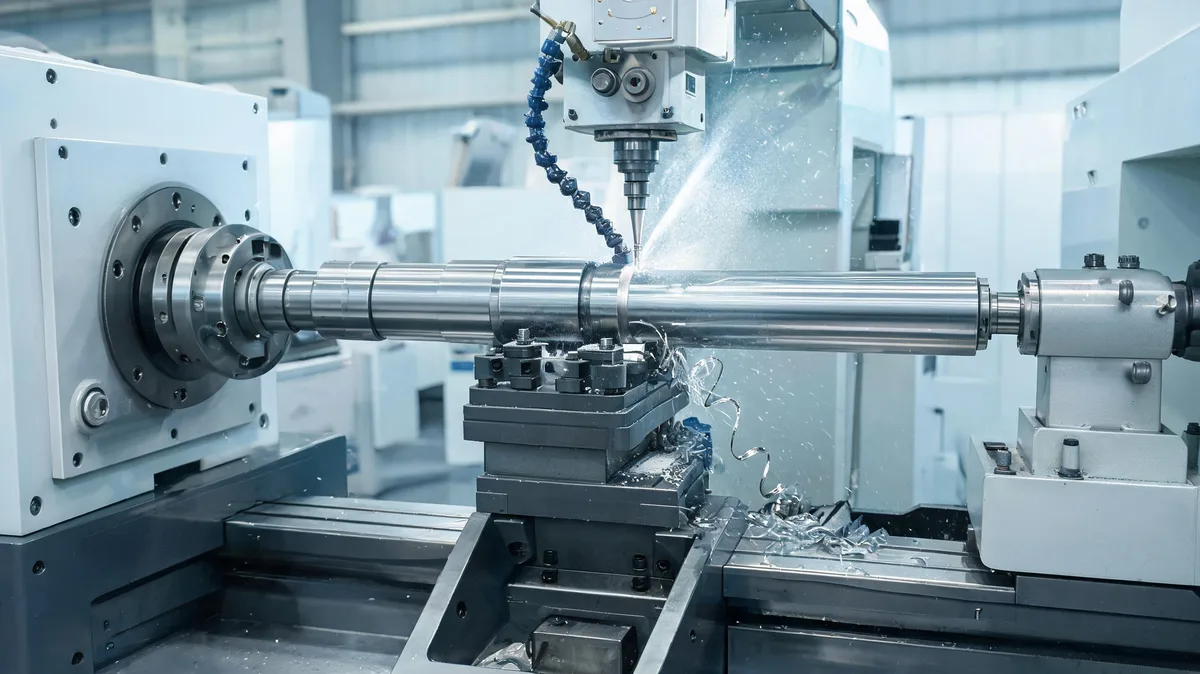
For most shaft work, a CNC slant bed lathe is the best fit. The TCK50 handles smaller shafts and high-volume runs; the TCK6050 covers longer and heavier shafts. Both have a 45-degree slant bed for rigidity and good chip removal.
If your shafts need milling or off-center features, a mill-turn machine like the TCK70 with live tooling lets you turn, mill keyways and drill cross-holes in one setup. For very long parts, a heavier slant bed lathe with a tailstock and steady rest supports stable machining.
Key Process Points
Centering and workholding
Always machine the center holes first, then use them for subsequent operations. A tailstock center and, for long shafts, a steady rest keep the part rigid so diameters stay consistent along the length.
Roughing and finishing passes
Rough with higher depth of cut and lower speed, then finish with lighter cuts for the final diameter and surface. This balances cycle time with the finish the spec needs.
Keyways and splines
On a mill-turn or with a milling attachment, cut keyways and splines in the same clamping as turning, avoiding a second setup and the drift that comes with it.
Threading
Use a rigid machine and a proven threading cycle. Consistent thread quality depends on stable spindle speed and coolant, not on the latest gimmick.
Inspection
Measure diameters at several points along the length to confirm taper is within spec. Use a reliable method and keep the reference consistent.
Frequently Asked Questions
What machine is best for turning long shafts?
A slant bed lathe with a tailstock and steady rest, like the TCK6050, is suitable for long shafts. It keeps the part supported so diameters stay consistent.
Can Handemo machine shafts with keyways and splines?
Yes. With a mill-turn machine with live tooling, we can turn, mill keyways and cut splines in one setup to reduce handling.
What steel do you recommend for transmission shafts?
Common choices are 4140 and 1045 alloy steel, or stainless for corrosion resistance. The right grade depends on your application and strength requirements.
Get a Shaft Machining Plan
Send us your shaft drawing and production target, and Handemo will recommend the right lathe and process. Contact Handemo CNC | Email: sales1@handemocnc.com | WhatsApp: +86 135 6320 3038