CNC Machining Pump Housings: Process and Machines
A pump housing looks like a simple casting until you hold the drawing next to it. Two gear pockets that have to stay parallel, a pair of shaft bores that carry the bearings, a valve plate face that must seal under pressure, and oil galleries drilled at angles through the body - every one of those features decides whether the pump leaks, whines or fails early. Machine the housing well and the pump is quiet for years; miss the bore alignment and no amount of assembly care will save it. This article explains how Handemo CNC machines pump housings - the casting materials we see most, the machining centers we recommend, and the process sequence our shop follows for gear, vane and piston pump bodies.
The Part: Pump Housing Types and Materials
A pump housing is the structural body that carries the pumping elements - gear sets, vane cartridges or piston assemblies - and converts the rotating motion of the shaft into fluid flow. It has to locate the moving parts in precise relation to each other, contain the working pressure without leaking, and provide the ports and passages that move oil through the circuit. The machined features that matter are the gear or piston chambers, the bearing bores at each end of the shaft, the face that seals against the cover or valve plate, and the mounting feet that bolt the pump to its prime mover.
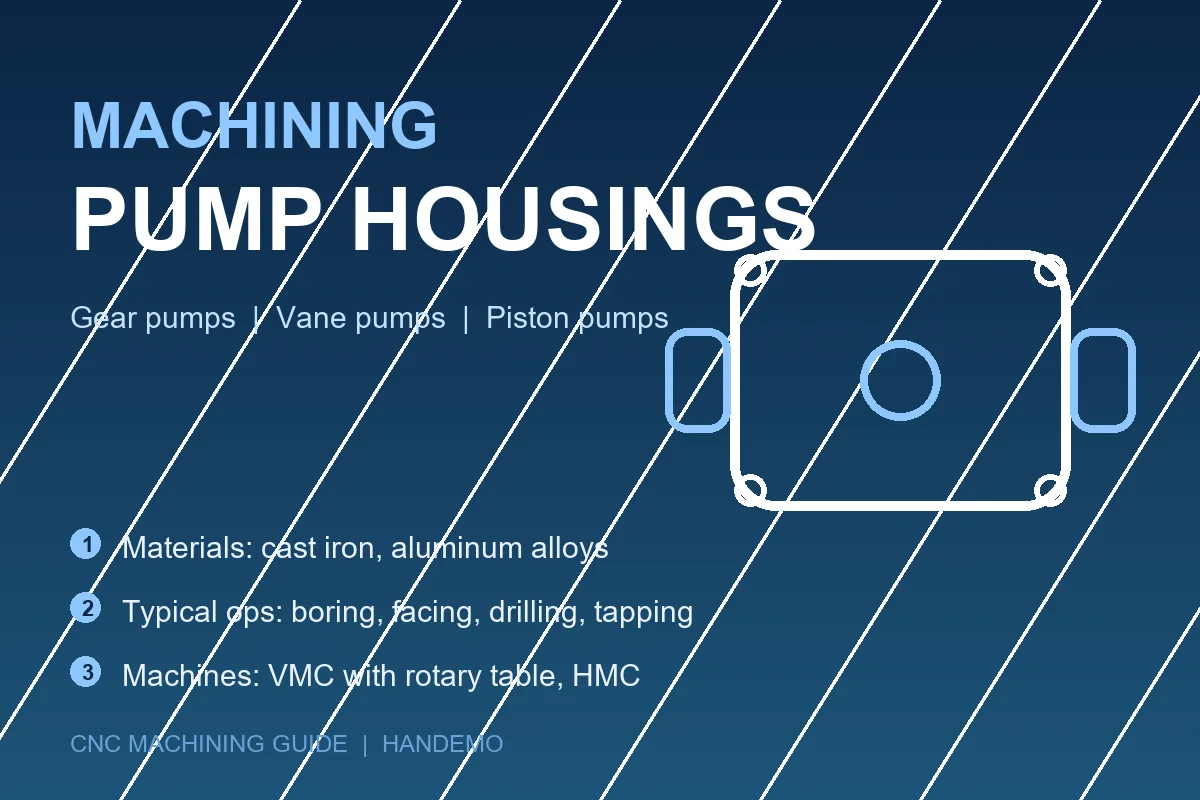
Gear pump housings are usually gray iron castings such as HT250, chosen for its damping, its stability in the bore area and its low cost at volume. Vane and piston pump bodies are frequently aluminum - A380 or similar die castings when the housing is a complex shape with integral ports, or sand-cast aluminum for larger frames. Heavy-duty and high-pressure pumps move to ductile iron or steel, where the housing must hold its geometry under repeated pressure cycles. The material changes the cutting strategy more than people expect: iron wants stable, consistent cuts with rigid tooling, while aluminum castings need sharp geometry and careful control of the cast skin, which is hard and abrasive even though the base metal is soft.
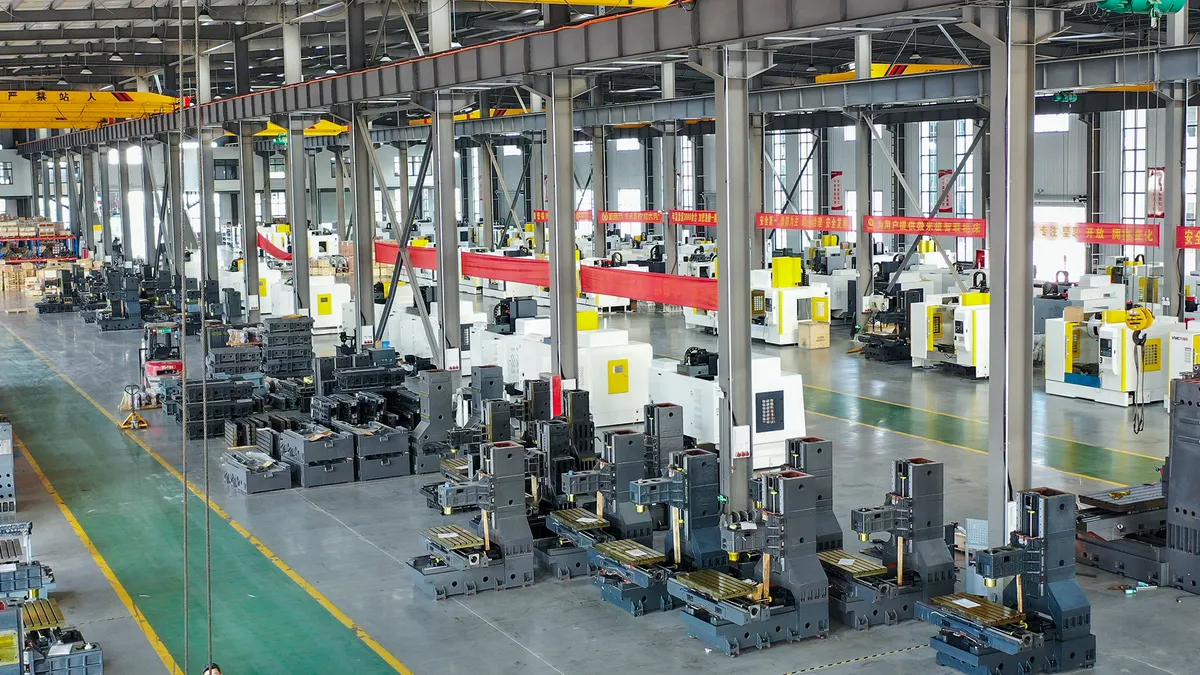
Recommended Machines for Pump Housings
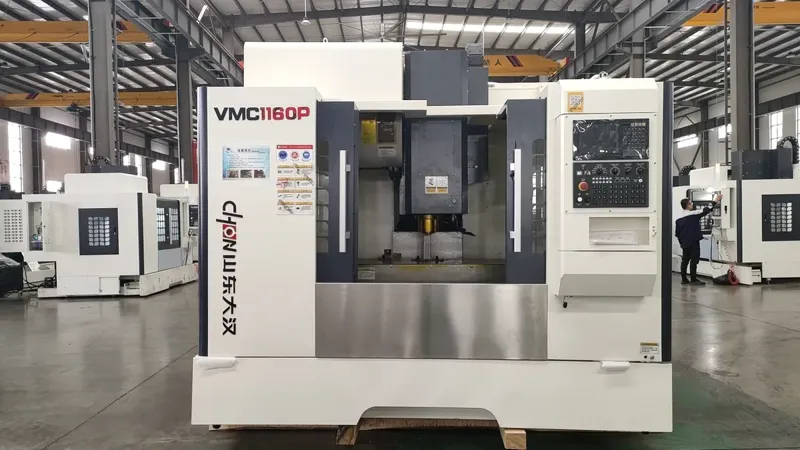
For prototype and small-batch pump body work, a VMC1160 vertical machining center is our standard recommendation. The gear pockets, bearing bores, valve face and mounting feet can all be reached from the top in one or two setups, which keeps the bore-to-face relationships under control. The VMC1160 work envelope covers most gear pump and vane pump housings through medium frame sizes, and the machine handles both the cast iron roughing and the aluminum finishing without a change of strategy.

Once the housing needs work on several sides - the shaft bores at both ends, the cover face, then the port faces - a HMC630-DT horizontal machining center pays for itself quickly. Its rotary table brings each face to the spindle in one clamping, so the shaft bore alignment through the housing is machined without re-fixturing. Large piston pump and heavy-duty housings fit the VMC1370 heavy-duty vertical machining center, which carries bigger tables and takes deeper cuts in ductile iron. Browse the full vertical machining center range and every model follows the same rule: cut the bores and the faces they relate to in one clamping, or plan the fixture so the part cannot move between them.
Machining the Pump Housing: Process Points
Datums first, castings second
Iron and aluminum pump castings both arrive with cast surfaces, draft angles and parting lines that have nothing to do with the machined part. The first operation establishes machined datums - usually the main mounting face and two locating holes or pads - and every later operation references those datums. Shops that skip this step chase bore misalignment from batch to batch, because each casting locates slightly differently off the raw surface.
Gear pockets and bearing bores as one system
The two gear pockets in a gear pump housing and the bearing bores at both ends of the shaft have to stay concentric and parallel with each other. We machine the pockets with a rigid boring sequence and the bearing bores with short, stiff tooling, and we finish the related diameters in the same setup wherever the machine geometry allows. On the HMC, the rotary table lets us bore from one end, index, and bore from the other end so the shaft bore alignment is held by the machine rather than by a manual re-fixture.
Oil galleries, cross holes and port faces
Pump bodies are full of angled oil galleries and cross holes that break into the pockets or the bores. These features need a spot drill before the drill, controlled peck cycles when the hole is deep, and careful edge break where the hole breaks into a machined bore - a burr here is a contaminant that will score the gear set on the first run. Port faces are usually machined flat and finished with a light pass so the fitting seats without a leak path.
Sealing faces and fastener patterns
The cover face and valve plate face carry the pressure seal, so they are machined in the same setup as the features they relate to, then finished with light cuts to keep the surface stable. Fastener patterns around the perimeter are drilled and tapped from the same datum; we use a spot drill first so the tap drill does not walk on the as-cast or curved surface. When a tapped hole breaks into a gallery, the part gets a cleaning pass before it leaves the machine.
Chip control inside closed bodies
Blind pockets, angled ports and intersecting holes trap chips, and a chip left inside a pump body is a warranty failure waiting for a customer. Through-spindle coolant clears the deep galleries, and every housing gets a wash and inspection step before assembly. On the HMC, chips fall out of the part instead of collecting in the pockets - one more reason high-volume pump shops run horizontal machines.
Quality and Consistency
Pump buyers reject housings for shaft bores that are not aligned, gear pockets that are not parallel, sealing faces that leak, and port threads that fail assembly. Those faults trace back to moving the part between operations, long tool overhangs, or clamping a casting without supporting the bore area. Our approach is a fixture that locates off machined datums, a sequence that keeps related features in one clamping, and a trial housing before the batch runs. When the first housing and the thousandth housing go through the same fixture and the same program, the customer gets the consistency they need to build pumps around.
Frequently Asked Questions
What CNC machine is best for pump housings?
For prototype and small-batch work, a vertical machining center such as the Handemo VMC1160 machines the gear pockets, bearing bores and sealing faces in one setup. Housings that need machining on several faces suit the HMC630-DT horizontal machining center, whose rotary table keeps shaft bore alignment through the body. Large piston pump and heavy-duty housings fit the VMC1370 heavy-duty model.
Do you machine both cast iron and aluminum pump housings?
Yes. Gray iron housings are machined with stable, rigid setups and consistent cuts; aluminum housings get sharp tooling, controlled passes through the cast skin, and the same datum discipline. We quote both materials regularly and plan the process from the casting quality rather than from a generic program.
How do you keep oil galleries and cross holes clean?
Through-spindle coolant clears deep holes during drilling, and every housing is washed and inspected before it leaves the shop. Tapped holes that break into internal passages get an extra cleaning step, and we deburr every edge where a drilled hole meets a machined bore.
Can you support prototype to production volumes?
We do. A customer can start with a single trial housing to validate the fixture and the process, then scale to batch production on the same setup. Send the housing drawing, casting source and annual volume, and we will recommend the machine, fixture approach and process sequence - plus options such as through-spindle coolant and chip conveyors that suit pump body work.
Get a Pump Housing Machining Plan
Tell us about your housing - material, size, casting quality, machined features and batch size - and Handemo will recommend the right machining center and process. Contact Handemo CNC | Email: sales1@handemocnc.com | WhatsApp: +86 135 6320 3038
Related reading: CNC Machining EV Motor Housings and CNC Machining Hydraulic Valve Bodies - more closed-body parts where bore position and sealing faces decide the result.