CNC Machining Guide for Gearbox Housings
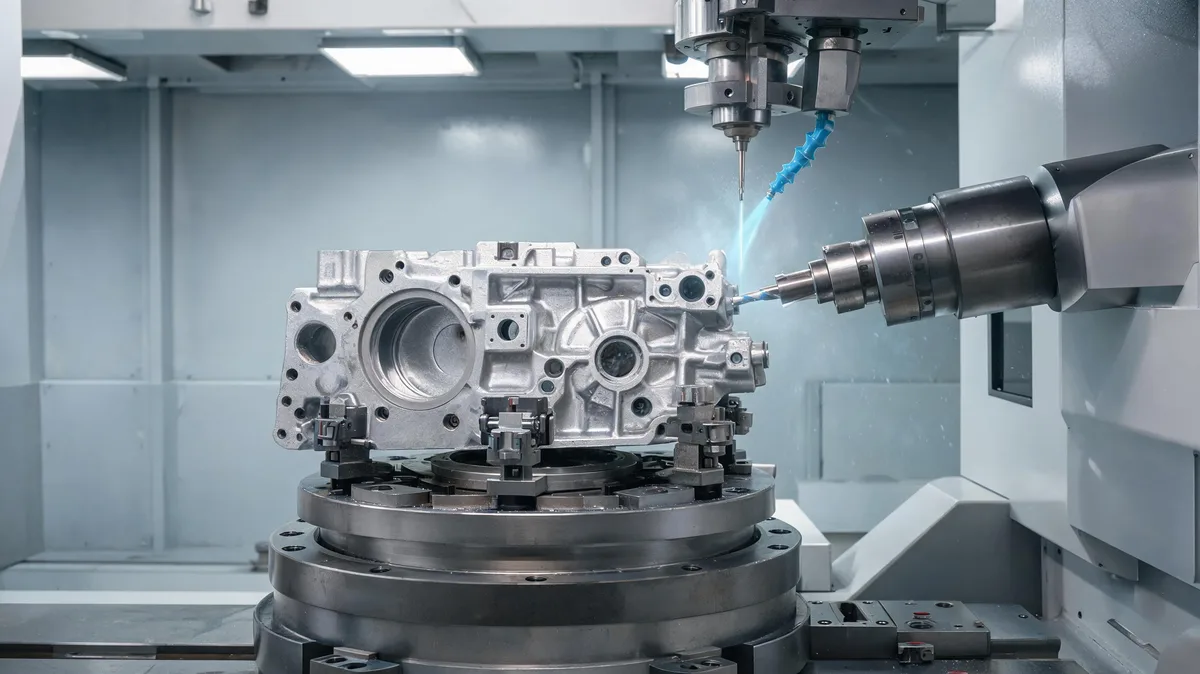
An automotive gearbox housing is a large aluminum or cast-iron casting that carries the shafts and gears of a transmission. It has to hold the bearing bores on a common axis, keep a split face flat so the cover seals, and be rigid enough to take the load of the gear set. Machining it well is mostly about datum control and a stable setup. This guide walks through the process and the machines that handle it.

What a Gearbox Housing Needs
The housing has two main bearing bores that take the input and output shafts, a split face where the two halves join, and a grid of mounting bolts. The customer needs the bores aligned and the split face flat so the joint seals. The part is machined from both sides, so the setups must share one consistent datum.
Because the bearing bores define the axial position of the shafts, they are the critical feature. Everything else is secondary. A housing that is machined well in every other way still fails if the bores are not aligned.
Machine Choice for Housings
A Handemo VMC1160 handles a medium housing with the part indexed to reach the features. It gives enough travel for the casting and enough stiffness to hold the bores true. For high-volume runs, a horizontal machining center with pallets finishes several faces without reloading, which cuts cycle time.
The machine needs the travel to reach the whole part and the rigidity to hold a bore without deflection. A bore that wanders is the most common failure in a housing, and it always comes back to the machine and the setup.
Establishing the Datum
The datum is the reference that ties every operation together. We locate the part on the main bore and the split line, then machine the top face as the secondary datum. From that face we machine the bores, the bolt pads and the mounting pattern.
Holding one datum through the whole job protects the alignment. If the shop shifts the datum partway through, it introduces an error that carries through the part. So we never move the reference once it is set.
The Machining Sequence
The sequence starts with the datum face, then the bores, then the bolt pattern and the detail:
- Machine the top face square to the datum.
- Bore the main bearing bores so the shafts sit on one axis.
- Mill the bolt pads and the split face flat.
- Drill the mounting pattern and the oil passages.
Each step builds on the one before it. If the datum face is not square, the bores will not align. So the order matters.
Holding the Bores True
The bearing bores need to stay true across the full length of the case. We use a boring bar and we check it for wear at the end of each batch. A worn edge shows as a taper or a poor finish.
We also take a finishing pass only after the part has settled. Castings are not perfectly stress-free, and if you push them to size in one hit the structure can move. By leaving a small allowance and taking a light finish, the bore stays true.
Working the Split Face
The split face is where the two halves of the housing meet, and it has to be flat so the seal holds. We machine the face with a stable cut and we check the flatness with a straight edge or a surface plate.
We take a finishing pass after the bores are done, so the face is not disturbed by the earlier cuts. This keeps the seal clean.
Drilling the Mounting Pattern
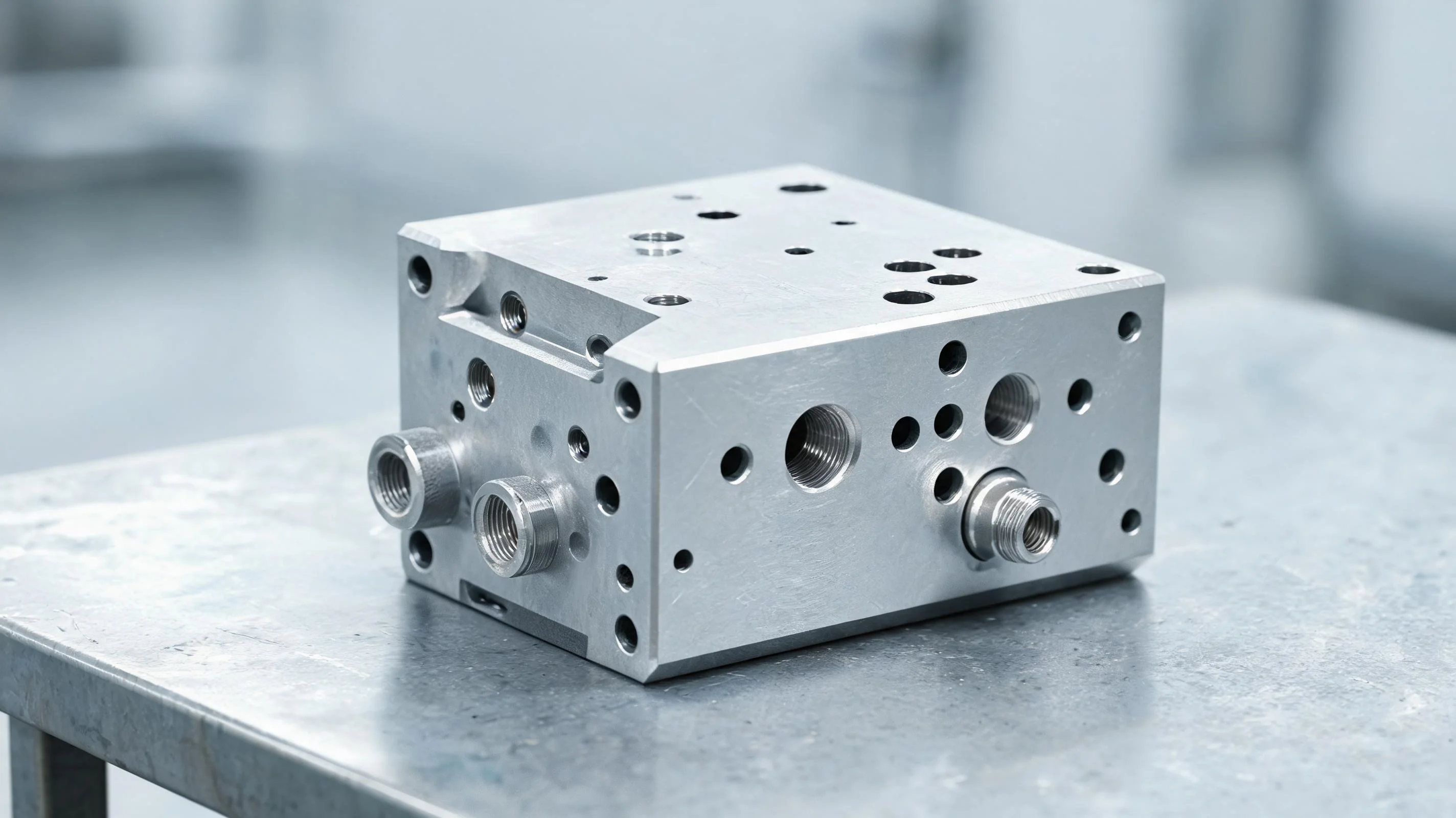
The housing has a grid of bolts that hold the two halves together and mount it in the machine. The bolt holes have to be in the right place so the housing lines up. We drill the pattern from the datum so it is consistent with the bores.
If the bolt pattern is off, the housing will not line up when it is assembled. So we reference the pattern to the same datum as the bores.
Quality Checks
Before a housing leaves the machine we check the things that matter:
- Bore alignment and ovality with a bore gauge.
- Split face flatness against a straight edge or surface plate.
- Bolt pattern position and size.
- Finish on the bore walls and the sealing face.
- That no chips or burrs are left in the oil gallery.
These checks turn a batch of castings into a batch of usable housings.
Thinking About Your Housings
If you machine housings, casings or similar boxes, the same principles apply. Establish a clean datum, hold it through every operation, and take a finishing pass after the structure settles. The machine needs travel and stiffness for the part.
If you are choosing a machine for housing work, we are happy to talk through your parts and suggest a fit. Use the contact form below and we will come back to you.